Philosophy
The Celebrity's Private Sphere: Mostafa Malekian and Tannaz Tabatabaei in Conversation with Haqq-e Mellat Monthly
A conversation between Tanaz Tabatabaei and Mostafa Malekian examines the boundaries of celebrity privacy through the lenses of lived experience and ethics. Tabatabaei stresses the importance of defining limits early and refraining from sharing personal details on social media to maintain security.
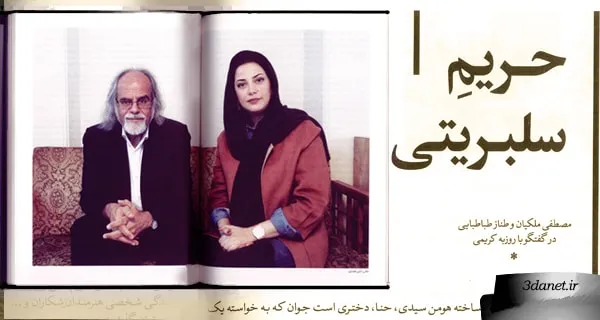
In the film Sound and Fury, directed by Houman Seyyedi, Hana is a young girl who, at the request of an artist, crosses the boundaries of her private life and, out of love for him, goes as far as being accused of a crime... When it was decided that the second issue of Haqq-e Mellat Quarterly would address the right to privacy, it was clear that the subject of privacy in the personal lives of artists, athletes, and so on—in short, those we nowadays call celebrities—could not be overlooked.
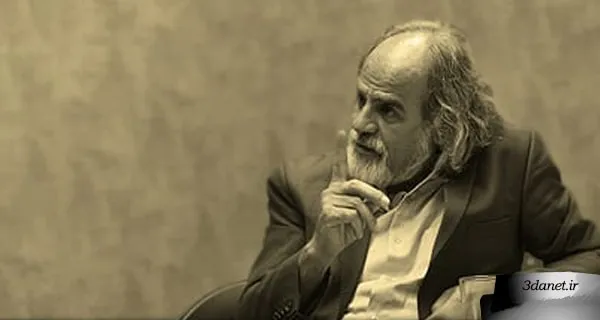
With the explosion of cyberspace and social networks, Iranian artistic, athletic, political, and other celebrities, while using these new spaces to be seen more and more, at the same time complain and criticize that audiences, fans, and users of these networks do not respect the limits of their privacy; one's headscarf is blown away by the wind and a video is published; a film emerges from another's wedding; another's chats are made public, and so on. So we decided to discuss the matter with a celebrity and hear their views, and of course, to avoid falling into repetition, we seated the well-known artist alongside "Mostafa Malekian," the moral theorist. Wherever Malekian has spoken or written about privacy, he has insisted on the position that our private sphere is constantly in conflict with social interests; one could guess that a dialogue would ensue between the artists' concerns about their privacy and Malekian's ideas... "Tannaz Tabatabaei," the actress who played Hana in Sound and Fury, is herself an artist who, although very selective in her cinematic work, has been one of the most popular actresses in recent years. Interestingly, she says she has been spared the challenge of celebrities and their privacy; she even says that in her 15-year artistic career, she has not faced sexual and gender-based looks and harassment from audiences and the public. But how? Tabatabaei, with her particular concern and outlook on celebrity privacy, sat down with Mostafa Malekian to talk about a celebrity's private sphere; a conversation on the border of an artist's lived experience, ethical ideas, and legal points...
Malekian: I suggest that Ms. Tabatabaei speak first as a celebrity, and I will speak in response to her remarks; I do not like repetition.
Tabatabaei: I am an ethics-oriented person. Being ethics-oriented does not mean lacking audacity. It means I define my personal boundaries, and with the image I have built of myself among my fans, the viewer knows from a certain point onward who they are talking to; they know what Tabatabaei dislikes, what questions she does not answer, where she does not go, and what she does not do. This is a boundary I define for both my own peace and security and for my audience. As a celebrity, I have had this definition from the first day of my career, because I knew that the further I went, the harder it would be to rein this in. I see other friends who sometimes get confused in this boundary-setting. Sometimes they think a certain act, for promotional reasons or based on the circumstances of the day, can help them. But for example, at the start of social media activity, despite its promotional reach, I absolutely did not want to enter it. It is very dangerous that this space allows my audience to suddenly intrude into my life. A photo of eating lunch or dinner, or a party, even with hijab, is completely personal, and I do not like to share it with my audience. When a stone falls into water, it creates a wave, but it takes time for people to get used to the wave; for culture-building to happen and for it to gradually become established how to use Instagram. That is why I have always avoided social networks, which might be conservative, but this is not a place where I act audaciously; it does not work to my benefit; it is even to my detriment. It has only been a year since I opened my own Instagram page, which I manage myself. There were fan pages, but I had no involvement in them. I think every person, whether a celebrity or not, defines a boundary for themselves according to their own characteristics. There are those who like intrusions into their privacy and think it has promotional reach; perhaps it increases followers and other things that are pleasing to them, and they have no problem with it. Some pull back a lot and think they are very bothered. In my opinion, this is not very proportionate to their being a celebrity either. After all, maintaining this boundary is difficult.
I do not attack audiences for being curious about my personal life. It was I who should have determined how close or distant the audience would be to me. A number of young people would come to see my plays and wanted to talk to me. I examined them many times to see who they were. Gradually they drew closer to me, to the point that their families also became close to me. I thought I could counsel or help them. Some do not respect boundaries, but we can control this sphere through a different kind of conduct and policy, not by confronting them. If I do not observe common decency, I have erred. And if something happens unintentionally—for instance, a video from a party leaks and becomes an issue—I am guilty for not having secured my surroundings. In the most private circles, everyone around me knows there are rules. No filming or photography is allowed. I myself must ensure my security, instead of asking why my security is not being ensured.
Could one say you have two private spheres? One that is more private, which is for yourself, and another that is more glass-like, which people see but have no right to pass through that glass. Perhaps all artists are like this.
Tabatabaei: In my view, private sphere means that even in facing my mother, I step somewhat outside the private boundary, and this condition expands step by step. Sometimes this private sphere is my encounter with myself. Whatever happens to me outside this door—with the neighbor, with my father and mother, with my siblings—is no longer that private sphere, and it grows larger and larger. What matters is how clear I am with myself about my private sphere. Being in the car and saying, “My four walls, my domain,” or at home saying, “My four walls, my domain,” and turning up the music is wrong. Suppose I dye my hair, take a photo, and share it, then ask why you talked about my hair, why you criticized my headscarf. If it matters to me, I should pull my headscarf forward, because I am putting myself on display. The moment I encounter even one person, I no longer have a private sphere. Sometimes some artists complain, “Why did they say such-and-such to me or behave in such-and-such a way?” But are they clear with themselves about their own position? Cultural roots, sociological factors, and psychological, economic, or political pressures cause audiences to do certain things, but what matters is how you deal with that situation.
It seems to me that Ms. Tabatabaei’s definition of the private sphere and the imperatives she sets for herself stem to a great extent from Iran’s social and legal rules. For instance, you ask your parents to observe boundaries even in a family gathering; perhaps if our legal system were shaped differently, you would not need to behave with such intensity. Isn’t what you said quite conservative?
Tabatabaei: The private sphere can have different definitions depending on a country’s social and political conditions. For example, the most private sphere we ought to have is my clothing. When I do not have that and am forced to manage it according to the law, then the conditions of my private sphere differ here. On the other side of the world, too, paparazzi truly harass celebrities and cause relationships between a woman and her husband, or with her children and others, to be endangered and create trouble.
Malekian: I completely agree with two main points in Ms. Tabatabaei's remarks. The first point is that the primary responsibility for preserving privacy lies with the celebrity. If their privacy is breached and violated, in most cases, the celebrity should be considered at fault, not the violators. Simply put, I, the celebrity, make mistakes that arouse curiosity among fans and audiences. Once curiosity is aroused, I can no longer stop it, and since I initiated it, I must consider myself at fault. A celebrity is like someone standing on a mountain peak. Someone standing on a peak has a choice between two actions: either remain standing on the peak or run downwards. If they decide to run downwards, they take approximately the first 10-12 steps voluntarily. But from the thirteenth step onward, they are no longer in control. They may well cry out, 'Save me, I am slipping and heading downwards, I am falling into the valley.' And they are telling the truth. But because the loss of control resulted from an action that was within their control, they must consider themselves at fault. If there is any blame or reproach, it should be directed at the one who consciously took those first steps. If one day a celebrity's privacy is violated, if one day they see inappropriate curiosity in their life, they must see what they have done to arouse the curiosity of others to such an extent that they try to encroach upon their privacy; whether they are artistic celebrities, sports celebrities, or those in other fields.
The second point they made, which is entirely correct, is that privacy has several levels. I have a privacy that is private in the strictest sense of the word and includes matters that only I know and want only myself to know. A little broader is the privacy I share, for example, with my spouse. A little broader is the privacy I share with my children, and a little broader is the privacy I share with my relatives, friends, and colleagues. Privacy is that part of life about which I want those I do not wish to be informed not to try to become informed. This is privacy in its narrowest and, of course, most important sense. I also have a privacy that I want my spouse to be aware of, but I do not want anyone else to be aware of it. I have another privacy that I want my children to be aware of as well, and so on, expanding in this manner. Therefore, I fully accept that a person like Ms. Tabatabaei has a privacy into which she admits no one, like when I write my memoirs and put them somewhere where even my spouse cannot see them. In this sense, privacy has several levels.
It is not a zero-sum matter where something either belongs to the private sphere or lies outside it; no. We must construct a kind of classification ourselves and tell each person, "Do not come closer to my privacy than this radius!" I tell my spouse, "No closer than a five-meter radius"; I tell my children, "a twenty-meter radius"; I tell my relatives, "a hundred-meter radius," and to my friends as well...; that is, I myself clarify the radii. Simply put, in the story of privacy, I am the center of a circle that is not singular, but rather a set of concentric circles, and I must determine what the radius of each circle should be. Therefore, Ms. Tabatabaei can also say that there are matters she has no problem discussing when she is with her parents or siblings, but she would like them to stop right there. Ms. Tabatabaei also mentioned that there are points that depend on the audience. That is, the audience is not one hundred percent at fault, but is, say, ten percent at fault. This is correct. No matter how much personal discipline you have, there are still those who do not respect boundaries; they want to nitpick and pry into your life. The second point is that the structuring and structuredness of the social system is also effective in determining whose privacy is respected, to what extent, and for whom it is not. When everything in a society is viewed from a sexual perspective, curiosity about celebrities also becomes focused on sexual matters. If, in a society, attention is paid to family relationships instead of sexual matters, we would also become curious about celebrities' relationships with their fathers, mothers, brothers, sisters, and spouses, and would not delve into sexual matters. If moral characteristics are important in a society, curiosity arises as to whether a celebrity is humble or arrogant? Are they honest or given to hypocrisy and deceit? Are they fair or unfair? To what extent do they keep their promises; how often do they break them? And of course, not all curiosity is equally harmful; when curiosity becomes detrimental by viewing all affairs through a sexual lens, this curiosity makes life unbearable for celebrities. But if the curiosity is about how cultured a celebrity is or is not, its harm is less. I am not saying it is harmless, but the degree of harm caused by intrusion into privacy varies depending on the sensitivities of the society. I believe we must fundamentally reform our education. Not just the Ministry of Education; those who consciously or unconsciously train citizens—the press, radio and television, speakers, the Ministry of Science, the Ministry of Culture and Islamic Guidance, and so on—all must seek to reform this sensitivity so that when we encounter someone, rather than the mind focusing on sexual and gender issues, on their way of eating, their way of dressing, and fashion, it focuses on what cultivation can be learned from them, how ethically they behave, and what degree of mental health they enjoy. If these existed, celebrities would have a more comfortable life. I am not saying their lives would become completely comfortable, because any curiosity about private life is more or less bothersome. But there is a great difference between someone being sensitive to a celebrity's sexual relations and someone being sensitive to how cultivated the person they admire is, how loyal they are, and whether they can be relied upon. Certainly, Ms. Tabatabaei does not find all curiosity equally bothersome; if someone asks her what book she has read this week, this is also curiosity, but it is not as bothersome as asking how many parties she has attended this week.
Tabatabaei: You mentioned the sexual gaze. Personally, in the 15 years I have been working, I have actually encountered the sexual gaze less often. Since I protect my sexual privacy, I haven't faced anything that harassed me sexually; a gaze that is harassing or a harassing comment. Of course, perhaps I haven't focused on it much and have said it's not important. Compared to what I think is a more deep-rooted and psychological issue in the audience, its number is very small. That point is that we live in a society where, no matter how hard we struggle, it seems we remain at a surface level, and every day, instead of going higher, we go lower. This pressure and struggling and getting nowhere, not going higher and remaining lower, or at least stagnating, may create psychological pressure in a person. This psychological pressure becomes older and older over time, and suddenly they encounter the life and work of a celebrity on Instagram or elsewhere and read news of their progress; of them being seen, their increasing popularity; domestic or international successes, etc. The person asks themselves, what does he have that I don't? Why does he go higher while I remain stuck? And from this perspective, instead of finding the lights, they search for the celebrity's shadows and darknesses. They go after the shadows to prove to themselves that he is no different from me, and that this celebrity is supported by such-and-such a place or has a relationship with so-and-so, and in order to give a more authoritative ruling to these rumors, they enter the celebrity's private sphere to find holes in it. We are all human and have secrets, some of which are our dark side, some our light side, but that person searches so much to prove to themselves that a celebrity is an even worse and darker person than they are. Human beings like to be seen, to be loved, and to be encouraged. Who would dislike that? A spectator who has a healthy psyche and is not captive to corrosive pressures will have no problem. In fact, they enjoy and take pleasure in the growth and encouragement of a celebrity. This is perhaps in the historical roots of our culture, that we lack meritocracy. We don't think that perhaps a celebrity's position was their due. We also don't see their efforts; we see the here and now, we don't want to believe in their abilities. We say, that thing he has, I have too. This very feeling that he has and I don't, I have and he doesn't, causes conflict, destruction, and violation of the celebrity's privacy. Do I, an Iranian celebrity, also search among Hollywood actors and look at what he has and what he has done that I don't have or haven't done? Perhaps we think to ourselves that the Hollywood star's father was the one who paid for him to go to UCLA to study cinema, paid a certain company for him to act, etc. But the fact is that that star put all their effort into their success ...

Malekian: But the point is, when television and cinema only film and create stories about certain strata of society, and television never, for example, goes to a carpet weaver or to someone who works two thousand meters underground in a mine, society certainly remains oblivious to some people. It is through the attention of mass media that society pays attention to something or does not pay attention. If television could show for one hour a day what workers endure at a depth of two thousand meters, I think any conscientious human being would say these people are commendable, and we would have other celebrities too.
Tabatabaei: Yes! I think they are truly heroes.
Malekian: Yes, they are heroes, and of course this does not mean that those who are celebrities should not be. It means that there are others who are not celebrities but should have been, and are not. This is due to the skewed and inverted value system we have. I say that the art of Ms. Tabatabaei and her colleagues must be fully appreciated, but the person who sweeps our alley better than all the neighborhood's street sweepers is the celebrity of street sweepers and should receive attention. The firefighter who enters a building, saves people's lives, and loses his health, in my opinion, he is a celebrity. But unfortunately, we do not take the camera there so that people understand what a noble human being someone is when they try to save another person with whom they had no bond, who was not a relative or friend, and put themselves in danger. This work keeps the current celebrities as celebrities, but it creates new celebrities for us. People look at celebrities, and as sociologists say, one of the reference groups is celebrities. When all celebrities are focused on fields like sports and art, it is as if I am creating a social motivation in the novices of society, in teenagers and young people, that everyone should come here, that valuable work is only here, but in reality, this is not the case. I do not remember in which of his works Romain Rolland said this sentence: if you want to see who built France? Those who carried out the Great French Revolution did not build France; the statesmen who formed parties did not build France; the great industrialists did not build France; the teenage girls who worked in weaving workshops and never received any encouragement, with the utmost they saw in return for their work being a bare subsistence, built France. I think this saying of Romain Rolland holds true for all societies.
Ms. Tabatabaei, do you think that in a society like America, where perhaps these psychological pressures do not exist, the situation is not like this? I think prying into the life of someone who is a superstar and a hero, or in today's terms a celebrity, is a normal thing. People all over the world identify with them, because they see or read their story, they feel they must continue the story with them. This is the nature of cinema. For example, Ms. Tabatabaei, who played a certain role in a film and was my beloved character in that film, how does she eat now?
Tabatabaei: At one time, I give an interview as a celebrity saying that I like chelow kebab or, as Mr. Malekian said, I read a certain book, I visit a certain exhibition or gallery, I share these things and I myself like to say them, but I definitely have shadows that I do not want anyone to see. To want to enter the private sphere that a celebrity does not want me to know about, its meaning is not identification. It is destruction.
Malekian: The question raised is that an audience member who likes a celebrity wants to know things about them. But if person A likes person B, it does not necessarily mean that B also likes A. If I like a celebrity, it does not mean that celebrity likes me. Therefore, I should not expect the celebrity to tell me everything about themselves. That celebrity should tell everything, or as much as they wish, to those they like, not to those who like them. We think that liking is a logically symmetrical relationship. That is, if A likes B, then B also likes A. Whereas liking is an asymmetrical relationship. A symmetrical relationship is one where if A has that relationship with B, B also has it with A; for example, if my house is close to your house, then your house is certainly close to my house. Being close and being far are symmetrical relationships. But if you are someone's father, that person is not your father. Because being a father is an asymmetrical relationship. Many people assume that friendship is a symmetrical relationship and that if I like you, you must also like me. Then I expect you to treat me as you would someone you like. But this is not the case. A celebrity has many admirers, but that does not mean they themselves like all of them. Therefore, I should not expect that the consideration a celebrity shows to those they like will be shown to me, who likes them but whom they do not necessarily like. In other words, the relationship between a celebrity and their followers is, in most cases, one-sided and unilateral. We think this relationship is symmetrical, so we say, I like them, but why don't they pay attention to our friendly relationship? Why don't they share with me the things they share with their friends?
It seems the discussion has moved toward what causes the desire to pry into celebrities' private sphere. Let us return to the discussion of the private sphere as a right. You both agreed that the celebrity themselves must observe it. It seems that in this view, the human right to have a private sphere has been transformed into a duty to preserve the private sphere, and in exchange for this duty of the celebrity or any other individual, you seem to grant a kind of right to pry for others. Before this session, I thought Ms. Tabatabaei would complain about why celebrities' private sphere is violated and place more blame on society.
Malekian: I agree with Ms. Tabatabaei. I believe we have far more control over our destiny than we realize. If the private sphere of person A is violated more and that of person B less, there must be something in A that is less than in B. One cannot say that humans, regardless of the differences between A and B, show more curiosity about A and less about B for no reason.
Ms. Tabatabaei, you said that because you observe certain matters, your experience with sexual harassment is consequently less. You both also emphasized that agency in the matter of the private sphere is very important, and you said that sometimes, celebrities themselves expose a portion of their private sphere to gain more fame or more fans, or for any other reason. How do you ethically evaluate an individual using their private sphere as a tool to gain fame?

Tabatabaei: I emphasize this point: I absolutely did not mean that my colleagues might do such a thing.
Let us suppose a celebrity wanted to do such a thing.
Tabatabaei: Sometimes people think sharing something doesn't endanger their security. For example, an actress gets married and says, I have the security of my life and my husband, I also have my husband's permission, and I share my own wedding photo with hijab. But perhaps sharing the wedding photo at such-and-such a salon or such-and-such a ceremony is the start of a path where people say, now that you've shared this with me, I have permission to get closer to you; now I have permission to ask about your husband's characteristics; how old is he; what is his job; where does he live; has he been married before? This act brings a wave of questions upon you. At the moment that actress shares her photo, she is completely safe. She thinks this is an attractive package to share with her fans. It makes her fans more intimate with her and this can help her popularity. I absolutely do not mean she is exploiting it. She wants to make appropriate use of her situation, assuming her situation is safe. But this is the beginning of exploitation by the audience.
But we also have celebrities who apparently did not succeed in their professional path with better artistic work and better performance, they failed, and they pursue another path, especially through activity on social networks, for popularity.
Tabatabaei: That is their choice, it's not failure.
Well, he chooses to succeed in gaining fame in the virtual space instead of serious work in his profession.
Tabatabaei: You measure everyone's value by yourself, by your mental ideal, or by the general ideal. People, in any form of thinking, have choices that do not mean success or failure. In his thinking, with his own values, he is successful, very successful indeed. We must be careful in choosing words so they are not misinterpreted. I chose a path that is the path of continuous progress in the art of acting. The art of acting, in my view, is the art of self-knowledge. But another person says from the beginning of their entry, I have no desire other than becoming famous. The fact that he likes to be a famous person does not mean that because he couldn't achieve success in cinematic situations, he has failed and now exhibits other behaviors. He made his goal different from the start of his path.
.
.
The Celebrity's Private Sphere
Mostafa Malekian and Tannaz Tabatabaei
In Conversation with Rouzbeh Karimi
Source: Second Issue of Haqq-e Mellat Monthly
Typing and Editing: Samira Rahimi
.
.

Discussion16 comments
متاسفانه بحث خبلی جامعیت نداشت .آنجای بحث که آقای ملکیان حرف از هم ذات پنداری زدند و خانم طباطبایی گفتند این نقض حریم خصوصی است بحث می توانست به نحو بهتری جلو برود ولی بحث ناقص ماند.و یک انتقادم به صداو سیما که متاسفانه فقط کار لجن پراکنی و ماله کشی در اخبار را میداند و به جای معرفی اندیشمندان و دگر اندیشان و اهل مطالعه همیشه بازیگران و ورزشکاران را به عنوان سلیریتی معرفی و دعوت به برنامه میکند چون میدانند که بازیگران و ورزشکاران اهل مطالعه نیستند و اساسا حرفی برای گفتن ندارند.
جالب بود. این دو شخصیت تقریباً در 90 درصد مطالب اشتراک نظر داشتند و آنچه گفتند در تأیید یکدیگر گفته اند، اما هر کدام بیان خاص خود را دارند و در مقایسه، می توان فهمید که چرا ملکیان فیلسوف است و طباطبائی، هنرمند. یاد کتاب «چرا میخواهیم پولدار شوید» ترامپ و کیوساکی افتادم. در آن کتاب هم همین وضعیت برقرار است. دو نویسنده در هر فصل به ترتیب صحبت میکنند و محتوای سخنشان یکی است؛ اما بعد از خواندن کل کتاب میفهمید چرا کیوساکی نویسنده ای بسیار عالی و موفق و تاجری کمتر موفق است، و در مقابل، ترامپ نویسنده ای کمتر موفق ولی تاجری بسیار عالی و موفق است.
درود ... متن گفتگو رو به طور کامل خوندم، با تفکرات خانم طباطبایی و همچنین تعاریف ایشون از حریم خصوصی کاملا موافق هستم. به خصوص پاسخ انتهایی ایشون در باب انتخاب مسیر و هدف ... از طرفی آقای ملکیان هم بسیار شیوا سخن گفتند. سپاس از شما
مجری حضور پررنگی داشت در حالیکه از چنین جلسهای انتظار یک دیالوگ سقراطی میان دانا و عامی وجود داشت، درحالیکه ابدا چنین دیالوگی شکل نگرفت که از ضعف مجری(خبرنگار) بود که نتوانست آقای ملکیان و خانم طباطباییرا باهم مواجه کند فلذا این شکل برنامه کاملا غیر ضروری و صرفا ویترینی بود. از مسائل محوری مهمی غفلت شد؛ مثلا اقتضاعات الگو بودن سلبریتی و نسبت آن با حریم خصوصی؛ یا کارکرد و تکالیف اخلاقی یک سلبریتی در جامعه؛ ایضا پرداختن به این مسأله که آیا خطای یک سلبریتی ، به علت الگو بودن و مرجع بودن او، بیش از دیگران قابل ملامت است یا خیر؟ و ارتباط این امر با فضای خصوصی... در کل شروع خوبی بود(کنار هم نشاندن نماینده عوامگرایی با نماینده قشر نخبه و خواص) اما سطح کار خیلی خیلی نازل بود، چه به لحاظ ساختار(و اینکه دیالوگی شکل نگرفت) و چه به لحاظ محتوا(که بسیاری از مسائل مهم مطرح نشد و سخنان در حد کلیگوییهایی بیثمر ماند)
like for like یکی از بهترین انتخاب های ممکن برای این رسانه. celebrity در کنار celebrity. فلسفه همان نقشی را دارد که سلبریتی . هم عمق هم منشاء هم دل . پیام ها یکی . تنها ظاهر متفاوت است.
انتظار داشتم جناب ملکیان در این گفتوگو نگاه و فهم صحیحی نسبت به این موضوع و جایگاه آن ارائه دهند و خانم طباطبایی صرفا به عنوان یک سلبریتی محبوب و موجه با تجربیات شخصیشان یاریگر ایشان در این بحث باشند اما گویا اصلا ایشان مجالی برای صحبت نداشتهاند که بتوانند چنانکه باید و شاید دربارهی موضوع صحبت کنند و بیشتر خانم طباطبایی از نظراتشان گفتهاند!
با درود ، لازم نیست اینقدر قهرمان پرور باشید ، قهرمان نشان دادن رفته گر و معدنچی فقط وقت آنها را می گیرد . درآمد بازیگر و رفته گر را جابجا کنید بسیاری از این مشکلات اخلاقی حل می شود ، رفته گران و معدنچیان نیازی به ترحم های قهرمان پرورانه یک سلبریتی و فیلسوف ندارند . هیچ سلبریتی همسایه هیچ معدنچی یا رفته گری هست ؟!، از آن مهمتر ، هیچ فیلسوف اخلاقی همسایه ای معدنچی یا رفته گر دارد . قرنهاست که بسیاری با این ترحم گوییهای شاعرانه کاسبی میکنند . اما رفته گر همانست و معدنچی همان .... بدرود
مرحبا به استاد ملکیان که متواضعانه در کنار شخصی سلبریتی قرار گرفتند و به حرف دل این بانوی هنرمند گوش دادند و تبادل افکار کردند... این چنین حرکتی بلنگوی قویتری برای استاد خواهد بود تا افکار زیبا و اخلاقی خودشون رو با افراد مختلف از صنف های مختلف در میان بگذارند...درود
دقیقا
گفت و گو را خواندم. به نظر بنده چندان پربار و همه جانبه نبود. انتظار بررسی عمیقتر موضوع را داشتم.
با شماموافقم.سائق من در مطالعه این بحث حضور استاد ملکیان بود.توقع بیشتری از استاد در زمینه واکاوی شهرت و سرمایه شهرتی داشتم.
درست است که برخی افراد در جهان حاضر دارای شهرت نیستند و در نهایت با گمنامی هم این دنیا را ترک می کنند. اما گمنامی به خودی خود که بد نیست. زمانی که گمنام هستی(حتی اگر به قول استاد ملکیان یک معدن کار قهرمان هم باشی)، مصائب کمتری تمرکز ذهنت را به هم می زند. بنابراین دلیلی ندارد که همه سلبریتی شوند. اصلا سلبریتی نبودن خود یک نکته مثبت در زنگی خیلی از آدمهاست که با تمرکز بیشتر مسیر زندگی راستین را میتوانند ادامه دهند.
اصلا جالب نبود اصولا یک سلبریتی (به ما هو سلبریتی) چه حرفی برای گفتن در مقابل یک فیلسوف میتونه داشته باشه؟ البته ممکنه نظرات درستی هم داشته باشه، اما اجتماع همه نظرات مثبت هر دو شخصیت برابر با گفته های ملکیان میشه. یعنی برای شنیدن جنبه های حقوقی و فلسفی و اخلاقی حریم خصوصی، واقعا هیچ نیازی به شنیدن نظریات ظناز طباطبایی نیست و مصطفی ملکیان به تنهایی کافیه به نظرم ملکیان با قبول این مصاحیه ارزش خودش رو در بین مخاطبان خودش پایین آورده و با توجه به شناختی که من از ایشون دارم فکر نمیکنم این مسائل براش مهم باشه. و صرفا هرجا احساس کنه میتونه حرف حسابی بزنه، دعوت رو قبول میکنه
آفرین. دقیقا
سلام دوستان عزیز هر شغلی یک مزایا و امتیازهایی دارد و یک مضرات و معایبی، مثلاً یک نظامی ممکن است از خانه سازمانی، فروشگاه اتکا، بیمه درمانی و حقوق و مزایا استفاده کند و در مقابل در جنگ و بحران اولین فرد باشد و در خطر شهادت و قطع عضو باشد و یا پزشک و مهندس و هر یک ..... در خصوص سلبریتی هم در مقابل شهرت و پول که مزایای آن است مشکلی به نام حریم خصوصی هم وجود دارد یعنی اصلاً آنها حریم خصوصی ندارند اگر میخواستند داشته باشند نباید دنبال شهرت می رفتند.
سلام اصلا کاری به محتوای مطلب ندارم و هنوز هم آنرا نخواندهام و قطعا بعد از گذاشتن این کامنت، آن را خواهم خواند. چیزی که برای من جالبتوجه است و بسیار ارزشمند؛ ایدهی قراردادن این دو نوع شخصیت در کنار هم است. مرهبا و درودتان.