Philosophy
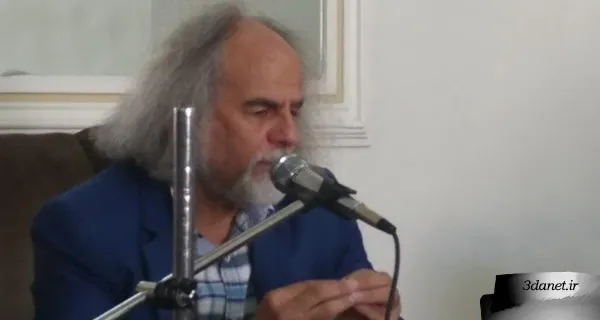
Mostafa Malekian's Lecture: 'Privacy from an Ethical Perspective'
From an ethical standpoint, privacy hinges on the distinction between individual and collective action: the consequences of an act either remain with the agent alone or extend to others. Mostafa Malekian outlines this moral framework against the backdrop of the shrinking sphere of individual action in modernity.

I greet all the ladies and gentlemen present. The discussion that friends proposed and I accepted is 'Privacy from an Ethical Perspective'; and what moral philosophers have said about privacy. The truth is that, without intending to show off, I have so many discussions about privacy in my mind that I truly cannot do justice to any of them. It seemed better to me to present to you, dear audience, a skeleton and general geography of the discussions related to privacy; because I cannot present any of these discussions with their branches and details. So perhaps it is better to take a bird's-eye view of the discussions related to privacy, although regarding each one, we will seemingly only pose questions and not address the answers; or if we do address the answers, we will not adopt any answer as our own chosen one...
Lecture
Privacy from an Ethical Perspective[1]
Professor Mostafa Malekian
November 12, 2016
Clarifying the Subject of Discussion
I greet all the ladies and gentlemen present. The discussion that friends proposed and I accepted is 'Privacy from an Ethical Perspective'; and what moral philosophers have said about privacy. The truth is that, without intending to show off, I have so many discussions about privacy in my mind that I truly cannot do justice to any of them. It seemed better to me to present to you, dear audience, a skeleton and general geography of the discussions related to privacy; because I cannot present any of these discussions with their branches and details. So perhaps it is better to take a bird's-eye view of the discussions related to privacy, although regarding each one, we will seemingly only pose questions and not address the answers; or if we do address the answers, we will not adopt any answer as our own chosen one.
The Domain of the Discussion on Privacy
The truth is that today, privacy is discussed in two domains: law and ethics. Both jurists and legal philosophers have paid much attention to the issue of privacy, as have ethicists and moral philosophers. I will not address the legal discussions (including political, civil, economic, and judicial and criminal law) regarding privacy. The discussion of privacy has been raised in various branches of law and in the philosophies pertaining to various branches of law. But since I myself have not worked in law at all, it is better to set aside the legal discussion; although I accept that the increased importance of privacy today is, in fact, mostly due to matters that threaten or limit privacy from a legal standpoint. What has motivated most individuals to raise the issue of privacy, even in the realm of moral philosophy, are the dangers that threaten privacy from the legal side and from lawmakers, law enforcers, and law supervisors—that is, the three branches of government, the legislative, executive, and judicial, which exist in every society, and even the fourth estate, namely the press. Because truly, both in the enactment of law, my and your privacy may be encroached upon and violated, and in the execution and supervision of law, and from the side of the press and mass media, radio, television, magazines, and newspapers. In fact, it is mostly these violations carried out by these four pillars of societies regarding the issue of privacy that have created motivation for legal philosophers and also moral philosophers. But in any case, I will not report on the issues that legal philosophers have had in this regard, because I have no involvement in legal discussions at all. However, the efforts of moral philosophers and ethicists are truly worth mentioning.
The Origin of the Discussion on Privacy: Individual Action and Collective Action
First, I will address this question: What is the origin of the problem and issue of privacy? What is it that causes human beings to defend their own privacy and to be zealous and protective of the privacy of others? The reality is that in social life, we have two categories of actions and reactions; one category of actions, reactions, and deeds we perform is such that its effects not only impact and befall the doer of that action but also impact and befall others. For example, if I tell a lie here, the negative effects and consequences of this lie do not only accrue to me, but also accrue to you, the listener. Or if I shout in the street, its negative effects and consequences do not only accrue to me; they accrue to society as well. But there is a series of actions whose positive or negative effects and consequences only accrue to the agent themselves. Therefore, from this perspective, we can say that every action that every human being performs in any place, at any time, and in any situation or state is either individual or collective. But when we say an action is collective or individual, it is not with regard to its performer. Because with regard to the performer, all actions are individual. All actions are performed by individuals. With regard to the effects and consequences of the action, an individual action is an action whose effects and consequences only accrue and reach one human being, and that is the doer and agent of that action, and a collective action is an action whose effects and consequences do not only accrue and reach the agent, but also befall others. Now, these others range from one other person to billions of people. Actions can be divided into these two categories. This division is a categorization that, in a sense, we must say its limitation is a rational limitation, and the number of categories cannot be increased or decreased. Ultimately, every action either has effects and consequences that accrue only to myself, or in addition to myself, they accrue to another or others as well. Therefore, since this division has a rational limitation, the number of its categories cannot be added to or subtracted from, but its instances are a matter of debate. Before the modern era, and especially before the nineteenth century, individual actions, in this sense, had numerous instances. That is, there were many actions that, if I performed them, their effect would only accrue to myself. As modernism and modernity progressed, and as we, in Marshall's words, became more of a global village, the instances of individual actions decreased. Bertrand Russell said that even in his father's time, a person could close the door of their house and say,
Now the discussion is about how we can define individual action and collective action in such a way that the definition has instances. For example, overeating seems to be an individual act, but upon closer inspection, if my overeating is constant, gradually, as a result of overeating, changes occur in my body. When I have a child, some of these changes I have created in my own body through overeating are transmitted genetically to my child, and my child may develop diabetes from childhood. That is, it reaches them through me, their father. Therefore, those examples that appear individual are sometimes not truly individual. For instance, if I read a novel and this novel has positive effects on my psyche, as long as my memory of what I read in this novel is still clear, alive, and awake, the positive effects and results of reading this novel may also affect my work environment and my relationships with colleagues and family. As you can see, it is not without effect. But when privacy is raised, such meticulous scrutiny to this degree is no longer taken into account, and the criterion for individual and collective action is set by common understanding. From this perspective, for example, they say drinking alcohol is an individual act. That is, if I drink alcohol in my own home, it is an individual act, just as if I sleep in my home, they should also say it is an individual act. If we were to apply those meticulous scrutinies, especially by accepting the universality of the principle of causality, in a sense, individual action would become almost without instance. However, these philosophical scrutinies are not taken into consideration today, neither in discussions of moral philosophy nor in discussions of the philosophy of law, and custom is the criterion for distinguishing individual from collective action.
The Six Meanings of Privacy
First Meaning: The Non-Sovereignty of Rights and Law in the Realm of Private Actions
Our collective actions are certainly subject to value judgment from six perspectives: 1. Legal-juridical; 2. Moral; 3. Conformity with social customs, conventions, and habits; 4. Religious and denominational perspective; 5. Aesthetic; 6. Prudential. These six valuations are conceivable for every collective action I perform. But regarding individual actions, many moral philosophers have said that although these actions are individual, they are subject to valuation from a moral perspective; that is, morality can also pass judgment on one hundred percent individual actions. But the entire debate is over the legal perspective: can my individual actions also be subject to valuation from a legal perspective or not? The first meaning of granting privacy is that if an action is an individual act, the law has no right to pass judgment on that action and, consequently, has no right to encourage, promote, or, from another side, reprimand it. Nor does it have the right to punish or reward this action. Because an action whose result accrues to myself alone concerns no one but me; this is the first meaning of the concept of privacy. So, in privacy, our intended focus is only on individual actions, and granting privacy means that even if morality has the right to judge my private actions (which, in the opinion of most moral philosophers, it does), rights and law have no right to evaluate my individual actions. This is the first meaning of privacy. Therefore, if someone subscribes to privacy, one of their intended meanings can be this: human beings, in their private sphere, are not subject to any legal ruling. The legislator has no right to enact a law concerning individual actions, and no law enforcer has the right to pry into or meddle with my individual actions. No judiciary and no judge has the right to prosecute and judge my individual actions.
Second Meaning: The Prohibition of Leaking Information About Individuals' Private Lives to a Third Party
Privacy also arises in another domain: does anyone have the right to convey what they know about my private life to a third party or not? Before that, another question may arise: can you even obtain data and information about my private life in the first place? Some have said that the very act of obtaining information and data about private life is possible. That is, it is not impossible. It is true that I have a private life, but my spouse or my business partner is aware of many aspects of my private life. For example, even the fact that I usually sleep for an hour after lunch in the afternoons. This is one piece of information among the items of information that exist about my private life, and my spouse or, say, my business partner becomes aware of it, even though it pertains to my private life. Therefore, it is possible for what relates to my private life to become the object of someone else's perception and awareness. But now the discussion is: does anyone have the right to convey what they know about my private life to a third party or not? If you say no, then privacy in its second sense becomes the subject of discussion, which is that if what relates to my private life happens, by chance, for whatever reason, to become accessible to you, you have no right to share it with a third party. That is, the awareness, knowledge, and information concerning what relates to my private life belong exclusively to me, and if you happen to gain access to it, you are at least morally prohibited from informing others about it. If you also subscribe to this, then you have subscribed to a second sense of privacy.
The Third Sense: The Prohibition of Prying into Individuals' Private Lives
The third discussion is: do I have the right to pry in order to become aware of your private affairs or not? The example I gave in the previous section was that my spouse or my partner, in any case, by virtue of our shared life or work, finds out that, for instance, I sleep after lunch. But can someone whose life circumstances did not require them to be exposed to a series of pieces of awareness themselves seek out this awareness and set out to pry into my life habits, my way of eating, my way of dressing, and what books I read or do not read, or not? Do they have the right? If you say that under no circumstances does anyone have the right to poke into the private lives of others, then it is said that you also subscribe to privacy in a third sense. That is, you say no one has the right to poke around and see what another person is doing, of course, as long as that action is individual. Collective action is not at all the subject of discussion. Privacy always concerns individual actions. Therefore, if someone subscribes to privacy and believes that this realm must be respected and we should accord it sanctity, then prying into the affairs of others will also be a violation of privacy. This is the third sense. Of course, you might subscribe to one of these senses of privacy and not to another. But these are the forms that are proposed for privacy.
The Fourth Sense: The Prohibition of Inquiring into Three Inner Realms of Individuals
There is also a fourth meaning of privacy, which is: do you have the right to obtain information about my private life from me myself (and not by prying, snooping, or covert actions) or not? Can you ask me: What beliefs do you hold? Do you believe in God or not? Do you believe in the Imam of the Age or not? Do you believe that in this war, right was on our side or on the side of our hostile enemy? In your opinion, is so-and-so a servant or a traitor? And can you ask me such things about my beliefs? Sometimes you might also ask me about my feelings and emotions. For instance, you might ask: Do you love so-and-so or not? Are you in love with them or not? Are you averse to and disgusted by them or not? Have you pinned your hopes on so-and-so or are you disappointed in them? These also concern my feelings and emotions. Likewise, you might ask something about my desires: Do you really want to buy this house or do you not intend to buy it? Do you really want to marry so-and-so? And questions of this sort. Can you ask me anything about my three inner realms (that is, the realm of beliefs, feelings and emotions, and desires)? In the Christian Middle Ages and during the Mihna in Islamic culture, the interrogation of belief was common. Of course, at that time, nothing was asked about feelings and emotions. Nor were questions asked about desires. But they did ask about beliefs. For example, during the Mihna, they would ask: Do you believe in the createdness of the Quran or the pre-eternity of the Quran? Or in the Middle Ages, they would ask: In your opinion, can all the angels of the world fit on the head of a pin, or some of the angels of the world, or only one angel, or can no angel at all fit on the head of a pin? In the Christian Middle Ages, this was one of the very important questions, and killings over this matter continued up until the seventeenth century. Even in the works of Pascal, the great mystic and theologian, the genius of the era, you see that he intervened in this issue, refuting one of the statements and endorsing the other. This question of "How many angels can fit on the head of a pin?" is just as laughable as the question they asked in our culture about the Quran: "Is the Quran created or pre-eternal?" One must say: What do these questions have to do with you? The Quran is God's message, and you must act upon it; whether it is created or pre-eternal. In the Middle Ages, they asked similar questions. For example, they would ask: Does the wine and bread in the Eucharist truly undergo transubstantiation into the blood and flesh of Jesus or not? Some said yes, and some said no; transubstantiation is impossible. Well, these interrogations of belief existed, and in the thousand years of the Middle Ages, nearly eighteen thousand top-tier scholars from various classes were killed. Because in the interrogations of belief, they expressed opinions that did not please the tastes of the Catholic leaders. Now, my point is that similar to this interrogation of belief, there can also be an interrogation of feelings and emotions. They do not always ask about beliefs. Because belief is very important in the three Abrahamic religions, at that time, they conducted interrogations of belief; otherwise, feelings and emotions, as well as desires, can also be asked about. If you say we do not have the right to ask someone about their beliefs, feelings and emotions, and desires, then it is said that you have affirmed privacy in the fourth sense.
The Fifth Meaning: The Prohibition of Interference in Individuals' Private Lives
There is also a fifth meaning of privacy, which is: can you intervene in my private life or not? Can you one day tell me, “Go study philosophy”? Or say, “In my opinion, sell this house of yours,” or, for instance, “Don’t go to such-and-such a place and don’t come to such-and-such a place”? Can you intervene in my life or not? Intervention here has a very precise definition. “Intervention” differs from “consultation” and also from “advice.” If you have set a goal for yourself, whether a small goal or a large one, but you ask me, “In your opinion, what is the means to achieve this goal?” then whatever I say in response to you is a consultation I have given you. You are the consulter, and I am the consultant and your advisor. You say, “My goal is to get a PhD in English language and literature. Now, what is the means to obtain a doctorate in English language and literature?” Since I am in the position of your consultant and you are my consulter and seek my advice, whatever I say to you is not intervention. There is no doubt about it. This is, in fact, your seeking of consultation and my giving of consultation. But intervention is when, instead of you determining a goal for your life yourself and only asking me about the means to achieve that goal, I come and impose a goal upon you myself and say, go get a PhD in English language and literature; go choose such-and-such a profession; enter such-and-such a business; marry such-and-such a person; or cut off contact with so-and-so. That is, instead of providing you with a means for your self-chosen goal, I essentially want to impose a goal upon you. This is intervention. From the perspective of moral philosophy, intervention means someone, initially and without prompting, comes and imposes a goal upon you and tells you to do or not do something. This is intervention. Can we intervene in the affairs of others? If you say that intervention is wrong from the perspective of moral philosophy, you have granted privacy in the fifth sense.
The Sixth Meaning: The Impropriety of Expecting Others to Inform About Their Private Sphere
Privacy also has a sixth meaning, which is: can you expect me to report what goes on in my private sphere to you or to anyone other than you? Can you ask this of me or not? That is, can you say, “Do whatever you want in your private sphere, provided that you also keep us informed”? Can you do such a thing or not? If we say that, ethically, you do not have this right, then again you have granted privacy, in the sixth sense, of course.
The Inductive Exhaustiveness of the Above Six Meanings
These are the six meanings of privacy. The division I have made is an inductive division. That is, I have seen in various books, treatises, and articles that privacy is used in these six senses. Of course, since this exhaustiveness is inductive, you might come across a seventh meaning that I have not paid attention to. These six meanings, if they are not exclusively these six, are at least the most prominent meanings that have been stated for privacy. In all these six meanings, if you consider an action ethically wrong, then it is said that you have granted privacy from an ethical standpoint. Someone might grant two of these privacies and not grant four of them; or grant three of them and not grant three of them, and someone might grant all six.
The Diversity of Arguments in Defense of Privacy
This is, in fact, the discussion of privacy from an ethical perspective. There is no doubt that all the arguments made in favor of these six privacies are not a single argument. That is, you might bring one reason to defend privacy in the first sense, but that reason might not be applicable for defending privacy in the third sense, and you would be forced to look for another reason so you can argue there as well. This is why defenders of privacy have offered different arguments for each of these six privacies. Can a single reason be applicable and usable for all of them? That is, can we bring one reason by whose requirement we say we have reasoned and ethically justified all six types of privacy? Apparently, this is not the case, and such a reason has not yet been established.
Three Important Points in the Discussion of Privacy and Its Problems
- First Point: Privacy and Being God's Property
Here we must pay attention to three very important points. The first point is that the spirit governing those who advocate for privacy is, in fact, that the human being owns themselves, and if the effects and consequences of their actions only reach themselves, it is no one else's business. If this is the case, perhaps those who do not consider the human being to own themselves would impose restrictions on privacy, and perhaps they would not believe in privacy at all. For example, according to some theological conceptions, the human being does not own themselves. The human being is God's property, and even if they interfere with themselves without divine permission, they have interfered with another's property. In fact, because my owner is God and I myself am God's property, I myself cannot interfere with this property without God's permission. Therefore, I cannot say that my privacy belongs to me and I can do whatever I want. From this perspective, in a world with secular ideas, there is more emphasis on privacy. Note that I never believe that if you consider yourself God's property, privacy in all six of its meanings is negated, but you come closer to at least narrowing the scope of privacy. However, if someone has secular ideas and, in this regard, even more extreme, laic ideas, then they truly believe that my body belongs to me. Even my body is none of my parents' business, even though my parents, in a sense, have at least prepared the ground and been the preparatory cause; at least in my coming to have this body, they have been the preparatory cause, but they too have no right to comment, judge, or interfere regarding my body, mind, and soul, and what I do with myself in these three realms. This is an important point. Sometimes in some writings, especially those related to the Protestant theologians of this era, we see them attacking Catholic theologians, saying you are unjustifiably restricting privacy. A human being can consider themselves God's property and still believe that humans have privacy in all six meanings.
- Privacy and Unpredictable Effects and Consequences
If we take the causal relationship seriously and also pay attention to the unpredictable effects and consequences of human actions, and not only the predictable ones, then the private sphere may once again become somewhat narrower. For example, if someone says that a person has the right to read whatever book they wish in their solitude, at first glance, reading that book truly concerns no one else. But if I gradually read 200-300 pro-Nazi books, a kind of anti-Semitic spirit will slowly emerge in me. If I read a number of anti-Arab writings, I will gradually develop a kind of anti-Arab spirit, and similarly, if I read the books of the Ku Klux Klans in America, I will become anti-Black, and if I read the books of some Black chauvinists, I will become anti-White. Initially, I am reading these books in my own private sphere. There is no doubt. My studies may not have any effect on my social actions and reactions for several years, but if, in the end, reading these books has an impact on me, I may gradually become a Daesh-like, anti-Jewish, anti-Arab, anti-Muslim, anti-Yellow race person, and so on, and develop all kinds of dogmatisms, fanaticisms, and negative prejudices about others (those who think differently, those who live differently, those whose skin color differs from ours, those whose ethnicity or tribe differs from ours, those whose religion or denomination differs from ours, and those who have a different ideology from ours). Therefore, if one takes the causal relationship seriously and especially pays attention to unpredictable effects and consequences, the circle of individual actions becomes much more limited. Particularly since we cannot now predict all effects and consequences; for instance, what will become of the books a person reads. But truly, unpredictable effects and consequences are still effects and consequences. Their predictability or unpredictability depends on the breadth and narrowness of our knowledge; otherwise, the more your knowledge, the more unpredictable effects and consequences turn into predictable ones. However, the harm arising from the effects and consequences, whether predictable or unpredictable, is, ontologically speaking, the effects and consequences of that study, even if, epistemologically, some are predictable and some are unpredictable. Therefore, we must also exercise this philosophical precision: when we want to grant a private sphere, to what extent do we want to factor in effects and consequences? If we only want to factor in predictable effects and consequences, the number of individual and private actions becomes much greater. But if we also want to factor in unpredictable effects and consequences, we may not be able to say with absolute certainty that reading this series of books is still a completely individual act.
- The potential conflict of granting a private sphere with other ethical views or duties
Granting a private sphere seems to be a noble ethical view, but it may conflict with some other ethical views. What should be done in the event of a conflict? If someone does not ethically grant a private sphere, no problem arises for them. But if someone ethically values the private sphere and its preservation, this issue may contradict some of the other duties a person ethically has towards their fellow human beings. Suppose I have gone onto the roof of our house to fix our television antenna. At that moment, I see that our neighbor is in the middle of their yard, hanging themselves and intending to commit suicide. I use this example specifically because the circumstances are such that I have not pried in any way. I have gone up and happened to see that our neighbor is now hanging themselves. Is their hanging themselves truly an individual or a collective act? Let us assume it is an individual act. For instance, they have no wife for the effects and consequences of their suicide to negatively impact, no children, and no parents; they are a stranger in every sense; and let us assume, taking this point into account, their suicide is a completely individual act. Now, what does the private sphere tell me? It says that if this is an individual act, you must not interfere in the individual act of others. That is correct. But on the other hand, I also have other ethical duties, and one of those ethical duties is that if someone is, as a result of pressure, committing injustice against themselves, I must still prevent the injustice they are inflicting upon themselves. In the words of Saadi:
When you see a blind man and a well, If you sit silent, it is a sin.
Do these two not conflict with one another? In fact, if someone is wronging only you, must I prevent his wrongdoing? Or if someone is wronging himself, must I prevent his wrongdoing? Some ethical viewpoints hold that if a person sees someone wronging even himself, he should not allow him to wrong himself; one must cut off the hand of his wrongdoing from himself and not let the hand of his wrongdoing reach himself. This, then, contradicts privacy. Therefore, granting privacy sometimes conflicts with certain other ethical duties as well. When this conflict occurs, the approach that arises in ethics in the discussion of the conflict of duties must be applied here too. Often, even outside the realm of privacy, two of our ethical duties conflict with one another, and then we must deem one of the conflicting parties preferable and the other overridden, and act accordingly. Here, in such situations, such a conflict is possible, and if a moral philosopher grants privacy, they must also offer a solution for these conflicts; of course, according to the approach and school to which they subscribe in moral philosophy. This is another point. This point has led some theologians and theologically oriented philosophers in ethics to say that for this reason too, the scope of privacy must be narrowed further. Because, in their view, someone who is committing suicide is trespassing upon another's property. We must not allow them to trespass upon another's property. For one's own life is not one's own property. If someone is killing himself and I see that someone is interfering with and trespassing upon one of God's possessions without God's permission, I must prevent it, just as in other instances we defend God's possessions on God's behalf. One of these is that my neighbor is one of God's possessions and is now interfering with a possession without the owner's permission—an unauthorized and unpermitted interference (or what is called wrongful interference).
The Reason for Raising the Three Aforementioned Points
I mentioned these three points so that you see that granting privacy also has its constraints. It cannot be stated so simply. Because privacy is violated so much, those who wish to defend privacy no longer pay attention to these subtleties. If we want to defend privacy, we must somehow solve these three problems I mentioned. Of course, these are only problems, not that they cast doubt upon the entire idea of granting privacy; but ultimately, we must resolve these problems in order to be able to attend to privacy.
Three Further Important Points
- Granting Privacy to Groups of Two or More
اما در آخر بحث، صرف نظر از مشکلات حریم خصوصی که به آن اشاره کردم، به سه نکته دیگر که در باب حریم خصوصی محل بحث واقع شده اشاره میکنم. فرض کنید دو انسان کاملاً به مفاد قراردادی که با هم بستهاند التزام نظری و عملی دارند؛ مثلاً در قرارداد تجاری یا همکاری یا زناشویی. زن و شوهری را فرض کنید که در قراردادی که به حکم زناشویی بینشان منعقد شده است واقعاً طرفین التزام نظری و عملی به تمام مفاد آن دارند. آیا در این صورت این دو تا را، با اینکه دو تا هستند، دیگر نباید بگوییم یک حریم خصوصی پیدا کردهاند که ورود در این هم مثل ورود در حریم خصوصی یک شخص است؟ مثلاً اگر زن و شوهری هر دو با هم تصمیم گرفتهاند بچهدار نشوند و فرض کنید هر دو التزام نظری و عملی به آن دارند، آیا بچهدارنشدن را دیگر نباید بگوییم به خودشان مربوط میشود؟ با اینکه الان تعداد افراد در واقع دو تا شده است. بچهدارشدن را مثال نزدم، چون اگر بچهدارشدن را مثال میزدم ممکن بود تعداد افراد دخیل سه تا بشود. اما اگر زن و شوهری گفتند ما با هم قرارداد کردهایم و هر دویمان هم، نظراً و عملاً به این قرارداد پایبندیم که بچهدار نشویم، آیا اگر ما در بچهدارنشدن اینها دخالت کنیم دخالت در حریم خصوصی نیست؟ با اینکه الان در واقع دو تا شدهاند. تقریباً همه فیلسوفان اخلاق میگویند دخالت است. اگر گروهی در چیزی همداستان شدند، فقط در همان چیز، دیگر ما باید قائل به حریم خصوصی برای آنها شویم. اگر دو، سه، چهار، ... و n نفر شدند ولی آثار و نتایج عملشان فقط به خود آنها رسید، همانطور که برای یک شخص میگفتیم حریم خصوصی خواهد داشت، آیا این تعداد هم حریم خصوصی خواهند داشت؟ با اینکه هم تعداد عاملان این عمل و هم تعداد متأثران از این عمل از یکی بیشتر شده است. بیشتر فیلسوفان اخلاق و تقریباً میتوانم بگویم اجماع فیلسوفان اخلاق میگویند اینجا هم ما با حریم خصوصی سر و کار داریم. حریم خصوصی فقط وقتی نیست که عامل و معمولٌعلیه یکی باشد. اغلب فیلسوفان اخلاق گفتهاند اگر تعداد عاملان همان تعداد معمولٌعلیهها باشد، ولو اینکه تعداد از دو، سه و چهار تا هم بیشتر باشد ولی آثار و نتایج عملشان به غیر آنها نرسد، اینجا باید حریم خصوصی قائل شوید. مثلاً شما میدانید در این سالهای اخیر در آمریکا فرقههای بسیاری پدید میآمدند که اصلاً کاری به هیچ کس نداشتند و ضرری به هیچ کس نمیزدند. اگر اسلوب زندگیشان سودی داشت در جیب خودشان میرفت و اگر زیانی هم داشت باز در جیب خودشان میرفت. به جنگل یا بیشهای میرفتند و در واقع آنجا را احراز میکردند و بعد هم نوعی سبک زندگی در پیش میگرفتند و آثار و نتایج مثبت و منفی این سبک زندگی فقط به خودهایشان میرسید. میدانید که در این سالها بارها ارتش و پلیس آمریکا حمله کرد و اینها را از هم پاشاند. یکی از مسائلی که در آن زمانها، هم از لحاظ حقوقی و هم از لحاظ اخلاقی، وارد کتابها و منشورات شد این است که مثلاً میگفتند فلان گروه بیست نفرند که معتقد به عقیده خاصی در مسیحیت یا دین و مذهب دیگری هستند و هیچ ربطی هم با بقیه مردم ندارند. اگر از این کارشان سودی میبرند خودشان میبرند و اگر زیانی هم میبرند خودشان میبرند. نه سودشان به کسی غیر از خودشان میرسد و نه زیانشان. لذا باید برای اینها هم حریم خصوصی قائل شویم و نمیتوانیم در زندگیشان مداخله کنیم. چون بحث بر سر این بود که عامل و معمولٌعلیه یا مؤثر و متأثر یکی باشند. اینجا هم مؤثر و متأثر یکی هستند. یک گروه دهنفرهاند که همهشان مؤثرند و همهشان هم متأثرند؛ و خودشان رضا دادهاند به اینکه این طرز زندگی یا طرز عمل اگر سودی داشت برای همهشان باشد و اگر زیانی هم داشت برای همهشان باشد و لاغیر. برای غیر خودشان این زندگی نه سودی دارد و نه زیانی. به نظر میرسد اگر تنقیح مناطی بکنیم حق با فیلسوفان اخلاقی است که میگویند اینها را باید به حال خودشان وانهاد. اینها هم برای خودشان حریم خصوصی دارند و نباید به حریم خصوصیشان تعرضی کرد. همچنین، در تصمیمگرفتن زن و شوهر راجع به اینکه میخواهند بیش از یک بچه داشته باشند یا یک بچه، یا اصلاً نمیخواهند بچهای داشته باشند و نیز این تصمیم که من میخواهم یار و شریک زندگیام فلانی باشد و او هم میخواهد فقط یار زندگیاش من باشم (اعم از اینکه طرفین رابطه دوستدختر- دوستپسر یا زن و شوهر باشند و ازدواج رسمی یا سفید باشد یا هر قالب دیگری) نیز گفته شده است باید همان حریم خصوصی را قائل شویم. نمونههای فراوانی از این دست وجود دارد. مثلاً در باب سقط جنین، که باز هم مسئله پیچیدهتری است، اگر زنی و شوهری هر دویشان بر سقطکردن جنین یا سقطنکردن آن وفاق کنند و فرض را هم بر این بگیریم که آثار مثبت
and its negative aspect is limited to these two, they have still said that this is their private realm and no one can interfere in it based on an external necessity.- Privacy and Benevolent Intervention
Can you maintain that I understand that in this way of life this individual/group has adopted, there are harms of which he/they is/are unaware, and for this reason I want to prevent him/them from this way of life? This is the foundation of the idea of commanding right and forbidding wrong, which exists in Islamic and Jewish culture. The core of the idea of commanding right and forbidding wrong is that I see someone doing something. This act may not harm anyone else (if it does harm someone, that is a different story), but I know that this person is doing this to himself due to a lack of awareness, and if his awareness were equal to mine, he would never do this to himself. For example, if he knew as much as I do about what smoking does to the lungs, the respiratory system, and even the heart, he would never smoke. I know, but he himself does not. Can I compensate for this person's lack of knowledge for his own benefit and say I forbid you from this wrong and will not let you commit this wrong? My reasoning is that if you were like me and had my awareness, I am certain you would not smoke. The fact that you smoke now is due to the absence or deficiency of your knowledge. Now I want to compensate for and eliminate the absence or deficiency of your knowledge, but I will not let you smoke. Therefore, I want to command you to do right or forbid you from doing wrong. Is this possible or not? Can we, trusting that we possess knowledge that the person in the private sphere lacks, on this basis, prevent him from an act or compel him to an act? Here a distinction must be made, and according to that distinction, a judgment must actually be rendered. The things about which you and I, so to speak, disagree can be divided into two categories, as I have said elsewhere before. Sometimes you and I have a difference of opinion over an external, objective matter, and sometimes over a subjective or internal matter. Subjective matters are matters related to our tastes and preferences. If, for instance, I said that food A is tastier than food B and you said food B is tastier than food A, or if I said the city of Tehran is more beautiful than Istanbul and you said Istanbul is more beautiful than Tehran, or if I said the most beautiful color in the world is blue and you said the most beautiful color in the world is green, here the disagreement we have, "so to speak"[2], is over a matter of taste, preference, aesthetic appreciation, and aesthetics. This is one category. If half of Iran's population said our country's flag should be a certain color and the other half said it should be another color, the disagreement they have, so to speak, is over a subjective matter; that is, matters of aesthetic appreciation, taste, and preference. The meaning of subjective and internal matters being internal is that no mutually agreeable scale is even conceivable to which the parties to the dispute could refer and resolve their disagreement by means of that scale. That is, suppose I said the most beautiful color in the world is blue and someone else said the most beautiful color in the world is green; we cannot say there is a touchstone, criterion, measure, or standard to which we can refer and see who is right. For example, if we referred to a third person to resolve the dispute and he said, in my opinion, the most beautiful color in the world is blue or, say, green, the matter has not been resolved at all. The parties to the dispute were just two before, and now they have become three. Because there is simply no mutually agreeable touchstone, criterion, standard, measure, or scale that everyone would agree to use to resolve the dispute. But sometimes the disagreement between you and me is an objective disagreement; that is, it is truly not over a matter of taste and preference but over a matter that is either true or false. If I said the population of Iran is less than eighty million and you said it is more than eighty million, and a third person said it is eighty million, here we no longer disagree over a matter of taste and preference. The disagreement is over an objective matter; that is, a matter for which, in principle, a scale exists, and by referring to that touchstone and scale, we can resolve our disagreement. This is called a disagreement over objective matters. Objective matters themselves are divided into two categories: objective matters that I call potential objective matters, and matters we call actual objective matters.
Potentially objective matters become the subject of debate when you and I disagree about something where, without doubt, either you are right or I am right, but the sciences and human knowledge have not yet found a scale to determine whether you are right or I am. For example, if I say that in a certain galaxy eight hundred billion light-years away from us there is oxygen, and you say there is no oxygen in that galaxy, there is no doubt that either you are right in saying there is no oxygen, or I am right, but the sciences and human knowledge have not yet provided us with a scale to understand whether you are right or I am. These we call potential objectives; that is, they are potentially objective even though their objectivity has not yet been actualized. Because a scale for them has not yet been found, but eventually, it is possible that in a hundred years, twenty years, or three hundred years, a scale, touchstone, or criterion will be found with which it can be understood whether I was right in saying there is oxygen, or you were right in saying there is no oxygen. But sometimes we also disagree about actual objectives. That is, objectives where either you are right or I am, and right now the sciences and human knowledge provide us with a scale. For instance, if I say water boils at one hundred degrees Celsius, and you say at less than one hundred degrees or more than one hundred degrees. Here we have a means to understand whether I am right or you are. Now, the question was: I see someone doing something; for example, smoking a cigarette; and I know that if they had my awareness, they would never smoke. Do I have the right to intervene or not? The answer is that if we are in dispute over a subjective or potentially objective matter, I have absolutely no right to intervene. Why do I have no right? Because if it is subjective, there is essentially no right or wrong in it. Therefore, neither is he in the wrong, nor are you in the right. And if it is potentially objective, right and wrong have meaning, but we still cannot understand whether he is right or you are. The right is with 'one' of the parties, but that 'one' is not identifiable. Therefore, we have no right to enter their private sphere. But if it is an actual objective, for example, they are eating a food that I believe is poisonous and toxic, and right now it can be shown in a biophysics, biochemistry, or biology laboratory that this food is toxic. Here our disagreement is over an actual objective matter. In this case, many moral philosophers have said that even though we can show that we are right, we still have no right to intervene. Because they are harming themselves, and we have no right. But some have said that when your disagreement is over an actual objective, you definitely have the right to intervene and prevent them from smoking or, for instance, from eating a compote or canned food that, according to your belief, is toxic and whose toxicity can be demonstrated.
That is the second point. In all these points, I am merely stating the issue. There are numerous debates surrounding each of them.
- Privacy and the scope of individuals' benefit and harm
The third point is: to what extent can we expand the scope of individuals' benefit and harm? There is no doubt that we must pay attention to "physical," "mental," and "psychological" benefit and harm. That is, if I see that the books this person reads are making them superstitious, fanatical, dogmatic, prejudiced, and wishful, and averse to reasoning, they are certainly inflicting damage on the other person's "mind." We understand this category of benefits and harms. In addition, we also understand "psychological" benefits and harms. If someone watches films that will lead them to depression or aggression, it has psychological harm for them. In these three areas (body, mind, psyche), the discussion indeed seems clearer. But can one hold that human beings, besides the benefit and harm they experience in the area of body, mind, and psyche, also have spiritual benefits and harms, and that they have no right to inflict harm upon themselves in those matters either? For example, drawing near to God is a kind of spiritual benefit. Annihilation in God, subsistence through God, and attaining divine beatitude are a kind of spiritual benefit. Losing divine beatitude is a kind of spiritual harm. Attaining Nirvana is a spiritual benefit, and remaining in the cycle of Samsara is a spiritual harm. In that issue where we said, "if someone is harming themselves in their privacy, we have the right to intervene," can we say that this harm also includes spiritual harms? The heretical books[3] that are confiscated from you and me are often justified on the grounds that these books do not cause physical, mental, or psychological harm to the audience (because it has not been shown in psychological laboratories that anyone who reads this book suffers damage to their mind or psyche), but they deprive the person of spiritual blessings. That is, spirituality is a story apart from psychology, mind, and body. Can we commit ourselves to such an action and say that even if we see people who, in their privacy, are damaging a set of their spiritual needs, we must intervene? Spiritual needs are expressed with various terms, including: felicity, salvation, redemption, entering paradise, not entering hell, subsistence through God, annihilation in God, divine union, Nirvana, and escape from Samsara. Can these also be included in the scope of individuals' benefit and harm, and can we intervene in their privacy with these in mind? Again, moral philosophers say: absolutely do not intervene in these matters. These matters are mysteries, and no one has the right to say that we possess knowledge regarding these mysteries that others lack.
I have only listed these issues. Each one of them has its own story.
And with that, peace.
Questions and Answers
Question: Given that you began the discussion of privacy with a kind of sociological method, from your perspective, is the human being fundamentally a construct of society and the social order, or an agent who can influence society? In any case, there is a difference between structuralist and agent-oriented sociologists. What effect would adopting each of these perspectives have on the scope they grant to privacy? Do structuralists not grant a broader scope to privacy?
Answer: I think the relationship is entirely reciprocal and dialectical; the individual influences “other members of society,” and “other members of society” influence the individual; there is no doubt about it. But did you notice that I say the individual influences “other members of society” and “other members of society” influence the individual? I do not say the individual influences “society” and “society” influences the individual. Because if I were to say that, I would have to posit an independent, separate existence for society, which I cannot do. However, this issue—that is, the issue that the individual ultimately influences the members of society and the members of society influence the individual—while being a very important issue in itself, has no bearing, either affirmatively or negatively, on the issue of privacy; that is to say, it is neutral. Whatever view you hold on this matter, you are still free to adopt any position you wish on privacy. It is not the case that if you adopt a position on this issue, you are compelled to adopt a specific position on the issue of privacy. This discussion is truly neutral. Meaning which discussion? Namely: firstly, does society exist or not? And then, whether it exists or not, is the individual’s influence on others greater, or the influence of others on the individual? All of these are neutral in relation to the issue of privacy.
Continuation of the previous question: Yes. To elaborate on this, sociologists say that humans, in any case, have a private individual sphere and want to live in a corner. They also have a kind of social cohesion that must be preserved; that is, they are two-dimensional and, in fact, psychologically remain between their private life and their social life.
Answer: Even when a person is under the influence of other members of society, the influence of “other members of society” only extends to making them develop a desire for specific actions within their privacy; actions that this social upbringing and education has given them. For example, suppose I am under the influence of Iranians’ love for poetic literature. Naturally, I myself become interested in poetic literature, and in my privacy, instead of reading a history book, I read poetry. What I do in my privacy, with my private sphere and solitude, can be completely under the influence of society. But the point is that although my reading poetry in private is also under the influence of society, it no longer has an influence on society. Therefore, I read poetry, not novels for instance, under the influence of society, but the individual nature of this act lies in the fact that my reading poetry or novels no longer affects anyone other than myself.
Question: Where does the boundary of the private sphere lie? For example, sometimes a particular manner of dress in one’s personal life is unproblematic, or is unproblematic up to a point and within a specific domain, but when it goes beyond certain limits, it is prevented; for instance, under the name of infringing upon the rights of others. How far does this individual autonomy and private sphere extend? That is, can an issue be a matter of privacy up to a certain point and limit, but beyond that become a kind of infringement upon the rights of others?
Answer: Yes, this is a very good question. The boundary of the private sphere extends to the point where the effects and consequences of the action only go into the individual’s own pocket. As soon as they also go into the pockets of others, it is no longer a private sphere. But there is a point that must be noted, which your question drew my attention to. The whole discussion is that we have no right, legally or ethically, to interfere in the private sphere, but it does not follow from this that we have the right to any and all interference in the public sphere. That is, interference in the private sphere is negated, but every kind of interference in the public domain is not thereby affirmed. For example, if I am alone in my home, however I dress or even if I walk around stark naked, it is no one else’s business. Because it is my private sphere, but one cannot then conclude that, therefore, if this is the case, as soon as you step out of the house, we can interfere in how you dress. That is a separate matter entirely. That is, what is negated is interference in the private sphere, but interference in the public domain is not affirmed by its negation. In this regard, on a case-by-case basis, they might say we interfere regarding some of the things you do in the public domain and not regarding others.
Question: What is the reason for the direct relationship between intimacy and the limits of privacy? That is, the more intimate I am with you, the less your privacy seems to apply to me; meaning you tell me more secrets of your life, and if I am intimate with you, I can ask things that I would have no right to ask if I were not intimate. Or, for example, suppose when I am someone's spouse, child, or friend, they expect me to tell them certain matters related to my privacy. It is as if I have no right not to clarify a certain limit of my privacy for them, and if I do not, that person becomes upset with me. What is the reason for the direct relationship between intimacy and privacy, and to what extent does this duty go? That is, does my spouse have the right to say, 'Why didn't you tell me this part of your privacy?' Or can I still defend myself and say, 'It is my privacy and I do not want to tell you'?
Answer: I think two things must be distinguished from one another: one is love, and the other is the marital relationship. Of course, let there be no misunderstanding; you can have both a marital relationship with your spouse and be in love with them. But these two have different rulings. It is like a single person who can be both a painter and a mathematician; but painting differs from mathematics, even though both can be instantiated in a single person. The story of love is very different from the story of marriage. Human-to-human love, according to a definition that is becoming established in psychology today, has three components. With the research conducted by Robert Sternberg's team[4] in America, this point is almost becoming established that human-to-human love has three components:
- Passion; for example, a person says: "If I do not marry so-and-so, I will kill myself"; "If I do not marry so-and-so, I will not marry anyone else"; "If you prevent my marriage, I will do something that will make you regret this action." These are manifestations of that passion in loving.
- Intimacy or confidentiality; this is exactly what you referred to in your question. That is, if you truly love someone else, you desire to make your existence crystalline and transparent for them, and for them to see all the depths of your soul and mind like crystal. A person fundamentally loves to talk incessantly before their beloved. This is what the commentators used to say about Moses (PBUH). They would ask: "Why did Moses speak so much? God asked him: 'Mā tilka biyamīnika yā Mūsā?[5] What is that in your right hand?' He should have said: 'Hiya ʿaṣāya.' But why did he say: 'Hiya ʿaṣāya atawakkaʾu ʿalayhā wa ahushshu bihā ʿalā ghanamī wa liya fīhā maʾāribu ukhrā;[6] O God, this is my staff; I lean upon it, and I beat down leaves with it for my sheep, and I have other uses for it. Do you want me to tell you?'" They say: Why did Moses speak so much? The commentators would answer and say that when someone is in the presence of their beloved, they constantly want to talk; that is, they love to make themselves crystalline and as transparent as possible, so that when the beloved looks at them, they see everything about them. This is that factor of seeking transparency, confidentiality, and intimacy.
- Commitment; meaning that whatever causes pain and suffering to my beloved also causes pain and suffering to me, and I show the same reaction to their pain and suffering that I would show to my own. What do I do when my own hand is wounded? When my beloved's hand is wounded, I do exactly the same thing. If this is love, then certainly the person themselves also likes to be transparent. That is, they constantly express themselves. Up to this point, they have made themselves transparent and no one has interfered in their privacy. But what about the other side? Can the other party say, now that our relationship is a loving one, you must be completely transparent to me? Here, wanting or not wanting is no longer meaningful; the greater your love, the more you will do this yourself. But if you fail to do this in one instance, it shows that your love has a slight deficiency. Now that your love has a deficiency, can the other party ask you to be transparent? No. If your body language gives implicit permission to the other party, the person might allow themselves this, but if you have not given implicit permission, they have no right. But marriage is a second story. Marriage is a contract and therefore subject to the ethics of contracts. In any contract, like business or anything else, the parties must adhere to the terms of the contract. Now, if one of the terms of their contract is 'do not hide anything from me,' they must also adhere to this. If this is not one of the terms of their contract, then no one has the right to pry into their spouse's situation. Love differs from marriage. Love is a psychological category, and marriage is an ethical-legal category. By contract, I do not only mean the written contract we take to the notary public; oral contracts and mental contracts are also contracts. What do mental contracts mean? It means that when your wife said 'yes' to you, certain things were taken for granted in her mind because of which she said 'yes' to you. That is, she thought that tomorrow when she becomes your spouse and you become her spouse, you would not do such and such a thing, and because she thought you would not do those things, she said this 'yes'; otherwise, if she had thought it likely you would do those things, she would not have said 'yes.' These are also, in fact, considered part of the contract. It is not just written or oral contracts. Of course, when in a shared space, two suitors or a future husband and wife have fixed commonalities in their mental space, there is no need for explicit statement, but if you come from one cultural environment and your spouse from another, and you doubt whether this thing that is in my mind is also in their mind as they are saying 'yes' or not, here the content of what is in the mind must definitely be stipulated explicitly, orally or in writing.
Question: What about a friendly relationship?
Answer: A friendly relationship is another story. Love and marriage are each one thing, and a friendly relationship, a collegial relationship, and a kinship relationship are each something else. Those three relationships each have their own situation. Because in social life, we have five types of relationships with each other.
Question: Usually, in public perception, a kind of geographical boundary is drawn between private and public spheres; in the sense that they say the things you do inside the house are part of the private sphere, but if you do the same thing outside, it becomes part of the public sphere. Recently, part of the discussions that took place about hijab also related to this very issue. Some said that if the removal of hijab occurs inside a car, that is not considered a private sphere. What is your opinion?
Answer: As it happens, I had noted down some of these points, including this very issue of the relationship between place and privacy, but there was no time to go into it. It seems to me that place has no relevance whatsoever in this discussion. The entire relevance lies in whether it has an effect on others or not. If my car or my spouse's car is such that nothing is visible from the outside, it seems to me that this is a private space. But if the car is such that the effect of one's clothing, speech, or anything else is in the view and sight of another or others on the street, then we have entered the public sphere, and there the rules of the public sphere apply; both legal rules and ethical rules. Therefore, the car has no relevance. Just as if you are sitting in your home but all your walls are made of glass and you have not hung any curtains, even though you are sitting in your home, you are still not in a private space. Because your manner of dress affects others. Of course, from the fact that your manner of dress affects others, I do not mean to conclude that they should immediately come and grab you by the collar. I mean to say that you have, after all, left the private sphere and entered the public sphere. To what extent the "law" should intervene in the public sphere, and to what extent "customs, conventions, and habits," "religion and creed," and "ethics" should intervene, is another story altogether.
Question: In some relationships, like friendships, we feel that even if we supposedly have the right not to give information about our private lives, withholding information causes resentment. Do we have an ethical duty regarding that resentment or not?
Answer: No. Contrary to the impression we seem to have formed partly under the influence of our mystics, ethics does not at all mean that I must live in such a way that no one suffers any pain or distress. This is a kind of sentimentalist ethics defined by our mystics. Of course, this ethics is good in contrast to the harsh ethics that exists in society; that is, in the face of that excess, there should also be a counterbalancing deficiency, but that is not the truth of the matter. The very essence of ethics is not that you must live in such a way that you cause no one pain or distress. The essence of ethics is that you live in such a way that you cause no one unnecessary pain or distress. Very often, your life is one hundred percent ethical and beyond reproach. Yet some people suffer because of your ethical life. You are not responsible. If we think that the requirement of ethics is that I must live so that no one suffers pain or distress because of me, ethics itself will be the first victim of this conception. Why? Because if you are an ethical boss or minister, you will be extremely strict to ensure that the employees of your office arrive and leave on time, do not take bribes, do not embezzle, do not mistreat clients, do not waste time, and so on. Because you are ethical. But when you are not ethical at all, you tell them: if you have the power and the means, take bribes; if not, it's due to your own incompetence; there is no accountability; come and go whenever you want. Imagine these two situations. In all fairness, in which situation are the employees more satisfied? Certainly in the second. If you want to cause no one pain or distress, you must first sacrifice being ethical itself. Because living ethically causes pain and distress to all those who dislike our ethical living. For instance, Ali ibn Abi Talib, who in the view of us Shiites is the symbol of ethics, said in Nahj al-Balagha: 'O God, I have wearied them and they have wearied me, and I am tired of them and they are tired of me;[7] O God, these people have made me weary and I have made these people weary; they are tired of me and I am tired of them.' He behaved ethically, but in reality, he caused distress to a number of people. Perhaps the number of people Muawiyah distressed in his life was less than those distressed by Ali ibn Abi Talib. Why? Because if they wanted a bribe, he gave it; if they wanted an undeserved position, he gave it; if they said give us such-and-such money from the public treasury as well, he gave it. Does such a person create more satisfaction for himself, or Ali ibn Abi Talib, who gave Aqil, his own daughter, Kumayl, and others responses that did not grant their requests? All of this is in Nahj al-Balagha. This act creates dissatisfaction. Therefore, the essence of ethics is that I do not cause anyone unnecessary pain and distress. But sometimes, the pain and distress you suffer because of someone's being ethical is necessary pain and distress that you must endure. From this perspective, in the realm of friendship (which is distinct from love, kinship, collaboration, etc.), if your friend is distressed because you do not share everything with them, it is their own problem, not yours. You cannot say, 'Because you are distressed, I will reveal whatever your heart desires.' Sometimes you reveal something whose disclosure causes no harm or loss from any quarter; you have also won your friend's heart. This is excellent. But to say that simply because my friend is distressed, I must reveal whatever their heart desires truly has no logic. Under the influence of the very noble, tender-hearted mystics of our history, we seem to have arrived at the same recommendation as Urfi Shirazi. Urfi said:
Deal with good and bad in such a way that after your death, Urfi, the Muslim will wash you with Zamzam water and the Hindu will burn you.
«مسلمانت به زمزم شوید و هندو بسوزاند» یعنی کاری کن که هیچ کس از تو نرنجد. منطق اخلاقی پشت این سخن نیست. نهایت این است که بگوییم کسی مثل عرفی انسانی بسیار عاطفی و رقیقالقلب است؛ اما انسان عاطفی و رقیقالقلب لزوماً اخلاقی نیست. اینکه در قرآن میگوید فلان کار را بکنید[8] و در ادامه میگوید: «و لا تأخذکم بهما رأفة فی دین الله»،[9] یعنی میگوید وقتی فلان کار را میکنید رقت قلبی در خصوص آنها پیدا نکنید؛ یعنی با اینکه وظیفه اخلاقیتان این است که آن رفتار را بکنید ولی گاهی وقتها با رقت قلبتان سازگار نیست و دلتان میسوزد و میگویید ای کاش میشد این مجازات را نکنیم؛ ولی میگوید وظیفهتان این است که این مجازات را بکنید. در واقع اخلاقیبودن و عاطفیبودن همیشه همراستا نیستند. اتفاقاً خیلی وقتها آدمهای عاطفی به دلیل عاطفی و رقیقالقلب و نازکطبعبودنشان تصمیمات غیراخلاقی میگیرند. خیلی وقتها هم آدمهای اخلاقی به دلیل اخلاقیبودنشان تصمیماتی میگیرند که آدمهای سنتیمنتال و احساساتی خوششان نمیآید؛ مثل رفتاری که علی ابن ابی طالب با دختر، برادر و دوستان خودش کرد. برخی هم هستند که عاطفیبودن و اخلاقیبودنشان در انطباق خوبی به سر میبرد. ولی غرضم این است که اگر من بخواهم هیچ کسی از من نرنجد نهایتاً از من انسانی بسیار عاطفی تصویر میکند. اما لزوماً انسان اخلاقیای نیستم. انسان اخلاقی اتفاقاً با اخلاقی عملکردنش همه کسانی را که از رعایت قواعد اخلاقی ناراضیاند از خودش میرنجاند؛ ولی برنجاند. این مشکل آنها است؛ مشکل ما نیست؛ یعنی مشکل کسی که بخواهد اخلاقی زندگی کند نیست.
.
.
[1] . منتشر شده در کانال تلگرامی استاد مصطفی ملکیان
[2]. حالا نمیخواهم توضیح بدهم که چرا میگویم «بهاصطلاح».
[3]. البته باید گفت کتب مضله؛ چون کتاب که گمراه نیست، گمراهکننده است؛ ولی گفته میشود کتب ضاله.
[4]. یک تیم امریکایی که نزدیک 35 سال در سرتاسر جهان کار روانشناختی کردند.
[5]. طه: 17.
[6]. طه: 18.
[7]. نهجالبلاغه: خطبه 25.
[8]. حالا من کاری ندارم به اینکه این کار پسندیده است یا نه.
[9]. نور: 2.
.
.
صوت سخنرانی مصطفی ملکیان با عنوان «حریم خصوصی از منظر اخلاقی»
فایل pdf سخنرانی مصطفی ملکیان با عنوان «حریم خصوصی از منظر اخلاقی»
.
.
عنوان سخنرانی: «حریم خصوصی از منظر اخلاقی
سخنران: مصطفی ملکیان
تاریخ: 22 آبان ماه 95
.
.





Discussion1 comments
سلام دوستان گرامی مرجع چهارم ناظر به کتاب قصه ی عشق انتشارات رشد است. این کتاب 36 ایماژ از روابط مصطلح عاشقانه را با ذکر مثال های ملموس، تبیین کرده است. خواندن این کتاب را ملکیان توصیه کرده است و حقیقتاً کتاب ارزشمندی است و به نظر من 36 جواب متفاوت برای عشق رومانتیک است که گویی معمای عشق، یک مساله ی 36 جوابی است. موفق باشید.