Philosophy
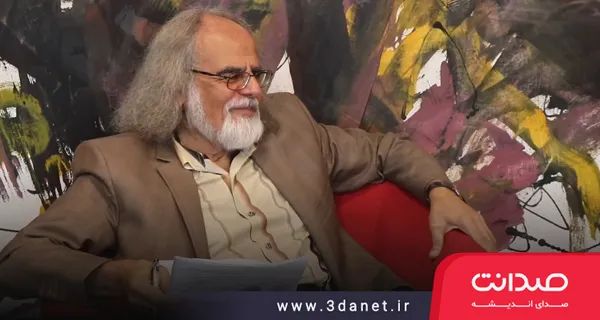
Mostafa Malekian's lecture “Static Identity, Dynamic Identity”
By distinguishing between shared existence, humanity, and personal identity, Mostafa Malekian pursues the discussion from an ethical and psychological perspective, drawing on the teachings of Islamic mystics: what must be preserved so that 'my self' remains inviolate.

Greetings to all the brothers and sisters present[1]
As mentioned, the discussion will be about identity in its individual sense ...
Fields of Knowledge that Have Discussed Identity
Before entering into the discussion of identity, I should mention that the issue of identity is one that can be raised and examined in various fields of human knowledge, and has indeed been raised and examined. Firstly, in the field of philosophy, the issue of identity can be raised in at least three important branches: one is in metaphysics, another in the philosophy of mind, and the third in moral philosophy. The discussion of identity has been raised in these three branches of philosophy. In the empirical human sciences, in psychology with greater emphasis, and in sociology and political science, the issue of identity can also be raised. In historical disciplines, the issue of identity, especially national-historical identity, has been raised. In the mystical and intuitive sciences, the issue of identity has also been raised. Therefore, we are dealing with a subject that can be viewed and discussed from various dimensions and aspects.
What I have undertaken in this session is identity from an ethical-psychological perspective, with an emphasis on the teachings of Islamic mystics. From the totality of what has survived from Islamic mystics, we can infer a viewpoint on identity, and this viewpoint of the mystics on identity has an ethical-psychological dimension, and it is this very ethical-psychological dimension that I will make the subject of discussion.
Three Questions That Can Be Raised About Any Human Being
Regarding any human being, three specific questions can be raised:
Why is this particular human being called an "existent"?
One question is: why is this particular human being called an "existent"? Why is it said that so-and-so "exists"?
Suppose you consider a specific person whom we name Hasan. If we point to this specific person named Hasan and say, "This exists, this is," here the question arises: by what authorization did I point to Hasan, consider him an existent, and say he exists? When you ask me this question, I must necessarily, in response to your question, point to a characteristic or characteristics that are common among all existents in the world, and this Hasan also possesses this characteristic or characteristics. That is, I can point to Hasan and say he exists because of this characteristic or characteristics that Hasan shares with all existents in the universe. This characteristic or characteristics exist in all existents of the universe but are not in non-existents and do not exist in that which is non-existent. What this characteristic or characteristics are is the subject of discussion in that part of philosophy we refer to as metaphysics.
In addition to this, one can point to Hasan and say that he is a "human being."
The Authorization for Predicating 'Human' of Individuals
Again, if you ask me by what authorization I point to Hasan and say he is a human being, I must, as a rule, point to a characteristic or characteristics that are common among all human beings, including Hasan, and that no other existent besides humans possesses. It is for this reason that I can say to Hasan, "He is a human being."
Naturally, Hasan shares a characteristic or characteristics with all other human beings, and this characteristic or characteristics are exclusive to humans and do not exist in non-humans. Even if one of these characteristics existed in non-humans, that would not be authorization and would not permit me to call Hasan a human being. Hasan's being human is due to the characteristic or characteristics common among all human beings.
But at the same time, in addition to being able to point to Hasan and say, "This is an existent," and in addition to being able to point to Hasan and say, "This is a human being," one can also point to Hasan and
The Unique Aspects of a Person (Personal Identity)
say a third thing, which is: "This is Hasan."
And the difference between this third one and the second and first is that this third one is the unique, singular, matchless, and peerless aspect of Hasan's existence. Here, Hasan will no longer share anything with any other being in the universe, neither in the past, nor in the present, nor in the future. By virtue of his existence, Hasan shares with all beings in the universe, past, present, and future; by virtue of his humanity, he also shares with all other human beings, present and future. But what is it that is exclusive to Hasan, in which Hasan shares with no other being, neither in the past, nor in the present, nor in the future?
"What is the matchless and peerless aspect of Hasan's being?" From this angle, we refer to it as personal identity, "Personal Identity," which is one of the very important issues in the philosophy of mind. Therefore, our subject today concerns this third element, namely personal identity. What constitutes the uniqueness of every human being? Why am I, me? And no being in the world has ever been me, nor is, nor will be; and why are you, you, and no being in the universe has ever been you, nor is, nor will be?
The issue of personal identity has been considered from numerous perspectives, but for now, I will address it from a specific viewpoint, and that is the issue that when the problem of personal identity is discussed from a "psychological-ethical" perspective, the question then transforms into this question:
"What is it within me that I must be concerned with preserving, protecting, and safeguarding?" "What is it within me that, if it is violated, the 'me-ness' of me is violated?" "What is it within me that I must preserve at any cost, such that if I do not preserve it, the 'me-ness' of me is lost, and I will no longer be me?"
From a psychological and ethical standpoint, the issue is referred and reduced to this. Of course, from other perspectives, the issue of identity is formulated differently, but from a psychological, ethical point of view, this is the issue.
In other words, "Where is it that you must feel danger?" "Where is it that you must feel you have been violated? That you have been transgressed against? That you have been trampled upon?"
It is here that we must pay attention to this point: what do we consider our very selves, in reality our humanity, our selfhood... not in its negative sense—that is, our identity—to be?
When we want to approach the interpretations of our own mystics regarding identity, we must also address a second preliminary point.
The Categories in Metaphysical Philosophy
In metaphysical philosophy, it has been said that if we want to claim existence for anything, it must be one of the categories I will mention:
It must either be, in the philosophers' terms, a "substance," like a cat, a nightingale;
Or, if it is not a substance, it must be a "property" of the properties of this substance: like the redness of this flower.
(This flower itself is a substance, but the redness of this flower is a property (Property) of the properties of this substance.)
Or the third thing it must be, if it is neither of these two, is a "relation."
Like the relation of teacher and student that exists between one person and another, or the distance and closeness that exists between you and me. Right now, I am spatially and physically close to a few people present in the session and distant from the rest. This is a relation and not a property, because if I do not consider you, I am neither distant from nor close to anyone else.
The difference between a relation and a property is that a property exists inherently within that entity, whereas a relation is when we compare that entity with another entity. If I do not consider another house, my house is neither far from nor close to any house; when we consider another house, then we say my house is far from or close to that house. A relation is always conceivable in connection with one entity and another entity.
The fourth category of things for which existence can be claimed is "collections."
Sets also exist. For example, we can speak of the set of Iranian chemists. This really exists. Or the set of children under three years old. The set of children under three who have not yet teethed. Sets, too, really exist, and a mode of existence can be conceived for them.
Another thing that is conceivable (exists) is a "state of affairs."
If you place a "that" at the beginning of a sentence, it becomes a state of affairs. If I say: "Hassan is sick," this is a declarative sentence. But if I say: "That Hassan is sick ..." this becomes a state of affairs. "That Hassan is sick" is one of the states of the universe. Of course, one way for us to arrive at a state of affairs is to place a "that" at the beginning of declarative sentences. The second way is to transform the predicate in a declarative sentence from an adjective into a noun, and then make that noun the governing noun and the subject the governed noun. Example: the same "Hassan is sick." Hassan is the subject, sick is the predicate adjective. We transform this adjective "sick" into a noun, becoming "sickness." Then we make this noun the governing noun and place Hassan, which is the subject, as the governed noun. It becomes: "the sickness of Hassan." "The sickness of Hassan" is a state of affairs. One of the affairs of the universe is the sickness of Hassan. Or that Hassan is sick.
But there is another category of existents, besides the types we mentioned, which we refer to as "processes."
Processes also exist, and apart from the previous types, existence can also be claimed for processes. For example, we say: the process of war between two countries. The process of water flowing from a stream to the sea. The process of the softening of someone's temperament. A process means affairs that are realized over time. They cannot be realized in a single instant. They must be realized within a temporal container of shorter or longer duration. Processes constitute a huge portion of the existents in the universe. One of the criticisms leveled against the Aristotelian system of categories is that processes had no place in it. That is, Aristotle does not mention processes in his works.
The Metaphysical Category of Human Personal Identity
I gave this introduction in order to return to my main discussion: what is my identity? Such that if it were exposed to danger, I should truly become agitated.
When we want to consider this identity, we see that human beings are of two kinds. Those who consider their identity a substance, which was the first type of existents I mentioned, and those who consider their identity a process, which was the last type of existents I mentioned. This is where we speak of dynamic and static identity.
The Category of the Human Being: Substance or Process?!
Those who consider themselves a substance, meaning a realized, formed, and unchanging entity, in fact believe in a static identity. And those who consider themselves a process, in fact believe in a dynamic identity for themselves. That is, a dynamic identity.
The Dynamism of Identity: The Message of the Mystics
Now, my claim is that the message of mysticism is that you should always consider your identity a dynamic identity, not a static one. One of the greatest calls of the mystics was that as long as human beings consider themselves a substance—that is, a fixed, stabilized, and established entity—they are in error. And not only are they in error epistemologically, but psychologically and morally they also fall into other errors as a result of that epistemological error.
The mystics said: consider your identity a dynamic identity, meaning see yourself as a process. And if you consider yourself a process, in addition to having achieved a correct understanding of yourself—meaning you have no epistemological problem—you will also not be afflicted by a series of psychological and moral problems.
The Meaning of Considering Personal Identity a Process
What does it mean to consider myself a process? It means that I do not bind myself to any of my possessions, any of my actions, or any of my desires. I do not suppose that one of my "desires," or one of my "possessions," or one of my "actions" is my very self, and tie my fate to it. If this tying of fates occurs, then I have considered myself as having a static identity. Let me give an example: suppose that 20 years ago I proposed a theory in a field of knowledge and was the originator of a theory or a thesis. This theory that I devised 20 years ago has naturally brought me friends and students; it has naturally brought me fame and a certain social standing.
I have given interviews about my theory, written articles, and delivered lectures centered around that theory. If, after 20 years, during which I gained everything because of that theory, you attack my theory and say that you can demonstrate that so-and-so's theory has one, two, or n epistemological flaws... Here, if I consider myself as having a static identity, I have tied my fate to that theory and perceive your attack on the theory as an attack on me, because I think one of my possessions was this theory. When someone attacks this theory, they have, in fact, attacked me. It is here that I show defensiveness, I become zealous, and perhaps I become angry and engage in a series of activities to repel the attack directed at me, because I feel that an attack on my theory is an attack on my very self.
To see how much difference there is, I give an example: if this attack you made on my theory had been made on my clothes, if you had said, "What an ugly, bad, and vulgar outfit! What poorly made, poor quality fabric and cloth!" Naturally, I would hardly feel that you had attacked me. I would immediately look at my clothes, and if I saw that you were right, I would change my clothes and put on something else. Here, I would not try to defend myself. I would not become zealous. Why? Because I do not equate myself with my suit. I do not equate myself with my clothes. That is, I believe that I am someone, and my clothes are something other than me. Therefore, an attack on my clothes is not an attack on me. It is an attack on something else that is external to me. But why did I not treat my theory the same way, and why did I become zealous about my theory? Why did I not say, just as I would if my suit had a flaw, if my theory has a flaw, I should pay attention; if these flaws and defects truly exist, I should say I will treat this theory like my clothes, discard it, and say from now on, despite the fact that I gained all my fame, popularity, social standing, students, and perhaps my income because of this theory, I will discard the theory just like my flawed clothes? But I do not do this with my theory.
This means that I considered my theory a fixed and constant part of my identity and perceive an attack on it as an attack on me. The mystics said: the way that person treats his theory, you should not treat your own theories that way, nor anything else of your possessions. Your possessions and actions are other than you. Therefore, consider yourself a process; every action this process has taken was an action of its past. Now it can take another action, and whatever it possessed in the past were possessions of its past, and it can now have another possession, and whatever desire it had was a desire of its past, and it can now change its desire. It should not say, "If I change my desire, my identity is lost."
If I change my possession, my identity is lost. Or if I change my action, my identity is lost.
Spiritual Wayfaring—the Message of Mysticism—means seeing the self as a process
It is for this reason that the entire message of mysticism is "spiritual wayfaring" (sayr-o-suluk). Suluk means process, seeing yourself as a process. All mysticisms share a very, very important component: they choose a name for the human being from the category of process, not a name from the category of substance.
Humans are given the attributes of seeker, wayfarer, and traveler, which indicate a process and a progression, and this means that if you now have a desire, do not suppose that if this desire of yours disappears, you have perished. Any characteristic that you consider to be yourself is a mistake:
In whatever form you come, you stand.
Whatever image you form of your possessions and say, "This is my possession, therefore I am." Or "This is my action, therefore I am." Or "This is my desire, therefore I am."
Seeing oneself as a process is a requisite for human health and realism
You have fixed and halted yourself, but the human being who, from the perspective of the mystics, is truly human—epistemologically realistic and psychologically and ethically healthy (these three are important: to be epistemologically realistic, and ethically and psychologically healthy, the requirement is as I have stated)—the requirement is that you see yourself as a process, and a process only loses its identity when it becomes static. If you want to destroy a waterfall, you only need to stop its movement. If you want to destroy a wave, you only need to stop its movement. If you pay attention, if I want to destroy this glass, I must create a movement in the glass to destroy it. If I do not create a movement, this glass remains in its state of being a glass, but when I create a movement, meaning when I apply pressure, this glass is destroyed. Substances are like this; they are destroyed by movement, but processes are destroyed by stillness. That is, a waterfall or a fountain from which water gushes, if you stop its movement, it is destroyed. To destroy a waterfall, you must stop its movement. Processes are destroyed by creating stillness, but substances are destroyed by creating movement.
The mystics asked us not to be like this; to consider ourselves a movement, and wherever we stop, to know that it is not us. This is very important. In whatever form you come, you stand. In whatever form you stand, saying "I am this and that"... that is not you. You are no longer that. You are not a fixed entity; you are a fluid entity. Fluidity is your existence. Movement is your existence, not stillness.
For this to come about, our mystics made recommendations. They said: In order to understand that you are a process and not a substance, and so that this processual nature of yourself is not taken from you, you must pay attention to certain matters; if attention is paid to these matters, your processual nature is preserved. All these matters share a common aspect, which is that they aim to prevent stillness from arising within us. They want our dynamism to remain constant, like water flowing down a waterfall. This is what Iqbal Lahori meant when he said, "I am if I go; if I go not, I am not"—he was precisely expressing the mystics' view that I am a wave; if I do not go, I am not. A wave exists only as long as it moves. Unlike a stone by the sea, which is a stone as long as it does not move. As soon as it undergoes movement, its stoneness is more or less compromised. The mystics made recommendations; I do not have the time to present all of them to you, but upon careful reflection, I feel that three of these recommendations are among the most important. However, these three, in my opinion, have a kind of logical precedence and succession relative to one another. That is, we can say the first recommendation is the mother of the second, and the second recommendation is the mother of the third.
Three Important Recommendations of the Mystics
1) Separating oneself from one's beliefs
The first recommendation the mystics made was to separate your beliefs from yourself.
Do not link yourself with the beliefs you hold. These beliefs make you static, they bring you to a standstill. Let me explain how my belief, if it becomes intertwined with my destiny, makes me static.
An Example from the Art of Translation
Those familiar with the art of translation know that there is a term in translation studies called the spell of the first meaning. This spell of the first meaning is entirely applicable to what I am now trying to express. It is said that when any person learns a language other than their mother tongue, the first time they encounter a word in that language, they come across one meaning of that word. For example, suppose your mother tongue is not English. When you start learning English, the first time you learn the word "well" in English as meaning "good," because the first sentence they teach in English is "I am very well." You learn "well" in English as meaning "good"; this is the first meaning you learn for the word "well." But there is almost no word in any language that has only one meaning. Of course, languages differ in this respect, but nevertheless, it is almost the case that every word in every language has more than one meaning. When I encounter a word that has more than one meaning—two, three, or n meanings—but the first time I encountered this word I learned only one of its meanings, those who work in translation say that we have a propensity to remain spellbound by this first meaning forever. That is, we are perpetually predisposed, whenever we come across "well" in English, to assume it means "good" and not know that it has other meanings as well.
We are always spellbound by the first meaning. Therefore, if you are a translator, you will see that whenever you are translating and encounter any word, the first meaning you came across in your initial encounter with that word springs to mind, and many of the faults of translators stem from this: they think that word has only one meaning. It is true that chronologically I first encountered this meaning, but I must know that a second, third, fourth meaning, and so on, also exist. Its other meaning is not a meaning that can be confused with the first meaning.
"Well," of course, also means a water well; a well is not confused with "good." But the difference between the second meaning and the first meaning of a word is not always this great. Suppose that in English, we are always learning words in their first meaning and adopting them, oblivious to the fact that these words have many other meanings. As long as you are spellbound by the first meaning, it can almost be said that you are not learning that language. This is called the spell of the first meaning.
This very phenomenon that in translation is called being spellbound by the first meaning also exists in the psychology of belief. A person is spellbound by their first belief about the world. Regarding any phenomenon, the first belief that was given to you—you are always under its spell, and it is as if you no longer wish to relinquish this belief and arrive at a second, third, or nth belief about this phenomenon. And incidentally, we learn our first beliefs at an age when we lack the power of discernment, the power of reasoning, the power of independent thought. These beliefs are beliefs that are inculcated in us about each and every phenomenon at a time when we are entirely imitative. We are completely imitative. In addition to being imitative, we acquire our first beliefs about the universe at a time when we are not only imitative but also suggestible. We are also susceptible to indoctrination, and all of this means that we hold beliefs about each and every phenomenon that are our very first beliefs. But just as in translation the spell of the first meaning stays with us to the end, it is quite possible that the first belief we form about any phenomenon stays with us to the end.
Oblivious to the fact that, just as that word had more than one meaning—even if you only learned one of its meanings—regarding this phenomenon, too, there is more than one belief. And you still want to keep yourself attached to the first belief. When someone wants to remain steadfast in their first belief, then
How Beliefs Place One in Bondage
its meaning is that they want a static identity; this means that person A wants to consider x as their own view, oblivious to the fact that it can be said that my first belief about phenomenon x is B. Or a third belief
Let us go under the heading x to see if I do not arrive at another belief that is x but is about belief A and is x C. Those who want to have a dynamic identity must always know that while it is currently B, arriving is just like this. x be B and then also that it is not x A and x but they must go and see that perhaps it is C, and this means seeing one's own process. Whenever a human being, with a belief x, is not B and x I say let me go and see, perhaps they have sworn a pact of brotherhood. This has turned their identity into a substance.
If I were to elaborate on this subject, I would stray from the whole discussion, otherwise, how beliefs put us in bondage has various mechanisms, meaning we can become bound by our own beliefs through various mechanisms. It is here that our mystics constantly tell us not to stand by this belief of yours. The last paragraph of Ibn Arabi's Fusus al-Hikam (Ibn Arabi's Fusus al-Hikam, in Ibn Arabi's own view, contains everything he wanted to say in a lifetime and said in 600 books, brought together in one book, the Fusus al-Hikam.) And then in its last paragraph, he says the ultimate thing I wanted to say in my book is that you should know that regarding any matter you have a belief about, never confuse your belief about that matter with the matter itself. Your belief about a thing is not the thing itself, so always know that your belief about a thing may be unsound, incorrect, and mistaken—in the sense that you have mistaken your belief for the thing itself. Go and see, perhaps there is a belief more correspondent to reality about that thing.
Therefore, I, Ibn Arabi, tell you: do not let your creed become your 'aqila (knot). 'Aqila means knot. Do not let your creeds become creeds and knots that tie you down here. This is what I want to tell you. Then, regarding God, he also says: even the creed you hold about God, know that this is not God. It is your creed about God. And there can be other creeds about God. From this attachment of ours to our beliefs, a second point also emerges, and that is being in bondage to the past. This case also arises from the first point.
2) Do not be in bondage to your past
The second point is that the mystics told us: "Do not be in bondage to your past."
Whatever you have desired in the past. Whatever you have done in the past. Whatever you have had in the past—and these possessions themselves are of different categories, and these possessions do not only mean material possessions, the relationships you have had, the connections you have had—these are in danger of stopping you and preventing you from maintaining your dynamism and making you always want to remain in your past. It was from this perspective that the ancients advised others not only to refrain from telling others what our past was like, but also to try to distance your past from your own belief. Let me give you a simple example.
Suppose you have dealt with a professor for ten or twenty years. Because of this long-standing connection you have had with them, you know them completely, so you can tell your friend or another student in your class that if you want a grade from this professor, this is the way, or if you want to make them angry, say this. If you want to win their heart, this is the way.
Why can you dominate these teachers—knowing that if you wanted to, you could anger them, you know what to do, or if you wanted to win their heart, you know what to do? Because your knowledge of them is extensive. The more our knowledge of others increases, the more their domination over us increases. But suppose a teacher you are seeing for the first time in your life now enters the classroom. How can you anger this person? How can you win their heart—one does not know? How can you tire them out—one does not know? How can you make them abandon the lesson—one does not know? The less our knowledge of others, the less our domination over them becomes, and the more knowledge you give people about your past, the more their domination over you increases. They understand better where your strengths and weaknesses lie. Emotionally, where is your threshold of stimulation? In terms of beliefs, from which beliefs can you not deviate? But interestingly, from the mystics' perspective, the issue is not only that I should try to prevent you from knowing my past because you would seize me; I must try to prevent my past from seizing me. And this is the point I wish to convey: the more a person falls into the grip of the past, the more fixed they become. That someone says, 'I have been saying A is B for ten years; how can I say A is not B?' means that those ten years of saying A is B have also taken hold of my present and future. It no longer allows me to now say A is not B. One of the great Christian mystics, who is also German, named Jakob Böhme, has a statement that I think is the pinnacle of global mysticism. He says:
The distance between heaven and hell is that (in fact, when he says heaven and hell, he means those who are people of felicity and those who are people of wretchedness) the people of heaven are those who want to be right, and the people of hell are those who want to have been right. That is, suppose I enter into a discussion with you in this session. If my entire effort in the discussion, debate, and intellectual dispute I have with you is this: 'Malekian, do something so that in this encounter you arrive at the truth. Let the truth come to you.' In that case, morally and psychologically, I am a healthy person; in Jakob Böhme's terms, I am a person of heaven. But if I say to myself, 'Malekian, do something so that what you said yesterday—that A is B—remains A is B; do not let them snatch yesterday from your grip,' that is, preserve having been right in the past. If I tell you, in this discussion I am entering with you, whatever I have said in the past, even if I said it just a moment ago, places me under no constraint whatsoever; I want to be right right now. This means that even if you destroy all my past beliefs, I accept it. But if I say, 'No, I want the rightness of what I said yesterday, or last year, or wrote in a certain book, not to slip from my hands,' and then all my arguing is over the rightness of my past, not my present rightness, this means that what I said in the past and came to believe has taken hold of my present and says, 'Go no further than this. From here, I must have no more movement and must remain as I am.' Those who, in Böhme's words, are people of heaven, always want to be right, not to have been right; therefore, they do not allow their past to take them into its service. But if you pay attention, we ordinary human beings, from the first day we begin life, the first day of our life reduces the billions of paths we could take on the second day by half; the second day reduces the millions of paths we could take on the third day by half. In the same way, gradually, by the time we reach an age like mine, 30 or 35, we see that each day we have no more than one path ahead for the next day. Why? Because the accumulation of what we have done, had, and wanted in the past has constantly narrowed the ocean of our possibilities.
We who, on the first day, were born with an ocean of possibilities, to use Ibn Arabi's expression, now see that our tomorrow is like the day after tomorrow, and the day after tomorrow is like the day after that. Why? Because each day we have narrowed a part of our future possibilities, all because we do not want to lose our past. And when the past refuses to be lost, a person falls into fixity and stability, and their process of becoming is lost. But the mystics did not allow this state to arise. The mystics would say of the belief they held yesterday: this is my belief of yesterday. Today, let me see what can be said, and the belief I have now, I may change tomorrow. This is not only in the area of my beliefs; it is in the area of all beliefs, possessions, and actions. One of our possessions is our beliefs.
We have other possessions as well. Moreover, besides possessions, we have other actions, and besides possessions and actions, we have other desires.
3) Do not be bound by the judgments of others about you
But the third point that the mystics recommended was that a third thing also throws you out of the process of becoming, and that is being bound by the judgments of others about yourself.
If I am concerned about what your judgments of me are and do not want your judgment of me to be negated, and if I want your judgment of me not to be negated, this means that the reins of my being have fallen into your hands. If until yesterday I wore a certain garment, you expect, you anticipate and have the expectation, that tomorrow I will wear the same garment, and if I want to fulfill your expectation, that means I must dress tomorrow as I did today. Because I do not want your judgment of me to become negative.
All those who live in the judgments of others fall, day by day, more into stability and unchangingness. Why? Because what others have seen of me in the past:
1- Has created presuppositions about me in their minds.
2- Has created expectations and anticipations about me.
3- Has created descriptions about me, which I want—the descriptions they have made of me, and the presuppositions, arrangements, and expectations they have had of me—not to disappear but to remain as they are. Because I do not want others' view of me to be negated; if the description others have had of me, or their expectation and anticipation, changes, then their judgment of me becomes negative.
So that the presuppositions others have about me, the expectations, anticipations, and descriptions they have of me do not change, so that their judgment of me does not become negative, I am in fact behaving as I did in the past. In reality, it is as if, in the unspoken language of every human being, one says to others: you tell me how you want me to be, so that I can be that. And this means that I want to remain in that same stability. Whenever someone does not want others' view of them to become negative, they must consent to stability—as another expression has put it, I will state it—just as social psychology has said, in fact, five selves are conceivable for us, and we always, instead of living in our first and second selves, want to live in our third, fourth, or fifth self.
The Five Selves of the Human Being
I have five selves:
One is "the self as I really am," in the real world. Which, in a sense, it can be said that only God is aware of this self.
I have a second self, and that is "the self as I myself imagine it." What conceptions do I have of myself? This becomes my second self. What characteristics do I attribute to myself, and what characteristics do I not attribute? What connections do I attribute? What connections do I not attribute? These collectively become my second self. The self as I myself suppose I have.
There is a third self, and that is "the self as you suppose it to be." What conceptions do you have of me? This becomes my third self. The conceptions you have of me.
My fourth self is "the self as I imagine you conceive of me."
And there is a fifth self, which is "the self as you imagine I conceive of myself."
These are five selves that reflect upon one another. In our lives, we always live, contrary to what the mystics say, in our third, fourth, and fifth selves. That is, I am always asking myself: what image do others have of me? Or, what image do others have of the image I have of myself? What image do I have of the image others have of myself?
Mystics recommend living in the fifth self
I am always living in my third, fourth, and fifth selves. The mystics said we should only live in our first and second selves: living in the first and second self means living in the first and second self in order to bring the second self closer to the first self day by day, that is, to make the image I have of myself closer to my self, to align it more with my self. We live in the third, fourth, and fifth selves. Person x lives in what others imagine of x, lives in the third, fourth, and fifth selves, that is, knows of himself x, in what he himself has of the image others have of him x they have. This means that we always want to preserve and maintain the opinion of others toward ourselves. But the mystics said you should not do this. The mystics always invited one to an authentic life, a life that accords with my own understanding and discernment. If it pleases you, come. If it does not please them, do not come.
Being bound to others is the cause of imitation and following another
To this they invited us. The mystics condemned in every way being bound to others, the idea that the image others have of me must be preserved, and they knew that when we live according to this image others have of us, that is when we fall into imitation of others and conformity with the crowd. What is the reason for this imitation of others or the crowd? Because I do not want to be separated from others.
La tastawhishu fi al-tariq al-huda li-qillati ahlihi
Ali ibn Abi Talib has a saying in Nahj al-Balagha where he states: "La tastawhishu fi al-tariq al-huda li-qillati ahlihi." When you walk on the path of guidance, do not be seized by loneliness (wahsha) because you see few people on this path. Wahsha in Arabic does not refer to just any fear; in Arabic, different types of fear are lexically distinguished from one another. Wahsha is a specific type of fear, namely the fear resulting from the feeling of loneliness. If you are at home and feel loneliness and fear overtakes you, this fear is called wahsha. This wahsha is different from another fear called khawf, and different from another fear called khashya.
Wahsha is the fear arising from the feeling of loneliness. Ali ibn Abi Talib says: La tastawhishu fi al-tariq al-huda li-qillati ahlihi. When you see that there is no one on the path you are walking, do not be seized by wahsha; do not let the fear born of loneliness take hold of you. Because they know that we always want to conform to the crowd, and we are terrified by walking a path that others do not walk, and by swimming against the current, to use a modern expression. And this desire to be like others causes all of us humans to take on each other's color and hue, and this was the greatest thing against which the mystics warned.
I have said many times, this example is of course an eloquent one, although it is not an example given by the mystics. If you buy five types of fruit, as long as you bring them into the house, each has only its own scent and imparts only its own sensation to you. But when you put them in the refrigerator, after ten days when you take them out, you see that each one has a combination of all the scents. That is, the orange gives off the scent of orange plus watermelon plus apple. This is, in fact, each one has lost its own scent to a great extent in order to take on the scents of others. Psychologically, this uniformity also occurs in us humans. Therefore, all have become of one scent. This is mediocrity. That is, conformity with the crowd is so that I may forget a huge part of my own existence in order to become of your color, of your scent, and to take on your very hue and color.
The mystics used to say: we should not do this at all. The mystics said: each of you should walk your own path. When they said, "The paths to God are as numerous as the number of created beings," it means that you do not necessarily have to tread in the footsteps of others; you have your own path toward God, and another has their own path toward God. Each of you walk your own path. That each of you walks your own path means that I truly remain in my own dynamism. I must constantly believe that I go forth, and nothing else, and no other beliefs relative to me, should enclose me within itself.
These 3 recommendations are the mother of the mystics' recommendations
If I were to provide evidence for these matters, as I mentioned at the beginning of my remarks, these three recommendations are the most important recommendations of the mystics:
Do not be bound by your own beliefs.
Do not be bound by your own past.
Do not be bound by the judgments of others about you.
What the mystics say most often is more than these three, but truly, the mother of them all is these three. In the very order I presented. The first begets the second, and the second begets the third. That is, they have a kind of logical order relative to one another. This gives us a fluid identity, and it can be said that acquiring a fluid identity, although it is an ethical-psychological discussion, also leaves its effects on other realms of human life. In another expression, the greatest calamities and misfortunes that occur in the world of politics, and also occur in the world of social relations, stem from this as well. It arises from every human being considering themselves a fixed entity and saying this entity must not have its composition altered and must remain exactly as it was before. If we were to cite evidence for these recommendations from Islamic mysticism, it seems to me the discussion would become very lengthy, which my memory cannot support. But the impression and inference I draw from the entire message of our own mystics and the entire message of the world's mystics is these three messages. Of course, the evidence for them is in my mind to a considerable extent, but a great part of it has also left my memory.
I hope that if this gathering's notion of fluid identity is believed by friends—that is, accepting that, firstly, our mystics have said such a thing, and secondly, that they were right in saying such a thing—we do not forget its commitment in our individual and social lives[2].
.
.
O God, make the end of our work such / That You are pleased, and we are saved
[1] . This lecture was delivered at the first session of the series of meetings on Iranian Identity, organized by the Center for Persian Language and Literature Research at Tarbiat Modares University in Tehran.
[2] .The question and answer session is available at the end of the audio file.
.
.
PDF file of the transcribed lecture "Static Identity, Dynamic Identity"
.
.
Lecture Title: Static Identity, Dynamic Identity
Mostafa Malekian / January 30, 2006 / Tarbiat Modares University
.
.





Discussion1 comments
سلام. فایل صوتی این سخنرانی رو نمیذارید؟