Political Science
Mehrnameh Roundtable on the Political Sociology of Populism
Populism is the twin of electoral democracies, and understanding its emerging forms is essential for strengthening democracy. The experiences of Iran and the United States have led to the distinction between the people-oriented and the demagogue; a path for freeing politics from its trap has been charted.
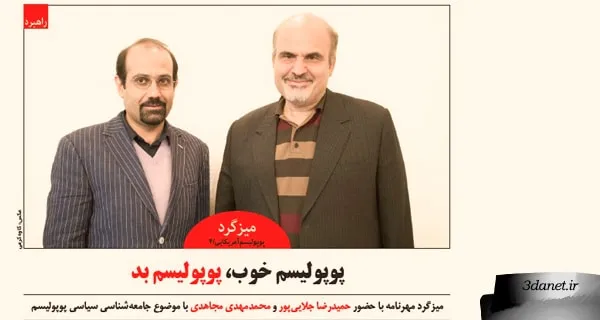
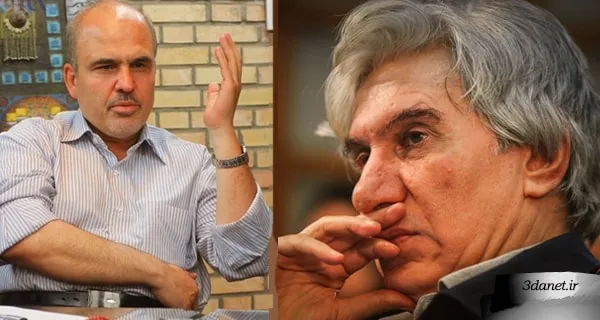
Explanatory remarks by Mohammad Mehdi Mojahedi regarding this roundtable: Attached to this note is a version of the edited text of a roundtable with the participation of myself and Dr. Hamidreza Jalaeipour, hosted by Mr. Javad Rouh, in which the examination of the meaning and basis of populism and its typology, along with a comparative perspective on populism in Iran and America, was the subject of discussion. This text was finally published in January 2017 in the fiftieth issue of Mehrnameh magazine.
Democracies, let alone quasi-democracies, have never been immune to the blight of populism. In other words, populism is the twin of electoral and majoritarian democracies, just as error is the twin of knowledge. As democracies have grown and become more complex, their blights, including populism, have also grown and become more complex. For this reason, for the survival and advancement of democracy, we must constantly update our understanding of populism.
Democracy is like knowledge; both improve and advance through the discovery and elimination of their errors. Hence, understanding and recognizing the more complex forms and newly emerging types of populism has for some time now returned to the list of the most important topics in democratic studies and political science. The rise to power of Donald Trump in America and the emergence of populist electoral campaigns in recent years in Europe mark a turning point in the renewed and serious attention to the problem of populism's assault on the hard structure of power in democracies.
For us Iranians, too, populist politics in the administration of the country is a not-so-distant experience, and in the electoral campaigns of recent periods, a living and present one.
The roundtable that follows was held after last year's American election, months before the recent electoral competitions in Iran for the election of the twelfth president heated up, yet the main subject of this roundtable's discussions has a direct link to the heavily populist theme of the recent election. Therefore, rereading this roundtable now, in a new text and context, may not be without relevance or benefit.
In the course of this roundtable's discussions, two types of populism in particular are distinguished from one another, which in my recent writings and articles I have called people-oriented populism and demagogic populism; two types of populism that competed with each other in the twelfth election, and fortunately this time, unlike the ninth and tenth terms, and contrary to what happened last year in America, but in harmony with the defeat of demagogic populism in the Netherlands and France, in Iran people-orientation prevailed over demagoguery.
Populism in all its varieties is a people-inciting politics that, beyond conventional and customary political categorizations, structures, and identity formations, directly agitates the people and deforms society, intensifying the grounds for political restlessness and depriving society of the possibility of discovering and eliminating errors, learning from current and past experiences, and the opportunity to elevate the level of political reasoning.
The future path of political society and civil society in Iran is a difficult path, one of the most important goals of which can be the liberation of the step of politics from the trap of any kind of populism.
.
.
PDF file of the Mehrnameh roundtable on the political sociology of populism (in Mehrnameh)
.
.
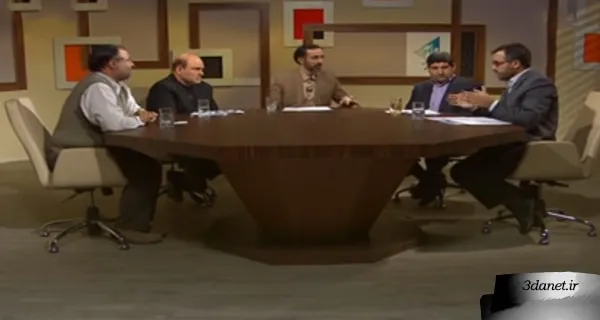
Mehrnameh Roundtable with the Participation of Hamidreza Jalaeipour and Mohammad Mehdi Mojahedi on the Political Sociology of Populism
Mehrnameh Monthly Magazine, Issue 50
.
.

Discussion0 comments
No comments yet; let yours be the first voice.