Political Science
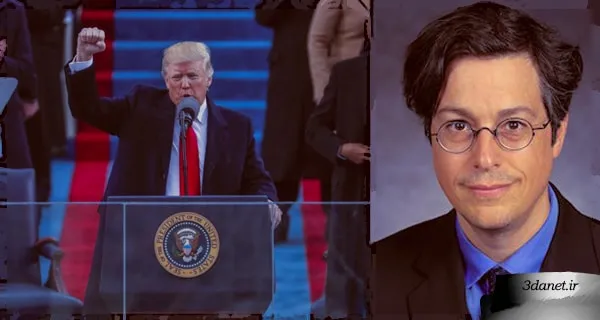
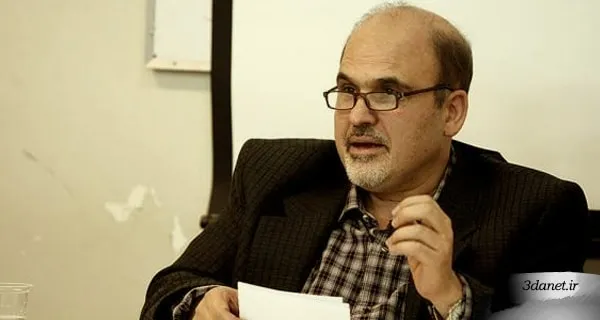
Hamidreza Jalaeipour Responds to Abazari's Analysis of Trump: You're Pointing in the Wrong Direction
Hamidreza Jalaeipour considers Yousef Abazari's analysis of neoliberalism and the rise of Trump to be exaggerated and unsubstantiated. He views Iran's economy not as neoliberal but as state-controlled and rentier, and calls the finger-pointing at the reformists a misdirection.
In my opinion, the discussion by my dear and learned friend, Dr. Yousef Abazari, in his recent speech on neoliberalism in America and Iran is exaggerated, unsubstantiated, and presents a caricatured picture of these two societies. If Dr. Abazari had not previously explicitly stated that he is an advocate of empirical sociology, I would not have critiqued his remarks. In Abazari's view, it is as if the capitalist economy is the same as the liberal economy, and the liberal economy is the same as the neoliberal economy. These three categories have taken different forms in different temporal and spatial contexts, and as it happens, the American economy is one of the more damaged examples, to which some of his criticisms apply. In his speech, without fully clarifying what he means by neoliberalism and without providing a non-caricatured picture of its achievements and costs, Abazari uses it as a kind of label and general insult in criticizing all economic policies in Iran and America over a four-decade period.
Policies of reducing state ownership (neoliberalism) and state intervention and ownership cannot be praised or condemned in general and without regard to empirical evidence and data. In both America and Iran, over the past decades, both types of policies have had major instances. It would have been better if he had shown in which specific area neoliberal policies were mistaken and what better alternative existed.
Abazari compares Iran with America, while the American economy (one-quarter of the world economy) is far more neoliberal than Iran's, and with four times Iran's population, it has half the number of government employees. In Iran, the government sets the price of bread, yogurt, and automobiles, and universal insurance and a large part of the economy and university education are state-run and free, whereas in America, even its oil wells, mines, and major media are in the hands of the private sector.
In Abazari's view, the neoliberal economy is both the main cause of America's misery and the emergence of the fascist Trump, and the main factor behind Iran's misery (and its carriers are Rouhani, Zanjani, Masoud Nili, and the Niavaran school). While in America, other important factors (including the Democratic campaign's management errors in this election) played a role in Trump's victory, and in Iran, the policies of the circle of economists from Sharif University and the Niavaran Institute have mostly helped reduce inflation and strengthen Iran's development (the benefits of which have reached all economic deciles), and the more effective factors that have led to greater pressure on Iran's economy and the lower classes have had nothing to do with the policies of this circle. One can critique the ideology of market criticism, be a critic of some policies of reducing state ownership in certain areas like university education (I myself am among these critics), but have the fairness not to reduce all economic policies to neoliberal policies and all neoliberal policies to destructive policies, and not to ignore the significant achievements of this circle in expanding welfare and strengthening Iran's economy.
In Abazari's view, the proponents of neoliberal policies possess such legendary power that they can capture the governments of Mousavi, Hashemi, Khatami, Ahmadinejad, and Rouhani. Without considering that the data shows all the policies of the Mousavi government and a large part of the policies of the Khatami and Ahmadinejad governments were anti-neoliberal. In a description and analysis that is "loose and baggy" and "broad and flat" and inconsistent with realities, Abazari considers both the reformist and moderate governments and the gathering of people at the tomb of Cyrus (which he calls fascist) as signs of the dominance of neoliberal policies over Iran's economy.
Abazari does not show, relying on empirical evidence, how Iran's state-controlled, rentier, crony-capitalist economy is a neoliberal economy, and how the expansion of the inefficient Iranian state's tenure can prevent fascism or economic pressure on the disadvantaged. Sociology, as an empirical (and critical) science, does not possess a crystal ball to explain both Trump's defeat and the cause of poverty in Iran with a single analytical term like "neoliberalism." If Abazari considers the reformist and moderate current in Iran to be the generator of economic neoliberalism in all fields, the increaser of poverty, and the strengthener of fascism, he must provide convincing evidence and reasons. If the US Democratic Party had not erred and, for instance, had supported Sanders (the representative of socialism in America), Joe Biden, or Elizabeth Warren instead of Hillary, and they had become president of the United States, what would Abazari have wanted to say? Even Noam Chomsky, whose insightful, empirically documented critiques of American society and government Abazari rightly references, does not consider all the policies of the Clinton and Obama administrations to be neoliberal policies, nor all neoliberal policies to be the cause of Trump's emergence.
If we want to speak about Iran's economy relying on credible evidence and data, we must first clarify what type "Iran's political economy" (or, as the leftists say, this specific capitalist economy of Iran) is and why. Calling Iran's economy neoliberal is as strange as someone considering Iran's political structure a full-fledged democracy. Iran's economy is a hybrid, intensely state-controlled, oil-based, and rentier economy. In this economy, key resources are distributed neither based on the "economic logic of economists" nor based on "market logic." If the market ruled in this country, we would sit and treat its harms (for example, with a fairer tax system and intelligent, efficient government intervention in the areas of education, health, and social security). Iran's economy suffers both the scourge of underdevelopment and the lack of a strong private sector, and the barrage of insults of being neoliberal from professors like Dr. Abazari. The economy of a country where the dignified work and life of the labor force is very costly is not even mercantilist, let alone neoliberal.
Neither Iran's economy, nor Iranian society, nor Iran's development, nor Iran's dominant discourse (whatever it may be) are neoliberal. The only thing that can be said to be neoliberal is one of the discursive layers (and a weak one at that) among policymakers. Incidentally, the Nili circle and the Sharif School of Economics are not neoliberal either; they are connected to the mainstream of economic science (which is bound to the critical analysis of economic variables). Interestingly, this circle did not even have unrivaled dominance in the Rouhani and Hashemi administrations, and even today they have tensions with parts of the government. Over the past four decades, these economists have mostly been critics of the ruling policies, and the government only turned to the likes of Massoud Nili when it encountered fundamental problems (for example, 45 percent inflation) and only to the extent necessary.
Abazari is pointing in the wrong direction. Every expert on Iran's economy knows where the main root of the current economic afflictions lies. But he has found no wall shorter than the Rouhani administration, the reformists, and the moderates, and makes no mention of the main agents of slow development in Iran. He does not notice that, incidentally, the most deep-rooted leftist and justice-seeking currents within Iran's ruling establishment are precisely these reformists. He speaks as if the "brothers who are better than us" and the alternatives to Rouhani can save the country from under the specter of this cancer of neoliberalism. He makes not the slightest reference to the forces that have a more serious role in the distribution of the country's resources (and whose policies led to systematic corruption, Babak Zanjani, sanctions, inflation, negative economic growth, and higher unemployment), and instead says that Khatami was the bearer of neoliberalism and that the cash-subsidy reform was not Ahmadinejad's doing either. It is as if Abazari does not see that for several decades, six channels have been busy hurling insults at economic science, the West, development, and neoliberalism, and we have no need for criticism without evidence and proof.
This style of speaking by Abazari (as a critical leftist professor) also diverges from the approach of the great figures of the critical tradition (such as Habermas). In the critical tradition, instead of giving wrong directions, they actually strive to identify and critique the principal roots of policies and dominant forces, both hidden and overt. But Abazari speaks as if the powerless Niavaran circle and an honorable professor with a research program in economics like Nili are the root of the rise of fascism and the spread of poverty in Iran.
But Iranian society is not under the hidden domination of neoliberalism and the Niavaran school. Fundamentally, hidden domination in Iran is more "political" than economic. Over the past eight decades, it is "politics" that has distributed resources, not figures like Ebtehaj in the Pahlavi government's Plan and Budget Organization and Masoud Nili in the Islamic Republic. A domination that even millions of people's votes (unlike in America) cannot easily bring about significant changes in, and indeed, the weakening of figures like Rouhani and Khatami leads to the increase of this domination and poverty. Perhaps one could loosely say that neoliberal policies are increasingly dominant in Saudi Arabia and Turkey, but what evidence do we have for the dominance of this type of economy in Iran?
An unintended consequence of Abazari's "loose and broad" analysis is striking at the moderate, more sensible, and reform-seeking current in Iran from the war era to the present day. Using the pejorative term neoliberalism to describe Iran's developmentalists, or labeling participants in Pashaei's funeral or at the tomb of Cyrus as fascists, does not seem very constructive or liberating. As a critical leftist thinker, during the era of affection, he had the least criticism for the Ahmadinejad current and its supporters, and today he calls a government that seeks to lift sanctions, uphold the JCPOA, and attract capital for job creation for the lower classes a facilitator of fascism.
This manner of speaking by Professor Abazari in contemporary Iran, although seemingly "ultra-critical" and appealing, does not unsettle the country's hidden political hegemony. It is having one's cake and eating it too.
Incidentally, if we were to speak like Abazari himself, his words could actually reinforce "political authoritarianism" itself and act as a "weakening force for the reform-seeking and developmentalist" elements of society, because in Iran's discontented society, he radically gives wrong directions. This kind of talk, in a situation where we know how detrimental the alternative to the moderates and reformists is for the people, causing slow development and increased poverty, is anything but responsible critical enlightenment.
.
.
Jalaeipour's Response to Abazari's Analysis of Trump: You're Pointing in the Wrong Direction
Author: Hamidreza Jalaeipour
.
.
Related Content:
Lecture by Dr. Yousef Abazari titled "Rationality and Moderation in the Contemporary World"
.
.

Discussion2 comments
(( اقتصاد ایران اقتصادی ترکیبی و به شدت حکومتی، نفتی و رانتی است . در این اقتصاد منابع کلیدی نه بر اساس « منطق اقتصادی اقتصاددانان » توزیع میشود و نه بر اساس « منطق بازار » . )) ؛ و افزودن نظریه های میزس و هایک به این معجون طی بیست سی سال گذشته ، وضعی پدید آورده که به قول ملکیان بزرگترین منکر جامعه ماست : « بزرگ ترین منکر اجتماعی در جامعه ما این است که یک انسان نتواند با هشت ساعت کارِ کاملاً شریف زندگیِ خود و خانواده اش را تمشیت و مدیریت کند ؛ یعنی زندگی ای که نتواند همه نیازهایِ خود و خانواده اش را برآورده کند . » نیروی کاری که با 200 هزار تومان در آزمایشگاه آقایان مدرن « پزشک » یا با مزد کمتر در لایه ضخیم خرده فروشی شهری ... کار می کند ، توان خرید شان چندان کاهش یافته که محصولات کارفرمایانی که انواع مالیات غیررسمی را راحت می پردازند اما مزد را بزرگترین هزینه در سبد هزینه های خود جلوه می دهند ، روی دست شان ـ یعنی در انبارها و فروشگاه ها ـ مانده و به فروش نمی رود . تزریق پول به مصرف کننده در قالب وام خرید و ... هم مشکل را رفع نمی کند . از کارفرمایان خرده اندیش و کوته نظر توقع نمی رود جور دیگری عمل کنند اما مدعیان علم اقتصاد چرا به چرخه تولید ـ مصرف و الزامات آن بی توجهند ؟! آقای جلایی پور از جنبه های مختلف درست می گوید اما به گمانم بهتر است به این نکته مهم توجه کند که شکاف درآمدی نقش مهمی در گسست در اصلاحات داشته است . سرآمدان جبهه مشارکت دغدغه های توده میلیونی فرودستان حامی اصلاحات را ندیدند و حتا سازمان مجاهدین انقلاب در بازنویسی مواضع اقتصادی ، متون « لیبرال » را کپی کرد . در این شرایط بود که شعار دم دستی و تنگ نظرانه توزیع 50 هزار تومان ، موجی پدید آورد که نه « اصلاحات » بلکه سیاست به عنوان عرصه مشترک و عمومی را به حاشیه راند . جبهه مشارکت و دیگر مدعیان تقویت جامعه مدنی ، نه تنها سازمان های تخصصی چون نظام پزشکی و نظام مهندسی را « خصوصی » نکردند و برای رهایی سازمان تأمین اجتماعی متکی به مزد نیروی کار از سلطه دولت ، قدمی برنداشتند؛ بلکه نظام پرستاری و نظام مهندسی کشاورزی و منابع طبیعی به صورت سازمان های اقماری دولت درآوردند و در برابر گرایش های پیشامدنی قومی انفعالی واکنش نشان دادند .
آقاي جلايي پور توضيح دهند اين همه ثروتمند وابسته به اصلاح طلبان مانند دختر صفدر حسيني با كار آفريني ثروت اندوزي كردند يا رانت؟ از بدو پيروزي انقلاب با حذف تغذيه رايگان از مدارس پولي كردن دانشگاه ها ، حذف كمك هزينه ي تحصيلي دانشجويان و تبديل آن به وام، ايجاد و گسترش مدارس خصوصي، نمايش زندگي واقعي يك كارمند در تلويزيون (سريال آينه). خصوصي سازي (يا خصوصي كردن ثروت عمومي) حذف رايانه ها بر روي نان و مواد غذايي و بالا بردن هزينه ي مواد غذايي به سطخ آمريكا(مواد غذايي در ايران از اروپا گران تر است)سياست هاي مكتب شيكاگو دنبال شد. احمدي نژاد هم بخش مشكل آن را انجام داد. اقتصاد ايران يك تقليد ضعيف از مدل نئوليبرالي است و در كشور هايي كه بازار خوب شكل نگرفته مانند روسيه (يلتسين)منجر به فساد گسترده مي شود تفاوتي بين روساي جمهوري در پيشبرد اين سياست وجود نداشته است.