Sociology
Truth vs. Expediency: An Assessment of Hamidreza Jalaeipour’s Critique of Yousef Abazari’s Lecture
A re-examination of Youssef Abazari's lecture statements serves as a prelude to assessing Hamidreza Jalaeipour's critiques; the author considers the demand for empirical evidence for every claim to be illogical and regards citing expert opinion as a form of evidence.
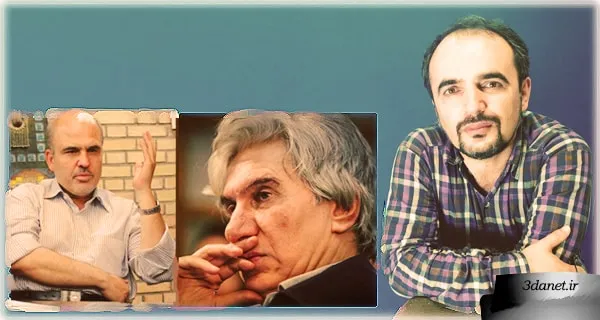
In this article, I will first rewrite the main propositions of Dr. Abazari's lecture, because I believe that a prerequisite for an accurate critique of a text is a correct reading of it. Then, while presenting Dr. Jalaeipour's critiques, I will assess them. In my view, Dr. Abazari's lecture consists of four parts: prescription, description, explanation, and analysis of consequences ...
The Opposition of Truth and Expediency
In this article, I will first rewrite the main propositions of Dr. Abazari's lecture, because I believe that a prerequisite for an accurate critique of a text is a correct reading of it. Then, while presenting Dr. Jalaeipour's critiques, I will assess them. In my view, Dr. Abazari's lecture consists of four parts: prescription, description, explanation, and analysis of consequences, which are presented as follows:
1- Dr. Abazari was invited to this conference to address moderation from a sociological perspective. His main message to the audience in this lecture was that your "existential boredom and anxiety" cannot be "covered up" with the "narcotics" of metaphysics, and it is better to come to "this side of metaphysics" in order to make people "hopeful about overcoming the dark global times." Just as he himself, in recent years, has come from that side (philosophical sociology) to this side (empirical sociology).
2- In describing the "dark aspect of these times," he points to evidence such as "poverty and corruption (the rule of the 1 percent minority over the 99 percent majority) and the nihilism of the masses."
3- In explaining this dark aspect and its manifestations, he addresses the "dominance of neoliberals over the society's economy," who, under the influence of "instrumental rationality, seek to maximize profit by any means possible" and try to "prevent the intervention of the people and the state in the economy." Neoliberals who, from Dr. Abazari's perspective, by "positioning themselves at the center (the point of moderation), refrain from taking explicit political stances, especially during elections," and can get along with all kinds of parties and governments because they have the ability to "neutralize the influence of parties and dispossess governments." Neoliberals for whom "maximizing profit takes priority over everything else, from the political stances of parties to political borders (especially under the conditions of the formation of the global market)."
4- In analyzing the consequences of such a situation, Dr. Abazari points to the "rise of populists" (the very ones whom neoliberals consider their "most important enemy") and, in explaining the mechanism of such a phenomenon, refers to "the poverty, desperation, and hopelessness of the masses on the one hand, and their anger and hatred toward the ruling parties and classes on the other," which is "the product of the neoliberal economic policies."
At this point, before assessing the critique of the esteemed professor, Dr. Jalaeipour, it is necessary to thank him for the opportunity he has provided for thinking about this subject.
In his first critique, Mr. Jalaeipour writes that because Abazari has claimed somewhere that he is an empirical sociologist (premise), he must therefore adhere to the rules of empirical methodology in his claims during his lecture at the Rationality and Moderation conference (conclusion). That is, he must provide empirical evidence for his claims. Is this critique valid? The answer is no, for several reasons. First, there is no logical necessity between the premise and the conclusion of Mr. Jalaeipour’s critique. That is, it is entirely possible that while a person has stated somewhere that he is an empirical sociologist, he might speak in a non-empirical (philosophical) manner at a conference whose audience consists of philosophers, make a claim using an interpretive method in another gathering whose audience consists of artists, and also present his claim using an empirical method in yet another setting appropriate for an audience of empirical scientists. I think that instead of going by Mr. Abazari’s identity claims (such as “I am an empirical sociologist”) and demanding relevant evidence and documentation from him, it is better to examine the type of his claims and assess the validity of his speech or writing on that basis. Therefore, if my rewriting of Mr. Abazari’s lecture is correct, his first claim is a prescriptive (recommendatory) claim that logically requires no empirical evidence, because logically no “recommendation or prescription” can be deduced from a “description.” However, claims 2, 3, and 4 are of an empirical nature and require empirical evidence and documentation to be provided for them.
In his second critique, Mr. Jalaeipour argues that Mr. Abazari did not provide empirical evidence and documentation for his claims. Before evaluating this critique, it is necessary to note that, first, the mere failure to provide evidence and documentation (whether empirical or of other types) is not a reason to consider a claim rejected, because rejecting a claim itself requires evidence and documentation. In such cases, the most we can do is say that the claim is not acceptable from our point of view, and nothing more. Second, demanding evidence and documentation from the claimant in a half-hour lecture, where there is not even sufficient time to present the claim, is an unreasonable expectation. In such cases, fairness in criticism dictates that we refer to the claimant’s other writings or lectures and see whether evidence and documentation for or against the claim exists there.
Nevertheless, if we pay close attention to the explanations and content of the critiques by Mr. Jalaeipour and many other friends, we will realize that none of these critiques address Mr. Abazari’s descriptive claim regarding the prevalence of poverty, corruption, and nihilism among the masses. It is as if there is a shared personal observation and experience between the critics and Mr. Abazari in this regard. Even Mr. Abazari’s fourth claim concerning the emergence of populism under conditions of poverty, corruption, and nihilism prevailing among the masses has not been criticized by anyone. Rather, the bulk of the critiques are directed at Mr. Abazari’s explanatory claim regarding the impact of neoliberalism on poverty, corruption, and nihilism among the masses, and through that, on the emergence of populism in the political arena.
Now let us examine whether Mr. Jalaeipour’s critique regarding the lack of empirical evidence and documentation for Mr. Abazari’s explanatory claim is valid. The answer here is also no. This is because Mr. Abazari’s reference to Chomsky’s statements (as a reference to the opinion of specialists, experts, or eyewitnesses) constitutes an instance of providing evidence for the claim. It might be said that mere reference to Chomsky’s statements is not proof of the evidence’s validity, which, although a critique worth considering, one can provisionally regard Trump’s high vote share among the white race in general, and poorly educated whites in particular, as well as his low vote share among the black race, as credible evidence for Chomsky’s claim.
Is Mr. Jalaeipour's claim regarding the political roots of poverty and corruption (as a rival and alternative explanation) correct? The most that can be said in this regard is that Mr. Jalaeipour, although he demands evidence and documentation from Abazari, does not adhere to this important principle himself (perhaps because the necessary circumstances are not available to him either, or he has addressed them in detail elsewhere). However, even if Mr. Jalaeipour's claim were correct, it is still not a reason to reject Mr. Abazari's claim. Because, firstly, Mr. Abazari has not claimed that poverty, corruption, and nihilism are rooted solely and exclusively in neoliberalism; secondly, the political factor itself can, as a mediating variable, influence poverty, corruption, and nihilism under the influence of the ideas, decisions, and actions of neoliberals; thirdly, a phenomenon can be rooted in several parallel factors.
Mr. Jalaeipour's third critique concerns the lack of a definition for the term neoliberalism and the absence of a typology in this regard on the part of Mr. Abazari. In this connection, although it is necessary to consider the exigencies of a half-hour lecture and to seek clarification of words and terms in the author's other writings or statements, he nonetheless mentioned some criteria related to neoliberalism in that very lecture, which I have referred to in the rewritten summary of the lecture. However, it may be claimed that the aforementioned indicators are also observed in liberal economics or other cases; I leave the critique of this to Mr. Abazari or expert friends, but I personally believe that, in practical terms, examining the connection of these indicators with poverty, corruption, and nihilism, and consequently with populism, is more important than examining their connection with the term neoliberalism.
The fourth critique from Mr. Jalaeipour and some other friends is directed at this current critical juncture! in political terms. Meaning, they have claimed that raising such statements leads to the weakening of the Government of Prudence and Moderation and exploitation by its political rival. In assessing this critique, it is necessary to point out a few points: firstly, Mr. Abazari, like any other academic, must uphold truth over expediency. Secondly, this very claim that raising such statements has a negative political function for the Government of Prudence and Moderation itself requires the presentation of credible evidence and documentation. Thirdly, my understanding is that Mr. Abazari, in his structural explanation, points to the unintended negative cumulative effects of the policies of calculating, self-interested neoliberals, which can attract the attention of intelligent and prudent managers so that, by revising their policies and decisions, they can reduce the grounds for poverty and corruption, and consequently the likelihood of their defeat by populist or non-populist rivals, and of course, it can also compel neoliberals to be far-sighted about how, while maximizing personal profit, they can reduce the possibility of the emergence of populists.
Wassalam
Majid Heidari Charvadeh, 17 November 2016
.
.
A Rewriting of Mr. Abazari's Lecture at the Conference on "Rationality and Moderation in the Contemporary World" and an Assessment of Mr. Jalaeipour's Critique of It
The Confrontation of Truth and Expediency
Author: Majid Heidari Charvadeh
Author's Website
Author's Telegram Channel
Author's Email: charvadeh@hotmail.com
.
.
Related Content:
Dr. Yousef Abazari's Lecture Entitled "Rationality and Moderation in the Contemporary World"
Hamidreza Jalaeipour's Response to Abazari's Analysis on Trump: You Are Giving the Wrong Address
.
.




Discussion0 comments
No comments yet; let yours be the first voice.