Sociology
A Lecture by Dr. Yousef Abazari: “Rationality and Moderation in the Contemporary World”
Yousef Abazari sees the rise of Trump and fascist movements as a consequence of public despair with liberal and conservative parties and the reign of neoliberalism, which treats the market as absolute truth. His lecture critiques Iranian philosophers' neglect of economics and epistemology.
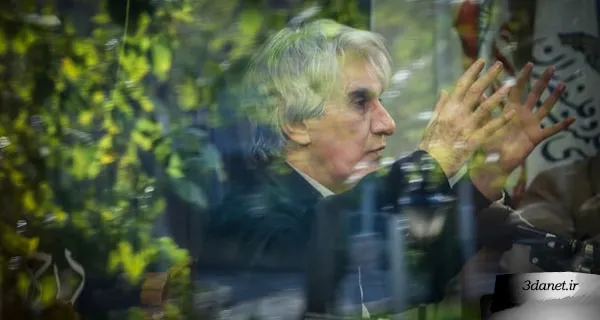
In his speech on World Philosophy Day, Abazari attacked the neoliberal current and criticized philosophers' neglect of economic and social issues, analyzing topics such as Trump's election and the gathering at the tomb of Cyrus the Great.
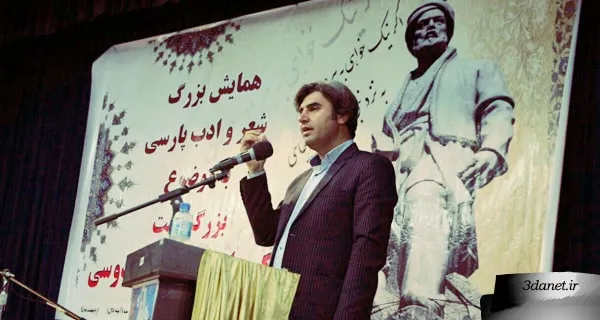
According to a Mehr reporter, the conference "Rationality and Moderation in the Contemporary World" was held yesterday evening on the occasion of World Philosophy Day at the Iranian Institute of Philosophy.
Professors such as Mostafa Mohaghegh Damad, Gholamhossein Ebrahimi Dinani, Abdolhossein Khosropanah, and Yousef Abazari were present at the conference.
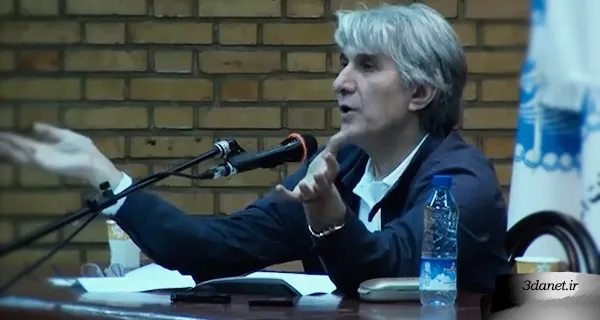
Yousef Abazari's lecture on "Rationality, Moderation, Fascist Movements, Extremist Religious Movements" sparked debate and controversy at the conference, and due to lack of time, he was unable to deliver his full speech.
Below is the full text of the lecture by Yousef Abazari, professor of sociology at the University of Tehran, which was provided exclusively to the Mehr reporter;
I thank the great figures of philosophy for allowing a simple sociology teacher to speak on Philosophy Day about categories they themselves proposed. I congratulate the philosophers on Philosophy Day and hope that what I say will make some small contribution to solving the problems that philosophy, sociology, and other humanities face in the present time.
The time available to discuss the above categories (the conference themes) is insufficient, so I have tried to express my remarks, however briefly, in short phrases. My phrases are mostly problem-statements;
1- In my outline, I do not need to start from one category and then deduce the subsequent ones from it. In my view, the above categories form a circle that allows me to start anywhere and speak about any category, provided I show their connection to one another.
2- I will start with the latest event that astonished the world: the election of Donald Trump as President of the United States. Someone who openly has fascist tendencies, and more importantly, the movement he has launched, a racist movement seeking religious discrimination that exaggeratedly calls for American greatness. Many statisticians, public opinion experts, and election specialists analyzed this election largely relying on the psychology of voters, but the most important analysis is the structural analysis, and those who had previously warned about the emergence of the Trump phenomenon pointed to it.
Chomsky had predicted Trump's emergence
3- Chris Hedges, in an article titled "It's Worse Than You Think," written on November 11, 2016, writes: Chomsky told me six years ago that the situation is very similar to the Weimar period in Germany. People have become disillusioned with the parliamentary system. The issue is not that the fascists defeated the Social Democrats; people also hated the liberal and conservative parties. It was the hatred of them that made the fascists victorious... The American people have been fortunate so far that a systematic leader like Joseph McCarthy or Richard Nixon or evangelical preachers has not emerged. If such a person comes and sincerely addresses the people, he will be able to win their votes because of the despair, hopelessness, and legitimate anger of the American people and the absence of any plausible response.
Instead of the Jews in the Nazi era, he will introduce blacks and immigrant workers as the cause of people's misery and will tell us that it is now white males who are the outcasts of society. He will say that we must defend ourselves and our honor. We must strengthen the military's power, or else we will lose world leadership. The United States is a global power. It is not a regional power like Germany; the emergence of such a person is dangerous for the world.
I suspect that such a person will emerge not from the right-wing Republicans but from the ranks of the mad Republicans and will win the election. The suppression of dissent will resemble the suppression in totalitarian regimes, and the security of the state will take first priority.
Globalization Means Neoliberalization
Chomsky, like other responsible American intellectuals, had predicted the rise of Trump and attributed its cause to the reign of the neoliberals from the Reagan era onward. Neoliberals who, whether in the guise of Republicans or Democrats, governed America by resorting to identical domestic policies and aggressive foreign policies. Critics have labeled these neoliberals, whether from the Republican or Democratic party, the "Extreme center" or, to put it better, extreme moderation, due to the similarity of their policies.
4- Why the center or moderation, and why extreme? Pinochet first implemented neoliberal economic policies in Chile; policies that appear economic but, in essence, resemble a religion. You are free to do whatever you want, but do not tamper with my principles, or you are either with me or against me and are an enemy. They have also assigned epithets to the infidels of their religion. Left or right populism. Later, Thatcher in England and Reagan in America, and then the French socialists under Mitterrand, implemented these policies, then imposed them on third-world countries, and then globalized them. Globalization means neoliberalization.
5- Why this happened is a long story. But the category of the center or moderation was thus constructed. If you became a neoliberal, your past no longer served you. It made no difference whether you were from the left or the right. Neoliberalism has very simple principles; anyone who spends a few minutes learning them will grasp its secrets, otherwise they will flounder in a sea of irrelevant talk.
The Most Important Principle of Neoliberalism: The Market Tells the Truth
6- The most important principle of the free market or neoliberalism is this: the market tells the truth. The most important preoccupation of philosophy is finding the truth. Every creed, school, and research program defines "truth" in some way; from ancient times until now, philosophers and theologians have spoken about truth and its conditions of possibility. In the view of neoliberals, the market tells the truth; if philosophers acknowledge this and play out their truth according to the market's conventions, they are not a nuisance.
In the view of neoliberals, the disputes of philosophers and theologians are like children's games; as long as this game does not disrupt their truth, they pay it no heed. But when they cast a critical eye upon it, they are considered enemies. But why the market tells the truth and not someone or something else is a philosophical tale recounted by Hayek and others. Yet neoliberals state this simple truth of theirs everywhere, at every opportunity.
Iranian Philosophers Think Economics Has Nothing to Do with Them
In Iran, they presented it as the "science" of economics and only economics; otherwise, a cursory glance at Hayek's works is enough to show that, in his view, the market has provided the most important epistemological answer to all philosophies, not just the science of economics. One of the reasons I draw the attention of philosophers to this simple point on Philosophy Day is this claim: despite the fact that neoliberal epistemology has been the guide for all post-war governments, whether moderate, principlist, or reformist, Iranian philosophers have paid no attention to this small point, because they have assumed that these are economic issues and that economics has nothing to do with them.
Domestic Neoliberals Taught Governments to Suppress Any Intervention in the Market
7- Philosophers and theologians who believe that God is the guarantor of truth, or the provider of the conditions for its emergence, have a simple approach toward the other: if you seek truth, do not interfere in God's work. Neoliberals follow the same logic; they believe that if you seek truth, do not interfere in the market's work. Intervention in the market occurs in two ways: the state and the people. For propaganda purposes, Iranian free-marketeers have so far said that the state should not interfere in people's affairs, and for this reason, a large number of people like them, but what they mean is that the state should not interfere in the market's work. By 'people,' they mean the market. But domestic neoliberals have not made it very clear that the people, too, should not interfere in the market's work, except when they have been forced to; however, in this regard, they have taught all post-war governments their formulas for how to suppress any collective that seeks to 'interfere in the market.'
Dr. Roughani Zanjani has said: "I made this argument in the parliament that if you are pursuing the implementation of a specific policy, you must also be prepared for a series of socio-political consequences and be able to pay the costs of your decisions. For example, the Korean government announces its policies publicly and pursues them intensely, and when it faces reactions from workers and students, it sends the police into the streets to suppress them. If we are to avoid witnessing such reactions, we will never implement the policies and decisions we have in mind... I explained to the members of parliament that to implement the policies of the First and Second Development Plans, reforms must be made in the country's foreign policy. We cannot fight on several fronts" (Roughani Zanjani, 1385: 226).
They vanish at election time and then appear for economic consultation after the elections
At the start of every election, they vanish. They do not openly support anyone because they must sell their wares to all governments, but after the elections, they appear to offer "scientific economics" and advise all governments. Fundamentally, in their view, the state must divest itself, meaning it must privatize all state assets. They deliberately say state assets and forget that these assets belong to all the people and the state is merely their agent for administration.
They say the state is not a good merchant and must be privatized. After the war, they have encouraged governments to privatize, and for this reason, they have even changed the law and the constitution. People do not like some privatizations, so they throw the people a bone under their breath, saying it has become 'khosoulati' [a pseudo-privatized, quasi-state entity]; a fabricated term. Otherwise, structurally, what difference does it make whether the privatized assets go to X or Y? They know this too, and for this reason, they leave the escape route of 'khosoulati' open for themselves; otherwise, they themselves have admitted on various occasions that a private sector has not existed in Iran.
Farshad Momeni, in the report on the plan for organizing state-owned companies published in Mehr 1377 by the Macroeconomic Bureau of the Plan and Budget Organization, specifies that Iran's private sector, under current conditions, still lacks sufficient motivation, economic capacity, and the necessary confidence to purchase major production facilities. The end? The result of a state that creates a nascent private sector will be nothing but 'khosoulati,' which the free-marketeers now ostensibly attack but are inwardly pleased with, because it is the result of their efforts?!
Neoliberal rationality is instrumental rationality
The issue is that the private sector, or someone who operates in this way, acts rationally. This is where I return to their concept of rationality; what they mean by rationality is achieving profit in the shortest possible time, which is the same as Max Weber's goal-oriented rationality or instrumental rationality. They do not care about value-oriented rational action, that is, philosophizing and the like, except when this rationality encroaches upon instrumental rationality. That is when they cry out that the science of economics has been ruined, society has been destroyed!
Let me summarize: in their view, the state must be the guardian of the truth of the market—that is, providing the laws they favor and the globalization of capital—and the suppressor of anyone who seeks to encroach upon the market. It should now be clear why they are called the center or centrist. Whoever becomes a neoliberal and takes control of the state must perform these very tasks and nothing else. This is why the departure of Democrat Clinton and the arrival of conservative Bush, or conservative Sarkozy and socialist Hollande, makes not the slightest difference. States must hand over education and healthcare to the truth of the market.
The most important reason elections have become meaningless is the dispossession of states from themselves
Gone are the days when socialists were advocates of universal insurance and universal education. The most important reason elections have become meaningless is the dispossession of states from themselves. Sarkozy goes, Hollande comes; Sarkozy comes, Hollande goes—it makes no difference. The center stands firm. Moderation stands firm.
Neoliberalism has led to the domination of 1 percent over 99 percent
But why extreme moderation? Because neoliberalism has led to the domination of one percent of the people over 99 percent of the people everywhere in the world. This moderation is extreme because it has dispossessed the people more than any political regime. People can no longer decide their own fate. The relationship between the state and the people is severed. Can you think of anything more extreme? It is precisely here that people, for reasons Chomsky mentioned, vote for a fascist like Trump. Neoliberalism, or an older variant of it, has always been the road-paver for fascism, whether in Weimar Germany, in America, or in England where its fascists won the Brexit vote. Although entering a free-market Europe is not particularly appealing either. Politics has become meaningless.
Fascist anti-Arab slogans at the tomb of Cyrus
8- Recently, a group of young people went to the tomb of Cyrus and chanted slogans. What horrified me were the anti-Arab slogans and expressions of hatred toward Arabs. Fascism always gains legitimacy this way. Perhaps those in that gathering do not themselves know what a fascist act they committed; perhaps they themselves are now critics of Trump. Neoliberalism and fascism will be upon you before you know it.
Why has neoliberalism become intertwined with fascism?
9- Why have fascist movements reared their heads after four decades of neoliberal rule, and why is neoliberalism now intertwined with fascism? The answer must be sought in the globalization of capital. The globalization of capital requires laws that are observed at a global level. The free trade law, which Democrat Clinton was a champion of imposing and conservative Bush continued, is one of these laws, treaties, and pacts whose result is the dispossession of nation-states from their powers. Thus, the way is paved for capital X to operate with the necessary guarantees in location Y.
One of the reasons for Trump's emergence is the destruction of America's own industrial base. The American worker is unemployed because a worker elsewhere receives lower wages. The nation-state will inevitably weaken in the age of globalization, and neoliberals both predict and celebrate its decline. Mises, one of their thinkers, said that the nation-state is a chaotic market centered on power. The natural community is a linguistic, and one might say ethnic and religious, community; therefore, something artificial like the nation-state must give way to something natural. But what has clothed this theorizing in reality is the construction of the global market. Any unit can separate from the nation-state and consider the global market as the guarantor of its existence.
Thus it is that even the foundations of Great Britain are being weakened. Scotland, because of the European and global market, is poised to separate from Britain. Therefore, the separation of peoples from one another has now become objectively possible, and the manipulation of the global market to rid themselves of what they call recalcitrant states intensifies the matter. After the Serbian affair, such murmurs now exist in Europe itself and the Middle East. Of course, these separations will not be as amicable as the separation of the Czech Republic from Slovakia. Rivers of blood will flow.
The Iran-Shahris encourage the fascism of the Persian ethnic group
The Iran-Shahris in Iran are blowing into this same fire and encouraging the fascism of the Persian ethnic group. Other ethnic groups are also murmuring things under their breath. For now, the neoliberals and the fascists are arm in arm, though they are unaware that the utopia of one is the hell of the other. For instance, they drunkenly insult intellectuals who are willing to submit to neither this nor that.
In their own view, they think they are turning dust into gold. Let them look at their bosom buddy. Recently, Dr. Akhoundi has written a panegyric about the free-market Iran-Shahri and has tried to reconcile the two. If such a thing were possible, the free-marketeers' claim of their enmity with fascism would no longer hold water.
The enormous volume of satire, mockery, and snide remarks on social media is astonishing
10- Pierre Bourdieu, the French sociologist, says that when the door to creativity is closed, the gate to satire opens. The enormous volume of satire, mockery, jokes, and snide remarks on social media is astonishing. Precisely when the hands of the free market have brought the most powerful and wealthiest country in the world to its knees, and its prolonged agony will spread this terror everywhere, and precisely when fascism is emerging all over the world and the economic-philosophical problems of Iran's free market are causing distress, the young and old of this country are busy making satirical jests. Of course, I do not want to, and should not, be one-sided in my judgment.
ISIS is a product of the same world whose president is Trump
11- ISIS is a product of the same world whose president is Trump. The results of the American election are announced, and the terrified elites ask: who voted for Trump? It is as if no one can believe their neighbor, their colleague, their classmate voted for Trump. But is this astonishment and desperation not familiar to us? Were these not the same media outlets that asked with disgust who could possibly join ISIS?
It was amidst these very questions that the wave of Paris bombings arrived. The media market was demanding its favorite commodity and finally found it. The European-born suicide bombers. As the name and details of each one were revealed, the media would go to probe the corners of their lives, and often they all found that same beloved commodity, namely, astonishment. For example, it would turn out that a girl fond of revelry and pleasure, who incidentally also liked cowboy hats, was suddenly transformed through acquaintance with some members of the ISIS group and, in a short time, became ready for a suicide operation.
But what truth do these narratives hide from us, which on the one hand consider the basis of the appeal of ISIS to be a kind of Western ennui, nihilism, and sometimes a search for identity, and on the other hand seek the source of violence in the essence of Islam?
It is better to pose this question: was Mosul conquered by those same novice European youths, and if so, why and how? The story of the conquest of Mosul has two sides, one inseparable from the other. To understand both sides, one must return to 2003, when America undertook one of its creative destructions. Through successive bombardments, America destroyed the infrastructure so that, upon these ruins, a new Iraq might once again be built. But the institutional reconstruction of Iraq was nothing other than the implementation of the same old prescription; when privatization reached the military and security forces, nothing remained of the army but its name. The names of hundreds were listed as guardians of the city, yet at the guard posts there was not a soul to be found, and thus the army did not stand even for a moment against the forces of the self-proclaimed caliph and took to flight.
On the other hand, in the victories of ISIS, the role of the Ba'athist commanders must not be overlooked; the Ba'athists had returned to the scene of struggle, this time intent on harsh revenge. In truth, when America, with its de-Ba'athification project, was destroying organizations and institutions one after another, no one asked what we would do with all these "superfluous people." The superfluous person of whom Arendt speaks, the individuals at the end of the First World War and the fall of the European empires? It was this very superfluous person who joined European fascism.
The Decline of Nation-States in the Middle East
The story of the Middle East is the story of the decline of nation-states; ever smaller political units, each harboring dreams of independence. Today, every lane and neighborhood, every city and village that is liberated, instead of the ululations of women and children, the cries of leaders rise up claiming independence. As soon as Fallujah was liberated, plans were submitted to the Iraqi parliament, each demanding some form of autonomy. National borders in the Middle East are being destroyed. The superfluous people in the Middle East have shattered the borders as well.
12- Where do our problems originate? If after the war all political factions in Iran, regardless of whether they knew it or not, were implementers of the free market, then what do the political disagreements stem from? The simplest answer is that whichever group seizes the government will advance privatization policies to its own benefit, but this answer does not cure our pain because it does not get to the heart of the matter.
Far-Right Liberals are Opposed to Democracy and in Favor of Freedom
Neoliberals call themselves libertarians or, in their own words, freedom-seekers. Libertarians, who are fundamentally opposed to the growth of state power, have several factions, from the left to the far right; Chomsky himself, whom I quoted, is a left-libertarian. The neoliberals who favor the Austrian or Chicago schools, although they have differences with one another, agree on the role of the state and the truth-telling capacity of the market. Far-right libertarians. Iran's libertarians are of this type. What kind of freedom do they want? They desire every kind of freedom except political freedom.
In their view, the weakest link in democracy is the voters, because they can vote for right-wing or left-wing populists and ruin their work. Trump is one of them. Of course, it remains to be seen whether Trump, despite attacking certain freedoms, will want to clash with the free market. Right now, Wall Street lobbies are busy assembling his cabinet. Right-wing libertarians are opposed to democracy and in favor of freedom because in a democracy, the people, especially the lower classes, have the right to share in their own destiny. They are entitled to actively participate in issues such as wages, education, and healthcare. The very thing libertarians oppose and consider interference in the market.
The story of freedom and right-wing libertarians is a long one, but when they realized that their entrepreneurs could profit from all sorts of freedoms, they ceased opposing certain freedoms and embraced them as a boon. The point in Iran is that one faction opposes granting certain freedoms, and another faction, which knows it is incapable of granting those freedoms, remains silent about them.
In the course of this give-and-take, governments have sometimes retreated. For instance, after the success of Los Angeles-style music, they agreed that the same type of music, with more cleaned-up lyrics, could be produced in Iran. Thus, a kind of Iranian pop music came into being that was artistically deplorable but attracted the public. Now the dispute is over these groups' concerts; the more pressure comes from that side, the higher the scope of satire rises from this side, and these disputes over personal and civil liberties cannot be resolved through a conciliatory process, because neither side is willing to back down.
The market of liberties, although presenting itself as a proponent of freedom, is terrified of dragging the discussion of liberties into the political sphere because it fears that the people, especially the lower classes, might raise demands that are interventionist. As a result, the more time passes, the more free-market laws are passed and implemented, the poorer the people become, and the poor are forbidden from discussing their own fate.
The more the pressure increases, the more hidden liberties increase, and this cycle becomes more closed. The neoliberals are the winners of this game. Their economy has brought nothing for the Iranian people but this very situation you see, yet the main conflict occurs in a place that has nothing to do with untying the knot of people's lives. On a global level, the neoliberal culture industry has, as much as you could want, devised plans and made provisions for these kinds of liberties, but speaking of the catastrophes of this global culture-making is disliked by some people, especially the youth, who consider it a violation of their rights.
Corruption, Nihilism, and Poverty Are the Logical Result of Liberal Policies
Not only has culture reached a dead end with this trashy music, trashy novels, and trashy films, but the critique of culture has also become impossible. The result of this situation is a nihilism that has engulfed the youth and a poverty that the neoliberals, both globally and domestically, have inflicted upon the people. A poverty that is swallowing the global and domestic middle class. What most people call corruption is the logical result of liberal policies; if we do not become aware of this point, we will be incapable of untying its knot. But again, in my opinion, this is not the main issue.
13- The contradiction that is the basis of our problem is the unconscious interweaving of two systems. Two systems that have no relation to one another. The free-market system, which tells the truth, and the system that believes God tells the truth. Michel Foucault explored this issue in detail in his book "The Birth of Biopolitics." I ask respected philosophers to read this book and pay close attention to liberal governmentality and sovereign governmentality. Foucault wrote this book, in his own words, with complete neutrality. But in my opinion, he shows a certain favor toward German ordoliberalism. I will refrain from explaining this book. I will suffice with a quotation: "The economy is a godless system; the economy is a system lacking totality; the economy is a system that demonstrates not only the futility but also the impossibility of a sovereign perspective." (p. 282 of the English edition) The fundamental problem is the merging of these two systems into each other by governments that sometimes speak from one and sometimes from the other.
14- Mr. Bijan Abdolkarimi once reminded me not to forget "metaphysics." I draw his attention to two categories from Heidegger, the first appearing in "Being and Time" and the other in a complete book titled "The Fundamental Concepts of Metaphysics"; anxiety and boredom.
Heidegger considers these two categories to be ontological and part of the structures of Dasein, which are neither subjective nor objective. They are mood. Basic moods. Moods, as the background, are the foundation of every event that affects us. Anxiety reveals the worldlessness and the being-in-the-world. Heidegger refrained from discussing the relationship between anxiety and time, but in the book "The Fundamental Concepts of Metaphysics," he explored the relationship between boredom and time in detail. In boredom, time slows down, stretches out, and ultimately leaves us to ourselves. One can find an inverse relationship between anxiety and time. Time overtakes us, and we are carried along in time's wake. In the book "Fundamental Concepts," Heidegger gives two examples to illustrate boredom: waiting at a train station and an afternoon party.
One could instead cite the example of the condition of unemployment, where anxiety and ennui follow one another in succession—to overcome which, one can, among other things, take refuge in drugs; substances which, if they are depressants, slow down time and mask anxiety, and if they are stimulants, intensify time and try to bring the individual who has fallen behind time back up to speed. Failed experiences that add to the endless anxiety and ennui.
Have those in philosophy visited this side of metaphysics?
One could cite examples of those who, during the sexual revolution, go from one experience to another to mask their ennui and anxiety, and cannot. As sociologists, because we research social harms—that is, the logical outcomes of neoliberal politics and economics—we are familiar with these phenomena and their connection to metaphysics. Have you also visited this side of metaphysics?
I hope philosophy gives us hope that we can overcome this global age of darkness.
.
.
Audio of Dr. Yousef Abazari's lecture titled "Rationality and Moderation in the Contemporary World"
.
.
Lecture title: "Rationality and Moderation in the Contemporary World"
Speaker: Yousef Abazari | World Philosophy Day Conference
The slogans at the Cyrus's Tomb gathering were fascist / The link between fascism and liberalism
.
.

Discussion2 comments
مایوس کننده، شعارگرایانه، دست سوم، و جانبدارانه. ما نمی توانیم متفکر داشته باشیم. در هر سطحی باید شاهد سخنان سطحی باشیم. چند نقل قول سوگرفته از این ور آنور با چاشنی خود را علامه دهر دانستن و ب خودمحوری در باره دیگران صحبت کردن و اندکی هم توهم توطئه. به نظر من با صحبت های حسن عباسی ها فرق زیادی نداشت. ضمنا فرصت نیست تا سوگیری سخنان ایشان را برملا کنیم که در مواردی به تناقض گویی هایی نیز منجر شده است. در مجموع، تاسف آ.ر و مایوس کننده و نهایتا یک روایت باسمه ای دست چندمی از یک چامسکی قلابی.
« ... زمانی که در خلاقیت بسته می شود دروازه هجو باز می شود. تعجب آور است حجم عظیم هجو و استهزا و شوخی و متلک پرانی در رسانه های اجتماعی... پیر و جوان این مملکت مشغول پراندن هجواند . » « مأیوس کننده ، شعارگرایانه ... با صحبت های حسن عباسی فرق زیادی نداشت ... چامسکی قلابی . » ، درضمن فرصت برملا کردن تناقض گویی ها را هم ندارد ! این پیام خود مصداق سخن اباذری است .