Literature
Lecture by Dr. Abdolhamid Ziaei: Rationality, Despotism, and the Shahnameh
The Shahnameh is a book of joy, wisdom, and freedom; at a time when rationality was being trampled, Ferdowsi revived Iranian identity. Dr. Ziaei analyzes the reasons for Sultan Mahmud's disfavor and the suppression of intellectuals through fatalism and divine providence in the face of foreign alliances.
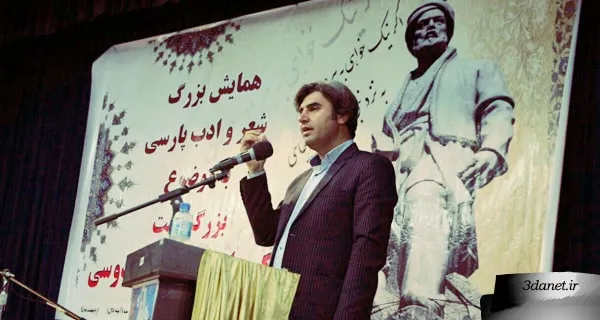
The Shahnameh is the book of joy, wisdom, and freedom, and wherever rationality is trampled with disrespect and humiliated, the Shahnameh is needed. Wherever art is scorned and magic and superstition are esteemed and ascend to prominence, and wherever joy and freedom are absent, the presence of the Shahnameh is needed... In a strange era when the newly converted Ghaznavid slave-born Turks from the northeast and the Arabs claiming Islam from the southwest had undertaken to form a dual and alien sovereignty in Iran, and amid the onslaught of accusations and slanders such as Rafidi, Qarmatian, and so on, Hakim Abulqasem Ferdowsi single-handedly accomplished the transmission of a vast portion of pre-Islamic Iranian culture and civilization, and Iranian and Aryan wisdom and mysticism. Without exaggeration, it must be said that the Persian language owes a significant part of its life and flourishing to the thirty years of suffering of the sage of Tus, whose corpse was not even permitted to be buried in the Muslim cemetery! One day, at the home of Egypt's Minister of Culture, the prominent Egyptian journalist and thinker Mohamed Hassanein Heikal was asked why Egypt, with its brilliant history of culture, civilization, and especially its official language, had consigned its language and part of its culture to oblivion roughly two centuries after the Arab invasion and domination. The Egyptian thinker and journalist's answer is deeply striking; after a moment of reflection, he said: "Unfortunately, we did not have someone like Ferdowsi, as you Iranians did, and if we had, we would not have fallen into such a state! Perhaps the first and most important question that arises in the study of the Shahnameh, especially in its opening verse, is why Ferdowsi invoked and praised the Shahnameh in the name of the Lord of "soul and wisdom"? By looking at Ferdowsi's era and times, one can find the answer to this question. In my belief, Sultan Mahmud of Ghazni's lack of favor and reception towards the Shahnameh had reasons beyond and other than Ferdowsi being a Shia and—as is attributed—a satire of the Sultan within the Shahnameh, and the reasons I will present were no less significant than these and merit further examination. The newly converted Ghaznavid Turks and the Arabs claiming Islam had allied with each other in Ferdowsi's time. The decline of the thought-expanding Samanid dynasty and the formation of the rule of the Turks and Ghaznavid slave-born can be considered the point of departure and the beginning of the decline of Iranian civilization, even more terrifying and sorrowful than the Mongol invasion. For this very historical event also became the prelude and groundwork for the Mongol invasion of Iran. In any case, the alliance of the Arabs and Turks was substantiated by astonishing reasons; the Turks, to justify their crimes and immoral and irreligious actions, were in dire need of religious legitimization from the Arabs, and the Arabs, for the continuation and expansion of the scope of their military campaigns and conquests, as well as the suppression of opponents, needed the sword and the awe of the Turks. Under such circumstances, the most biting and perilous question that could be raised was the question of the identity and essence of the Iranians, and Ferdowsi raised this question—which was a source of fear for Mahmud of Ghazni—in the form of an epic that revived and recalled the several-thousand-year history of Iranian identity. The question of identity both troubled the Baghdad Caliphate and threatened the foundation of their underlings' rule in Iran (the Ghaznavids). The result was that Mahmud of Ghazni, with unkindness and coldness, rejected the lord of the Shahnameh and paid no heed to him and his immense epic. As you are aware, in Ferdowsi's time, rulers, by resorting to the idea of "predestination, divine will, and decrees," had seized the reins of governance over the masses, and in this path, they enjoyed the support of superficial and literalist sects such as the Murji'ah, Karramiyya, Mushabbiha, Mujassima, Ash'ariyya, Ahl al-Hadith or Akhbaris, and so on. These sects were, in turn, supported and promoted by the ruling power. Sects that had reduced God to the level of the common people's understanding, believed in anthropomorphism, depicted forms and outward appearances for God, and had found or fabricated hadiths on this subject (the outward and anthropomorphic attributes of God)! And they did not permit any rational contemplation or conscious reflection on the polysemous text of the Holy Quran. The result was that those with insight, rationalists, philosophers, and even some mystics were placed in severe straits and were branded with accusations such as Rafidi, Qarmatian, Magian, Dahrī, Zindiq, and so on! Sultan Mahmud also endeavored to entice the wise with gold and force, by any means possible, to align them with himself. Those who refused the Sultan's request either became fugitives and were driven from place to place...
.
.
Download the audio of the lecture Rationality, Despotism, and the Shahnameh by Dr. Abdolhamid Ziaei
.
.
Lecture by Abdolhamid Ziaei on 15 May 2016 in Khuzestan Province. On the subject of Rationality, Despotism, and Ferdowsi's Shahnameh
.
.


Discussion1 comments
چرا کشور مصر با آن سابقه درخشان فرهنگ،تمدن و بویژه زبان رسمی ، حدود دو سده پس از حمله و سیطره ی تازیان ،زبان و بخشی از فرهنگ خود را به دست فراموشی سپرد ؟ جواب اندیشمند و روزنامه نگار مصری سخت شنیدنی است،وی پس از اندکی تامل گفت :شوربختانه ما مانند شما ایرانی ها ،کسی مثل فردوسی را نداشتیم و اگر چنین می بود به چنین روزی نیفتاده بودیم! -------------------------------------------- حسنین هیکل پان عرب بود ! امکان نداره چنین حرفی زده باشه !