Religion
Reza Babaei's Lecture: 'Religion and Religiosity in the Contemporary World'
Theology can take two paths: from religion toward the human being, or from the human being and their suffering toward religion. Babaei argues that the contemporary world will only accept religion when it succeeds in alleviating human pain, not when it dictates beliefs. A report on a lecture by Babaei.
In the study of religion, there are two paths: the first path is the movement from religion toward humanity and society, and the second path is from humanity and society toward religion. In the first path, we wander through religious texts, literature, and the history of religion, and in accordance with our cultural nature and point of view, we become filled with specific beliefs, fatwas, priorities, sensitivities, and concerns, and then we present and sometimes dictate them to humanity and society. This path is the one that traditional seminary and Al-Azhar religious studies have followed until now. The second way and method is to first, or simultaneously, look at humanity and its sufferings and see the painful shortcomings of society, and then turn to religion to find a remedy for those pains and sufferings. These two paths give rise to two kinds of theological apparatus and two kinds of belief systems, each with its own priorities and sensitivities; especially in the realm of Sharia.
In the first belief and fatwa-making system, religion bears no responsibility toward humanity and society; rather, its commitment is to the understanding it has found through the study of texts, and it considers that very understanding to be the decree of God. The second path strives to lift a burden from the shoulders of humanity and untie a knot from its entangled affairs, and sees commitment to God in service to humanity in this world full of pain, suffering, and failure.
The contemporary world, due to fundamental and conceptual differences with the world of tradition, is not very receptive to the institution of religion in the first sense. Religion, art, philosophy, and the humanities in the contemporary world possess the possibility of institutionalized and structured presence to the extent that they succeed in alleviating the pains and sufferings of contemporary humanity; otherwise, they must content themselves with a greenhouse existence and life in rural retreats. It can also be easily shown that the prophetic method and conduct have a greater affinity with the second path than with the first.

.
.
Download the audio file of this lecture
.
.
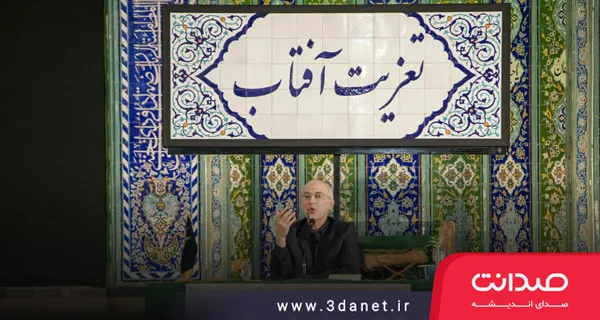
Special Program: Ta'ziyat-e Aftab (Mourning of the Sun)
Speaker: Reza Babaei
Lecture Title: Religion and Religiosity in the Contemporary World
Date: 24 October 2018
Organized by: Imam Hossein (AS) Cultural Center - Mirneshaneh - Kashan
.
.

Discussion1 comments
با سلام حضور استاد محترم در مقدمه مختصات جهان سنت و جهان مدرن را بیان فرمودید که البته در حد فرصت کمی که در اختیار داشتید کفایت می کرد اما به نظرم رابطه منطقی بین جهان مدرن با ان خصوصیات و راه حل چگونگی دین و دینداری که موضوع بحث جنابعالی بود یعنی حرکت از نیازهای انسان به طرف دین حد اقل برای بنده روشن نبود با تشکر