Religion
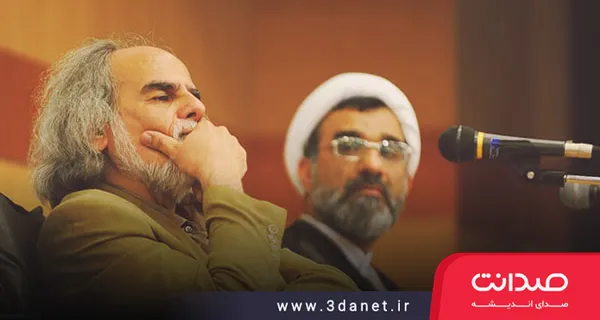
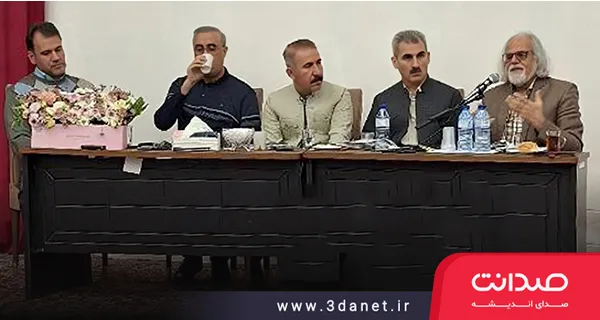
Roundtable: “Religiosity in the Contemporary World” with Mostafa Malekian and Abdolhossein Khosropanah
At a roundtable on contemporary religiosity, Malekian described religious interpretations as diverse and argued that mystical Islam is more rationally defensible than fundamentalism. He identified the prerequisites for dialogue as equal freedom without cost and the rejection of any claim to absolute truth.
Audio version of this articleRead aloud · 15:54
0:00 / 15:54
Roundtable: “Religiosity in the Contemporary World” with Mostafa Malekian and Abdolhossein Khosropanah
Mostafa Malekian: 1- There is truly no single understanding of religion and creed. It depends on which understanding of religion and creed seeks to rationally defend its own knowledge-giving, identity-giving, and meaning-giving functions. There is no doubt that if Mullah Omar and the Taliban, or bin Laden and al-Qaeda, or Boko Haram and ISIS, and those who are sprouting like mushrooms every day in the Islamic world, want to defend, based on rationality, that we provide knowledge, identity, and meaning (especially knowledge), the path is absolutely blocked. But others have had other understandings of this same Islam. Just as in Christianity and Judaism, not all understandings are fundamentalist understandings. For instance, in this very Islam, there has also been Rumi, Shams, and Ayn al-Quzat Hamadani. For now, I am absolutely not in a position to judge which understanding is correct. But if you ask me, I will say that the capacity of the Islam of Rumi and Shams Tabrizi for rational self-defense is certainly greater than that of the Islam of ISIS and Boko Haram. Therefore, there is no single understanding about which I can say whether or not it can rely on rationality. But the second point is more foundational and fundamental. Essentially, when two rivals want to defend their positions as two alternatives, and one has authority and the other does not, how should they proceed? This is an important point. Suppose I am the spokesperson for a religion and creed, and you are the spokesperson for a philosophical system, and you consider me your rival and alternative. Then you and I want to defend our own integrity against each other's attacks. But I have authority and you do not. Not having authority means that whatever you say, the reason you bring for your claim resides in your own mind and conscience. You never say, 'I say this because Plato, Kant, and Spinoza said it.' For whatever you say, you yourself must have a reason. But I, who am defending my religious and creedal viewpoint, must ultimately resort to authority somewhere. That is, for example, if you ask me, 'Mostafa, is the number of gatekeepers of hell 19?' I will say yes. You ask, 'How have you counted that it is 19? Why should hell even have gatekeepers? What happens if it becomes 18 or 20?' If you ask me this, I cannot myself provide a reason that the number of gatekeepers of hell is 19. I must say that our Quran has said this. It makes no difference what religion I have. If I were Jewish, I would resort to the Old Testament; if I were Christian, to the Bible. I want to say that this is not specific to the Islamic world. Then you say to me, 'So you yourself cannot provide a reason?' I will say no, my holy book, my prophet, or the founder of my religion has said this... There is also a third point. Some might say, it is true that we have no reason for the number of gatekeepers of hell being 19, and we say it based on the Quran, the words of the Prophet, or the saints of the religion, but beforehand we have made a rational argument that whatever the founder of our religion and creed has said is the truth (this is the first premise). The second premise is that the founder of our religion and creed has said that the number of gatekeepers of hell is 19. So the conclusion is that the number of gatekeepers of hell being 19 is the truth. That is, if we do not have reasoning for each and every one of our religious propositions, we have a general argument for this entire set that whatever it says is the truth. That is, we prove it indirectly and through a mediator. In response to this claim, I can give two answers; first, we have thus understood that those with authority and those without authority cannot continue the discussion. So those with authority must become those without authority. Again, the same statement is confirmed that two human beings can converse with each other only if they do not have a master's authority looming over them. Unless they prove that master's authority, in turn, through reasoning that exists in their own minds and consciences, and speak without authority. But the second point is that regarding the claim that 'whatever our holy book has said is the truth,' we first make a rational argument for this and then accept the details, or in the logicians' terms, you have a rational argument for your general premise. I say, bring forth this rational argument.
2—In fact you asked two questions, and I will separate these two questions from each other. One question is whether dialogue on the issues you gave as examples, such as the issue of social justice, is possible between the religious and the non-religious or not, and if it is possible, what conditions must exist for dialogue to take place. I gave one answer in the previous part, which I will not repeat. But another point concerning the first part of the question is that if dialogue is to take place between the religious and the non-religious, there must be conditions without the realization of which this is not possible. One of the conditions is that the two sides be, in the true sense of the word, on equal footing, and the most important condition within this first condition is freedom. The two sides must have equal freedom. And that freedom must be without cost for either side. Not that after the debate session one awaits a reward and the other awaits punishment. Freedom must exist for everyone. The very thing that the late Motahhari wished for. Time and again, thinkers of the world have said that freedom in a society means freedom for opponents and dissidents; otherwise, in which society have conformists lacked freedom? Mohammad Baqir al-Sadr and Bint al-Huda al-Sadr spoke their minds in Saddam's Iraq, but then over the course of a week they were subjected to such medieval tortures that they were killed. It is not logical that one of the greatest blessings that existence, God, nature, or whatever you name it has given us is freedom, yet we must pay a cost to exercise this right of ours.
The next point I want to make is that dialogue is different from wrangling, chatting, and debate. In dialogue, the two sides must have a presupposition; that is, when I engage in dialogue with Dr. [Khosropanah], my presupposition must be that there are strengths in his speech that, after hearing them, I should absorb into my own thought, and there are weaknesses in his speech that I should point out to him, and if he is a seeker of truth, he should expel these from his thought. When he engages in dialogue with me, it should be in the same manner. Therefore, the condition for dialogue is that neither side is absolute truth and neither is absolute falsehood. Dialogue cannot be established between truth and falsehood. So the condition for dialogue is that both sides accept that each is a mixture of truth and falsehood, and they engage in dialogue to learn from each other. Now, if someone says that we are the spokespersons of God and that what I say is the word of God, then dialogue becomes meaningless. Because God says nothing but the truth. So if a religious person's understanding of religiosity is that whatever he says is the word of God, he closes the door to dialogue. Therefore, if the religious want to engage in dialogue, they must have an understanding of their religion according to which they themselves are not the owners of truth and others are not devoid of it. They must also believe that there is truth in their own statements and in the other side's, and that there is falsehood in my thought and in the opponent's thought. Thus, embodied truth cannot speak with embodied falsehood. Truth mixed with falsehood can speak with falsehood mixed with truth. If the religious person accepts that he too makes mistakes and errors, and sees himself not as the owner of truth but as a seeker of truth, and sees the other side as a seeker of truth and not its owner, then two seekers of truth can be both teachers of truth and students of it. They can become both each other's master and each other's pupil....
Truth-seeking has seven blights, and if I want to be a truth-seeker, I must repel these seven blights. First, in truth-seeking there must be no prejudgment. One must not have a positive or negative stance toward a person before hearing what they have to say. Second, one must set aside dogmatism and rigidity.... Third, there must be no prejudice.... Prejudice means that the degree of loyalty to an entity is not proportionate to the vicissitudes of that entity. Fourth, one must be tolerant and have the capacity to bear the existence of other ideas. The fifth blight is wishful thinking. Wishful thinking means that because I like A to be B, therefore A is B. For example, because I like my country to be the best country in the world, therefore my country is the best country in the world. Sixth is evasion of reasoning. One of our forms of evading reasoning is to resort, in the middle of a discussion, to something that the methodology of the discussion does not warrant. Seventh is that as soon as I reach the conclusion that the other side's word is true, I must confess to it so as not to destroy the other side's strength.
Abdolhossein Khosropanah: 1- Religions are not identical in meaning-making, knowledge-generation, and identity-formation. One may find a religion that has no concern for knowledge-generation. One may even find a religion that is anti-knowledge, or a religion whose concern is identity-formation or meaning-making. It is not absolutely correct to say that today, in the contemporary world, a religion can be found that possesses all three of these components simultaneously. Not only are religions not identical, but different readings of each religion are also not identical. In Christianity or Islam, there are readings that are entirely anti-rational. Therefore, one must ask: which religion and which reading of religion? The question is incomplete. It is as if everything and every school that has been proposed in opposition to religion is rational, and we want to ask, now that religion has found a rational rival, does religion provide rationality and knowledge-generation or not? Or do the rivals provide those three domains or not, and so on... The rivals of religion are also not identical. There are various philosophical and social schools that are anti-rationality. The common feature of fascism and Nazism was anti-rationality. Figures like Hitler were interested in Nietzsche and Freud because Nietzsche and Freud moved more in the world of feelings, emotions, and the non-rational domain. So our view of religion must be specified, and our view of the rivals of religion must also be completely specified. The third point is that we should not use philosophical schools in an absolute sense in opposition to religion, because some of those philosophical or social schools are defined under the umbrella of religion. Every issue must first be assessed as to whether its method is rational, transmitted, intuitive, or something else. For example, to say whether this Islam that Rumi presents is rational, or is more rational compared to Islams that are not rational...
2- Regarding this, I have no disagreement with Professor Malekian and the explanations he provided. I also believe that dialogue is possible. Dialogue is possible both among the religious across different religions and between the religious and the non-religious. Naturally, this possibility is not an essential impossibility, nor is it a real impossibility. It has a real possibility, and this dialogue can be realized. Interfaith dialogue takes place all over the world. In some places, dialogues have also taken place between the religious and atheists, but overall, it has happened less frequently in the world.... .... Today, in our society, the conditions for dialogue and its quality are better than in the past. In fact, one of the obstacles to scholarly dialogues is the dominance of politics over wisdom and rationality. Our country has become very politicized. I am not saying politics is bad, but attributing thinkers and experts to political parties and groups is bad. Therefore, scholarly discussions and dialogues should not be degraded. Of course, stating these conditions does not mean that dialogue cannot take place until all these conditions are fully met. If these conditions are provided relatively, to that same extent, the conditions for realizing scholarly dialogue are also prepared. Another important condition is having forbearance (hilm). In our religious texts, knowledge (ilm) is paired with forbearance. No scholar becomes a scholar without forbearance. Forbearance means tolerating the opponent's speech, allowing the opponent to speak, not being aggressive, not interrupting their speech, and so on... Unfortunately, forbearance is scarce in our society.
Is freedom of belief and thought recognized in Islam?
Malekian: I believe that freedom of expression of belief is respectable. Freedom of expression of belief should have no legal (juridical) obstacles. However, for me, who wants to express my belief, there must be several ethical obstacles, which I do not wish to enter into here. In any case, for four legal reasons, every citizen in any society must be able to express their beliefs. Now, if in such a society, when expressing a belief, we must think to ourselves: is it right that the law has allowed me to express my belief, but does ethics also allow me to express a belief for which I have no argument? This is where my own ethics must prevent me from expressing a belief without argument. Secondly, do not express a belief to someone who might become infatuated before understanding the belief and accept it without reason. Because in that case, we may become cultivators of infatuation. A belief should not be ethically expressed in a situation where the audience's capacity is low and they might misunderstand it unjustly.
Khosropanah: Friends, one must distinguish between social and philosophical freedom. This is a fallacy. Philosophical freedom is the same as free will. We do not have philosophical determinism, and philosophically we are free. The second point is that freedom of thought is different from freedom of belief, and freedom of belief is different from freedom of expression. Freedom of thought means the freedom to think. It is a process. Freedom of belief means whether, after the process of thinking or without undergoing that process, we are free to hold a belief or not. The third is freedom of expression. Do we have freedom of thought? I believe that yes, we have freedom of thought, but it is bound by logic. That is, one cannot say, “I think wherever my heart desires.” One cannot say this in the sense that, logically, one cannot. As for whether we are free to hold a belief or not? In my opinion, it is a meaningless question. Because a belief is either reasoned or caused. If it is reasoned, one has arrived at it through reasoning, and if it is caused, one has arrived at it through a cause, and a cause also produces an effect. The main discussion is social freedom and freedom of expression.
.
.
Watch the roundtable Religiosity in the Contemporary World on YouTube
.
.
Watch the roundtable Religiosity in the Contemporary World on Aparat:
Part 1 Part 2 Part 3 Part 4 Part 5
Part 6 Part 7 Part 8 Part 9 Part 10 Part 11
.
.
Download the audio file of the roundtable Religiosity in the Contemporary World:
Download
.
.
Roundtable “Religiosity in the Contemporary World” with Mostafa Malekian and Abdolhossein Khosropanah Monday, 25 May 2015 | Amirkabir University
.
.

Discussion5 comments
ملکیان رو اینقدر ضعیف و بی بنیان تصور نکرده بودم! ظرف بحث علمی اقتضای، مطالب علمی را میطلبد که عصبانی شدن و توهین و اظهارات حاشیهای! متاسفانه عجز ایشان در عدم توان مبرهن ساختن دعاویشون کاملا عیان شد هم در قسمت اول مباحثشون که کلا سوالاتشون عقیم و غیر دقیق بود چنانکه دکتر خسروپناه تذکر دادن و جواب. هم در قسمت دوم که بحث رو احساسی و حاشیه کرده و پاسخ اشکالات دکتر خسروپناه رو ندادن. خواهشا نظرمو انعکاس بدید، سانسورش نکنید!!
سلام بی زحمت امکانش هست نسخه کامل قسمت هشتم رو برای حقیر ارسال بفرمایید ؟ با تشکر از زحمات بی دریغ و همچنین سایت خوبتون
موضوعي كه بيشتر باعث تعجب و تاسف است آن است كه سخن كذب آقاي خسرو پناه و سيد جواد طباطبايي در مورد دكتر سروش در مناظره موجود است ولي پاسخ به آن از مجموعه سخنان حذف شده است چون هم مجري و هم آقاي ملكيان پاسخ آقاي خسرو پناه را دادند گفتن خلاف حقيقت اخلاقي نيست نگفتن حقيقت هم اخلاقي نيست ولي اينكه بخشي از حقيقت را هم حذف كنيم باز هم اخلاقي نيست
بخشي از سخنان ظاهرا به عمد يا به اجبار حذف شده علاوه بر قسمت هشتم كه بخش هايي به دفاع از دكتر سروش بيان شده (با توجه به اينكه در جلسه حضور داشتم)كه از طرف مسوولين صدانت باعث تعجب و تاسف است
قسمت هشتم کامل نیست و فقط سه دقیقه است، آیا امکان آپلود نسخه کامل وجود دارد؟