Religion
Debate on the Possibility of Religious Science with Mostafa Malekian and Mohammad-Mehdi Mirbagheri
In a debate on religious science, Mostafa Malekian and Mirbaqeri offered divergent definitions of what makes science religious; Malekian sees it as the use of sacred texts in reasoning, while Mirbaqeri defines it as the realization of tawalli (allegiance) toward religion in the genesis of knowledge.
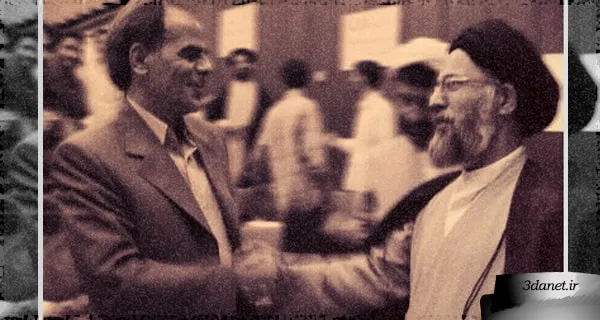
Both dialogues were organized by the “Science and Religion Project” group of the Student Basij of the Greater Tehran Universities; one in the year 1384 (2005–2006) and the other in Shahrivar 1386 (August–September 2007). They also met each other in Khordad 1386 (May–June 2007) at a conference honoring the Malaysian Professor al-Attas, and an indirect dialogue took place between them.
We know Seyyed Mohammad-Mehdi Mirbagheri for “maximalist religion” and his particular conception of the religiousization of science; that is, precisely what Iranian intellectuals are completely opposed to, and perhaps the indirect dialogue between the two at the al-Attas conference on this very subject caused Mirbagheri – who rarely appears in academic circles – to face Malekian again in less than four months. But this time, unlike the debates that students arrange, the dialogue did not take a political turn, because, at Malekian’s repeated request, it moved toward an explication of Mirbagheri’s thought; just as, over these past two years and in intra-hawza gatherings, Seyyed Mohammad-Mehdi Mirbagheri has been faced with such requests.
The chairing of this session was undertaken by Hojjat al-Islam Dr. Hadi Sadeghi – head of the Islamic Research Center of the Islamic Republic of Iran Broadcasting (IRIB).
The Story of Religious Science
Sadeghi: The subject of religious science is among the topics that, in our country – especially after the Revolution – has received much attention from both proponents and opponents, but the discussions surrounding it still require clarification, further research, and elucidation of its various aspects. There are diverse views on this subject. On one side are the modernists, who altogether deny the existence and possibility of religious science. This group believes that science has but one path, that no cultural or geographical realm or dominion is conceivable for science, and that science is evaluated solely based on universal methods and criteria of assessment, and what has occurred in modernity is the sovereignty of science.
On the other side are the fundamentalists, who are altogether opposed to modern science and believe that everything humanity has needed, the prophets have brought, and there is no longer any need for effort in these arenas, and we must return to the foundations laid by the prophets and order our lives upon that basis. These are the two extreme ends of the spectrum; by extreme, no positive or negative valuation is intended. In between, there are also various viewpoints, from traditionalists to others who strive to reconcile modernity and tradition or find a middle way, with the aim of both safeguarding religion and tradition and welcoming the new world.
Characteristics of Religious Science
If we are to have a religious science that is “science” in the precise sense of the word and is also “religious,” the first question is: what are the characteristics of this science and religion, and how are they defined? What is the first feature that makes it “science” and makes it “religious”?
Malekian: The religiousness of religious science lies in the realm of its arguments.
In my view, the religiousness of religious science means that the arguments present in that science have utilized sacred religious and scriptural texts. This utilization is conceivable in one of two ways: first, that the religious and scriptural proposition itself is used in the argument; and second, that the religious and scriptural proposition itself is not used, but is regarded as a hypothesis, and from that hypothesis, implications and consequences are derived, and those implications and consequences are subjected to the test appropriate to that science. In this way, if that science is empirical, philosophical, historical, or mystical, it is subjected to the test appropriate to each.
Malekian: The scientificity of religious science lies in the realm of its subject matter and methods.
اما اینكه علم بودن علم دینی به چیست، این وظیفه طرفداران علم دینی است كه بگویند چگونه چنین چیزی میتواند علم تلقی شود. ولی شاید بتوان علم بودنش را به این معنا گرفت كه بالاخره ما در آنچه علم دینی نامیده می شود هم با یك دیسیپلین و یك رشته علمی سروكار داریم. علم در «موضوع كل علم ما یبحث فیه عن عوارضه الذاتیه» به معنای رشته علمی است و ممكن است بین اجزای علم تقدم و تأخر باشد و موضوع، مسائل و اهداف داشته شد. علم دینی به این معنا می تواند علم باشد و در باب موضوعی سخن بگوید و مسائل و اهدافی داشته باشد. من از علم دینی – به لحاظ علم بودنش – چیزی بیش از این نمیفهمم.
میرباقری:علمی بودن علم دینی در ناحیه ی موضوع و روش هاست.
همانطور كه استاد ملكیان گفتند، اگر علم، مجموعه مسائل منتظمی باشد كه موضوع و هدف معینی دارد، در این صورت باید به این خصوصیات راجع باشد، علاوه بر اینكه مستند به یك عقلانیت صحیح هم باشد؛ عقلانیت قابل دفاعی كه موضوع تفاهم نخبگانی باشد. بنابراین، علم بودن یك علم به این است كه واجد روشی باشد كه ضامن علمی بودن یك بحث است.
میرباقری:دینی بودن علم دینی در ناحیه ی تولی نسبت به دین است.
اما دینی بودن آن به این است كه تعبد در آن جاری شود و به تعبیر دیگر، در فرایند پیدایش علم به نحوی جریان تولی به دین و سرپرستی دینی تحقق پیدا كند و در فرایند تاریخی – اجتماعی و فرایند معرفتشناختیاش به نحوی حضور سرپرستی دین از یك سو و تولی بر آن هدایت از سوی دیگر وجود داشته باشد؛ البته این همیشه به معنای نقلی شدن علم نیست.
گاهی ممكن است یك گزاره در فضای معرفتهای دینی از منبع دینی اتخاذ شود و وارد علم شود، ولی حتی این گزاره هم اگر بخواهد در درون علم به رسمیت شناخته شود، در نهایت باید از آن متد و عقلانیت تفسیر شده، تبعیت كند. اگر بنا شد فرضیهسازی هم شود، باید از متدلوژی و عقلانیت علمی تبعیت كند. دین در فرانید پیدایش علم و از جمله در عقلانیت سازی، دخالت میكند.
- علم دینی در ناحیه ی روش ها
صادقی: آقایان ملكیان و میرباقری در ناحیه علم گفتند كه باید یك دیسیپلین، عقلانیت یا روش خاصی حاكم باشد. پرسش این است كه خود این روش از كجا میآید؟ آیا خود روش را هم میتوان دینی كرد یا روش فرادینی است؟ این پرسش در ناحیه علم است.
ملكیان: روش ها از یک نظر، قابل دینی شدن هستند و از یک نظر، نیستند.
احتمالاً جناب استاد میرباقری جواب خواهند داد كه روش هم قابل دینی شدن است. اما من معتقدم به این سؤال جواب دوگانهای میتوان داد. اگر به روش، به این لحاظ نظر كنیم، خود این روش یك فرآورده است؛ این به نظر من دینی شدنی نیست. اما چون روشها چیزهایی هستند كه از ذهن و ضمیر انسانها تراوش میكنند، ممكن است انسانی كه روحیه دینی دارد و انسانی كه روحیه غیر دینی دارد، عطف توجهشان به بعضی از روشها نسبت به بعضی از روشهای دیگر بیشتر یا كمتر باشد. در روانشناسی علم، به این نكته توجه شده كه عالمان در اینكه به چه روشی توجه كمتر یا بیشتر داشته باشند، علائق و تعلقات مختلفشان میتواند دخیل باشد.
یكی از علائقی كه میتواند دخیل باشد، تعلقات دینی و مذهبی است. پس ماحصل این دو جواب این است كه خود روش، دینی نیست اما اینكه ما توجهمان به روشx بیشتر باشد یا y یا برعكس، این بحث میتواند بنا به تأثیر تعلقات و علائق ما باشد و بخشی از این تعلقات، دینی است.
ملکیان: پرسش از چرایی قید صحیح در عقلانیت
Mr. Mirbagheri pointed out that rationality must exist in method for mutual understanding to be possible. My disagreement with Mr. Mirbagheri here lies in the area of this rationality. Whenever the topic of rationality comes up, he speaks of correct rationality, proper rationality. As if we have two types of rationality: correct rationalities and incorrect rationalities.
If we do not consider this qualification explanatory, that is what it means, but if the qualification is explanatory, it is like saying the hot sun. “Hot” is an explanatory qualification, but if—as the rhetoricians say—we consider the qualification restrictive, when you say “correct rationality,” it does not mean that every rationality is correct; that is, it is as if we have two types of rationality. I do not understand when rationality is characterized by the attribute of correctness and when by incorrectness. I understand that we have rationality and the absence of rationality, but that rationalities within themselves, while still being rationality, are divided into two categories (correct and incorrect), this I do not understand.
Mirbagheri: The influence of religion in the area of method goes beyond psychological influences.
As Professor Malekian pointed out, in my view, methods too can be influenced by religion and become religious. This does not mean that the researcher only intervenes in method through the influence of psychological characteristics; that is one part of the intervention that has been considered. The emergence of a research method is certainly a social phenomenon. A social phenomenon comes about in a social process. The social process is likewise; and moreover, its historical process is the same; that is, the research method is attributed to factors that, when they emerge, we cannot ignore their method in understanding it, and if we do ignore it, that does not mean those factors are not present. The historical, social, and psychological contexts that are involved in the emergence of that science can be religious or non-religious, they can be formed on the basis of adherence to religion or not. But as long as we discuss these concepts vaguely in psychology and sociology, we naturally cannot say how and by what method.
In other words, we do not have a clear logic to explain the involvement of religion in the emergence of methods. If we can provide a model for classifying these factors and their presence, then it becomes clear how these factors intervene and precisely create methods for research. I have systematized this subject to some extent, in that I have introduced at least 27 factors that intervene in the research method. Of these, 9 are infrastructural, 9 are philosophical, and 9 are cultural; that is, culture, philosophy, and infrastructure must all be present in the method. If we define the research method solely in terms of infrastructure—which systematizes trial and error—then religious and non-religious are equal there; that is, in a sense, this is the common ground of religious and non-religious method.
Mirbagheri: The difference between religious and non-religious science in the area of method relates to the philosophy and culture involved in the emergence of science.
I agree up to this point. We accept that trial and error in infrastructures are common elements of research and are not specific to religious or non-religious science, but in terms of culture and philosophy, it becomes somewhat different; therefore, the culture and philosophy that are involved in the emergence of science must have their factors carefully classified, identified, and introduced, and then their intervention must be made intelligent and measurable.
Thus, it seems that method can also be religious, and a combination of religious guidance and religiosity in the process of knowledge production can be present in method-creation. In rationalizing this method, we must certainly identify this process and introduce its factors. When these factors are introduced, it becomes clear which factors and in what proportion influence the emergence of a scientific hypothesis or theory.
Sadeghi: So far we have reached the point that, in Mr. Malekian's view, the method of science can only become religious through the psychological issues present within the scientist, and he stated that individuals' inclinations, motives, and attachments can influence which method they choose or do not choose. In this regard, Mr. Mirbagheri also agrees with him. Mr. Mirbagheri added two other areas through which the method of science can become religious: one is culture and the other is philosophy, which he said are shared in the substructures. The philosophy governing this method or the culture that supports it can differ and be religious or non-religious. What is Mr. Malekian's opinion on this matter? Does he accept that a scientific method is necessarily governed by a philosophy and relies on a specific philosophy, or not? If so, can this philosophy be religious? This question also arises regarding culture.
Malekian: The question of how substructural, cultural, and philosophical are placed as mutually exclusive categories
Before addressing Dr. Sadeghi's question, two serious questions arose for me from Mr. Mirbagheri's remarks. He said that substructural, cultural, and philosophical issues interfere in the research method. I have two questions: one is, how are substructural, cultural, and philosophical placed as mutually exclusive categories in the first place? When you say substructural, cultural, and philosophical, it means, for example, that philosophical matters are not cultural. In what sense is the philosophical not cultural? It also means that substructures are not philosophical. In what sense are substructural matters not philosophical? When we say substructural, cultural, and philosophical, we must speak in such a way that substructural matters are not philosophical, or, for example, philosophical matters are not cultural. The question arises for me: in what sense are substructural matters not philosophical, and in what sense are philosophical matters not cultural? How are these placed as mutually exclusive categories? Do they not interfere and overlap with each other?
Malekian: The question of how psychological discussions are placed under substructures
The second question is that Dr. Sadeghi placed my psychological discussion as a subset of Professor Mirbagheri's substructural matters. How can substructural matters be placed as a subset of the psychological? In other words, I said that psychological factors are effective in approaching or not approaching a method. Mr. Sadeghi portrayed Mr. Mirbagheri's remarks as him adding two categories in addition to Malekian's psychological factors: one cultural and one philosophical. It seems to follow from this statement by Mr. Sadeghi that my psychological category is a subset of Mr. Mirbagheri's substructural matters.
Now, the question for me is how the psychological factors I referred to – which Mr. Mirbagheri also accepted – are placed as a subset of substructural matters. Therefore, let Mr. Mirbagheri answer two questions: first, how are substructural, cultural, and philosophical placed as mutually exclusive categories? Second, where exactly did those psychological factors I mentioned end up? Did Dr. Sadeghi correctly recount that they are placed as a subset of substructural matters, or did Mr. Mirbagheri himself express a different opinion? This needs to be clarified so that I can answer Dr. Sadeghi's question.
Sadeghi: I did not place psychological issues as a subset of substructural matters, and I only said that it is agreed upon that psychological issues can have a religious or non-religious influence on the method of science or the choice of a scientific field. Psychological issues cannot be situated within the area of substructural matters that Mr. Mirbagheri mentioned, because he said "substructural matters" are among the commonalities; that is, they are common between the religious and the non-religious. So, according to Mr. Mirbagheri's words, the religious and non-religious influence in substructural matters are separate from each other. We must accept this separation from the outset, that we do not intend to place the psychological issue there; at least, that was not my understanding of Mr. Mirbagheri's remarks.
Malekian: The question of the placement of psychological factors within the three stated categories
Mr. Mirbagheri's statement was precisely that, in addition to the psychological factors Malekian mentioned, he also added cultural and philosophical ones, but he corrects that this was not his intention. Now the question arises: where do the psychological factors that Mr. Mirbagheri accepted from me fit within this infrastructural, cultural, and philosophical part? Are they a fourth component or not? Do they fall under one of these three categories? This depends on where the boundaries and distinctions between the infrastructural, cultural, and philosophical lie in the first place.
Mirbagheri: Psychological factors pertain to another division, parallel to the stated threefold division.
We referred to two divisions and said that the processes influencing the genesis of knowledge are sometimes processes that are – in Mr. Malekian's terms – psychological. Parallel to that, there are also factors that constitute social and historical processes. Another division was that when we want to make the research method rational and rule-governed, besides infrastructures, we must also make two other things rule-governed; one is philosophy and the other is culture. Accordingly, these two divisions are parallel, not nested within one another. Of course, one can place these in a matrix and establish a relationship between them.
Mirbagheri: Infrastructural factors; that is, factors through which we test the efficacy of a thought or hypothesis.
The second point is that we can explain this threefold division of mine – cultural, philosophical, and infrastructural – as follows: one set of factors involved in the production of science – which we must make rule-governed – are factors related to the practical reason of the individual and society, another set are theoretical thoughts, and another set are the rules through which we test the efficacy of a thought. What is currently receiving more attention is the third set, which I refer to as infrastructural factors; that is, factors through which we test the efficacy of a thought or hypothesis to determine whether it has the desired efficacy or not.
A scientific theory must be backed by rationality and also be efficacious; otherwise – at least in today's world – a science that lacks efficacy and does not meet human needs is not considered science. Therefore, the rules that guarantee efficacy are infrastructural rules. However, the theoretical thoughts that intervene in the genesis of a scientific theory, codifying them and bringing them out of ambiguity, we call "philosophy," and those that intervene from the realm of the practical reason of society or the individual, we call cultural factors. We must make all three of these rule-governed so that we can say in what context a science emerges. Therefore, we can say that science, besides needing infrastructural rules and possessing the soundness to be established through that rationality, certainly also has a philosophy and a culture, and we must also codify the influence of philosophy on culture within science.
Malekian: In Mirbagheri's words, the infrastructural factors were expressed once as subordinate to methods and once as equivalent to them.
Professor Mirbagheri's explanation, besides not resolving previous ambiguities, added two more ambiguities for me; the first ambiguity is that the question in response to which he brought up the discussion of the infrastructural, cultural, and philosophical was: what are the methods? It was these methods that were divided into infrastructural and cultural, but in the current explanation, the discussion was only about the infrastructural aspects of method; the cultural discussion became practical reason, and the philosophical discussion became theoretical thoughts. So this, in fact, differed from the beginning of his speech.
Initially, the premise was to state what the methodological aspects in science are. He said we have 27 methods and divided these 27 methods into three groups of nine. Nine infrastructural, nine cultural, and nine philosophical. Up to this point, it came to mind that it is the methods that are 27 in number and nine are infrastructural; now, in the explanation, he said that what relates to efficacy is the method itself, and these are called infrastructural, and those relating to theoretical thoughts are called philosophical, and those relating to practical reason are called cultural factors.
Malekian: The question of creating a third category between the theoretical and the practical
The second problem is that Professor Mirbagheri pointed out that practical reason is one category, namely the cultural matters; theoretical thoughts are another category, namely the philosophical matters; and efficacies are the infrastructural ones. Now the question is: when you say we have three things—practical reason, theoretical thought, and efficacy—I ask, by what definition of practical and theoretical reason is efficacy neither theoretical nor practical? Is a third category between the theoretical and the practical even conceivable?
Until now, we had understood that all perceptions are either theoretical or practical, and there is no third category. In the professor's statement just now, practical reason was one category, theoretical thoughts another, and efficacy a third component. So it turns out that a third category is conceivable between theoretical thoughts and practical reason. Of course, he may be right, but I want to say that this conflicts with what we had understood until now, which was that we apparently divided all perceptions into theoretical perceptions and practical perceptions. There is no problem if it does conflict, but it needs to be explained to me.
Sadeghi: It seems that in Mirbagheri's words, the method is one, and the factors involved in it are three.
My understanding of Mr. Mirbagheri's remarks was not that he wanted to say we have three categories of method, each of which, for example, becomes nine, and these methods are different. I think he said that three categories of factors are involved in the principle of the method; the method is one, and three categories of factors—cultural, infrastructural, and philosophical—are involved. This differs from what Mr. Malekian is saying.
Mirbagheri: The two other categories of factors, apart from infrastructures, are matters involved in our judgments.
I said that what is sometimes referred to today as method is only those infrastructural factors. But in order to judge whether this thought is correct or incorrect, we must necessarily have a rationality that ultimately tells you whether this science has efficacy or not; because the assumption is that it is empirical knowledge. We cannot establish empirical knowledge without trial and error; that is, if we want to have religious science, the science must demonstrate its efficacy in solving problems—the problem under consideration. Therefore, in every science, we need to prove the efficacy of the thought. Today, this is referred to as "method."
My point is that we must codify two other categories of factors. If these two other categories of factors are also codified, then you can involve those factors in your judgment as well. Then you can easily analyze a body of knowledge, reveal its hidden parts, and say that a thought that does not manifest itself has philosophical and cultural foundations; then you can judge and speak. Therefore, the main discussion is whether this thinking, in terms of these cultural or philosophical foundations, is correct or not; efficacy alone is not the criterion for the correctness or truth of a thought. The factors that establish its efficacy are now recognized; you might manipulate them, they themselves might manipulate them, reduce or increase them, and refine these factors.
In this sense, you can say that in the method we pursue, we must also codify and regulate these two categories of factors so that we can then say we have a method through which we can precisely evaluate a science in terms of the cultural principles governing it, the philosophy governing it, and its efficacy. Therefore, there is no longer any necessity to place efficacy alongside practical reason and theoretical reason. The principles by which you prove efficacy may themselves be principles that have passed through your theoretical reason.
It is a lawfulness that theoretical reason establishes or that is somehow based on practical reason as well. Therefore, there is no necessity for this factor to be alongside practical reason and theoretical reason. The factors of rationality and the rational principles we employ to prove efficacy are one thing. This does not suffice to prove the truth of a science or the validity of a science; because science can be based on a particular theoretical philosophy, a particular theoretical space and atmosphere, as well as a particular culture, and yet still be efficacious.
For example, in jurisprudence you have different tendencies, all of which are efficacious. The meaning of this efficacy is not that we ignore the presuppositions. Suppose that if herbal medicine were successful in resolving an illness or controlling the balance of bodily fluids in humans, there is no reason to accept that the presupposition which defines pain—for example, the balance of bodily fluids—based on the four humors is also correct. Therefore, the correctness of a scientific theory is not solely due to its efficacy; rather, it also possesses a culture and a philosophy, and it must be identified through that culture and philosophy.
So, whenever you have analyzed and classified the cultural and philosophical factors and have been able to identify them precisely, then you can refer to it as a methodological principle or give it another name. Rationality must be able to present the culture and philosophy hidden within a thought and provide the possibility of judging a mode of thinking from the standpoint of this culture and philosophy.
Mirbagheri: The point of contention in religious science pertains to the culture and philosophy involved in the genesis of science.
Someone might say that the dispute lies precisely here, and someone might say no, knowledge has no relation to culture and philosophy and does not encompass a specific culture and philosophy; it is merely knowledge obtained based on the human being's epistemic tools, and we must pursue its correspondence to reality, its efficacy or lack thereof. Every science emerges within the space of a particular philosophy and culture; the social, rational, scientific, and theoretical processes that intervene in the making of science create that science. To judge a science, we must be able to identify these processes and judge them precisely.
If we can create and pursue such a method, the discussion moves beyond this state and becomes the content of the principle "the strongest proof for a thing is its occurrence"; you precisely analyze a scientific theory and see what philosophical principles and what faith-based principles are embedded within it. My point is that this, too, must be made rule-governed. That which makes this rule-governed can naturally be called a method; although the task of this method is no longer the control of efficacy, but rather the control of the principles hidden within a thought. I say the same even regarding our own existing Islamic sciences. We see specific philosophical thought and principles backing jurisprudence. In the principles of jurisprudence, too, we see specific philosophical and logical thought. We see a culture.
In the principles of jurisprudence, it has been accepted that revelation is absolute truth, and my point is that everywhere, since science is produced in a social process, it is necessarily shaped within the cultural atmosphere of society and the atmosphere of society's theoretical rationality, and those factors are present in this product. A model that can classify these factors and then reveal its hidden factors is a "method," and if you do not name it as such, it is not important. We need a way to classify these factors and provide a path to access them; of course, this theorizing must ultimately also have efficacy. Even in jurisprudence, we must say—although the statement seems very weighty—if our juristic practice does not have efficacy in a direction, it ultimately cannot play its role in the expansion of faith.
Sadeghi: Our question to Professor Malekian is whether he accepts that in the scientific method—whatever it may be—philosophical and cultural factors, or factors such as inclinations and faith—which are present in the production of knowledge—are also present in the method.
Mirbagheri: The philosophical and cultural factors of methods must be discovered.
It is we who must have a method for discovering them. Of course, the method itself, being theoretical knowledge, naturally possesses these as well; that is, if you wish to take a second-order look at method, method too is a produced rationality. If you say that mathematics, for example, has a culture and a philosophy, then certainly the research method in sociology also has a culture and a philosophy.
Sadeghi: So it is present both in the method itself and in the product of that method—that is, the knowledge that is produced. Mr. Mirbagheri believes that philosophy and culture are present, meaning that both faith and theoretical knowledge are present in the method.
Regarding Mr. Malekian's second question, my understanding is that he wishes to say we must pay attention to three directions. I think we should not enter into the dispute over whether these are precisely mutually exclusive or not. They may be able to defend that they are mutually exclusive. They may not, and we might somehow place that discussion related to culture together with the discussions of efficacy into one category, and that division itself becomes twofold. In any case, we seek Professor Malekian's opinion on this: are culture and especially philosophy present in the product of this method?
Malekian: Repeating the question about the common denominator of the three cases
Answering the question is contingent upon one's understanding of the question. I, who still have not understood the question, cannot answer. The issue remains for me: first, what is the common denominator of the infrastructural, the cultural, and the philosophical? First, are methods of three types? Second, are the factors influencing methods of three types, or are the methods themselves of three types? Third, are the methods themselves one of these three, and moreover, are all three not methods but merely the infrastructures of methods?
Malekian: Questioning the nature of the opposition between knowledge and method
In addition to this, another point was added to Mr. Mirbagheri's remarks; we were speaking about how every science has a method, but now we heard that the method itself was placed in opposition to science. The question was raised: is this method or knowledge? Method is the method of knowledge.
It is knowledge that has a method. They must say whether this is the method of knowledge or not the method of this knowledge. I mean to say that an opposition was created between method and knowledge. You were saying that we want to examine the existing methods in a science. Mr. Sadeghi asked, and he answered, whether this belongs to the category of method or the category of knowledge. What was knowledge, after all? Knowledge was a collection of which method is one of its tools; for example, physics is a science that has a method or methods. What does it mean to ask whether this is knowledge or method? Rather, we must say that knowledge has a method.
Malekian: Questioning the nature of culture in opposition to philosophy
Another point is, has anyone denied that philosophy is influential in science? Of course, this is if what we mean by science is empirical science; otherwise, if what we mean by science is the general meaning—which includes philosophy as well—then the matter is very clear. If what is meant by science is non-philosophical sciences, that is, empirical, historical, and mystical sciences, there is no doubt that philosophy is influential in all three. A fortiori, it is also influential in the philosophical sciences, for we even have the philosophy of philosophy. This is not a problem, but another problem arises: I say philosophy is influential in science. Then I am asked whether, in addition to philosophy, culture is also influential in science or not. In this state, an ambiguity arises for me. What, after all, is culture? What is culture that, in addition to philosophy—which we all accept is influential in science—the question of culture is also asked?
Malekian: From the influence of philosophy on science, it does not follow that philosophies have an equal status relative to one another.
The second point is that if we say “philosophy influences science,” it does not follow that philosophies can anarchically produce different sciences. Philosophy does influence science, but some philosophies themselves have precedence over others, and one can criticize, modify, negate, affirm, and so on among them. It should not occur to friends that views like those of Feyerabend and Kuhn, regarding the influence of philosophy on science, concluded that every philosophy therefore has the right to its own science. We say that every philosophy naturally has its own science, but that does not mean philosophies have an equal status relative to one another. Some philosophies are rejected and some are accepted.
Therefore, I was unable to answer Dr. Sadeghi’s question, but I accept that philosophy influences science. However, I do not understand when they say, “Malekian, you accept that philosophy influences science,” why they then ask whether culture is also influential? What, after all, does culture mean? So, first, the notion of philosophy and culture being mutually exclusive categories is unintelligible, and besides that, the claim that philosophies are influential is one thing, and the claim that every philosophy has an equal right to every other philosophy is another. No, some philosophies must be discarded through critique, and once discarded, we do not allow a science corresponding to them to be created.
Sadeghi: By philosophy, do you mean only the theoretical part, or both theoretical and practical?
Malekian: If you consider culture to include customs, traditions, and so on, then it is no longer a category separate from philosophy, but rather the category that subsumes it.
From time immemorial, we have been taught that philosophy “itself” has two branches: theoretical and practical. In that case, what does culture mean? You might say that culture contains things distinct from philosophy, for example, customs, traditions, and so on. If you say this, I say, “We grant this,” but in that case, you should no longer speak of philosophy, because philosophy itself falls under the subcategory of culture, and one cannot say “culture and philosophy.”
Sadeghi: If we want to move past the discussion surrounding these labels and get to the content, we can posit several categories of factors: one category is theoretical factors, value-based factors related to inclinations, human faith, and so on, and another set of factors produced in social traditions and customs. Mr. Mirbagheri’s explicit view is that all of these influence and are involved in the production of science. Do you accept the involvement of all these?
Malekian: That all dimensions of human existence are involved in the production of science is accepted, but ultimately, the criterion for acceptance is scientific methods.
I cannot give a blanket answer. To rescue the discussion from this dispersion, I suggest you divide the states of the human being in terms of existence, and then, for each dimension, we find a series of factors. For example, let us say we have the dimensions of beliefs, feelings and emotions, desires, speech, and action. Let us posit factors corresponding to the number of human dimensions and say that ideological factors, emotional and affective factors, factors related to desires, and factors of speech and action are influential in the human being and their science. Why? Because the human being possesses the dimensions corresponding to them.
If you had spoken this way and asked me: “Malekian, do you now accept that all these influence science?” I would have said: All these factors are influential in the genesis of scientific propositions and theories. But when these scientific propositions and theories are to be accepted, rejected, considered, affirmed, strengthened or weakened, amended or corrected, criticized or modified, then only the methods of that science itself can intervene, and nothing else has the right to intervene. So, in the genesis of scientific propositions and theories, these factors are influential, but when I present my theory to my colleagues, they do not accept it immediately; rather, they make it the basis for acceptance or rejection. Rejection and acceptance, strengthening and weakening, amendment and correction, and so on, all take place based on method, and those methods are the methods accepted in that science. So, I spoke about the domain of the genesis of science, and I spoke differently about the domain of negation.
Now the question arises: someone who wants to involve faith or religious beliefs as well has no doubt that religious faith, depending on the theory of faith you hold, falls under the category of beliefs, emotions, or deeds and speech. But whichever category it falls under, religious faith is influential. I have no doubt. Depending on the three different theories we have of religious faith, faith is ultimately either a matter of belief, a matter of feeling and emotion, or a matter of speech and deed. So religious faith does influence scientific theories, but it influences the genesis of a theory, science. Nevertheless, in the critique of that theory—accepting, rejecting, amending, revising, etc.—faith is not influential here, and only methods are influential. Mr. Mirbagheri may go along with me up to this point, but after that he will say: “I accept that methods are influential in rejection and acceptance, but the methods themselves are influenced by religious faith.” If he says this too, we have no problem, but he must answer one question: have methods not arisen from a body of knowledge? If they have arisen from a body of knowledge, then all the things said about that knowledge are repeated verbatim.
Sadeghi: According to Mr. Malekian, method is no longer directional, because it is itself produced based on a scientific method, and the hypotheses related to the method may have arisen directionally, but the context of judgment pertaining to the method is then non-directional. Mr. Mirbagheri, if you believe that method also becomes directional and differentiated, and takes on religious and non-religious forms, by what reasoning do you state this?
Mirbagheri: From Malekian's perspective too, method, with a second-order view, is knowledge.
I believe Mr. Malekian accepted that method, with a second-order view, can also be knowledge and that the predicates of knowledge apply to it. Therefore, the answer to his question of whether it is method or knowledge is that it is a method which itself, by virtue of being second-order, is knowledge; like the science of logic, which is a method for philosophy but is itself a second-order science.
Malekian: What I meant by methods being knowledge was the discussion of the methodology of the sciences.
No, Mr. Mirbagheri, I was not saying that. Our initial discussion on this was that every science—physics, for example—has methods, but midway through the discussion, you and Mr. Sadeghi asked whether this is knowledge or method. I said, what do you mean, is it knowledge or method? Method is always the method of a science. But what I myself said recently is that a science like physics has methods that are the methods of that very science. But these methods themselves belong to a science other than physics. Sometimes the point is to consider science, for example, like a fortress. One piece of this fortress is the methods of that science. This is a point I emphasize: if you say this, then you should no longer ask whether this thing is method or knowledge. No, method is a piece of a science. That was one point. Another point is that the method which is the method of a science—for instance, the method of science x—this method itself is discussed in another science, not in this x, but in another science, regarding its correctness and incorrectness, its efficacy and inefficacy, its expediency or inexpediency, and that “other place” is the place usually referred to as the “methodology” of that science. For example, we say that in the “methodology of physics” we discuss the methods of physics. Therefore, let us never say it is method or knowledge. First, note that all methods are the methods of a science, and then the methods of this science—especially in another science we call the methodology of this science—are themselves the subject of discussion and examination.
Sadeghi: What I meant was whether the knowledge produced by a method becomes directional, or do you consider the method itself to be directional as well.
Neither I nor Mr. Mirbagheri insisted that method stands in opposition to knowledge. What I meant was whether the knowledge produced by a method becomes oriented, or whether you consider the method itself to be oriented as well—and Mr. Mirbagheri emphasized both. We never intended to set these two in opposition to one another. Mr. Mirbagheri claimed that the product of every method is manifested in a body of knowledge. Method is the method of every science. Every science has a product; for instance, the product of the method of physics is such-and-such a physical proposition or theorem. He says these theorems become oriented because a philosophy governs the method of that science and the science itself. He then said we also have a second-order knowledge in which these methods are produced, and this is precisely the point you alluded to; that is, there is no difference of opinion on this matter—that method itself is the product of another body of knowledge.
Mirbagheri: The method of adjudicating science is not merely a method that checks efficacy; it is a method that also checks the philosophy enfolded within the science and the scientific proposition.
If you accept that philosophies influence the sciences, but philosophies are not all on the same level, then one of the methods of adjudicating the sciences is to analyze the science. We extract the philosophy behind it and say that because its philosophy is not an acceptable philosophy, this scientific proposition is also unacceptable. Indeed, I was also saying that the method of adjudicating science is not merely a method that checks efficacy; it is a method that also checks the philosophy enfolded within the science and the scientific proposition, and this too is part of the method of checking science. Therefore, it is not enough to say this proposition is efficacious. In medicine, it is not enough to say this proposition is efficacious and cures the disease; rather, this medical proposition may be based on a natural philosophy that has been falsified, so this medical proposition is also falsified. Thus, we must have a method for analyzing a theorem or a proposition with the aim of finding the philosophy enfolded within it, in order to lead us to an adjudication of that science.
Malekian: Sciences that consider only the practical realm, if they are efficacious, we accept them, even if their philosophies are erroneous. But theoretical sciences, even if they possess efficacy, are not acceptable if their philosophy is incorrect.
I never denied that one of the ways—in your terms, analysis, and in my terms, critique—of science is to proceed to critique its philosophy. But there is one point, and this is my point of disagreement with Mr. Mirbagheri. Mr. Mirbagheri says that if we suppose, for example, that a certain way of prescribing and a certain type of medical practice cured your headache, this has so far shown that this medical practice is efficacious, but if the philosophy behind this medical practice is, say, based on the four humors, he says that theory might be wrong. I submit that it is possible for a science to be efficacious while the philosophy behind it is incorrect.
But the whole point is what conclusion we want to draw from this. It is possible that your headache is genuinely cured by Hindu medicine, yet the theory of Hindu medicine may be problematic. There is no objection to this, but the debate is over whether, if a science is efficacious but the philosophy behind it is erroneous, we can reject that science on this ground or not. It is here that we must divide the sciences into two categories: sciences whose erroneous philosophy, if they are efficacious, we must accept; and sciences whose erroneous philosophy means their efficacy does not license us to accept that science. Which sciences? Sciences whose sole purpose and end is practice. This category of sciences, even if the philosophy behind them is incorrect, are valid if they succeed in practice.
Therefore, if we adjudicate sciences based on efficacy, we must say: sciences that consider only the practical realm, if they are efficacious, we accept them, even if their philosophies are erroneous; and if they are not efficacious, we do not accept them, even if their philosophies are correct. But theoretical sciences, even if they possess efficacy, are not acceptable if their philosophy is incorrect.
Sadeghi: A question on the possibility of purely instrumental sciences
The conclusion we draw from Mr. Malekian's remarks is that one group of sciences are purely instrumental and give us no information about reality, while another group are not like this. If the philosophy of the second group of sciences is falsified, then those sciences themselves are certainly falsified. The question is whether such knowledge actually exists. Can we find a knowledge that is purely instrumental, where only its efficacy is the criterion and which does not bring with it a culture and philosophy of its own?
Malekian: The discussion of purely instrumental sciences is a departure from the current debate.
Our main discussion was whether the concept of religious science is possible and desirable or not. But this question of yours takes us away from the main discussion.
Sadeghi: If this question is not answered, we cannot arrive at the discussion of the possibility and desirability of religious science. Because when we say that directedness manifests itself in these instances, its precise result is that it can be religious or non-religious. So we are moving exactly at the very center of the main discussion. When we discuss value, philosophy, and culture, it is clear that a portion of these values and cultures are religious; therefore, we have not gone astray in the discussion.
Malekian: The philosophy of any science is different from the intervention of religion in science.
We have gone astray because the philosophy of any science is different from the intervention of religion in science. You did not pay attention to this point. I said that five factors are influential in science. Then I said that religious faith – depending on whether we consider it a type of belief, or feelings and emotions, or speech and action – undoubtedly influences science, but where does it exert influence? In the genesis of science. Now I want to make two points;
First – When we said religious faith exerts influence, we did not conclude this from the philosophy of religion. The philosophy of religion is only the influence of philosophical beliefs on religion. Not all of our beliefs are philosophical. Therefore, from admitting the influence of philosophy on science, we should not conclude that we have therefore admitted religion has an influence. We accept the influence of beliefs in general; religious beliefs, philosophical ones, etc. But one part of these beliefs are philosophical beliefs.
The second point is that you say until we understand whether or not we have a completely practical science, we cannot understand whether or not we have religious science. I do not understand; was religious science – which was the subject of your discussion – only the practical sciences? When you say religious science, meaning religious philosophy, religious physics, religious psychology, and religious sociology, these are theoretical sciences, not practical ones. In other words, suppose that a completely practical science does not exist. Dr. Sadeghi's question was whether a science that is completely practical exists or not? If the answer is negative, then all sciences become theoretical. If all sciences became theoretical, then the problem of religious science would become even greater.
Mirbagheri: In the context of purely instrumental sciences, religious science is a science whose efficacy is oriented towards the expansion of nearness [to God].
I am not saying whether we have a science that is only science or not. Let us assume we do. If you have sciences that are entirely oriented towards action, these sciences become religious and non-religious; in the sense that their efficacy is either in the direction of expanding worship or it is not in the direction of expanding worship. If efficacy becomes the subject matter in a science, I can say that if its efficacy is not in the direction of expanding nearness [to God], then it is anti-religious. You object, saying this is science. I say it was decided that we do not judge its truth about reality and only pay attention to its efficacy. Efficacy also has a false type. Such a science does not admit truth and falsity [in terms of correspondence to reality] but it does admit right and wrong. Therefore, I consider being religious as synonymous with being not wrong and right. A science that is only oriented towards efficacy is either right or wrong; if its efficacy is in the direction of expanding nearness, it is right, and if it is in the direction of distance, it is wrong. There is no third option. Therefore, in this group of sciences, the criterion of right and wrong is relevant, not the criterion of truth and falsity, so that we could say its philosophy is false.
Mirbagheri: In the context of theoretical sciences, religious science is a science that is compatible with a religious worldview.
اما آن دسته از علوم – كه ناظر به واقعیت هستند – حتما مشتمل بر یك فلسفه و جهاننگری هستند. اگر این جهان نگری دینی بود، این علم دینی است و اگر نبود این علم دینی نیست.
اسم این جهاننگری را فلسفه میخواهید بگذارید یا هر چیز دیگر، فرقی نمیكند چون دین لااقل به انسان یك اندیشه و یك نظام فكری میدهد. اگر پس از آنالیز كردن علمی به اندیشه علمی – كه فقط معطوف به كارآمدی نیست – منتهی شد و شما بپذیرید كه از طریق فلسفهاش میتوانیم در باب آن قضاوت كنیم، موضع یك چنین علمی اگر برگردد به چهارچوب نظام فكری دینی، این علم، دینی است و اگر به چهارچوب نظام فكری دینی برنگردد، اگرچه كارآمدی دینی داشته باشد، غیردینی است. اگر شما مبتنی بر اندیشه كانت علمی تولید كردید و كارآمدی هم داشت به نظر من میتوانیم بگوییم این علم دینی نیست چون اندیشه فلسفی او را دین تایید نمیكند. بنابراین علمی كه معطوف به كارآمدی است، به لحاظ حق و باطل، دینی و غیر دینی میشود.
میرباقری: مقصود از فرهنگ، گرایشهایی است كه به یك نظام ارزشی و حقوقی و دستوری در جامعه تبدیل میشود.
اما فرهنگ چیست. مقصود از فرهنگ گرایشهایی است كه به یك نظام ارزشی و حقوقی و دستوری در جامعه تبدیل میشود. اگر این نظام ولایت و تولیای كه این علم را تحویل می دهد، نظام ولایت و تولی دینی باشد، دینی است و اگر نباشد دینی نیست. اگر نظام ولایت و تولی اجتماعی دینی باشد، حتما فضایی كه علم خاص تولید میكند، دینی میشود. بنابراین فرهنگ غیر از فلسفه است. فرهنگ عبارت است از آن گرایشهایی كه در جامعه تبدیل میشود به نظام ارزشی، دستوری و حقوقی كه به دنبال آن علم تولید میشود. بنابراین، نظام ارزشی، دستوری و حقوقی جامعه در دانش آن مؤثر است و دین حتما ایجاد یك نظام ارزشی دستوری حقوقی در جامعه میكند و ما دیگر نمیتوانیم بگوییم دین این كاره نیست.
به این معنا من مدعی علم دینی هستم. علم دینی علمی است كه فضای نظری حاكم بر او دینی است و علمی است كه كارآمدی در جهت توسعه قرب دارد. بنابراین ما معتقدیم كارآمدی همیشه یا در جهت حق است یا در جهت باطل، سوم هم ندارد. مگر اینكه شما انتزاعی نگاه كنید و نظام كارآمدی ما را در قالب بهینهشده نبینید. اگر چنین نظام كارآمدیهای علمیای را در حال بهینهشدن ببینید، حتما جهت در كارآمدی هم خود را نشان میدهد و به لحاظ جهت حق و باطل پیدا میكند.
میرباقری: نظام ولایت و تولی، دخالت در مقام داوری هم میكند.
نظام ولایت و تولی، دخالت در مقام داوری هم میكند. این به بحث معرفتشناسی و اینكه شما معرفت را چه میدانید، برمیگردد. اصلا داوری كردن یعنی چه، تا بگوییم داوری جهت دارد یا نه؟ داوری اگر كشف مطلق است، كشف مطلق كردن بر اساس اندیشههای پوزیتیویستی، دینی و غیردینی ندارد، اما خود داوری كردن، همیشه با یك ارزش همراه است. اگر انسان فقط اندیشه نظری داشته باشد در این صورت، هیچ داوریای اتفاق نمیافتد و به تعبیری هیچ حركتی هم صورت نمیگیرد. حركت مبتنی بر انگیزه است. بنابراین دستگاه داوری انسان به لحاظ معرفتشناختی، تركیبی است از دستگاه نظر و عمل.
بنابراین اگر داوری را فقط به عقل نظری برگردانیم، ممكن است كسی بگوید در مقام داوری دین دخالت نمیكند. وقتی ما داوری میكنیم و میگوییم دین صحیح است، این داوری تركیبی است از عقل عمل و نظر.
میرباقری: كیفیت گرایش ما در كیفیت داوری ما دخالت میكند.
بنابراین كیفیت گرایش ما در كیفیت داوری ما دخالت میكند. پس ادعای من مبتنی بر دخالت دین در داوری، مستند به این است كه داوری فرایندی است اختیاری. اینطور نیست كه نظام اختیارات اجتماعی در نوع داوریاش هیچ دخالتی نداشته باشد. حتی داوریهای علمی هم نمیتوانند از چنبره نظام گرایش اجتماعی رها باشند. اصلا ما علم فارغ از گرایش در عالم نداریم. روش فارغ از گرایش هم نداریم. این ادعایی است كه البته باید اثبات شود و من فقط چهارچوبهای آن را گفتم.
Sadeghi: In that case, what you said means the starting point of human movement becomes either inclinations or human faith? Up to this point we might go along with you and say this happens in every individual, but the criterion for scientific judgment is individual. If it were collective, couldn't there be an objective criterion independent of these tendencies, values, and inclinations, one that would no longer take a religious or non-religious direction?
Mirbagheri: Inclinations definitely interfere in methodology construction, and methodologies prove themselves mostly through efficacy.
Inclinations definitely interfere in methodology construction, and methodologies prove themselves mostly through efficacy; that is, judgment here is not about theoretical rightness. Rightness in practice can prove it. Which scientific method can demonstratively prove a proposition?
Sadeghi: Perhaps it is not demonstrative, but the very fact that collective reason has accepted it...
Mirbagheri: So then it doesn't need a demonstration.
Sadeghi: Yes. And no one has claimed a demonstration; in scientific discussions, no scholar has claimed that.
Mirbagheri: So what is the criterion for judgment; an inclination toward efficacy?
Sadeghi: No, their criterion for judgment is collective reason. When the community of scholars judges, it accepts it.
Mirbagheri: Collective reason does not judge free from inclination.
My question was exactly this: how does collective reason judge? We say its criterion is collective reason. In epistemology, I discuss the judgment of collective reason, that collective reason does not judge free from inclination, and it is impossible for it to free itself from inclination. Even when it wants to free itself, it has an inclination. Freeing oneself from inclination is an illusion. If inclination changes, judgment also changes. Of course, I accept that a religious theologian must definitely be able to construct a theoretical apparatus that, without religious presuppositions and based on shared social inclinations, proves its own rightness.
I'll give an example; suppose we want to prove the unseen world. We must construct thought based on the inclination that exists in the majority of society. Therefore, it seems to me there is no reason to present a single philosophy and a single theology for all levels. Say who your audience is and at what coordinate point they stand, so we know how to speak to them. The very definition of demonstration as Aristotelian demonstration—which presents one equal demonstration for all levels and inclinations—is an abstract definition of the human being. Demonstration differs for different human beings, and it is meaningless to say we have an equal demonstration.
Sadeghi: Let's not enter this philosophical discussion and return to the methodology of science and collective reason. You are saying the inclinations of each of these individuals come together and create a collective inclination. Is that correct?
Mirbagheri: Yes, collective inclination is the source of public judgment.
Sadeghi: A collective inclination is formed, and it must be so. You also accept that this is both the reality and how it should be.
Mirbagheri: But we can reform this inclination. One meaning of research management is the management of inclination.
Sadeghi: Shouldn't we try to minimize these inclinations?
Mirbagheri: I consider human science and technology to be "developed ignorance".
No, you can change its direction, but you cannot reduce it. You can change the direction of the inclination so that the judgments change. Inclinations have the direction of truth and falsehood. I do not mean they are either purely true or purely false. You can move toward the purity of inclination so that pure knowledge is produced and judgments become pure. In other words, a human being who belongs to himself, his judgments are always dark, even his scientific judgment. Therefore, in my view, what is called science today is compound ignorance, has no efficacy, and its result is the expansion of human misguidance; it cannot render any service to humanity.
I have said this repeatedly and I repeat it with certainty, even though I am accused: If the caravan of civilization had stopped before the Renaissance, it would have been far better and more felicitous than reaching Toffler's electronic bridle. Even if the caravan of civilization had stopped before the Renaissance, it would have been far more felicitous than the current situation. It has yielded nothing but anxiety, insecurity, the negation of human dignity, and dissolving the human being in the expansion of capitalism, and spending human dignity for the expansion of capitalism. Therefore, I consider human science and technology to be "developed ignorance." Of course, within it there are layers of luminosity, because it is not pure unbelief.
Malekian: The question of judging purely instrumental sciences based on proximity to and distance from God
The first point the professor made was that we can also judge sciences whose sole occupation is practice, from the perspective that the product they produce is in the direction of proximity to God or in the direction of distance from God. I will give two or three examples of products: a wall, a potato, and pot-making. Are this pot, this potato, and this wall in the direction of proximity to God or distance from Him?
Mirbagheri: If you move out of the state of abstraction, you will see the connections.
This wall is certainly in the direction of distance, because it is oriented toward modern architecture, it has a philosophy, humanity must live in this realm, it belongs to a specific type of human being, and its efficacy is a false efficacy.
Malekian: But we have heard that the Prophet built walls in the mosque with his companions.
Mirbagheri: We build them too, but this architecture is false architecture. The walls that the Prophet built, for example, were four-cubit walls that were not based on mathematical science and technical principles, but the wall in your example is based on mathematical and technical principles, it is based on the entirety of modern knowledge and based on the modern system of inclination; meaning, if there were no iron and modern mathematics, there would be no architecture. If we say this modern system of inclination is false, then all its products are also false, including the wall.
Malekian: What about the potatoes that the companions of the Prophet ate?
Mirbagheri: If our agricultural model is the modern agricultural model, problems arise; both in the domain of human nutrition and in the domain of human spiritual and physical health. Why do you detach a potato from its scientific model? The question is, in which scientific system and which atmosphere was this potato produced? If you move out of the state of abstraction, you will see the connections.
Malekian: Some tools have a dual function and are not separable.
Mr. Mirbagheri is certainly sincere, and this is quite evident, but he does not pay attention to the fact that some tools, in the words of Rumi, are like a rope with which one can both descend from the surface of the earth to the bottom of a well and ascend from the bottom of the well. The disbeliever, the hypocrite, the materialist, the theist, the mystic, and the prophet can all use the potato. Therefore, one cannot look at this potato in itself and say it brings one closer to God or distances one from God. It depends on who the eater is and in what direction they consume it.
Mirbagheri: One must distinguish between the subordinate level and the appropriative level of sciences.
The sciences have subordinate and dispositive levels. Wherever a holistic view is taken of the goals, the direction is definite, and wherever there is no holistic view, there are isolated experiences.
Malekian: Accepting that we have no value-free method lands us in difficulty when it comes to accepting foundational religious beliefs.
You said that even our judgments are influenced by our motives in judging, and this is nothing new. Sin affects a person's cognition and renders it dim and opaque. Sin, whether it be a sinful will or a sinful act, affects the human mechanism as a whole. The human mechanism consists of communicating vessels. You are not compartmentalized. The discussion is about the fact that motives influence judgment. Many people reject a colleague's new theory out of envy, but why, despite all this, does physics say that Einstein was right and not his rivals? That Newton was right, because it has methods that say, with whatever motive you wish to negate or affirm, you must present yourself before this scale.
Mr. Mirbagheri pointed out that in all sciences, whether theoretical or applied, our value judgments ultimately intervene, and he emphasized that we have no value-free method and that our negations and affirmations are ultimately influenced by our values. I say, let us suppose our statement is correct, but I have a question: the set of propositions that prove the truth of our religion, such as proving the existence of God, discussions concerning the proof of God, general prophethood, specific prophethood, the Resurrection, the guardianship of the Pure Imams, etc.—you certainly prove these to your audience using a method.
We want to know, when you accepted this, which of your motives influenced your acceptance of them? I want to say that the problem Popper's critics posed for him arises at another stage for the likes of Mr. Mirbagheri. Mr. Mirbagheri says that all religious motives can have a positive influence on judgments, and non-religious motives can have a negative influence. I will suppose I have accepted this. Now I say, when we want to choose a religion, you who have chosen Islam, the Shia branch, and the Twelver sect—were your religious motives influential or your non-religious motives? Non-religious motives cannot be influential, so your religious motives must have had an influence. Religious motives cannot be influential in the religion you subsequently choose. Thus, you fall into an infinite regress.
Mirbagheri: In the realm of setting criteria, theoretical reason is not independent of practical reason, and the human being is not born devoid of practical inclinations.
My general argument stands. In the realm of setting criteria, theoretical reason is not independent of practical reason; therefore, criteria revert to the dominant social inclinations. It is the general inclination within human beings—the innate inclination—that presents itself in judgment, but this is not an inclination in which our own will is initially effective. When we are created, it is not the case that we are created with a theoretical reason and possess no practical reason whatsoever, nor any inclination within us, and then afterward, theoretical reason, for instance, proves God so that an inclination might arise. From the beginning, we are beings possessing innate disposition, desire, inclination, and perception, and these two operate in mutual reinforcement.
This is a common general inclination that is toward the Truth. But it is not an inclination in which my will is present; however, given that the human will begins to act, it chooses a direction to guide its inclinations, and that voluntary direction affects the quality of voluntary human understanding. In other words, at one level of understanding, our agency and will are natural. These gentlemen trace it back to causality; we say it is not the case that the will is a possessing agent. We do not believe in voluntary directionality. Directionality exists, but it is not a matter of our free will; it pertains to the providence of God Almighty. God Almighty, in order to move the world toward the Truth and to bring everyone to perfection in the Truth and in the completion of the proof regarding the Truth – just as He has placed a common faculty of assessment and theoretical reason – has also placed a common inclination, without which no completion of proof would occur. If our innate desire and innate inclination were removed, and if there were no desire for servitude and nearness in our innate nature, the completion of proof through the prophets would not occur at all. So here, the basis of common understanding is usually traced back only to theoretical reason and causality, whereas we trace it back to the combination of practical reason, theoretical reason, and providence.
The point is where the human will becomes active in understanding and its agency plays a role, and here the direction traces back to individual and social will. Our discussion is in this part. The knowledge that is produced based on human will, not the knowledge produced based on innate nature and without the presence of my will, where the will of human beings becomes present in the creation of knowledge; it is there that I say the will takes on a direction and understands in accordance with that direction. The type of its understanding is proportionate to its direction, and its capacity is its direction. Therefore, in the community of the righteous, the understanding of the natural order of the world is also transformed. I am discussing this part of knowledge. In voluntary science, direction enters, truth and falsehood enter, and truth and falsity are also formed in accordance with direction and will.
Even the criterion of assessment, where we produce it in a voluntary form, involves the presence of our will. Of course, at all these levels, we do not have absolute freedom, just as we do not have absolute freedom in our actions. That is, the frameworks of providence do not allow absoluteness to assessment, but this does not mean they reduce the power of our will's presence and our will in assessment to zero. The reason you see instances of invincibility emerging is that our will is not absolute in methodology. Precisely because it is not absolute, we imagine it is zero. So, method is a method in which the will is not present at all. We oscillate between zero and one.
.
.
Audio of the Debate on the Possibility of Religious Science with Mostafa Malekian and Mohammad-Mehdi Mirbagheri
PDF file of the Debate on the Possibility of Religious Science with Mostafa Malekian and Mohammad-Mehdi Mirbagheri
.
.




Discussion11 comments
انسجام فکری و توانایی ملکیان در مناظره کردن حیرتانگیز است.
واقعا افق دید آقای میرباقری خیلی بالاتر از آقای ملکیان بود و بنظرم آقای ملکیان حتی به افق دید آقای میرباقری نزدیک هم نمیشد و برای همین نمیتونست از تابوهای مدرنیتهی ذهنش خارج بشه. بنظر من نظرات آقای میرباقری خیلی ناب و چندین مرتبه بالاتر و عمیقتر بود. ممنونم
خیلی مناظره خوبی بود ممنونم. برخلاف دوستان من اعتقاد دارم باید این مناظره ها انجام بشود چون فقط با این مناظره هاست که میشه قدرت نظرات را فهمید. بررسی رابطه دین با علم و عقل برای من خیلی جالب است. نقد کتابی هم اخیرا کانال فلسفه از کتاب مکتب تفکیک گذاشته، نقد متین و موقری بود، واقعا لذت بردم. در صدانت درباره خیلی از موضوع ها پرونده ای کار کردید میخواستم ببینم در مورد مکتب تفکیک هم کار میکنید؟ نظرات مخالف و موافق را بگذارید اگر میشه. ممنون
بابا جون، علم دینی دیگه چه صیغه ای یه ؟؟! متدهای علمی (اندازه گیری و آزمایش) دارن. اندازه گیری هم مگه مدل اسلامی داره ؟؟؟ اینا فقط میخان، جوانان و بچه های مردم رو مغز شویی کنند… به خدا، مردم از خنده :-) :-D
توصیف علم در یک خط ! واقعا دقیق و معتبر بود. تاریخ علم خواندن هم بد نیست.
پاسخ شما تحقیر و سرکوب است و استدلالی درش نیست . خط اول شما مغالطه است چون تمسخر کردید . خط دوم شما ناسازگار با منابع است . بقیه هم که تمسخر است و خالی از ارائه مطلب و استدلال.
سخن ایشان می تواند بسیار بدتر از این که توصیف کردید باشد و می تواند نکاتی داشته باشد. وقتی کسی توهین و تمسخر می کند به علت نداشتن دلیل و محتوی است. زیرا که اگر سخن این آقا اینقدر شما را به خنده وامی دارد که دیگه چه نیازی به تحقیر و تاکید شما دارد؟ فهممخاطب شما اینست که می خواهید موضعی را بکوبید. ضمنا ان چه گفتید با موضع مقابل هم ناسازگار است. موضعی را که مدعی دفاع از آن هستید را نمی شناسید.
اگر بدنبال علم و فلسفه بودید با مطالعه شاید (شاید) به نتیجه ای برخی افراد مانند منتقدین وجود slant و values در ساینتیزم یا تقدیس علم ماتریالیستی ِ ماکانیستی، یا طبیعت گرا می رسیدید. توجه داشته باشید نمی گویم این موضع درست است اما با مطالعه متوجه عدم موفقیت نگاهی که عالم را بر اساس mechanism یا physicalism که نگاه فوکو و دیگر منتقدین نیست می شویم. خلاصه مطلب طبیعت گرا اینست که جهان همین هست که تجربه می شود. یعنی همان سخن باستانی یونان esse est pericipe حس تنها منبع شناخت در نظر گرفته میشود. 1. طبیعت گرایی حتی تعریف ندارد و حتی یک موضع قابل ارائه روشن ، واضح، کامل و بی خطا نیست. 2. طبیعت گرایی مکانیزم ، و تجربه گرایی توان تبیین موفق جهان را ندارد و به شواهد غیر مؤید و مخالف برمی خورد. 3. این مواضع خود غیر تجربی هستند. 4. خود تجربه گرایی تجربه گرا نیست و a priori و پیشینی است. 5. ... 6.... 7.... Is that enough ? or do you want to hear more? علت ارائه علم ساینتیستی فرانسیس بیکنی در دانشگاه قدرت و سلیقه موسسین دانشگاه های مهم دنیاست نه صدق تجربی وrationality این نگاه. اگر نگاه در پس تبیین علم مکانیکی یا طبیعت گرای را بپذیریم بغیر از مشکلات عقلی ، فلسفی، منطقی، تجربی .. به مشکلات زیاد دیگری نیز بر خواهیم خورد. نتیجه پذیرش لم مکانیکی این است که جهان همینطوری اتوماتیک می چرخد و همینطوری انرژی دارد و همینطوری بیخودی می چرخد . بدون هیچ علتی بودن هیچ agent ای به کار ادامه می دهد و کار می کند and functions. ایا اگر کسی در مقیاس بسیار کوچک و در سطح ساده و غیر پیچیده این باور را بپذیرد به عقل او شک نمی کنیم؟ چه برسد به پیچیدگی و کارکرد فوق العاده جهان مشاهده پذیر. This would be the most counter intuitive belief anybody could think of.
وای عجب مناظره ای بود. صدانت دوست داریم.. خسته نباشید به “استاد ملکیان” گرامی.. ولی نامردی، مجری هم وسط مناظره، به نفع طرف مقابل، یهو اومد تو بحث، مناظره در واقع “دو به یک” بود.. ولی انصافا استاد چیزی ازشون باقی نگذاشت :-D :-)
اولا آقای صادقی قبلا به نوعی شاگرد آقای ملکیان بوده ، کتاب فلسفه اخلاق ویلیام فرانکنا رو که آقای صادقی ترجمه کردن رو آقای ملکیان مقدمه زده و آقای صادقی هم ترجمه شون رو به آقای ملکیان تقدیم کرده . ولی وقتی آقای ملکیان حرف سطحی می زنه هیچکس نمی تونه بپذیره، قبل از این مناظره هر یک از آقایون در روزهای قبلش مدعای خودشون رو مطرح کردن بصورت سخنرانی بعد مناظره انجام شده . ای کاش متن اون ها هم موجود بود تا مدعای هر دو طرف روشن بشه و بعد مناظره رو می خواندید .
جالب بود.. ممنون