Political Science
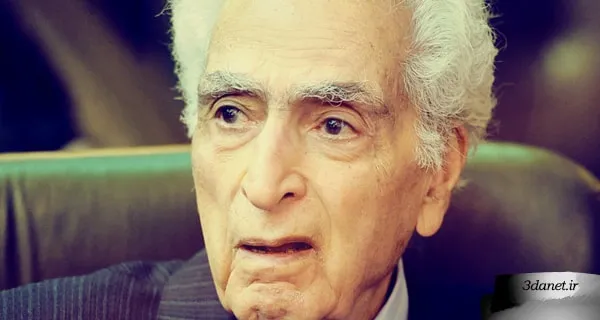
The Relationship Between Capitalism and Democracy: Mehrnameh Monthly's Conversation with Mohammad Tabibian
Drawing on Dahrendorf, Mohammad Tabibian sees the coexistence of capitalism and democracy as a historical accident, not a theoretical necessity. Capitalism does not lead to democracy, and its definition rests on individual rights and competitive markets.

1- For many years, Iranian intellectuals have spoken of the necessity of the priority of political freedom over economic freedom, but the arguments of pro-market economists are often to the contrary. The strong theories of economists emphasize that economic freedom precedes political freedom. For instance, Milton Friedman says, "Economic freedom is the essential prerequisite for political freedom." Please explain what relationship exists between economic and political freedom in the literature of free-market economics, and why the left-leaning intellectuals' view regarding the priority of political freedom over economic freedom is incorrect?
Answer: The first noteworthy point is the nature of the relationship between capitalism and democracy, however we define them—such as an economy based on the market mechanism, or capitalism. The question that arises is: what has this relationship been like theoretically and empirically? Perhaps the best analysis I have seen on this matter is in the article "Democracy, Capitalism and Globalization" by Lord Ralph Dahrendorf. He is a social science researcher and writer who served as director of the London School of Economics for about ten years. However, his view differs somewhat from that of economists in this field. Although his ideas are hypothetical or conjectural and require more rigorous testing, he considers other options of thought that are worthy of reflection.
Dahrendorf begins his discussion with Isaiah Berlin's proposition that since the Enlightenment, social thinkers and intellectuals have believed that all good things come together. Accordingly, democracy—which guarantees the individual's liberation from partial and total servitude and bondage, and grants personhood, human rights, and the right to participation for all—comes hand in hand with a competitive market economy, which guarantees the creation of wealth, the generation of prosperity, and the opportunity for talents to flourish and for people to enjoy the results. But he thinks that this fortunate conjunction is a coincidental historical accident in Western Europe and the systems rooted in it, such as Canada and Australia. He says that examples like China and the countries under its influence, such as the Southeast Asian nations of Singapore and Malaysia, are capitalist countries where governments are established that do not believe in political choice, freedom of expression, and other political freedoms. He also considers the American experience a special case, where a suitable constitution was adopted from the beginning, and within its framework, individual freedoms and economic development were realized, becoming a clear example of democracy and a free economy existing side by side. But this example was not repeatable, was not implemented in that style elsewhere, and attempts to export it to other countries were fruitless. He notes that totalitarian systems, like the former Soviet Union under Lenin and Stalin and China under Mao, lack the capacity for progress. Because they must constantly be engaged in mobilizing people and resources, and this prevents a market for human labor, goods, and resources from forming, efficient and economical resource allocation does not occur, and the political system continues to waste human labor and resources until it either corrects itself or collapses. Authoritarian systems also usually operate in a manner that creates an oligarchy of the wealthy, who become rich based on the assistance of the person at the top, and are supposed to aid him in various ways and aspects and protect his power and their own interests. Like the current example of Russia or many Third World countries such as the Arab states. Naturally, this favored oligarchy acquires wealth through corrupt methods, and not, as is in principle the norm in a capitalist system, through wealth creation. Therefore, the inherent and structural corruption of these authoritarian systems is itself a factor that keeps these governments unstable and in a state of perpetual decline (which consequently drives these systems to resort to repression or reliance on foreign powers). A particular type of governmental system that can be considered is fascist and populist systems. Dahrendorf argues that these systems, although appearing as an extreme form of the capitalist system, are in fact considered its enemy. From Dahrendorf's argument, it can be understood that the existing alternatives to democracy lack the capacity to maintain and perpetuate a system based on a free economy as envisioned by economists since the eighteenth century.
It can be understood that the capitalist economy and the democratic system depend on two different conceptual domains: one is the economy, whose potential arena is global; the other is government and politics, whose arena is strictly national. A review of the experience of the last two centuries also shows that diverse examples can be mentioned. Non-democratic capitalist systems (like China and Saudi Arabia) and some examples of non-capitalist democracies (like India until the last two decades of the twentieth century). Therefore, just as capitalism is not necessarily accompanied by democracy, democracy also does not necessarily lead to the development of a wealth-producing economic system.
This argument of Dahrendorf's, which has considerable foundations, is also flawed in one respect. Although his subjective concept of democracy is a standard one—the concept of democracy he has in mind means government based on individual rights, the rule of law, universal participation, and the peaceful transfer of power—his conception of capitalism is not uniform. This is because the term has been used with great pejorative connotations by political activists and political philosophers. Although the economic systems of Saudi Arabia, China, Germany, England, and Australia are all called capitalist, their differences are vast and fundamental. From very ancient times, there have been individuals in societies who have appropriated ownership of the communities' wealth and resources. For instance, in Iran during the Sassanian, Safavid, Qajar, and other eras, wealthy individuals and large landowners could be found. Because some held ownership over the means of production, some also call those systems capitalist. A strictly organized economy based on a constitution, like that of America or Germany, can also be called capitalist. Yet these two are very different.
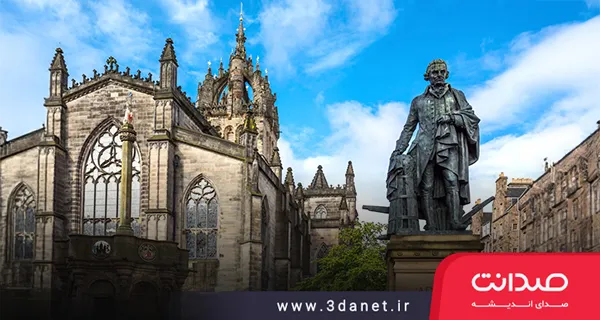
What we understand as capitalism within the framework of economics is a specific edition with a specific intellectual and philosophical history and a specific empirical tradition. This concept is, in fact, a product of the Enlightenment and is rooted in the intellectual tradition of recognizing and respecting individual rights. The root of this concept in economics begins with Adam Smith and the new definition of the wealth of nations. In Adam Smith's view, the wealth of nations was not the hoard of gold and silver and weaponry, but rather the capacity to produce goods and services that are useful to the ordinary person. The indicator of being useful to the ordinary person is that the good or service can, in principle, be bought and sold voluntarily and freely in the market. This, in turn, requires a competitive economy, the elimination of monopolies, the regulation of natural monopolies, the prevention of malfeasance, the protection of tangible and intellectual property rights, the elimination of rent-seeking and free-riding conditions, appropriate macroeconomic policymaking, and so on. This paradigm changed the concept of capitalism as revolutionarily as the heliocentric paradigm changed traditional astronomy. In this way, the capitalism envisioned by Adam Smith and the economists after him has a great affinity and closeness to democracy, because both are built upon the foundation of the rights and freedoms of the individual human being. This is the same American precedent that Dahrendorf also points to. Therefore, such a political and economic system and organization, moving in lockstep, does not come into being spontaneously or suddenly. In fact, its creation requires trial and error, learning from experience, and repeated correction.
The success of societies in this long-term and arduous experience also requires the existence of an educated class possessing an appropriate intellectual paradigm. In the author's view, this distinction is the pivotal point in the success or failure of societies on the path of economic progress and democracy. In the contemporary history of societies, a populist tendency to flee from democracy in the hope of escaping economic hardship has been observable. A clear example is the overthrow of the so-called Weimar government in Germany after 1933 and Hitler's rise to power in post-World War I Germany, which was a popular movement away from democracy due to the economic crisis and the people's hope and perception that if a strong government came to power, it would be able to solve the problems. Many examples can be cited, such as the populist support for the Bolsheviks in Russia and the sidelining of the nationalists after the overthrow of the Tsar, or the defeat of the Chinese nationalists and their retreat to Taiwan and the victory of the Maoist communists on the Chinese mainland. The difference between these examples and those of England, America, and other cases under similar conditions, where the country undergoes repeated economic crises, has been that in this latter group of countries, the educated stratum was aware that in conditions where economic well-being is lost due to crisis, they must be careful not to lose freedom, at least, so that the opportunity for a rational solution to the problems is provided. These cases and their comparison with the former group of countries, where populists took the field, show that in the latter case, the people, by following populism, lost both freedom and economic prosperity. In the other group of countries, the resistance of the rationalists against the populists guaranteed the continuity of those societies, and time was gained to solve problems and confront crises. In the current conditions of American society, the fundamental test is whether the educated class and social institutions will be able to control Trump's populist policies or not.
This is precisely the key point. That is, the existence and resolve of an educated and aware stratum regarding what they should defend, what they should be vigilant about, and what kinds of policies and methods they should avoid and reject. This has been the weakness of our country's educated stratum from the dawn of the Constitutional Revolution to the present, and the reason for our country's failure to advance its economy and democracy. In other words, our thinkers, due to communist and leftist tendencies within that tradition, instead of guiding or correcting social movements, have followed the masses and have attributed a submissive authenticity to emotional and populist movements. For which, quite rightly, they have also been suppressed and humiliated by the hands of the very masses, and have seen the reward for their confusion and inappropriate thinking in the palms of their own hands. A similar cause and phenomenon led to the insufficient success of Mr. Hashemi's efforts and, to some extent, was a factor in the dominance of populists and the infliction of irreparable blows on the country's economy, society, and diplomacy.
2_ Leftist intellectuals and Iranian institutionalist economists say, "Since the market is itself a set of institutions, including property rights, and the emergence of institutions is itself the result of the transition to democracy, therefore the market is an institution born of democracy." Institutionalists in Iran believe that "Considering the institutions necessary for a competitive market, especially property rights, one can say that a competitive market takes shape in the process of transition to democracy; therefore, the market mechanism cannot be considered prior to democracy. Also, the process of transition to democracy is more complex than to be explained by a single factor like the market mechanism." What is the flaw in this reasoning?
Answer: I have a long history of personal friendship with some of these institutionalists, and the opinion I am expressing is related to and directed at the idea, not the person. If I refer to domestic institutionalists, it is not a personal discussion, as I remain committed to that old bond of friendship with those friends. Unfortunately, the criticism that can be leveled at this thought falls into two categories: one is a lack of erudition, and the other is a lack of professional integrity. Regarding the first, consider the very text of the question: that the institution of the market, because it is an institution, is born of democracy. The market, meaning the mechanism of voluntary exchange, has existed since the earliest formation of human society, when no one knew the words institution or democracy. Elsewhere, I have spoken of the experience of the market two thousand years before Christ. The Carthaginians, who were seafaring traders, used to trade with the forest-dwelling tribes of Africa. They would approach the shore in a specific season of the year, arrange booths of their goods on the beach, return to their ships, and create smoke. The forest dwellers, noticing the arrival of the Carthaginian traders, would place their own goods—including hides, gold dust, precious stones, and the like—in front of the booths and flee into the forest.
The ship-dwellers would come ashore, and if they deemed the goods opposite their wares suitable for the value they had in mind, they would take them and go back to the ship; otherwise, they would return to the ship without touching the goods. The forest dwellers would return again, and if they were willing, they would add to the counterpart of the ship-dwellers' goods; otherwise, they would take their own goods and go back into the forest. This process would repeat until the relative price of the goods was determined and the final transaction was made. We observe that the market existed at a time when there was no law, no government, no judge, and no domestic institutionalists—even when buyer and seller were terrified of each other and did not even wish to see one another. And this argument of the institutionalists is entirely baseless. For the existence of a market, the division of labor and diversity in production, voluntary exchange, and repetition without imagining a final point are sufficient. The second criticism of domestic institutionalism is the lack of professional integrity. This group has never been willing to specify which tradition of institutionalism raised in economics they believe in; and if they believe in none and have instead brought forth a new achievement, to codify it for the use of the world. They are also unwilling to clearly formulate a set of their desired policies and subject them to public judgment; instead, they wait for others to raise a point, and then they write a critical essay or deliver an emotional speech about it.
3_ Iranian intellectuals believe that development is not a process that is the product of market-oriented attitudes. For this reason, they cite social democratic countries as examples. For instance, they say that the model of Sweden, which is governed on the basis of social democracy, is based on socialism, so the market model is not the only solution for transitioning to development. Has development in the Scandinavian countries been achieved because of the implementation of the socialist model, or because of moving closer to the market?
Answer: This is also a fundamental fallacy. Sweden's economic system is a capitalist system, or a competitive market economy with full private ownership, in every sense of the word. Its social democracy lies in the fact that it levies higher taxes and provides more welfare services. Those who raise these points do not want to accept that Sweden does not follow the rule of traditional Marxism-Leninism socialism and adheres to the intellectual tradition of economic freedom. This achievement was not attained through slogan-based idealism either. Before the Second World War, Sweden experienced high economic growth for fifty years within the framework of a free economic system, and during this period, education and culture also advanced, such that both society became wealthy and the people became cultured, enabling them to establish the mechanism of a durable welfare economy through untainted tax payment and corruption-free government spending.
.
.
The Nature of the Relationship Between Capitalism and Democracy
Mehrnameh Monthly's Conversation with Mohammad Tabibian, Issue 51
Read this conversation on Mohammad Tabibian's website
.
.




Discussion1 comments
سال ها نویسندگان « چپ » گفته اند « اقتصاد زیربناست ، سیاست عصاره اقتصاد است ... » اما پرسشگر خلاف این را مبنا قرار می دهد و از چرایی اش می پرسد : « چرا دیدگاه روشنفکران چپ گرا در زمینه تقدم آزادی سیاسی بر آزادی اقتصادی درست نیست ؟ » ؛ استاد هم نمی گویند مستند و گواه مبنای پرسش شما کدام است ؟ کدام « روشنفکران چپ گرا » و کی و کجا این حرف را زده اند ؟ پرسش و پاسخی که این گونه آغاز شود ، قرار نیست به رویش آگاهی بینجامد . به هر رو ، چون آزادی در گرو وجود مبانی زیستی ـ اقتصادی توانایی رفع محدویت و تضمین آن و تحقق استعدادهاست ، در صورتی گسترش می یابد و فراگیر می شود که مبانی زیستی ـ اقتصادی ( مالکیت بر لوازم زندگی و اختیار خود ) فرگیر باشد . تمرکز بیشترین ثروت در دست گروهی یعنی آزادی عده ای اندک و عدم آزادی اکثریت . وقتی نداشتن نتوانستن باشد و داشته ها دائماً در اختیار درصد کمتری از افراد جامعه باشد ، نتیجه آن آزادی درصد کاهنده ای از افراد در برابر ناآزادی اکثریت قریب به اتفاق مردم است . وقتی بسیاری یک ماه کار نکنند و مزد نگیرند ، گشنه می مانند ، و وقتی چند دهک جمعیت چند ماه مزد نگیرند ، قسط و اجاره شان عقب می افتد و برای تأمین نیازهای اولیه خود به مشکل برمی خورند ، امثال طبیبیان از آزادی چه کسانی سخن می گویند ؟ !