Literature
Mohammad-Ali Eslami Nodushan: The Realm of Hypocrisy in Literature
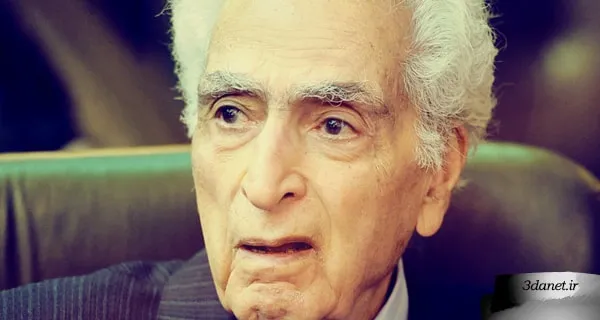
Hypocrisy and dissimulation became prominent in Persian poetry from the Ghaznavid era onward, leading to moral decline. Mohammad-Ali Eslami Nodushan identifies geographical factors, despotism, social turmoil, and the separation of the outward form of religion from its inner substance as the reasons for the prevalence of duplicity in politics and religion.
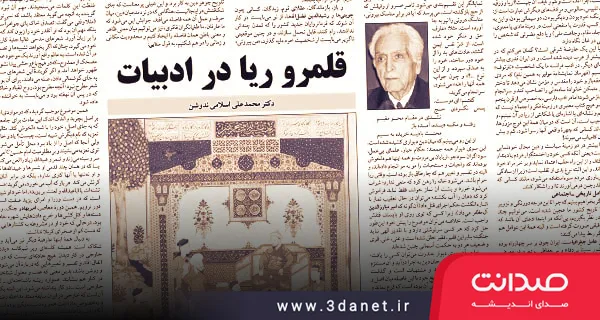
Note: For reasons dating back to the Ghaznavid era, eulogy and flattery became prominent in Persian poetry and language, to some extent forming the axis of discourse, and as time went on, it grew thicker and thicker, leading in later centuries to moral decline—or perhaps it mirrored that moral decline. The original title of this piece is “The Realm of Hypocrisy in the Social and Political Context,” which Professor Eslami has examined with attention to the social and psychological dimensions of the subject. We wish the Professor, who has long been away from his homeland, health and a speedy return.
In none of the books written about Iran, whether by Iranians themselves or by foreigners, has anyone yet noted or clarified when hypocrisy and dissimulation entered Iranian history, why they came, and what their nature and extent are. Hypocrisy, deceit, dissimulation, imposture, sanctimony, and their synonyms consist of: changing color; being oneself and being another, being two-faced, and this is for the purpose of gaining power or some benefit in the material or spiritual realm (wealth, status, position, national prestige), or averting a harm that would keep a person safe from calamity.
Is this an Eastern affliction? I suspect it has been seen more in the East than in the West, and in Iran somewhat more than elsewhere. In French literature, we know a character named “Tartuffe” (the hero of Molière’s play of the same name), who is a trickster and presents himself as holy and pious in order to possess the young, wealthy daughter of a simple-hearted family, and is eventually exposed; but in Persian literature, especially from the fifth century AH onward, there is no significant book in the realm of thought and society that we can open without seeing some sign, allusion, or complaint about hypocrisy, and what is strange is that among all this host of dissemblers, few were those whose true faces were disgraced; more or less all of them died successful!
Hypocrisy has mostly had the opportunity to display itself in two domains: politics and religion; that is, for someone to present themselves as a servant of the people or as devout, and in this way gain trust and ride the steed of their desire, and this is, of course, a vile form of fraud; because it exploits the simplicity and credulity of the people, like those who imitate the call of the quail in order to hunt it.
Historical-Social Factors
If we wish to see why duplicity, dissimulation, and dissembling have become so intertwined with our country’s history, we can consider several factors, without claiming here that a precise examination has been carried out, and of course, all these factors are interconnected:
One is the geographical factor. Because Iran has been situated at a crossroads, it has been a relatively defenseless and unprotected country, exposed to various invasions, especially from less affluent peoples; therefore, it has been, on the whole, an insecure country, and the characteristic of people who live in insecure and poorly protected lands is that they build a psychological fortress around themselves, and each person secures their own safety in this way. One method was for a person to adapt themselves to circumstances and become ready to appear other than what they are.
The second is the factor of governance, and this is a characteristic of countries ruled by despotic government. In a system where the ruler considered himself the representative or trustee of God (and in ancient times this was often the case), he was compelled to present himself as the guardian of heavenly decrees in order to maintain the people’s obedience to him. Hence, the pretense of piety was considered part of the very essence of rulership, and the ruler himself and all his agents were obliged to observe it. In return, the people, in the face of an oppressive government, saw no other way than to feign submission and belief, even if they thought otherwise in their hearts.
Third, the chaos and disorder of the social organization. Although this factor contradicts the second factor, it produces a similar result, which is insecurity and the absence of a recourse for justice. As a citizen of a city without walls, you are compelled to erect that same psychological defensive barrier around yourself so that, instead of repelling an attack, you reduce your own vulnerability to attack; thus you resolve the matter for yourself as follows: “Whoever is inside, we are the corridor…” And this story found in the Golestan is deeply meaningful: One day a fox was fleeing. They asked, “What calamity is it that causes such great fear?” He said, “In the city they are seizing camels.” They said, “What have you to do with a camel?” He said, “By the time I come forward and prove that I am not a camel, my deliverance will be postponed until the Day of Judgment!” This simple story conveys the depth of insecurity and lawlessness in a society.
Fourth is the separation of accounts in matters of religion, and this arises precisely from the excessive intermingling of religion and the world. The point is that, as we advance through our history, we increasingly see this tendency for there to be no connection between the outward form and the essence of religion, meaning that the required duties are performed, and thereafter one’s mind is at ease, thinking that we have done whatever was required and there is no reason we should not be righteous servants of God. Gradually, the other part, which is the spirit and essence of religion (piety, brotherhood, compassion, renunciation of greed), falls into oblivion. This attitude gradually divides religious precepts into two categories: those to be consumed and those not to be consumed; whatever one sees as beneficial is kept, and whatever one sees as detrimental is set aside. For instance, a person can amass a legendary fortune and console himself that he has paid his khums and zakat, or sell at an exorbitant price and say that the buyers purchased willingly and gladly, and so forth…
The famous poem by Naser Khosrow (“The pilgrims have returned with reverence…”) says everything there is to say on this matter and clearly illustrates this compartmentalization. Naser Khosrow asks his friend, who has returned from the Hajj, whether, alongside the outward rituals, he has also performed the inward rituals, for example: “Has he become a knower of Truth and a denier of his own self, become secure from the evil of the ego, cast off bad habits, surrendered himself to sincerity, and suchlike…?” And when he hears “no” in answer to all of them, he finally says:
I said: O friend, then you did not perform the Hajj, You did not become a permanent resident in the station of annihilation. You went and saw Mecca, and have returned, Having purchased the hardship of the desert with silver.
Thus we see that a wall has been erected within religion. On this side of the wall, everyone is gathered: tyrannical rulers, unprincipled clerics, profit-seeking merchants, pitiless masters, and all of them have been content that they have meticulously performed the obligatory and supererogatory acts, and of course, the door to interpretation and exegesis has always been wide open. When usury is forbidden, one can mortgage a house, which is permissible; wine can be drunk and prayers offered afterward, provided one does not forget to rinse the mouth; one can, while performing the supererogatory prayers after the obligatory ones, order an execution with a gesture of the finger (as Amir Mobarez al-Din of the Al-e Mozaffar used to do), because killing anyone who stands up to him is obligatory. In short, one can resolve the matter for oneself thus: everyone has a destiny, and one must not struggle against divine decree; therefore, the poor were created poor, and the rich, rich. The strong and the weak have both been made so by heavenly wisdom.
But on the other side of the wall, one can rarely find anyone; for there the essence and soul of religion must be put into practice, and that requires depriving oneself of pleasures and desires and demands self-sacrifice. Therefore, throughout our history, we have been confronted with this gap between the essential and the subsidiary, and the result has been that the subsidiary remains and the essential departs. What wonder is it if Iran has been divided into the two camps of arrogance and oppression? For they had interpreted it such that one could be “arrogant” without, according to outward judgment, any contrary act having been committed…
Fifth is the course of Iranian history, which, as it advances, sees the intensity of moral disorder in the country increase. The reason is clear. At every stage along its path, Iranian history takes on a new problem, and the accumulation of problems and calamities in a society without a central authority increasingly generates fragmented and self-serving reactions. One of these reactions, and perhaps foremost among them, is precisely this turning away from the straight path and resorting to hypocrisy.
As far as can be inferred from the available evidence, the most wholesome period in Iran's post-Islamic history was the Samanid era (which encompassed a part of Iran). In this period, a warmer human relationship is observed, and there is a greater measure of sincerity, joy, and simplicity among the people; it is an era in which beliefs are expressed more freely, the expression of religious conviction is accompanied by less affectation, culture holds sway over the people's spirit, and thoughts are candid and clear. After the Ghaznavids, and then the Seljuks and Khwarazmshahs, came to dominate Iran, and a closer relationship was established between Iran and the Caliphate of Baghdad, dryness, harshness, and fanaticism increased, and Iranians, in order to adapt themselves to the fierce and less civilized temperament of the invaders, began to strengthen their talent for flexibility and diplomacy…
The Worldly Scholar and the Despotic Rulers
Throughout this entire era, the scholars of Iran, the thinkers, and the so-called "cultivated class" of the country were divided into two groups: those who sided with the rulers, with the prevailing wind, and placed themselves at its service, such as Ahmad Hasan Maymandi, Nizam al-Mulk, and all the courtiers of this sort, as well as many scholars who, through their silence or complicity, effectively kept the wheels of government turning, along with a number of writers and others… In contrast, a minority of religious scholars (figures like the son of Sammak and Bu al-Hasan Bulani, the Qadi of Bust, whose descriptions Beyhaqi has given in his book), a handful of poets and writers, and a large number of mystics, took another path, which was the path of opposition to power. The complaints and revelations of these individuals, which can be considered the expression of dissenting thought and the public conscience of the people, were directed at three sources of authority: the despotic ruling apparatus, the worldly scholar devoid of practice, and the common people.
It is from this point that Iranian mysticism strives to contend with these three constraints and create a broader, more breathable intellectual space. Mysticism, without breaking away from the essence of religion, disregards many of its secondary aspects and regulations, and consequently, its aim is to place principle against subsidiary, and kernel against husk.
The Terror of Mongol-Stricken Iran
After the Mongol invasion and the incalculable destruction and massacres, the Iranian spirit was shaken and crept further than ever into the shell of its obsessions and superstitions. The little experience it had gained in life made it ever more aware of its own defenselessness. It saw that Tatar savagery, quite simply because it was accompanied by force, had overcome civilization, and its books, beliefs, and knowledge had been unable to resist it. So where is truth? It is nothing more than a name, and everyone must fend for themselves.
And again, the survivors, the wise men of the nation, the elite, people like the Juvaynis and Rashid al-Din Fazlollahs, had to set about the task of taming the country's new rulers, who possessed little civilization, and making them tolerable. In such a situation, they were inevitably compelled to draw upon their own character, to set the "outer self" against the "inner self."
Mongol-stricken Iran never again became that former Iran. An insidious fear crept into the underground stream of the people's psyche: the realm is unsafe, and at any moment someone might emerge from behind the wall; therefore, as much as you can, conceal your true self. The most eloquent spokesman of Mongol-stricken Iran, of disaster-stricken Iran, seasoned by heat and cold, its foot having struck a stone, becomes Hafez, and it is not without reason that he presents the archetype of the clear-sighted Iranian in the figure of the "rend"; that is, one who knows all the ins and outs, has seen through everyone's game, and is aware of everything concerning the universe and existence. And although he outwardly maintains a convinced and affirming demeanor, deep down he knows what the matter truly is. Hence, even though he swallows his cry and speaks softly, in code and allusion, he knows what must be known, and nothing is hidden from his inflamed, sleepless, dust-covered eye; and he knows this well, too:
He spoke of that beloved for whom the gallows grew tall
His crime was that he revealed the secrets
As the prevalence of hypocrisy persisted over time, it became a habit and an inseparable part of the politics of life. People came to see their best interest in living with their outward face, and it also became a normal matter that rulers, community leaders, and ideological guides, “when they go into seclusion, do that other thing.” The result is that the course of affairs flows on the surface, and there is always doubt regarding the inner reality; yet a blind eye is turned. Sin, in reality, is recognized as that act of which people become aware; if it can remain hidden, it is no longer a sin; and the art of living becomes learning how to cover one’s weaknesses and keep one’s inner self concealed, as it has long been said: “The uncaught thief is a king”! In this way, life can take the form of a theater stage where everyone is both themselves and the performer of a role they must present themselves as.
Let us return to the testimony of literary works. Secrecy and ambiguity, in the words of Rumi, a “mixing of water and oil,” spread from society into literature and itself became a method, which was that for every word or term, two or three meanings were intended, one being its apparent meaning and the other allegorical, and through this, a kind of two-layered literature was created, where the lower part was far more meaningful, more tumultuous, and more storied than the upper part; and mystical expression was founded on this basis and went so far as to use blasphemous terms in alluding to the essence of religion. And this is very meaningful, though there is no room to delve into it here. When, among the claimants of religion, such a great distance falls between word and deed, the answer becomes that we mystics, we intellectual rebels, can also create the same distance between the apparent meaning and the inner meaning and break the limitations of time and place, as Sanai says:
The word you speak from the face of faith, whether in Hebrew or Syriac
If you seek the place for the sake of Truth, whether it be Jabalqa or Jabarsa
The prevalence of metaphor and allusion in Persian poetry was not for a bad purpose, but with the intent of escaping harm. It was a refuge sought to open a path so that thought could transcend the line drawn by the “pretentious seekers of authority,” who wanted the world narrowed to suit their own interests.
The Constraint of Logic and Ethics
In general, we see the practices of hypocrisy in two forms: ostentation and dissimulation. Ostentation comes from the powerful, but dissimulation is specific to those who have been in a position of weakness or a minority. It is the concealment of one’s belief from others, whether religious or political, at a time when expressing that belief brings fear for one’s life, property, and honor, and this is employed in a society where fanaticism prevails. Holding an unconventional thought is not as great a sin as expressing it; for there is fear of its spread, which would cast people into doubt. Moreover, in a society where a single thought must rule alone, the audacity of the minority must not be forgiven.
When dissimulation became widespread, it acquired the status of a rule of life within the social hierarchy, one that must not be violated. As soon as a person finds themselves facing a stranger, or someone stronger, they see their best interest in showing themselves aligned with the current toward which power flows. By the same token, belief remains shaky, and as soon as power changes hands, it too shifts its position. What else can a society do in which there was no respect for reasoning and no logical criterion for measuring right and wrong? The protection of life and property takes on primary importance, and the sacrifice of belief becomes inevitable.
This mentality has brought two other complications with it: one is flattery and dissembling courtesy, and the other is exaggeration, and both arise from a mode of thinking that no logical or ethical constraint places a boundary before. When there was no problem with a person speaking contrary to their belief, there would also be no problem with words being used in an expedient and interest-driven sense to advance a matter, that is, a meaning that has a conventional aspect rather than a real one.
If we see that so much flattery, exaggeration, sycophancy, hollow pleasantries, and empty titles and epithets have been invented in our language, it stems from this very issue. Since the powerful sought subjugation rather than conviction, they measured the degree of their power and eminence by the thickness of these words. What mattered was not whether the speaker believed what he was saying—which he could not (for instance, when he said: "May I be a sacrifice to the dust of your jewel-like feet")—but rather that he abased himself enough to utter these words. Panegyric poetry often takes on a caricature-like quality, such that if one were to bring the similes and images contained within it into the real world, a bizarre, laughable creature—the like of which could not be found in any zoo—would emerge from the person being praised. And if the speaker of these ridiculous poems was given a reward instead of a reprimand, it was because the literal meaning of the poem was not at issue; what was at issue was the spirit of subjugation and abjectness hidden behind it, which also had to be transmitted to the reader.
This very issue has caused the semblance to outweigh the substance in some cases, and gradually this habit has developed in society of contenting itself with the semblance instead of the substance. Let us give an example: What is the Ta'zieh, whose other name is Shabih (semblance)? It is remembrance and memory, but when it causes the substance to be forgotten, it becomes a matter for reflection. A person sits in a Ta'zieh, weeps for the oppression of Imam Hussein (AS), beats his head and chest, and curses Shimr and Ubayd Allah ibn Ziyad, yet it is quite possible that just a few steps away from him sit Shimrs and Ubayd Allahs, and not only does he have nothing to do with them, but he bows and prostrates himself before them. Every time he drinks water, he says: "Greetings to your thirsty lips, O Aba Abdillah, and curses upon Yazid," yet he himself is enamored of the force held by Yazid-like ministers and princes. Let us not go too far. In this very contemporary era, Amir Bahador-e Jang was renowned far and wide for his rawzeh-khanis, mourning processions, lavish displays, and expenditures, while he himself, during the Constitutional Revolution, committed massacres that were no less than the plain of Karbala.
Following all this comes another affliction, which is the spirit of skepticism: always seeing a catch somewhere, seeing a foreign hand at work. There is no event that occurs in the country for which the interpretations and explanations given are straightforward and clear, in the sense of placing a known cause and effect side by side. An unknown root—possibly foreign—is always presumed to be at work. One reason for this, of course, is that foreigners have a long history of intervention in Iran, and especially the issue of oil has always been a source of intrigue, and also that governments have not been accustomed to telling the people the truth. Nevertheless, another reason must be sought for it, and that is the pessimistic and skeptical mentality created over centuries as a result of a dual-personality and two-tiered life.
Modern Hypocrisy
After acquaintance with Western civilization was made and the Constitutional Revolution arrived, hypocrisy found a new arena for self-display, and that was beating one's chest over reform and modernity. A class of so-called intellectuals familiar with Europe, who by their own claim wanted to bring the East out of medieval darkness, mounted themselves on the people's shoulders and drew a strap from their backs such that Qajar despotism paled in comparison! Now, here, they intimidated the nation through Europe, and the concept they held in their minds for the people was that very "common folk are like cattle," in the full breadth and length of its meaning. From this date onward, hypocrisy becomes systematic, meaning it becomes organized and falls under a rule. On one side is the constitutional government, parliament, the judiciary, separation of powers, and law, which of course is nothing more than a grand joke, like plastic mannequins, and on the other side are people who are barred from intervening in politics and in whose name only ballot boxes are issued.
The lights were off and the mill was turning, and opportunists were always ready to act, to immediately take on the color of power's desire, and to show themselves as heartbroken lovers of whatever smelled of gold and force, be it blasphemy or faith. And what is strange, and also regrettable, is that Iranian society, despite all its efforts, has not been able to render itself independent of the services offered by this group of opportunists, who are very talented in trickery. Whichever way it turns, a number of these have surrounded it; but one must remove the cotton from one's ears, for until this historical wound of Iran, which is hypocrisy, is healed, nothing will change in any profound way, and Iran will inevitably have to live again with the secondary and the semblance.
*Yesterday, Today, Tomorrow
.
.
PDF File of The Realm of Hypocrisy in Literature
Download from Server One | Server Two
.
.
The Realm of Hypocrisy in Literature
Dr. Mohammad-Ali Eslami Nodushan
Ettela'at Newspaper | Wednesday, 20 September 2017 | Page 6
.
.


Discussion1 comments
شیعه باشد اوج زرق مغول دادش رشد برق خواجه نصیر شد وزیر نمد مالید پس امیر پس آمدند سربدار کز خلق آرند بس دمار قزلباش بود زان بتر در ظلم کرده غوطه ور مملوک شده این ملة هیات منا الذلة!