Art
Abbas Kiarostami in a Group Conversation with Mehdi Malek, Alborz Zahedi, Mohammad Hossein Mirbaba, Ardavan Tarakomeh, and Hesam Salamat
Abbas Kiarostami's cinema remains a site of contention; a conversation exploring the nature of this phenomenon, from the distinction between the Iranian and the global Kiarostami to the clash between Orientalist and formalist perspectives, and his definition as a modernist artist who eludes every analytical framework.
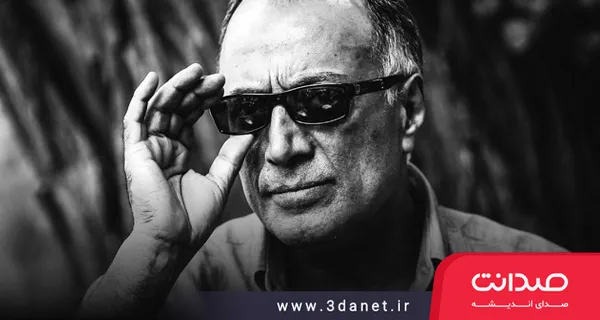
The cinema of Abbas Kiarostami, like that of many of his contemporaries, remains a subject of dispute and will probably forever be a topic of irreconcilable differences. This disagreement and dispute, which is perhaps intrinsic to any true auteur, was once again seriously brought to the fore after his regrettable death—itself another matter worthy of reflection. It seemed to us that putting Kiarostami's cinematic legacy up for discussion among people who, at least based on their prior knowledge of one another, should not be so like-minded and unanimous in their assessment of this legacy, could be illuminating in shedding light on the internal tensions of this legacy and bringing its controversial and paradoxical aspects to light. That is why we decided to turn Kiarostami's cinema into the subject of a group conversation. What you read below is the product of this conversation.
Hesam: In the upcoming session, we are going to discuss Kiarostami's cinema. The participants in the conversation are Mehdi Malek, Alborz Zahedi, Hossein Mirbaba, Ardavan Tarakomeh, and Hesam Salamat. The first question is, and naturally the first question should be, where should we start? Because, based on the initial discussion we had with the group, we concluded that we don't want to proceed step by step and line by line through all the dimensions and all the angles of Kiarostami's cinema. We want to, so to speak, start with a more general question so that the conversations can take off and see where we end up through the dynamism of the discussion process itself. For the reason I mentioned, we want to start with a very abstract question that will ultimately launch us very directly and immediately into the very subject called Kiarostami, and that question is: who really is Kiarostami? Or, to put it another way, what is the Kiarostami phenomenon? Therefore, our discussion begins from this very whatness. The whatness of the phenomenon called Kiarostami. Now, the group will start, and if you agree, we can consider a process. That is, initially, we go person by person, and after the first round, when everyone has presented their discussion, we can proceed with the conversations randomly and in reaction to each other's discussions.
Alborz: To begin, I think it wouldn't be a bad idea to, as they say, formulate a framework. I think we should naturally start from this point: how many Abbas Kiarostamis can we distinguish from one another? There is the Abbas Kiarostami of Iranian cinema, who gradually emerged from the late 1960s, alongside Masoud Kimiai and his film Qeysar, and with that generation of Iranian filmmakers. Afterwards, he continued his work in collaboration with the Institute for the Intellectual Development of Children and Young Adults. Apart from The Report, he made almost all of his works with that same institute, in the form of short films, documentaries, and feature films, and continued on this path almost until the late 1980s. From this perspective, this Kiarostami, whom we ourselves might know and whose influence on Iranian cinema we might have examined, has been less addressed. Except perhaps for one or two books written about him in the late '80s. We also have an Abbas Kiarostami who is a global figure. Parallel to that other face, this image also belongs to a filmmaker about whom almost all the living figures of world art cinema have spoken. Many of the greatest critics and theorists of cinema and art have spoken and written about him—though I think lumping all these reactions and interpretations together and homogenizing them is not quite correct. We have Susan Sontag and David Bordwell versus Nancy, Badiou, and Žižek, who belong to two not-very-compatible schools of thought, and all have spoken and written about Kiarostami with praise and loved his cinema. From critical intellectuals to formalist film theorists, from postmodernists to critics of postmodernism, and from philosophers to art theorists, the only common element among them is the stature of Abbas Kiarostami. In the midst of this, there are also second- and third-rate festivals that, in imitation of global artistic and intellectual waves, pay tribute to the filmmaker and are followers, and one can trace the footprints of an Orientalist, exotic gaze and the effects of a post-colonial perspective in their approach. Another division can also be made, and that is the duality of form and theme in Kiarostami's cinema: through which one does each person or movement encounter the Kiarostami phenomenon? In any case, the Kiarostami who is prominent on the world stage, through his works from the mid-1980s, perhaps from Where Is the Friend's House? to the Koker trilogy, Taste of Cherry, and Close-Up, and those 5 or 6 major films made during those years, the thematic extracted from these works is the very theme that a Western audience might like to find in a work produced in the East. A cheerful encounter with life, a kind of mysticism and cynicism, and images in praise of life—and everything that belongs more to the Far East, India, and those regions of the world, they can extract from this cinema. There is an individual redemption, a purification through the journey, and a kind of escape from the collective in these works, which is of interest to many Western critics and thinkers. And of course, I believe this is not the only thing that can be extracted from Kiarostami's cinema, but in any case, Abbas Kiarostami is that image which suits these Orientalist interpretations, and incidentally, the issues that some critics of Kiarostami point to gain relevance in confronting this approach. For example, after he died, in one of the notes collected for his death, the former editor-in-chief of Cahiers du Cinéma emphasized that whenever he sees a film by Kiarostami, he is reminded of the tales of the One Thousand and One Nights and the magical East. Why should Kiarostami's films remind one of the One Thousand and One Nights? The issue is those familiar signs that a Western audience searches for when encountering a phenomenon from the East. On the other hand, when Haneke, Mike Leigh, and others speak of Kiarostami, they are more engaged with the formalist Abbas Kiarostami. A minimalist filmmaker whose works are full of experimentation and formal innovations. An Abbas Kiarostami who constantly challenges the patterns of cinematic representation in his works, plays with the possibilities of cinema, puts form under tension, and expands the language of cinema. So, we can encounter Kiarostami from several perspectives.
Ardavan: This formulation was a good start, but there’s a tension that, for me personally, has always existed regarding Kiarostami: amidst all these debates—is Kiarostami a mystic? Is he political? Is he a realist or a postmodernist?—one thing that manifests itself, based on his cinematic activities, is that whether we like it or not, we are dealing with a modernist artist. A modernist precisely in the sense that he is constantly evading placement within any very specific analytical framework. That is, if we were to list a series of formal and thematic elements and say, look, for these reasons Kiarostami is a such-and-such apolitical, mystical filmmaker—and we can indeed find examples in this vein—we could just as readily extract a very radical formalist, on the scale of cinema history itself, from his films. Examining all of Kiarostami’s periods, we are constantly faced with an artist who is fleeing definition, fleeing confinement within the boundaries of a specific theory. For this reason, our position on Kiarostami is not fixed; in the same sense that our position on many modern filmmakers is not fixed. In the sense that we cannot say, for instance, that Godard is a filmmaker who possesses these formal elements and these thematic elements, therefore we can offer a very clear definition of him. On this basis, this is a starting point for me: to what extent and with what definition can we consider Kiarostami a modern filmmaker? Kiarostami is, in fact, a very orthodox modernist, a claim one can fully stand by, as evidenced by my favorite films of his, like Close-Up or The Report. The next point, which is very important to me, is the opposition that most festivals and, in a way, that line of Western leftist intellectuals try to establish with Hollywood through the mediation of Kiarostami. That is, Kiarostami becomes the representative of that alternative cinema which is now standing against the formal and aesthetic hegemony of Hollywood, and is introducing a very alternative cinema; and this, for me, is a major issue, given that, as cinema history attests from the 1950s onward, we have always had this debate. Meaning, filmmakers were always being discovered in Europe, Asia, Africa, and Latin America to be a voice against the hegemony of Hollywood. The latest example in the 1980s, with all the atmospheres that the 1980s onward possess, seemed to be Kiarostami. Based on a series of elements, Kiarostami became the newest modernist version opposing Hollywood. Now, to what extent can one agree with this statement—which, in my opinion, one can both agree with in some respects and disagree with in others—and to what extent is this binary fundamentally false? I mean this binary of Hollywood and alternative cinema. I will get to why, from my personal perspective, this binary can be a false one, especially where the discussions of Third Cinema in Latin America are raised. And why, in my opinion, in the final analysis, Kiarostami is not that alternative to Hollywood cinema.
Hesam: I think it would be good if you could continue your argument right here, because we might not return to this topic of why, in your view, Kiarostami is ultimately not that alternative.
Ardavan: To explain this issue, I will make a historical reference to a manifesto written in 1966 by Fernando Solanas and Octavio Getino, two Argentine documentary filmmakers, called “Towards a Third Cinema.” In it, they propose a formulation and say that we have three types of cinema. First Cinema is the mainstream Hollywood cinema, which is essentially the official cinema of all countries, and it has a very universal set of codes and filmmaking guidelines. Shot/reverse shot, a linear editing system, classical narrative based on a hero, and so on… In contrast, we have Second Cinema, the auteur-driven European intellectual cinema, like Antonioni, Fellini, Bergman, and I will explain what differences they have and where we arrive at the discussion of Kiarostami. Finally, they arrive at Third Cinema, which they believe is an emerging cinema whose origin is not necessarily the Third World, and it is a cinema that seeks a different aesthetic, form, and, more importantly, a different mode of production from those two mainstream currents. What does that mean? It means that their main critique of Second Cinema and figures like Antonioni is that they cannot, in fact, be a very radical alternative to Hollywood. Their argument in the manifesto can be summarized as follows: Antonioni, Fellini, or Bergman may create tension and rupture in the Hollywood formal system, but on a very important point that relates, in a way, to the political economy of cinema—that is, in the mode of distribution and production—they continue the same mode of production as the mainstream; meaning their politics of distribution and politics of production are aligned with the same mainstream cinema system. In my opinion, Kiarostami ultimately falls within the second current. That is, he is also one of those who cannot define their distribution and production system independently of mainstream cinema. Their own positive example is Third Cinema, and we have numerous examples in cinema history of those who believe we must move towards a kind of collective cinema, towards the elimination of all the hierarchies that were affirmed from the Hollywood studio system onwards and have since remained in all mainstream cinemas. The authority of the director, the division of labor that exists in the domain of production, and then distribution; that distribution is the responsibility of companies in Hollywood, or in Second Cinema, festivals and official art institutions. The authors of this manifesto believed that we must move towards a kind of collective production and a kind of distribution independent of the market and capital, in order to create new channels of communication between ourselves and the audience. We also have a domestic example in this matter; the “Cinema-ye Azad” (Free Cinema) experience in 1970 was a continuation of this very idea, though perhaps there was no theoretical awareness behind it, but in practice, they were going down this same path. That is, films that were produced collectively and distributed through unofficial channels, such as clubs and universities, a possibility created by Super 8 and 16mm cameras. In this way, the Free Cinemas were able to define an independent distribution system throughout Iran from 1970 to 1976 and also created their own audience. Well, that is one discussion. Now, in this context, I also believe that Kiarostami, based on the evidence that he is completely connected to the festival system in terms of distribution, though in terms of production, it can be debated. Because Kiarostami made his production team small. Kiarostami’s main idea was that the production team should be as few and as small as possible. I think in the “Koker” trilogy, for example, it was just him, a cinematographer, a sound recordist, and an assistant. Perhaps we can see traces of a different production in his mode of production. But well, his distribution was entirely reliant on that same festival cinema. In this sense, for me, Kiarostami is Second Cinema. Despite the formal innovations he presents, in the political economy of cinema, he ultimately cannot create a very radical alternative, as evidenced by what we have seen in our own country’s cinema and in the various and diverse cinematic groups of the twentieth century.
Mehdi: Well, up to this point in the discussion, I completely agree with what Ardavan said about Third Cinema. That is, if you distance yourself from the manifesto-like discussion of Third Cinema and look at it more concretely, you see that over the years, the outcome of the work of many of those filmmakers and directors was, in fact, a kind of Nietzschean kintetic gaze at cinema, where, for example, they tried to subvert a set of formal elements routinely used by Hollywood cinema with a kind of stubbornness, with a kind of taking a stance against it, and this, in my opinion, was very different from what Eisenstein, for instance, did in cinema in the 1920s. Practically speaking, the question arises here: does taking a position against a set of dominant values, questioning them, and acting against them, fundamentally lead to the creation of new value and ultimately result in the creation of positive values in cinema, or not? From this standpoint, one could say that by inverting a set of specific formal cinematic values, they ultimately remained within the determination of Hollywood. Regarding Kiarostami, one point that gives me a lot of food for thought is: what is the relationship between Kiarostami's cinema and European art cinema? That is, between the somewhat false dichotomy that was established years ago between Hollywood cinema—cinema based on a set of predetermined rules, a cinema where the logic of capital has the final say—and, on the other hand, so-called art cinema, a cinema in which creation and the creative element play a much greater role than the use of a set of frameworks and rules. However, what is interesting to me here is the fate of art cinema from the mid-1970s onwards. You are aware that in that decade, two famous Italian directors who are counted among the great filmmakers of art cinema—Antonioni and Fellini—were forced to turn to large, so-called capitalist companies to make their films. Antonioni made The Passenger with Sony Pictures, and Fellini made Amarcord with an American foreign investor, in addition to the fact that in later years, when Italian cinema was heading towards bankruptcy, it was the Italian television network RAI, with Berlusconi's support, that allocated a budget for the survival of this cinema. Meanwhile, on the other side, we have a movement in American cinema that we can say parallels the European art cinema of the 60s, which is called New Hollywood or the Hollywood Renaissance, a cinema that took shape from the mid-60s and continued until the late 70s. Well, if we stand in the 1980s, we see that we have an almost bankrupt current of art cinema, and on the other side, we have a type of cinema whose end in America is considered to be 1980-81. The major failure of Coppola's Apocalypse Now and films like Heaven's Gate and so on. For me, this perhaps leads to the conclusion that the reason for the attention paid to Kiarostami, and his popularity in general, apart from elements related to the East, many of those components, in my view, trace back to the West. If I want to elaborate further, it means that, in fact, Kiarostami's cinema is considered a kind of survivor for those who followed the trajectory of the art cinema movement. Someone who, because his cinema does not rely so heavily on large investments and is able to make films with small investments, was able, in the 1980s, to keep the flag of that type of cinema flying, and for me, Kiarostami's popularity is more relevant in this context. In addition, you know that in film studies of the late 60s and 70s, the dominant view is a structuralist one. That is, if you consider Screen magazine, it has two completely separate sections: Lacan and Althusser. Like the article Laura Mulvey writes in this space. However, in the 80s—now, I don't want to call it a theoretical void, because we have a figure like Deleuze who comes along and fundamentally influences film studies—the Western interpretation of structuralism grew tired. It is here, in my opinion, that the playful use Kiarostami makes of general themes in his films, aided by thresholds, doubts, undecidabilities, and their combination with a series of other motifs—some of which are mentioned in the book Paris-Tehran—such as nature, aligns with the post-structuralist atmosphere of the 80s. A so-called postmodernist gaze in which the death of grand narratives, the death of certainty, and so on are at stake.
In this context, I think these two aspects greatly contribute to Kiarostami's popularity and that of his works. That is, a kind of nostalgic gaze toward something that is now finished and lost. Similar to the reception that Angelopoulos enjoyed in the 1990s, and Angelopoulos also cleverly references the art cinema of the 60s, like Fellini's cinema, in many places, and alongside that, the fading of structuralist interpretations about certainty and... Another example I can give is music. In rock music, you see that form of protest, that form of norm-breaking, idealism, and certainty, which subsequently fades and fades further in the 80s. In my opinion, these two factors help in understanding the reason for his festival popularity more than raising issues like the Western gaze toward Kiarostami's Eastern exoticism and discussions about how mysticism and naturalism have caused his appeal. I am referring to the events that generally occur in world cinema after the 80s. I will talk about this as the discussion continues.
Hesam: One of the important axes concerning the question raised, namely the essence of Kiarostami, is where we see Kiarostami in connection with the history of Iranian cinema and what position we consider him to hold, and on the other hand, the issue of the Western gaze upon Kiarostami. I believe that Kiarostami, whether we agree with him or not, is the most important filmmaker in the history of Iranian cinema, in that he is a highly problematic filmmaker and a filmmaker around whose cinema very diverse issues and perspectives have arisen. It is from this perspective that I say he is a very important filmmaker. Of course, I myself do not much like Kiarostami's cinema, apart from a few of his good works like Homework, The Report, and Close-Up, as well as Case No. 1, Case No. 2. Nevertheless, I consider Kiarostami one of the most important filmmakers in the history of Iranian cinema. I think that the essence of Kiarostami must be seen precisely in connection with this current. In fact, in connection with the effort that has transformed his view of cinema into an exotic gaze. A gaze whose critique we also encounter in the book Paris-Tehran. At the same time, I believe that in some places, Kiarostami did not distance himself from the context of the society in which he was making films. Although his greatest effort was to distance himself from this very context. But I feel that, at the same time, with the reference of the Western gaze to Kiarostami's cinema and by centering the issue of Kiarostami in the history of cinema and in connection with Eastern cinema, and especially Iranian cinema, that context still flows and is current and pervasive. Even though the filmmaker himself, consciously and deliberately, in various parts of his works, especially the works he makes from Where Is the Friend's House? onwards, tries to ignore it and distance himself from it. I think that the essence of Kiarostami must precisely again be sought in the centrality of those same issues and discussions that both crystallize and highlight the Western gaze upon Kiarostami's cinema—which was intensely present in the explanations of all three of our friends, namely Alborz, Mehdi, and Ardavan, and was looked at from various and good angles—and also, in fact, as Mehdi Malek said, in his effort to address a specific type of cinema called art cinema. That is, an effort that was both highly specific and tangible on the part of the filmmaker himself, and with that very good analysis that Ardavan presented in connection with the second current in cinema, was an effort that, in fact, created a great deal of prestige for him in the global market, such that it seems to have connected him to the main body of an important part of the film industry in the world, and especially the film distribution industry. This was the general idea I had in mind, and I will talk about it further.
Hesam: I will proceed with my discussion in three very condensed parts, in response to the points the others have raised. The first point, which is in a sense my own positive argument, is that – and this was touched upon to some extent in the others' remarks, and it is a very important point that should not be forgotten – one should not speak of Kiarostami's cinema itself as a unified whole. That is, the differences and distinctions that exist within this cinema itself must be taken seriously. The efforts Kiarostami has made to create distance from himself in certain places, to move away from himself, and not to repeat himself. This issue, in my view, is decisive for our discussion. Of course, we can talk about how successful he has been in doing this, about how successful he has been in not falling into the trap of repeating himself, and whether he has ultimately been able to push that distancing to its most radical conclusion. That is, when we speak of Kiarostami's cinema, let us not make it general and monolithic, and let us see its ruptures, breaks, and innovations in relation to its own history. This is a very important point. This matter directly propels us toward the necessity of confronting Kiarostami's cinema itself. While these discussions of film history must undeniably be taken into account, if they become a veil or an obstacle that prevents us from confronting Kiarostami's cinema itself and questioning his works themselves, and does not allow us to ask what questions this cinema itself has posed and what issues it has put forward, it can ultimately be quite misleading. I think that ultimately, Kiarostami's cinema can be divided into three general lines or genres. The first line is his so-called educational films, of which Homework and Case No. 1, Case No. 2 are the prime examples. In addition to these, the most important short and feature films he made during his filmmaking period at the Institute for the Intellectual Development of Children and Young Adults more or less fall into this same genre. The second line or genre relates to his urban films, from The Report to Ten. And the third line of his cinema, which I call his naturalistic films. In fact, it is these naturalistic works that, in a way, made Kiarostami into Kiarostami, and as was also mentioned in the others' discussion, turned the Western gaze toward Kiarostami's cinema. Apart from considering the internal differences within Kiarostami's works, one must also consider the differences within the Western gaze itself; that is, we should not assume that the Western gaze in its entirety – which totality, anyway? – stands fully behind Kiarostami's cinema. For example, recall that the film Shirin was entirely excluded from the competition section of the 2005 Cannes Film Festival, and the festival jury, which was always said to be under Kiarostami's influence, did not like the work at all. I want to say that the Western gaze is not a unified and homogeneous whole that is always, in advance and under any circumstances, enamored with Kiarostami's cinema, and now you and I must clarify where this infatuation comes from and, for instance, to what extent it is influenced by Orientalist approaches or this and that. As far as this so-called Western gaze is concerned, there have always been different judgments regarding Kiarostami's naturalistic films or his entire body of work. Preserving these differences, I think, is important. That is, preserving a kind of fidelity to the internal tensions of this cinema itself. I think the requirement of a fair encounter with this cinema, or indeed with any cinema, author, or thinker, is to consider those points where that thinker or director distances himself from himself. So much for the first point. The second point is actually a criticism directed at Ardavan. Regarding your tripartite division, I ask myself whether this is not a kind of a priori judgment of a phenomenon. You have a three-faceted model in your mind: mainstream cinema, intellectual-artistic cinema, and alternative cinema or avant-garde cinema or collective cinema, the last of which is concerned above all with a revolution in the mode of film production. And then the question is whether Kiarostami fits into this third cinema or not. In my opinion, this very question is flawed. That is, you have a pre-existing framework in your mind, and then you ultimately want to determine where this person can be classified within these frameworks, whether it is Kiarostami or anyone else. Ultimately, you want to say he fits into the first, the second, or the third. Ultimately, because I have an affinity for the third cinema and because Kiarostami does not fit into this third category, then his cinema is not what it should be. In my view, this is an a priori judgment of a phenomenon.
This method distances us from a direct encounter with the very thing we are talking about. I think this very often causes us to impose the ready-made templates we have in our minds onto the subject we are ostensibly evaluating, and this naturally may work in some places and not in others. In this case, however, we ultimately haven't said anything useful about the subject itself. The third point I want to make is to some extent connected to what Hossein said and goes back to the question of what issues Kiarostami's cinema has actually raised within cinema itself and what problematizations it has undertaken. Naturally, Kiarostami's cinema, in its relation to the history of Iranian cinema and the history of world cinema, has brought forth a set of issues. Here, however, I want to claim that Kiarostami turned cinema itself into a problem. In other words, in Kiarostami, we are faced with the problematization of cinema itself or, in perhaps a more precise formulation, the problematization of the cinematic gaze itself. I think what makes Kiarostami important, regardless of whether I like him or not—because liking or disliking is not our issue at all—is precisely this: I can dislike someone but still judge their achievements fairly. It seems to me that Kiarostami's importance lies in the problem he poses to cinema itself. Essentially, a significant portion of Kiarostami's works addresses the questions he raises regarding the cinematic gaze itself. And this, I think, goes back to what I would like to call Kiarostami's experimentalism. Experimentalism in the strict sense of the word. This experimentalism can be traced in Kiarostami from two aspects: the first aspect relates, in a way, to Kiarostami's own personal career. He himself has said many times that he engaged with cinema in a very self-taught manner. That is, in an experimental way, in a very accidental way, or something like that. And this self-teaching of Kiarostami ultimately compelled him, or propelled him, toward invention, toward innovation. My question is this: What are the inventions and innovations of Kiarostami's cinema in relation to cinema itself? That is, after Kiarostami, what issues are we faced with within cinema itself, relying on the inventions and innovations that this person has put forward? Therefore, my question will be: What possibilities and spaces for invention has Kiarostami's experimentalism given him? And to what extent can we explain these inventions and innovations in connection with the opening of new spaces within cinema itself and the cinematic gaze? I believe the proper encounter with Kiarostami's cinema is precisely to clarify which spaces Kiarostami's experimentalism has opened up within cinema itself and in relation to the cinematic gaze, and how and to what extent his works, relying on their inventions and innovations, have expanded the internal possibilities and capacities of cinema. That was the entirety of my discussion.
Ardavan: At the beginning of my remarks, I said that not only Kiarostami, but fundamentally any modernist artist, in this sense, cannot be placed within any conceptual framework. That is, in line with the first part of what you said, not only is our position regarding him not clarified, but he is also not a unified whole. Meaning, you cannot find any modern filmmaker of whom you can offer such a unified definition. The second point is that there are critiques within film theory itself of this categorization by Solanas and Getino in the "Third Cinema" manifesto. Just as there are fundamentally critiques of any kind of categorization, and this way of looking at phenomena. For instance, one can consider to what extent these three types of cinema they propose were influenced by the Third-Worldist atmosphere of the Latin American left in the 1960s and by the Chinese Three Worlds Theory of that period, and issues of this sort; however, from one perspective, I believe that if we look at it through the lens of the political economy of cinema—that is, the very issue of the problematization of the mode of production and distribution—and precisely with this retrospective view, well, Kiarostami falls into that second cinema. That is, due to the distribution and production policies of his films, Kiarostami falls into the second cinema in that categorization. But if we want to move towards somehow defining a position on Kiarostami, and make this the criterion for our analysis and judgment, yes, this can be debated and opposed. There was another point I wanted to make before we go to Alborz. A discussion that comes up a lot is why Kiarostami became prominent over there; was it accidental and incidental, or was it because of the decline of the age of auteurs in the 1980s, or something similar? In a way, in line with what Hesam says about cinema itself becoming the issue in Kiarostami, although this is not a strange invention either—in many modern artists from the 1950s onward in cinema, well, cinema is constantly becoming the issue. We can even trace this in silent cinema. What was interesting to me is this dispute that has always existed in film studies since the advent of sound in cinema. That is, we are always dealing with a spectrum of filmmakers who prioritize the image—that is, the primary unit of film, the image—over dialogue and sound. You can list all sorts of these imagist filmmakers, from Antonioni to Kiarostami himself and many others. That is, filmmakers who are thinking about a kind of image independent of sound, independent of dialogue, and independent of narrative. Youssef Ishaghpour has an interpretation regarding this aspect and believes that their modernism lies in the creation of a kind of, as he puts it, discrete units of image-thought. If we want to unpack this further, it could mean that in these filmmakers, we are dealing with a perspective that seeks to think with images. That is, if thought has always been based on logos and verbal language, according to what we encounter in silent cinema, we see that this time it wants to think with the image instead of the word. This was the entire concern that Gilles Deleuze, in a way, raises in his Cinema 1 and Cinema 2 project: how cinema allows us to move towards a philosophy whose fundamental material is the image and not logos. Or, for example, Godard says the same thing in his monumental Histoire(s) du cinéma series. And, in a sense, all his films are a working with this very idea. How to produce thought with the image. This is very different from making a film that is still bound to verbal language, still bound to dialogue. Well, now, with this premise, we were facing a void in the cinephile culture of the West in the 1980s. That is, when, in a sense, the age of auteurs ended, something else ended with them. Namely, the age of that image-based cinema. That cinema represented by Antonioni, Bergman, and others. In all of them, we saw that they wanted to elevate the image itself to an independent status, and we suddenly faced a void. It is from this aspect that, in my opinion, Kiarostami can be a kind of invention, or better to say, a kind of reinvention in line with this idea. A filmmaker who emerged in the 1980s, in a period when that visual perspective had been set aside and filmmakers had become intensely dialogue-oriented, narrative had become heavily reliant on sound—recall the sound-image contrast in Michel Chion's discussions—suddenly, with Kiarostami, Westerners had rediscovered someone who was referring back to the image itself.
یعنی دارد سینمایش را سوای اینکه در چه ساختار روایی قرار دارد و سوای اینکه چه نظام فرمالی دارد یا چه محتواهایی را دارد بررسی میکند، رویکردش رویکرد بازگشت به تصویر است. این بازگشت به تصویر یکی از دلایل جذاب شدن سینمای کیارستمی در محافل روشنفکری غرب میتواند باشد و در ادامه هم خود کیارستمی انگار متوجه این نکته میشود. یعنی هر چه سینمای کیارستمی جلوتر میآید، که درنهایت میرسیم به «ده» و اوج این نگاه را در «پنج» میبینیم، انگار دائماً دارد به این سمت میرود که تمام آن عناصری را که از زمان ناطقشدن سینما به این تصویر مدام اضافه شد و سعی میکرد تصویر سینماتوگراف را یکجورهایی مقید به خودش بکند، حذف کند؛ روایت را، دیالوگ را، و حتی همان شبهدرامهایی را که در فیلمهای قبلیاش داشت. همهی اینها حذف میشود تا به آن تصویر ناب، به آن هستهی سخت سینمای صامت برسد. از این منظر میشود یکجورهایی در سیر فیلمسازی کیارستمی تلاش و این نوستالژی برای آن دوران خوش سینمای صامت را هم دید. یعنی به این معنی کیارستمی دارد دائماً در سیر فیلمسازیاش تمام این عناصری که زمان ناطق شدن سینما، درواقع بار تصویر شد را از آن کسر میکند. یکجورهای subtract میکند تا به تصویر ناب برسد. این چیزی است که وقتی من مثلاً نانسی را میخوانم که دارد راجع به کیارستمی حرف میزند، میبینم که روی همین نکته دست میگذارد. یعنی انگار فیلمسازی را کشف کردند که دارد دوباره در آن ایماژ، دارای یک خود آیینی سفت و سختی میشود.Alborz: After my reference to the various dimensions of Kiarostami's cinema and the good discussions that took place between Ardavan and Hesam, I prefer to focus my attention on the formal aspects of Kiarostami's cinema. Mehdi Malek also made good points about two major issues in the form of Kiarostami's cinema. The first issue is the matter of "omission," which, as Ardavan also pointed out, includes the mode of production of his works. In form as well, this persistent effort toward omission in Kiarostami's works sometimes continues even to an extreme degree. In his various works, we encounter different types of omission. At the level of plot, at the level of theme, at the level of production, and in formal elements, sound and image, etc., we can experience all kinds of omissions. For example, in Under the Olive Trees, we encounter the omission of the image and the presence of sound as narrator. In one of the most memorable scenes in cinema history, for several minutes we witness sounds that are meant to narrate the situation outside the car for us, and we never confront what is happening. The car has stopped, and there is an obstacle in front of it that we must understand by hearing people's voices. In The Wind Will Carry Us, we never see the secondary characters and we imagine several characters in our minds through the medium of sound. In Ten and Taste of Cherry, we face the continuous omission of stories. We develop the narrative actions solely through a few sentences and dialogue in our minds. The omission of the frame in favor of what is outside the frame also occurs in the radical experience of the film Shirin. Cinema is reduced to its effects. Cinema becomes its audience. The encounter with cinema is also represented in the film. Cinema, in a sense, with that neo-Kantian approach to it where its smallest unit becomes the effect of shots on the mind, is represented in this film. In the film Shirin, the image has been completely omitted, and the image presented is the image of the effect of cinematography on an audience that has itself become part of the cinema. We engage with an omitted part of cinema. In Kiarostami's works, we are constantly engaged with the idea of "the representation of representation." Representing the very representation of image and reality in cinema.
In Taste of Cherry, we deal with the omission of "drama," the omission of "certainty." Nothing happens because the characters cannot be influenced through a few dialogues, and Kiarostami considers the language of cinema more inarticulate than this, and we can never remove that final sequence from the film, where whatever happens, that is, redemption through tasting a mulberry, will be believable only with the aid of the cinematic image and its magic, and this is the height of Kiarostami's cleverness. Another discussion that Hesam also pointed to, and it is worth emphasizing again, is the issue of the formal primitiveness of his works, which does not have a negative meaning here. He did not emerge from the cinephile tradition. This wild and untamable nature adds to the quality of his creativity, enabling him to constantly doubt everything and play with everything. In fact, he undertakes a kind of rediscovery of cinema and a challenge with the possibilities that cinema and the image place at our disposal.
From his first feature film, namely the film The Traveler, we can witness the issue of representation or the problematization of the reality being represented. From the scene in the film where the child protagonist has a camera with which he collects money for his trip by deceiving subjects, Kiarostami has been engaged with the position of the director and author in works of art. This pessimism of his continues intensely in his later films as well. You have a director who is himself an actor in the film. Which part is the film, which part is reality, and what is going on? The director is also part of the deception of this representation and is the same child holding the camera and deceiving the audience. Sometimes he does not even spare himself, and in Homework, he appears in that terrifying guise of the filmmaker-interrogator and transmits fear to his subjects so that the representation of that terror widespread in the sixties becomes possible through the presence of the filmmaker himself and the camera that is constantly inspecting. He has also pointed out many times in his interviews that he has no interest in a cinema where the audience is taken hostage by dramatic deceptions. In The Wind Will Carry Us, we have a director who is waiting for a person's death so his mission can end. A person's death is to be recorded for the sake of a mourning ceremony that has exotic aspects for the audience, and this is the bitterest view of cinema, which surges throughout this film.
In Taste of Cherry, he suddenly enters the frame, shakes hands, and says he is a partner to those waiting to see whether this Mr. Badiei commits suicide or not. Do not forget that I am the director of this performance. The suffering will continue, and it ends in the continuity and repetition of life, in the parade of soldiers, which is a display of the inviolable, tediously cruel reality. In Close-Up as well, which engages with “media” and “media people” and the authors and agents of every medium on multiple dimensions and layers, he problematizes all the committed stances that the committed auteur of that era’s cinema is involved in displaying, and considers it part of the cinematic spectacle.
But whenever Kiarostami leaves Iran and experiments on a global level, he fails in these very innovations, and that avant-garde approach and those critical themes all remain within themselves, and sometimes even take a reactionary turn, though it is better to use this word with caution. Kiarostami’s film ABC Africa behaves problematically in its display of human suffering. When he leaves Iran for Africa and wants to confront the issue of Africa with a fleeting, bon vivant approach, suddenly everyone’s voice of protest is raised. How can one have such a cynically detached approach to the poverty and misery that human beings face? In fact, the very person who seeks a mystical approach in his cinema, when it comes to the issue of Africa, becomes furious that human suffering and a lighthearted, aesthetic confrontation with it are never acceptable. This aesthetic confrontation with suffering and Kiarostami’s confrontation with the world, his flâneur-like and individualistic approach, and his individual understanding of concepts such as happiness, suffering, and life, are the very issues pointed to in books like Paris-Tehran. In fact, he pays no heed to the collective and never takes it seriously. Even in his urban works, in works like The Report, Close-Up, and so on, he follows this same approach and this same confrontation with life, and the absence of politics, the collective, and so on in his works does not sit well with many. The fact that he recognizes no certainty or truth and does not stand for anything is an issue that even these Western critics sometimes do not accept when Africa comes into the picture. For example, Maziar Eslami, in one of his critiques, points to an issue that has been, at least for me, worth pondering. Consider this very idea of the journey. If in Asghar Farhadi’s cinema the journey is tied to evil, in Kiarostami’s works, the journey is a tool for revelation, flânerie, and a kind of purification. Although I do not agree with this idea with such intensity and generality, it can be considered a debatable example of thematic criticism of his works. That the journey is the road to salvation. However, I do not think this journey is of the same kind as the journey we see in road movies. I see this journey more as a kind of escape. A kind of evasion from standing still. But what I believe is the absence of the collective in his cinema and his lack of belief in any form of collective subject.
Hesam: If I were to raise an issue, it would be the importance of the audience for Kiarostami. That is why I return once more to a historical look at his cinema. I very much agree with the periodization Hesam proposed, and in fact, in the continuation of my remarks, I will add another period to it. I believe that the question of the audience was important for Kiarostami from the very beginning. I will actually start with the film The Report. And why is a film like The Report made in the continuation of the Iranian New Wave cinema? Precisely with the templates of Iranian New Wave cinema, such as addressing urban issues, its link with modern European cinema, and the very kind of characterization we expect to see in Antonioni's cinema, in the cinema of the French, and that it is, in fact, a successful experience. Now, my question has always been—and I even raised this issue with Alborz once—why did The Report end? Why did Kiarostami never make another film in the continuation of this type of cinema? Why did The Report not continue? Look, for example, we have someone like Nasser Taghvai, who at one time makes a film like Tranquility in the Presence of Others on the scale of a modern Iranian film, and years later, we see the same filmmaker make Unruled Paper; that is, even in his return to films that actually have an Iranian context, we still see a modern gaze in him, but in Kiarostami, this matter ends. The next phase of Kiarostami's career is the early revolution and the educational films, especially Case No. 1, Case No. 2. The next phase is the naturalistic cinema that Hesam points to. In my opinion, the audience is so important to Kiarostami that after making these kinds of films, he turns to making examples like Certified Copy, or the last film he made in Japan, which I heard is a very weak film, and even ABC Africa, which is that fourth line I add to Hesam's periodization and includes weak films. I want to see exactly why Kiarostami abandons his own gaze, that naturalism he begins in the mid-1980s and continues until the mid-1990s, and moves toward making films like Certified Copy. I see this as nothing other than the audience. In fact, in my opinion, Kiarostami is an artist who knew his audience well and attached great importance to them. In post-revolutionary Iranian cinema, especially during the peak period of Kiarostami's cinema in the 1980s, we see fundamental weaknesses in the film industry and in presenting cinema to the world. We have filmmakers who generally made good films. We have films that are brilliant works of the 1980s, but none of them had the possibility of being presented to world cinema and global markets. Yet, amidst this, Kiarostami finds his own specific audience in world cinema. Now, one could, like the ruthless interpretation we encounter in Paris-Tehran, assume this to be coincidental. Like the example Maziar Eslami gave in that book comparing it to the introduction of Japanese cinema to the world. But in reality, Kiarostami was successful in understanding the taste of the global audience during the period of stagnation for Iranian cinema in the world. Nevertheless, if I want to look at this issue in the historical process of Kiarostami's filmmaking, the question still arises for me: why does a film like The Report no longer appear in Kiarostami's oeuvre? It is precisely here that Kiarostami does not become an auteur filmmaker. He is, in a way, auteur-averse, but if we want to look at it from another direction, I actually want to return to that first issue I mentioned, which is Kiarostami's importance in the history of Iranian cinema. Because he is a problematizing filmmaker—this problematization not in the sense that Kiarostami himself is a problematic filmmaker, but rather that Kiarostami and his cinema have always been viewed as an important problem. Especially by various critics, or the gaze that has, in fact, been cast upon Kiarostami's cinema by the global community, or the Western gaze. This is where the issue of the audience becomes important for Kiarostami. But Kiarostami seeks his own specific audience. An audience that is more present in global markets and festivals than among the people of his own country. This matter is even observable in the periodic ruptures of Kiarostami's cinema. Even in choosing the very excellent subject that led to the making of the brilliant film Close-Up, and even in the way he presents his films to the global market, Kiarostami still has his specific audience in mind.
همه میدانیم اهمیت فیلم تاحدی است که نانی مورتی فیلمساز شهیر ایتالیایی مستندی از اکران این فیلم در سینماهای ایتالیا ساخته است. با اینوجود حتی اگر نگاه حسام به سینمای کیارستمی را بپذیریم و سینمای او را بدعتگذار و قالبگریز و بسیار شخصی و به دنبال ابداعات سینمایی بدانیم باز هم با هنرمندی طرف نیستیم که این آثار را با نگاهی صرفاً شخصی و درونی و حتی عرفانی به سینما ساخته باشد. بلکه او هنرمندی است که این نگاههای شخصی را در قالبهایی که بازار خاص جهانی تعیین میکند قرار میدهد. از نظر من این مسئلهی مخاطب یکی از مهمترین مسائلی است که در گسستهای دورههای مختلف فیلمسازی کیارستمی دخیل است.Mehdi: For the discussion I want to raise, I have to move somewhat beyond Hossein's point. In a way, one could say I want to connect the points raised by Alborz and Ardavan in some manner. Firstly, if we want to discuss the importance of Kiarostami's cinema and the reason for its popularity, we must discuss content, form, and how these are, in a way, interwoven. That is, they are inseparable from each other, and this very issue certainly exists in the work of any modernist artist. The discussion of content brings us to the point that, in fact, if we look at most of those who became global figures in this way, they were people who raised universal questions, fundamental questions, using a series of local elements. Why doesn't Ozu's cinema become global cinema, and why does Kurosawa's? Why does a cinema like Satyajit Ray's become prominent in the world, and another Eastern filmmaker's cinema does not? Or fundamentally, why has Farhadi's cinema been successful in recent years? Is it, as the authors of a book recently published, which Ardavan is aware of, claim, because it is connected to the political events of the Ahmadinejad era? I want to say that for that Western gaze, in fact, what matters apart from political and local discussions is ultimately fundamental questions, fundamental questions like truth and falsehood, life and death, like inside and outside, like love and hate, and Kiarostami's cinema in a way steps upon the duality and separation of these concepts. In the film Under the Olive Trees, if we want to speak concretely, this is the issue of the love that those two people, who are supposed to be actors in the film-within-the-film, have for each other. Or, for example, in And Life Goes On, the discussion of death, which is present in its most naked form. Or even in Where Is the Friend's House?, the discussion of the affection the boy has for his classmate and his own particular anxiety. However, what I want to say here is that, as you know, experimentalism, self-education, innovations in cinema—none of these began with Kiarostami. In fact, cinema at its inception and before the dominance of Hollywood was much more experimental than it is now. That is, we have French Impressionist cinema, we have the New York experimental movement, and so on. But the difference, which I want to mention as a supplementary point to the first part of my talk, is that well, all of these things that Alborz also mentioned, like doubt, these exist in the art cinema of the 60s too; with one very important difference in my opinion: and that is that in Antonioni's cinema, the occasional removal of the character from the narrative, or the issue of doubt and uncertainty in Bergman's cinema, is ultimately meant to refer those forms of gaps and ruptures to a transcendental matter, to a higher matter. Now, to the extent of the interpretations and analyses that have been made, the existence or non-existence of God in Bergman's cinema, the issue of bewilderment and the stagnation of man in Antonioni's cinema, and other discussions. Let me give you an example from Bresson. Since the topic of omission came up, Bresson is the undisputed master of omission in cinema. He omits so much that the very concept of acting no longer remains in his cinema. He considers all the formal elements of cinema to be, in his own words, a filter or screen. Nevertheless, the difference we see in Kiarostami's cinema is that all these omissions, all these doubts, are not meant to be tied to a higher matter concerning, for example, identity or any other subjective matter. And I can consider Kiarostami a step ahead of the cinematic modernists of the 60s in another way, and that is that the promise of indeterminacy in his cinema is even greater than theirs. For example, regarding Bresson's cinema, if we want to talk about his narrative form, if you remove any piece of Bresson's films, the narrative stalls, it limps. Because absolutely no more could be removed from it. But in Kiarostami's cinema, on the contrary, what is very, very abundant are redundant and superfluous scenes, which from the standard perspective and norms of Hollywood filmmaking are outright errors (faults). You can remove many parts, even dialogues, many comings and goings in Under the Olive Trees, or in Taste of Cherry, or even The Report, without damaging the entirety of that film. Now, where this comes from is a subject for another discussion. Regarding where this originates, I have one reason or justification that I would be happy to hear your thoughts on as well. Here, I refer to Ardavan, and that is the discussion of cinema's desire to attain the image.
Rancière opens up this discussion very well in Film Fables; where he brings up the example of Jean Epstein's Bonjour Cinéma—Epstein being a French Impressionist director and one of the first filmmakers who was also a theorist. Epstein has a very interesting phrase, likening the cinema camera to a mechanical eye. Something that is not supposed to select based on something subjective. That is, it is supposed to record the objectivity of the reality of things exactly as they are. And Rancière himself explains that this has been a long-standing dream for narrative to ultimately give way to the image. His claim is that, at least since the German Romantics, the discussion has always been about how to achieve a completely objective representation. Now, whether such a thing exists or not, or is even possible, is a separate discussion. Another example of this content—meaning a universal matter, fundamental questions in the form of a series of indigenous elements—can also be seen in the films of Bahman Ghobadi, who was Kiarostami's student. Perhaps the specific regional geography we see, for example, in the film A Time for Drunken Horses, might be exotic for a Western critic, but ultimately we still see that the main discussion is a fundamental or essential question, just as I exemplified with Farhadi. But what Kiarostami does to go a step further than what the cinema modernists did in the 50s and 60s is precisely this use of doubts and uncertainties, this use of omissions, and something I want to add to Alborz's talk is, in a way, the creation of ambiguity or rupture within the narrative itself. Now, Alborz spoke very comprehensively, completely, and generally; I want to talk about it a bit with examples and in more detail. For instance, we have binary concepts—by 'we,' I mean Westerners. Those fundamental discussions that Derrida raises. The dualities that have constituted the entire system of Western metaphysical thought. For example, the very discussion of life and death. Or, for instance, the discussion of love and hate. In Through the Olive Trees, with that circular structure the narrative has, we see these two people playing the role of husband and wife in a film-within-a-film, but, well, in the real world, this hasn't happened, and the main film doesn't give us any answer to the issue at all. In the film Taste of Cherry, why should that character, who has been searching so hard for someone to throw seven or ten shovelfuls of dirt on him, why does he say, 'Throw a few stones at me too, maybe I'm alive? Maybe I regretted it, maybe I got up.' This is one of those ruptures that actually throws the entire text into crisis. The ambiguity of that final scene, which is a very famous scene interpreted many times, where this man lies down in the grave and dies/doesn't die. This uncertainty, when a director or artist wants to move beyond this binary, certainly reaches a common ground or Interface. Reaches a threshold point between those two poles, between that duality which has no definite boundaries. For example, in Taste of Cherry, you see that the people who get into the car, as soon as they enter through the car door, it's as if the boundary between inside and outside is called into question. As if they have, in a way, entered his world. One can also talk about his other films. For instance, this very life and death in And Life Goes On, which, well, is not my favorite film either. But that life which emerges from the heart of death, death which emerges from the heart of life. That is, there is a kind of intertwining in these things, so that ultimately it is neither a film about life nor a film about death. And this, in my opinion, is Kiarostami's cinematic innovations compared to his predecessors.Alborz: So you accept that, in one sentence, following the discussion about the car you just raised, a very important issue—following my earlier point—is that this man is about to get into the car precisely so as not to enter the city; he does not want to confront the certainty outside the car, whether in his film Ten, in Life, and Nothing More..., or in The Report. It is as if there is a safe haven inside which I can speak, I can think, but outside it is insecurity. In The Report, he shows this duality of insecurity and security.
Mehdi: Apart from this discussion of the car sequences, the question of where Kiarostami's innovation lies, I think, fits within the very question you raised. If we believe there is such an innovation. That is, where in this Kiarostami has something uniquely his own been added to the history of cinema.
Hesam: Just a marginal point. Brecht has a very strange sentence in his will. In the first sentence of the will he writes: Make sure I am dead. That is, Brecht had this ontological dread that he might not be dead but be buried. This point that Mehdi mentioned from Taste of Cherry, where Mr. Badii tells the old man to throw a few stones at me to make sure I’m dead, speaks to a dread that you see in Brecht as well. Now, leaving that aside, I want to follow a line of thought to its end here, a specific line that was present in most of the guys’ comments, I mean the elimination of cinematic elements from Kiarostami’s works. I want to see where we end up if we follow this elimination and reduction to its conclusion. I think there has always been a question at work in Kiarostami’s cinema, especially in its naturalist genre, along these lines: how far can the constitutive elements and components of cinema be eliminated and set aside? It is as if these works have, in a way, been dealing with the problem of “cinematic reduction.” It is clear that I am thinking about Kiarostami’s cinema here from a specifically phenomenological perspective. It is as if the issue here concerns the question of the essence of cinema itself, and as if this cinematic reduction is ultimately meant to confront us with the essence of cinema itself, that hard, irreducible core beyond which cinema is no longer cinema. That is, when this process of cinematic reduction reaches this hard core, this essence, it can go no further and can no longer eliminate it. What is this essence? The image, the pure image. That is, you can eliminate narrative, you can eliminate dialogue, you can eliminate the actor, the scenario, the music, the mise-en-scène, effects, editing, and so on and so forth. But what remains in the end that is no longer eliminable? It is clear: the image itself in its poorest and simplest form. This cinematic reduction, which in its phenomenological interpretation is the epoché, or the suspension, or the bracketing of the seemingly natural components of cinema, has, I think, been present in a way in Kiarostami’s naturalist cinema and continues right to the end – and I will say where exactly I think this end is. The point Hossein raised regarding why, for example, Kiarostami’s urban cinema – a genre whose most important instance is perhaps still The Report – did not continue and was effectively halted and left somewhat unfinished does not hold true for Kiarostami’s naturalist cinema. One could say this about the didactic genre of Kiarostami’s cinema as well, but not regarding his naturalist works. Kiarostami, I think, pushed his naturalist cinema to its logical extreme. This logical extreme, I think, is the film Five. Five is, in a sense, the ultimate cinematic reduction that Kiarostami has always had in mind in some way. It is as if with Five this cinema reaches its own end and completes itself, the end, cut! After Five – which was made in 2003 – Kiarostami abandons his naturalist cinema and makes no more films in that vein, turning instead to other cinematic forms, examples of which are Shirin, Certified Copy, and Like Someone in Love. In a way, with Five, this cinema reaches its end. It is precisely in this Five that we encounter, in a way, the manifesto of Kiarostami’s naturalist cinema, which has no more than one sentence, and that is that cinema is nothing but pure looking or, to use a more precise term, pure intuition. Of course, intuition not necessarily in its mystical sense, but in the sense that comes from the tradition of German Idealism, that sensory perception of the world. Now, why pure intuition? For the simple reason that Kiarostami struggles to eliminate and set aside all the intermediaries and mediations that are supposed to mediate between the subject and the world so that the world itself is revealed. By reducing cinema to mere looking in Five, Kiarostami’s desire, it seems, is to remove the distance between subject and object and, by uniting the two, to rid himself of the problem of representation and the question of how objective representation can be, or to do his part in trying to solve the problem of representation by minimizing the subject’s share in the process of representation and identifying the subject with pure looking. In short, it is as if in Five Kiarostami has arrived at an answer to the problem of cinematic representation, while at the same time this answer ultimately has its own indeterminacies and doubts. In any case, for Kiarostami, reaching the essence of cinema, which is pure looking, is only possible through subtractions and eliminations, or, in its more precise phenomenological interpretation, reductions and epoché.
These cinematic reductions and minimizations ultimately bring us to what Jean-Luc Nancy, who also works in a sense within the phenomenological tradition, calls obviousness. In pure obviousness, it is as if there is no longer any distinction between the subject that looks and the object that is being looked at. They somehow become one, and the tension between them seems to be eliminated. These two, this subject and object, have, in the heart of obviousness, become identical with one another. But within this obviousness or pure intuition, another concept enters the scene, namely the concept of passivity, and I want to use it to tie my discussion to the point Alborz raised. Passivity, of course, not necessarily in the political or social sense of the word, but in its philosophical sense. In obviousness or pure intuition, you are dealing precisely with a subject that, in relation to nature or any possible object, possesses only pure receptivity; that is, its relationship with the world or nature, through the gaze or pure intuition, is a passive one. Here you are dealing with a completely passive subject that does not intervene, does not participate, only watches, only looks. That reference Alborz made to the concept of pleasure-seeking and individual salvation, I am more inclined to explain through the concept of passivity. Kiarostami's naturalistic cinema has continually moved toward pure passivity, and ultimately, in Five, makes this passivity absolute: five static shots of nature: the eye/camera/subject that only looks. In fact, Five is, in a way, the final word of Kiarostami's naturalistic cinema, the completion of the project of cinematic reduction that had begun in Kiarostami's earlier films. Kiarostami's naturalistic cinema is ultimately reduced to the act of watching itself, to the gaze itself. In this respect, the refrain of this cinema could be:
Alborz: I feel that the Western audience's perception of Kiarostami's approach is that of an inner, mystical journey in pursuit of a mental happiness and revelation. In fact, the individual, fleeing a bitter fate in society, takes refuge in their own self and …
Hesam: Allow me to say a few points about this very concept of travel you mentioned. What is travel in the Western paradigm? At least since Homer's Odyssey, travel has been nothing but a process through which the subject reaches maturity. The individual leaves home, distances himself from his refuge, and through the experiences of travel, the hardships and trials he undergoes, ultimately arrives at a kind of maturity that is the product of these very experiences. That is, travel is a teleological process, and its end is precisely the attainment of maturity through moral education. In this respect, travel has always been linked with the concepts of maturity, education, and, one might say, cultivation or worldliness, or the German Bildung. We witness the philosophical narrative of this story in Hegel, specifically in the Phenomenology of Spirit. The Hegelian Spirit moves from the level of childhood and, through the accumulation of experience, becomes step by step more mature, finally reaching the Absolute, which is the ultimate rational maturity of the Spirit itself. That is, travel is not aimless wandering; the subject is supposed to be educated, trained, and matured through travel. In this sense, the end of travel is a matured subject. We encounter this theme in classical literature as well, for instance in Goethe's Wilhelm Meister or Flaubert's Sentimental Education. Now let us ask what relation travel in Kiarostami's cinema has to travel in the Western paradigm, which ultimately deals with maturity. It is clear that in Kiarostami's works, travel has no end and is, more than anything, a process during which the subject, without ever becoming all that involved in the experiences of travel, passes by landscapes, people, and ruins. Perhaps the best expression for it is Forugh's phrase, "the wind will carry us." Or perhaps the term 'wandering' that Alborz used, which is, of course, more of an urban concept. In this travel or roaming, you are again dealing with a subject who has the least intervention and the least engagement, and always confronts the world with a kind of spectatorial passivity. Its peak is probably And Life Goes On. That gentleman who sets out for the earthquake-stricken regions of Gilan in search of the little boy from Where Is the Friend's Home? does not stop in any of his encounters, does not help, and does not pay much attention to his surroundings; he just wants to reach that boy from Where Is the Friend's Home?. That is, you clearly witness this avoidance of involvement and attachment in favor of passive watching. Now one might ask, should we take Kiarostami to task here and criticize the spectatorial passivity of his subjects? It seems Alborz's critique of Kiarostami's cinema is precisely this, and in his view, it is exactly here that Kiarostami's works become problematic, and it is precisely here that this cinema, due to its passive observationism and its, one might say, poetic attachment to looking and nothing more, becomes open to criticism. But must we really resist this cinema and its inner affinity for cinematic reduction and reaching a pure gaze, and reject and condemn this affinity or tendency as a kind of merely aesthetic, poetic, or philosophical curiosity and temptation, and demonstrate that this reductionism in fact speaks to the inadequacies of this cinema, and that this is precisely where, now with some leniency or exaggeration, the very mystification-game of Kiarostami's cinema, while it may pose an important problem for cinema itself, is also the very place where cinema is actually emptied of all its tensions and historicity, all for the dream of attaining a kind of self-evidence or pure intuition? I want to ask whether this critique is even valid, or are you simply dealing with a filmmaker who is pushing his own cinema to its logical end, whatever the cost may be? I want to ask, what if this procedure is in fact the result of Kiarostami's fidelity to the inner logic of his own cinema? What if the cost is reaching pure passivity? What if the cost is not intervening? What if the cost is letting things be and moving on? What if the cost is that his eye/camera/subject is a wanderer? What if the cost is that he pays no heed to the collective subject, to collective salvation? So what! Kiarostami tells us that whatever the cost, it does not matter. What matters is that I must follow the inner logic of the path I have been on for years to its very end. Which is more important for us? That he is following a logic to its end and radicalizing it, or something else? Perhaps Kiarostami could tell us that what matters to me is to see how far I can go with this cinema, and how far the inner exigencies of this cinema itself can take me.
I am trying to raise the question: couldn't Kiarostami have responded to our critique by saying that you are ultimately trying to impose an external standard on me, and by stating that your cinema lacks a collective subject or doesn't understand politics and so on and so forth, you are in fact merely loading the criteria and norms of cinema that you favor onto my cinema? Whereas I am not at all obliged to answer to your external criteria. On the contrary, I must, in an immanent way, simply remain faithful to the path I am pursuing. I also think that if we understand critique immanently and do not wish to judge with external or transcendental criteria, we must indeed be faithful to Kiarostami's fidelity in the sense I have explained, or at least correctly understand its meaning.
Alborz: And I feel that since I am to critique from the position of an intervening subject, a subject that encounters and has a subjective intervention, I also make ideological judgments. There is no escaping it. Here I take a step away from immanent critique. Here I define a subjectivity, I intervene, and in this encounter I have with the phenomenon of Abbas Kiarostami and his works, I involve an ideological judgment. I believe that when his encounter with the world is not meant to connect with my encounter with the world, or as Mr. Shamlu said about Sohrab, that the paradise he promises is not of the same stuff as my hell, I cannot connect with this world. When I say I have a problem with this cinema, this 'I'—not in the form of an ego but as a subject—negates this encounter. When no political subject emerges from within all these works, I lose a bit of my trust and belief in this world, and yet, I might, incidentally, understand his ontological perception of the world and even empathize with him in places. Of course, I emphasize that my critique is not meant to be a priori. For instance, if I were to say that anything other than works produced in the form of social realism is worthless, the judgment I am making is a priori. If I want to impose a mold on an artist or draw up a blueprint for them, I am no longer critiquing anyone. My discussion is, in fact, an a posteriori encounter. It is that I cannot extract a problem from within this cinema. For example, when I encounter Antonioni's cinema, like him, I mourn the loneliness of contemporary man, the misunderstandings, the impossibility of communication and companionship, and so on. Is the task of art anything other than this, to collectivize, in an intersubjective relationship, a problem that emerges in an individual's mind? Is its task anything other than ultimately, in a subjective encounter, to construct a collective subject or to create a rift and tension in the encounter with concepts? The issue is not about defining a duty or task for the artist, it is not about issuing circulars.
But that aspect of Kiarostami's works which helps me understand him to some extent is his constant pessimism and flight from reality. His bitter encounter with the absurdity of life and his despair at constructing any meaning for it. The only thing Kiarostami acknowledges is death, and facing it, there is nothing but a flight and an escape in the face of this ominous certainty. I think we have a duality of movement and stillness in his works, which is the same as flight-gazing. Movement as flight and stillness in the sense of gazing. A gazing that is impossible. The very duality of life and death. He understands life as a flight and death as a halt. His movement and journey mean that no one is supposed to reach a destination in it, or lead the audience to a destination. The essence of this movement is merely not to get stuck and not to stop, nothing more. Kiarostami never encounters anything; he only flees from it. We see the best depiction of this idea in Life, and Nothing More....
Mehdi: And one more point. I raised this at the beginning of my talk with a question, and now I think it's a good time to return to it. That is, can one fundamentally have an intervention that is purely objective? No, one cannot. I mean, for example, in the film Five, a single long sequence of the sea is simply filmed; what is this? Again, the camera frame, because the camera frame is fundamentally a subjective intervention. Because you have separated a framework from the phenomenal world around you and looked at it. So here, one can disagree with those who say that in Kiarostami's cinema, the world or nature appears in its concrete, objective form. Because this interpretation has been put forward against those who take a stance against Kiarostami's non-intervention, that Kiarostami's cinema is a window open to the world in which details come into the frame; this is the very discussion Epstein had raised. He essentially says that for the first time, with the cinematic camera, we can look at the smoke of a cigarette or the shape of a cup, and he puts this look in quotation marks. But the reality is that even the look that makes this claim is by no means an objective look. Because ultimately, you chose what to look at and what to eliminate.
Alborz: Of course, Hesam elaborated on this topic very well in his discussion, and the issue of the gaze that Ardavan raised was also about this. My point is that Kiarostami is not meant to carry a transcendental trajectory in the theme of his works. Even in his long shots, he never reaches any form of transcendence. Of course, I say this with some caution, and my caution stems from the fact that any interpretation that inevitably arises from the image ultimately involves a kind of transcendentalization.
Hossein: I want to tell you something. There is a contrast that Mehdi mentioned in his remarks: if we want to examine Kiarostami in opposition to or in confrontation with another filmmaker, we can actually make this comparison with Bresson. Bresson also moves in cinema towards this same reductionism or arriving at a series of specific eliminations, and we know that he compiled his ideas in a book titled Notes on the Cinematograph. In that book, Bresson defends the elimination and reduction of form in his own particular ways, but he still preserves the theme in his works. In fact, I want to say that the effort of someone like Bresson in relation to cinema is a much more cinematographic effort than the effort of someone like Kiarostami. In my opinion, if we look at the bold and prominent part of Kiarostami's filmography, which has been his naturalistic films, we see Kiarostami as someone who was in pursuit of his own discovery and intuition through cinema. That is, in some places, cinema itself is of secondary importance to Kiarostami and is more of a tool for this intuition. This differs from the approach of someone like Bresson, who even has a technical endeavor in confronting cinema. Because despite Bresson's cinema being a highly thematic cinema, we know that in relation to the issue of form, we can very easily remove the theme from Bresson's films and talk for hours about form and the importance of form in Bresson's cinema. I believe this very point stands against the positions of those who grant Kiarostami an innovative status regarding form in the history of cinema. For those who think Kiarostami opened a new language in cinema and made specific innovations. From this perspective, cinema is of secondary importance to Kiarostami. The reference to cinema itself in the works where, as the guys say, he tries to be faithful to his own intuition and at the same time to the specific elements that friends mentioned, is of secondary importance. This also includes the issue of the cinematic treatment of these films. We especially observe this issue in the morphology or aesthetics of Kiarostami's works. The techniques he deliberately employs in his works, which we can pinpoint and critique. From the types of framing to other issues and matters. Or even the highly exposed forms that sometimes want to make the audience understand that there was an intentionality in using them. These exposed forms are observable in the example Alborz gave regarding Kiarostami's cinema, especially where he constantly tries to escape death and find a way out towards life. One of the places where he can no longer escape and resorts to this exaggerated form is the use of music in the film Through the Olive Trees. Suddenly, the camera, which had been very loose and messy, frames a neat and beautiful image of nature with a beautiful cinematic frame and accompanies it with an artistic cinematic zoom, along with joyful classical music heard over the image. Now, if we remove this frame and show its surroundings, there is nothing but ruin, destruction, and death. That is, the very gaze Mehdi is talking about in the matter of phenomenology. Because you know that in documentary cinema, too, the issue is that there is no documentary thing in the true sense of the word. We always, in fact, have an observing gaze and a selection, why? Because the camera has a frame, it has an angle, and this precisely means the selection of the subject. From this perspective, in comparison with Kiarostami, I turned to someone like Bresson in the history of cinema. For Bresson, it is the cinema and its form that matters, whereas Kiarostami's personal spiritual journey places cinema in second place.
Alborz: I just remembered something I would regret not mentioning. An example that helps this discussion. At the end of the film Through the Olive Trees, there is a scene where the boy wants to talk to the girl and, as the saying goes, get her to say “yes,” and the girl says no. This effort and process repeat continuously, and Kiarostami’s famous spiral takes shape here as well. Perhaps a kind of Sisyphean allusion to humanity and its striving. In the end, they move so far away that the camera can no longer do anything to show their union, and what we see is the two becoming one, through their distance and their fading into the image. How can the camera represent their union? To me, this is the essence of Kiarostami’s encounter with the world and its representation. If there is something in life that possesses certainty, that holds importance and a crisis within itself, it will certainly elude the camera.
Mehdi: And let me add this point to what you said: that discussion I raised in the second part about those dualities also exists in cinema. In fact, these dualities have existed in various modes of thought, both in cinema and in philosophy, at least since Plato onward. One beautiful thing Kiarostami does in his cinema regarding the subversion of these polarities is his inverted use of the close-up and the long shot. If, for example, you have Where Is the Friend’s House? in mind, we see a great many close-ups of the film’s main character. But in practice, that little boy’s face is so expressionless and cold that no extra information, no tension, is conveyed to us from seeing him. Now compare this with the long shot you gave as an example, a long shot that is not meant to intervene directly in the narrative, that has its own specific functions, yet the amount of information and the intervention that long shot makes in the narrative is far, far greater than the film’s close-ups.
Ardavan: In one respect, as it happens, I actually see Kiarostami’s subjectivity precisely in this fidelity to the project he has defined for himself. That is, I believe we are dealing with a filmmaker whose aesthetic project is that I am in pursuit of a cinema that is on a journey along this path, which naturally has no destination either. Although, as Hesam said, in the film Five he reaches that ultimate limit which is the destination itself. But he wants to place cinema on a path where, film by film, it constantly reduces, reduces further, until it finally arrives at that pure image. So, to the extent that Kiarostami is faithful to this project, we can speak of the subjectivity of Kiarostami’s cinema. That’s one. Two, something I think we should talk about is that we are constantly discussing the elimination of technique in Kiarostami’s cinema, but well, another argument we are all familiar with is that they say this is not the elimination of technique; on the contrary, it is a poverty of technique. That is, what I think we should talk about is where exactly, in line with this project we have defined, Kiarostami is eliminating and moving forward, and where he is simply suffering from a poverty of technique, and to what extent we must accept this duality simultaneously. Another point, which I think is somewhat defensive of Kiarostami, is that I believe art, essentially, the more autonomous it becomes, the more political it becomes. We can indeed apply the term political to this kind of art, not to art that seeks to be committed to elements of the external world. On the contrary, in the view of the members of the Frankfurt School, art is political when it turns more toward its own internal, constitutive elements, and plays more upon its own limits and boundaries, and this art has the capacity to become political, for one simple reason, which is that in this way it enters the market system of art less; though of course, there is much debate on this.
Another thing about Kiarostami that interests me is essentially what his relationship is with realism as a cinematic style that has a specific history. I think it was Iraj Karimi who first introduced Kiarostami as a realist filmmaker in the 1980s in his book Kiarostami: Realist Filmmaker. In my view, that innovation of Kiarostami, which was our first topic, in a way fits into this relationship. Kiarostami's encounter with realism is very interesting, in that he does not, as a modern avant-garde filmmaker, entirely discard realism in favor of an abstract cinema—the kind of thing he does himself in Five or in many of his other works—he does not discard realism in that sense, nor does he have an orthodox view of this style to make a zero-to-one-hundred realist film that is a completely honest reflection of external reality. Rather, by drawing on what he does in Close-Up, or in Taste of Cherry, or even in The Report, Kiarostami is constantly confronting realism with tension from within; that is, without discarding this style, he is perpetually confronting it with its own internal tensions. One of these tensions, for example, is Close-Up itself. In Close-Up, we are dealing with a film that tells us, in the manner of many modern political films in cinema history, how what we consider reality, to which realist cinema appeals so much, is an ideological construct, to what extent this reality is a fabricated image, a false image. I believe Close-Up is in a way considered a kind of mockumentary, just as we see mockumentary in Watkins. In Close-Up, or for instance in that famous ending of Taste of Cherry, we are dealing with a film that is realist by any definition—now, perhaps we can find minimalism in its formal elements, but the film is entirely realist. Yet ultimately, in the ending, we encounter a very simple Brechtian distancing effect, examples of which are evident in many other modern films in cinema history, but in the end, in that ending, we see a film that is emphasizing its own film-ness. In Close-Up, we are watching a documentary that is constantly stepping outside the boundaries of documentary; that is, Kiarostami is doing this with realism in many of his films—he puts one foot on this side, steps outside of realism, and makes you, for whom this was one of your concerns, constantly confront the fact that we are dealing with a reality in the film; well, this reality with which I had been identifying up to now is a completely artificial reality, a completely ideological reality, and the movement back and forth between these two boundaries is the element by virtue of which Kiarostami's cinematic autonomy becomes political. It would be interesting for me if we also discussed what Kiarostami's relationship with realism is and what he is actually doing with this style. Another point is that something which is very present in, say, The Report, and also in Homework and Close-Up, is this encounter that Kiarostami's camera and Kiarostami's frame have with the subjects and elements of his narrative; it is very fascinating from this perspective. That is, in every single one of Kiarostami's mise-en-scènes in these films, we encounter a kind of cinematographic translation of the idea of equality. I'll give an example from the sandwich shop sequence in The Report. In this sequence, according to convention, we should identify with the protagonist; the camera should be at his service, the narrative should be at his service, and all elements should serve to highlight that character relative to other elements. In that sequence, we are dealing with a camera for which there is no distinction between the person who happened to come into the shop, the Armenian bar owner who is talking, and the rest, and the protagonist. That is, the camera and the narrative allocate an equal measure to all of them. We see this in Close-Up as well, we even see it in Homework, and we even see it in the opening of The Report; that is, the first time we watch The Report, up to a certain point we cannot tell at all who the protagonist is. You are dealing with a camera that treats the employees of that office, the clients, and every single person there in a very egalitarian way. You even see this in the pictorial composition; that is, it is not the case that, for example, it distinguishes between its characters in the center of the image or in the foreground and background based on narrative significations.
That is, both in the mise-en-scène and in the camera's encounter with the characters, you see a pure equality. The camera gives exactly the same value to X that it gives to Y, and you see this in its narration as well. Well, this is one of the elements through which, in my opinion, with that definition of political and radical art—which is autonomous art—one can discover a kind of Kiarostami politics. A politics that, for me, is precisely this representation of equality in some of his films. Of course, I should also say that you must set aside the auteur theory entirely from these analyses of yours, because if we look at it this way, we run into problems. With the auteur theory regarding Kiarostami, we are dealing with someone who publishes a book on Saadi, publishes a book on Hafez, which simply does not fit into these discussions. But if our unit of analysis is the text itself, regardless of who its author is, I think this discussion can be drawn out from within it. Another point, which exists in this same discussion of the representation of equality, in Kiarostami's mise-en-scènes and form, as well as his problematization of realism in his films, is that in all these ideas, a supreme figure in Iranian cinema and even world cinema comes to the fore: Sohrab Shahid Saless. In many discussions, it is asked how close or far this Kiarostami is to Shahid Saless, how much they are or are not related to each other; let me just say in headline form that what is present in a very meager form in the Kiarostami of
.
.
Abbas Kiarostami (1940–2016); A Collective Conversation
Mehdi Malek, Alborz Zahedi, Mohammad Hossein Mirbaba, Ardavan Tarakomeh, Hesam Salamat
Source: Problematicaa
.
.
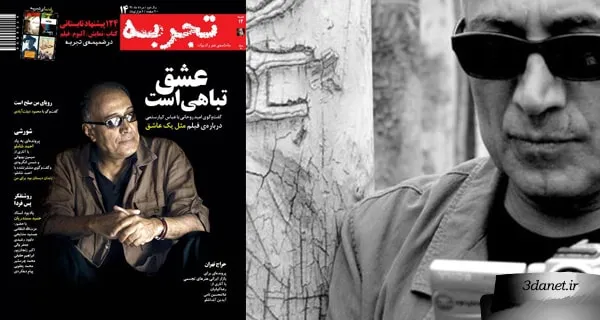
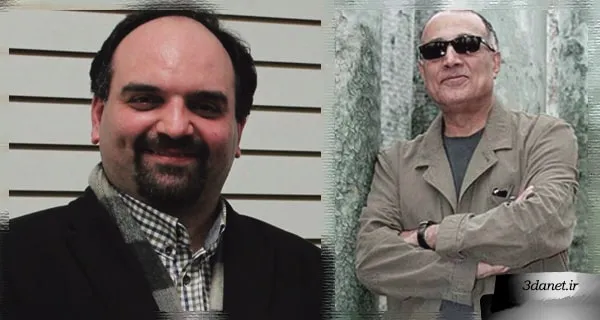
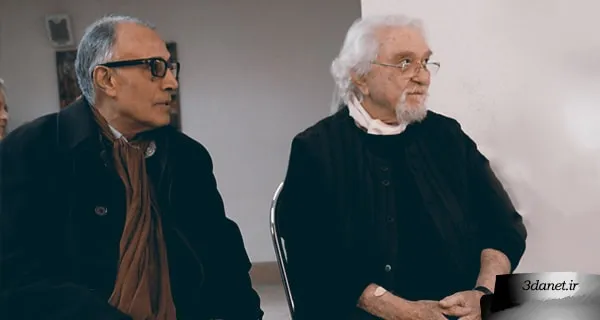
Discussion0 comments
No comments yet; let yours be the first voice.