Political Science
“Neoliberalism: State, Society, Market” – Lectures by Hesam Salamat
Neoliberalism is often used as a slur or term of abuse, devoid of any clear meaning. The course “Neoliberalism: State, Society, Market,” taught by Hesam Salamat, examines its theoretical formulation, history, and its relationship with democracy and Iran.
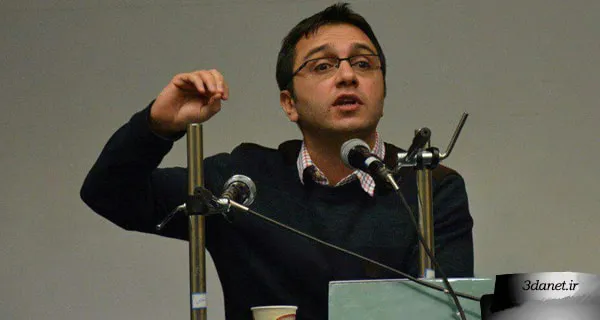
When we talk about neoliberalism, what exactly are we talking about? For a long time now, neoliberalism has become a refrain in political discussions and economic debates, not only in Iran but on a global scale. Nevertheless, few people know what this concept actually means. Neoliberalism has, unfortunately, suffered the fate of concepts that, in the everyday language of ideological disputes, are reduced to a stigma or, worse, a handy insult, and precisely for this reason convey no specific meaning. That said, the aim of the course “Neoliberalism: State, Society, Market,” held in the spring of 2017 at the “Iranian Sociological Association,” was to provide an introduction to the theoretical formulation and conceptual clarification of neoliberalism and to outline its thematic scope and theoretical coordinates as far as possible.
.
.
Lectures on “Neoliberalism: State, Society, Market” by Hesam Salamat
.
Session One: General overview of what neoliberalism essentially is; discussions on the fourteen components of the ideal type of neoliberalism
.
Session Two: a) A short history of neoliberalism, or, where did neoliberalism come from and how did it take shape?; b) From classical liberalism to neoliberalism
.
Session Three: a) A side note on privatization procedures in Iran; b) The political-ideological logic of neoliberalism
.
Session Four: a) The “Washington Consensus” and the tenets of neoliberal economics; b) Development and the politics of indebtedness: the globalization of neoliberalism
.
Session Five: The Austrian School and the political economy of neoliberalism: readings from Mises and Hayek
.
Session Six: The Austrian School and the political economy of neoliberalism: readings from Mises and Hayek (Part Two)
.
Session Seven: a) Karl Polanyi, market liberalism, and democratic socialism; b) Pierre Bourdieu and the sociological critique of neoliberalism
.
Session Eight: Michel Foucault and the paradoxical logic of neoliberalism (1)
.
Session Nine: Michel Foucault and the Paradoxical Logic of Neoliberalism (2)
.
Session Ten: Michel Foucault and the Paradoxical Logic of Neoliberalism (3)
.
Session Eleven: On the Tense Relationship Between Neoliberalism and Democracy, or, Why Is Neoliberalism Incompatible with Democracy?
.
Session Twelve (Final Session): An Introduction to the Mechanisms of Neoliberalism in Iran.
.
.
Discussion3 comments
متشکر جناب آقای دکتر ! دستمریزاد
عالی بود، بسیار عالی...سپاس
از دیروز تا الان چند جلسه گوش دادم و من رو میخکوب کرده. عالی عالی دست مریزاد