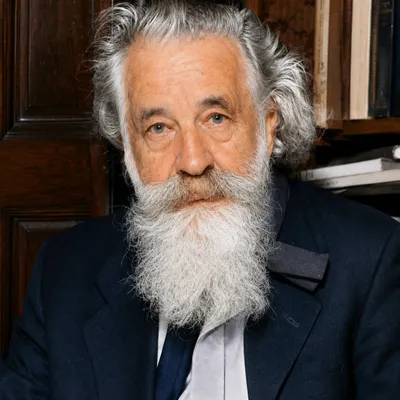
Foreign thinker
Gaston Bachelard
Gaston BachelardPhilosophy of science, phenomenology of imagination, epistemologyFrench1884–1962
“Scientific truth is what the historical rectification of a long error allows us to consider true.”


Life and Thought
Gaston Bachelard was a French philosopher, epistemologist, and philosopher of science known for his studies on the history of science, poetic imagination, and the formation of scientific knowledge. By introducing the concept of the “epistemological obstacle” and analyzing the role of imagination in human experience, he had a significant influence on philosophy of science and contemporary French thought.
Gaston Bachelard was born in 1884 in Bar-sur-Aube, France. He initially worked in the fields of science and mathematics before turning to philosophy. After receiving his doctorate in philosophy, he taught at French universities and held the chair of History and Philosophy of Science at the Sorbonne from 1940 to 1954.
In his works, Bachelard examined how scientific knowledge is formed and the obstacles that appear in the process of understanding. In The Formation of the Scientific Mind (1938), he introduced the concept of the “epistemological obstacle” and argued that previous beliefs and assumptions can hinder scientific progress. He also emphasized epistemological ruptures in the development of science and influenced later philosophers of science, including Georges Canguilhem and Michel Foucault.
Another major part of Bachelard’s thought concerned the philosophy of imagination. In works such as Psychoanalysis of Fire, Water and Dreams, and The Poetics of Space, he explored poetic images, the four elements, and the experience of imagination. Bachelard argued that imagination is not merely a reproduction of reality but a creative force in shaping human experience of the world. His thought created a bridge between philosophy of science, aesthetics, and the study of human imagination.