Foreign thinker
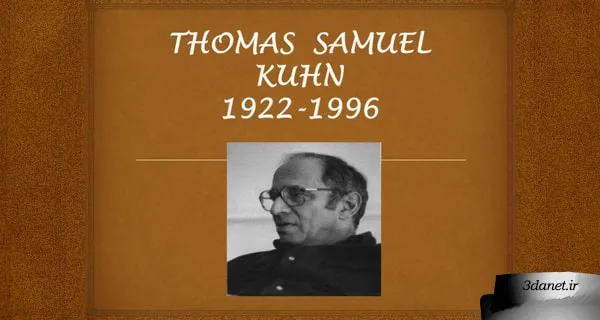
Thomas Kuhn
Thomas KuhnPhilosophy of ScienceAmerican1922–1996
When paradigms change, the world itself changes with them.
In their times
Open in the Timeline of Thought


Life and Thought
Thomas Samuel Kuhn (1922–1996) was an American philosopher and historian of science whose influential book The Structure of Scientific Revolutions introduced the concepts of paradigm and scientific revolution into the philosophy of science. He demonstrated that scientific progress is not linear and cumulative, but occurs through discontinuous transitions between competing paradigms. His works have had a profound impact on the philosophy of science, the sociology of science, and science and technology studies.
Thomas Samuel Kuhn was born on July 18, 1922, in Cincinnati, Ohio. After studying physics at Harvard, he received his doctorate in the same field in 1949. His interest in the history of science led him to gradually shift from physics to the history and philosophy of science. He taught at Harvard, Berkeley, Princeton, and MIT.
His major work is The Structure of Scientific Revolutions (1962), which is one of the most cited books in the humanities of the twentieth century. In this book, Kuhn argued that science progresses during periods of "normal science" under the dominance of a single paradigm; a paradigm that determines legitimate problems, methods, and standards of problem-solving. When anomalies accumulate, a crisis emerges, and ultimately a scientific revolution occurs, during which a new paradigm replaces the previous one. He likened this change to a "gestalt switch."
His key concepts such as paradigm, normal science, anomaly, crisis, and incommensurability have become standard vocabulary in the philosophy of science. Kuhn also wrote works on the Copernican Revolution and the history of physics. He died on June 17, 1996. His legacy remains a central point of discussion regarding the nature of scientific progress and the relationship between science and society.