Religion
Hassan Mohaddesi and Alireza Qaeminia Debate: Assessing Religion's Record (2)
Hassan Mohaddesi distinguishes between “religion in the text” and “religion in society,” and considers both open to critique. The yardstick for evaluation is a comparison of pre-power promises with post-power performance, not an endless wait for those promises to be fulfilled.
Religion plays an influential role in shaping beliefs, feelings, and emotions, and in many historical events the role of religion can be regarded as an indisputable one. From the Tobacco Protest to the Islamic Revolution, the more we have advanced, the more prominent and serious the political and social role of religion in our society has become. But the more prominent religion's political and social presence becomes, the more harms it will consequently entail. Hence, a critical examination and assessment of religion's political and social record can scrutinize the strengths and weaknesses of religion's presence in the arena of politics and society.
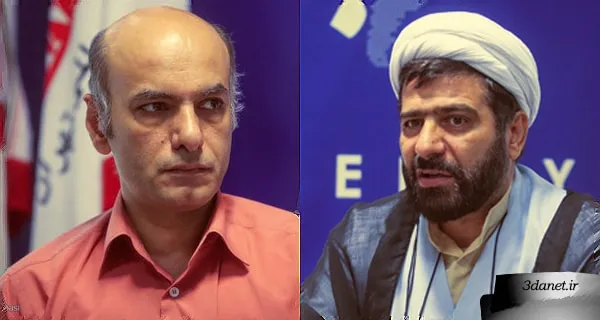
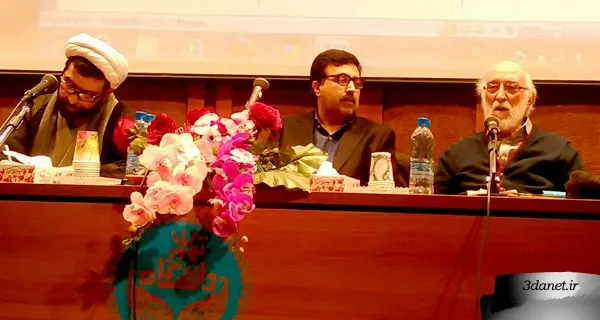
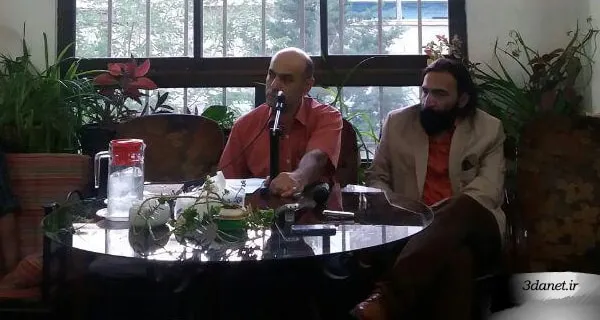
But examining religion's performance itself requires preliminaries. Some time ago, during a conference at the Technical Faculty of the University of Tehran dedicated to commemorating Dr. Ali Shariati, a debate titled "The Social and Political Record of Religion" was held, in which Alireza Qaeminia, a faculty member at the Research Institute for Islamic Culture and Thought, and Hassan Mohaddesi, a sociologist of religion and faculty member at the Islamic Azad University, presented their views. However, due to a shortage of time, this debate remained unfinished, and we decided to continue this debate with the presence of both parties. The necessity of examining religion's record and from what standpoint and with which rationality one can critique religion with regard to its performance is a subject that was examined in the first part of this debate.
You can read the second and final part of this debate below;
*Dr. Mohaddesi, the previous discussion reached the point that religion in terms of definition and religion in terms of realization are different. If possible, please continue the discussion from here.
Mohaddesi: Essentially, I want to focus on this very discussion: how can we evaluate religion? What do we mean by religion? First, I want to address what religion is in terms of definition. In my view, religion in terms of definition goes back to the perspective of a theorist who enumerates the characteristics of religion. In my opinion, we cannot talk much about religion's record in this situation, because it completely goes back to the subjective viewpoint of a thinker, which Dr. Qaeminia should explain whether this is what he means or something beyond this?
Therefore, I think that for a more precise discussion on this matter, we can separate religion in the text from religion in society. That is, we can say that religious teachings and ideas have a manifestation and appearance that are in religious texts; whether the holy book like the Quran or other texts, whether texts that emerged in early Islam, or texts that emerged in later centuries. We call all of this religion in the text. This is a distinction between what is formulated in texts and what is realized in the real world and Islamic societies.
For a more precise discussion, we can separate religion in the text from religion in society
Therefore, in my view, we can seriously distinguish between Islam in the text and Islam in society. Certainly, Islam in society has various forms; it differs from one society to another and from one period to another. Islam in the text is also very diverse, and very diverse legacies remain, each containing different epistemic materials that, in accordance with the understanding presented by each producer of the text, sometimes even contradict each other.
Sometimes, from within a text like the Quran, contradictory understandings and interpretations emerge. Therefore, we have a diversity of texts that we cannot consider as monolithic and say that Islamic texts are monolithic texts; just as in our own Islamic hadiths, we sometimes see very diverse propositions that are contradictory or appear contradictory at first glance.
In any case, the religion that is realized, although influenced by its texts, acquires its own specific characteristics. The religion that Muslims have, in accordance with the changing cultural elements of the society and the people who live there and the upbringing that Muslims have, is in fact something different from the religion in the text. I think we can speak of the assessment and characteristics of both. That is, we can speak of both the assessment of religion in the text and the assessment of realized religion.
I think that religion can be criticized both in the form it has realized in the text and in the form it has manifested in the external world in various Islamic societies and periods. I think religion can be criticized and examined from both perspectives. In fact, we have religious texts that contain destructive elements, or we have understandings and interpretations of religious texts that can be destructive, and conversely, we also have textual elements that can be very constructive.
The religion that Muslims have, in accordance with the changing cultural elements of the society and the people who live there and the upbringing that Muslims have, is in fact something different from the religion in the text
Regarding religion and what is realized in society, we can also pursue this perspective. The accounts or forms of Islam that have appeared throughout history in Islamic societies, or that have appeared in various currents and thoughts, can also be criticized and examined to see if they have been successful or prosperous? Have they fulfilled the promises they made or not?
Because one of the appropriate criteria for assessing the record of any religion or any religious current is to see what promises the leaders and heads of that religious current made and what program they had, and then, when they entered into action and sought to realize it, what they did. When they came to power, to what extent were they successful in fulfilling those promises?
In this regard, if we want to talk about Iran and the current period, we can very seriously consider whether Iranian Muslims have achieved the promises they made before the revolution, when they said what would happen if Islam were realized and what kind of society and what kind of human beings we would create. Have we reached them today or not? Or have we reached parts of them or not? It can be discussed from this perspective as well, and I think this is a good criterion for assessing the record of a religion or a religious current.
One appropriate criterion for assessing the record of a religion or a religious current is to see what promises the leaders of that religious current made and what program they had, and what they did in seeking to realize it
To see whether the promises and claims they made have been realized or not, and then we must go to the religious leaders themselves to see how successful they have been in realizing their promises and claims. Have the promises we made now been realized or not? Or if this time is not enough, how much time is needed for them to be realized? Because we cannot leave the time open and say several centuries must pass for it to be realized. In fact, such a thing is unfalsifiable. Then we should see what time period is needed for a series of promises to be realized. I think that if we discuss from here, we can clarify the ambiguous points of the previous discussion.
*Mr. Qaeminia, please explain more about what you mean by "religion in the position of definition" and state whether you accept Dr. Mohaddesi's distinction between Islam in the text and Islam in society or not, and how they can be assessed?
Qaeminia: I previously mentioned that religion, in terms of definition, is what emerges from the Book and the Sunnah. I am not dealing with religion in the absolute sense. Religion in the sense of religion, which encompasses every faith—this word is a construct and fabrication of the eighteenth century, and it has been applied to many things, even Marxism. I do not use religion in this sense. My discussion is exclusively about Islam, although similar discussions could be raised about them as well.
Religion in the sense of religion, which encompasses every faith, is a construct and fabrication of the eighteenth century, and it has been applied to many things, even Marxism.
The word religion itself, in Wittgenstein's terms, has a family resemblance. That is, you cannot find an essence or accident common to all religions and apply it to all of them. Perhaps that sociological perspective which Dr. Mohaddesi holds is more suited to this. My discussion is more focused on Islam itself: how religion in terms of definition and realization can be implemented.
We sometimes see religion as it emerges from the Book and the Sunnah. Sometimes we see it as it appears in history, society, and culture, and I do not limit it to society, and perhaps Dr. Mohaddesi's intention is this, although he used the word society. As it has emerged in history and in the context of human relations, on the social scene, and in culture, that is religion in terms of realization. Religion in terms of definition is what emerges from the Book and the Sunnah.
Of course, we see a religion in terms of definition in the field of philosophy of religion. However, this in terms of definition is more the point that Dr. Mohaddesi made, and it holds true there. The definitions presented there are, in fact, a series of theoretical definitions. That is, they are dependent on the theory that the researcher themselves holds. Suppose William James says religion is the relationship that a person has in solitude with a transcendent reality. This is based on a specific theoretical perspective. Religion in terms of definition here differs from religion in terms of definition there. Here, religion in terms of definition means the way the Book and the Sunnah introduce Islam.
It should be noted that religion in terms of definition is an ideal, a perfection, whereas religion in terms of realization is not a perfection.What view does Islam have, and when we look at Islam and the Sunnah, what components do we derive for Islam? It should be noted that religion in terms of definition is an ideal, a perfection, whereas religion in terms of realization is not a perfection, but it may strive to reach that perfection and ideal state and the things that Islam has introduced, but it falls short of it.
The currents that have grown throughout history and the denominations that have emerged throughout history all strive to be religion in terms of the ideal. But these differ from one another; that is, religion as it was revealed and as humanity attempts to implement it in history and society are different. It is certain that religion in terms of realization proceeds in many places as a kind of trial and error, and it is not the case that all the ideal things and elements that came in religion in terms of definition are easily implemented in terms of realization.
Perhaps it would be better here for me to make a distinction that, of course, exists in many social science books, which they sometimes raise under the title of holistic and piecemeal social engineering. Therefore, religion in terms of definition is a kind of holistic, ideal, and desirable social engineering. Religion in terms of definition is a kind of holistic, ideal, and desirable social engineering.Religion in terms of realization is a kind of piecemeal social engineering. Because here the human element exists. (Human as opposed to infallible, not in its general sense, because religion in terms of definition is entirely in the hands of the infallible.) But there, a general plan, similar to a utopia that you see in philosophical theories, is given.
But how does this human being construct this utopia by referring to the Book and the Tradition? A kind of social engineering takes place here, and naturally, it is assessable here by social, cultural, historical, and other criteria, and one must see to what extent it approaches that ideal perfection and where it does not. However, religion in the stage of realization does not have that overall plan with all the details specified; it takes some elements from religion in the stage of definition, and some through human creativity and trial and error—how humans reconcile these components with one another and actualize them.
Naturally, religion in the stage of definition may have a degree of ambiguity such that we say it is what is found in the books. These books must be specified; if the intended books are the founding texts of the religion, such as the Quran and the Tradition, that is correct, but not the commentaries and analyses that have come down. Because these commentaries and so on move back toward religion in the stage of realization. Since they analyze religion in the stage of definition with regard to their own social, historical, and cultural situations.
Religion in the stage of definition is that which emerges from the Book and the Tradition, but the commentaries, analyses, and interpretations move toward religion in the stage of realization.
Our view differs from these two. For example, the late Shariati distinguishes between Alavid and Safavid Shiism. Is this religion in the stage of realization or in the stage of definition? It is certain that he is speaking of religion in the stage of realization, which is the duality of religion in history, and he does not want to analyze what is in the Book and the Tradition. Rather, he wants to analyze what has occurred in history.
Of course, I do not want us to accept Shariati's model now, because, in a sense, it is a kind of Weberian model. Shariati presents a kind of model for religion in the stage of realization to separate these, and within it, there are also value elements regarding how we can analyze it. Today, you see that Imam Khomeini himself proposed pure Islam and American Islam, which is also a kind of model for evaluating religion in the stage of realization. Just as today we speak of ISIS Islam and non-ISIS Islam. In fact, these are all models that contain many elements within themselves, and we consider them for evaluating religion in the stage of realization as it appears in human geography.
Alavid and Safavid Shiism, pure Islam and American Islam, and today ISIS Islam and non-ISIS Islam are models that we consider for evaluating religion in the stage of realization and as it appears in human geography.
Therefore, the summary of the matter is that religion in the stage of definition is what is found in the founding texts. The ideal components it proposes are what is considered. Throughout history, many criteria have been proposed, and many modern thinkers have sought to provide criteria for evaluating religion in the stage of realization.
For example, perhaps before everyone else, the late Iqbal, in his book The Reconstruction of Religious Thought in Islam, attempts in the second and third chapters to provide criteria that mainly emphasize two elements, although he implicitly proposes a third element as well. He says that divine religions must be known from two places: one, that they call to morality, and the other, through the civilization they build. He makes these two elements the criteria for evaluating the great religions and says that no religion can be anti-moral, just as the Holy Prophet (PBUH) said at the beginning of his call:
Morality is the primary criterion for evaluating religion in its realized state, and the secondary criterion is the civilization that religion brings into being. The great religions have created great civilizations. I do not wish here to assess Iqbal's remarks, but merely to report on what these relate to. It is true that religion as defined differs from religion as realized, and the criteria for evaluating them also differ. The evaluation of both states may also be internal or external. That is, you may come and evaluate based on internal criteria. For example, regarding religion in its realized state, you might ask whether the justice that Islam proposes has emerged in this process or not. Does the justice and humanitarianism that Islam proposes exist in the course of ISIS or fundamentalism... or not? This is a type of internal critique. External critique can also be based on specific criteria, which Dr. [Qaeminia] perhaps emphasized as being sociological, meaning religion can be evaluated with sociological criteria. One can even discuss to what extent the sociological axis is permissible, as this itself is a matter of debate.
I distinguish between a sociological perspective and social analysis. A sociological perspective is a completely external view. But social analysis may be internal or external. Many of the analyses that the late Shariati presents about history and social currents are more social analysis. That is, they remain within the framework of those initial assumptions and Islamic presuppositions. That is, what the Book and the Sunnah offer, but he tries to provide a social analysis of them, of what state they are in when realized. The sociological perspective is what we see in sociology books, and sociologists have a completely external view and do not see things with affection or partiality. They analyze from a perspective that may sometimes even be opposed to religion.
A sociological perspective is a completely external view. But social analysis may be internal or external
The points that Dr. [Qaeminia] raised, that ultimately one can evaluate what matters the leaders put forward, I see all of them within the framework of that discussion of social engineering. Perhaps when a sect or a movement emerges, it initially presents itself like religion as defined. If you pay attention to the issue theoretically, all movements are like this. Every movement, upon its emergence, presents itself in the form of religion as defined. But because it is religion in its realized state, it inevitably has a partial social engineering within itself and moves forward step by step through trial and error to achieve the goals it has. There, one can evaluate why these promises were made, why they were not fulfilled, and what problems existed.
My emphasis is that the theoretical state should not be confused with the practical state, and the criteria for these two are separate, and also the capability of internal and external perspectives must be assessed.
Mohaddesi: I differ with Dr. Qaeminia on some of the fundamentals. His statement that religion as defined is the ideal of perfection is a theological view. I think that the faithful consider religion as defined to be the ideal of perfection. But for those who define religion from other perspectives, this is not necessarily the case. However, this view is very common among the faithful and religious scholars, that they consider religion as defined to be the ideal of perfection.
This view is very common among the faithful and religious scholars, that they consider religion as defined to be the ideal of perfection
Another point commonly shared among religious scholars is that they present a pure and ideal image of religion, as if it were directly sent down from God to earth, a cure for all human ills, capable of providing a satisfactory answer to all human questions and needs forever. Yet another common view among the faithful and religious scholars is that there is an unbridgeable gap between that which is pure, ideal, divine, and heavenly, and that which is realized in practice. Therefore, they consider any criticism directed at religion in its realized form to be irrelevant to religion itself. I believe such propositions are problematic and are, in fact, false consciousness. Or that same utopian conception of religion that is never realized, but if it were, what would happen!
Consequently, what the faithful do throughout history bears no relation to that original, ideal religion. I emphasize first that this false consciousness is very dangerous and deceptive, and can repeatedly deceive a group of people into thinking we can bring that pure religious model within ourselves, realize it, and build paradise on earth. This thought and view, in my opinion, has a very dangerous function and can be very alluring and attractive. But in practice, it leads to forms of failure. That is, the ideal image of an ideal society presented by that religious outlook raises expectations and aspirations very high, but what actually occurs is a multitude of problems, pains, and sufferings. I think that the ideal and pure religion is mostly imaginary, and fundamentally, we do not have something called pure religion or pure Islam. Of course, I must point out that the great figures who speak of pure Islam were and are compassionate people, interested in improving human lives and implementing ideal models of life.
They were or are sincere people in their claims, but I mean this in the sense that pure religion does not exist.
The ideal and pure religion is mostly imaginary, and fundamentally, we do not have something called pure religion or pure Islam
In any case, any intellectual or cultural system that seeks to be implemented on earth becomes contaminated by the exigencies and possibilities of human life, and consequently, it absorbs elements from the social and cultural world and adapts itself to them. In this sense, I believe that fundamentally, there is no such thing as a pure religion that is a package capable of answering all human needs and questions in the same form for all time and for all eras. The reason is that since religion seeks to be realized on earth, it is compelled to take into account the cultural and social elements and the possibilities of society, to harmonize itself with them, and to absorb elements from them. For example, a significant part of Islamic rulings were confirmatory rulings, meaning that a large and considerable portion of the laws that existed in tribal society were confirmed by the Prophet and entered into Islam. Then, Muslims tried to build a society based on that.
We have learned, and know today, that law changes in accordance with social conditions and the type of society. For instance, we have learned from Durkheim that in societies with mechanical solidarity, law is punitive, and in societies with organic solidarity, law is restitutive.
Modern law is completely different from the law of traditional and tribal societies. It is necessary for law to change, and therefore, this law cannot be eternal and must undergo change and evolution in accordance with different social conditions. Some Muslim scholars have also accepted these evolutions in Islamic jurisprudence. This is why I believe we cannot speak of a pure religious system and a pure religion as if it could answer all questions forever.
But I believe that religion must be reconstructed and changed in its historical process and harmonized with the exigencies of the time. Sometimes these changes are very serious. Moreover, this ideal and perfect conception of religion is, I think, very crude and imaginary. We can even say that regarding that specific meaning you mention—that religion, in terms of definition, derives from the Book and the Sunnah—it must be pointed out that the Muslims of the early centuries themselves had very different interpretations of the Book and the Sunnah. Firstly, Islam split into two major branches (like all other religions). The Quran itself points out how religion becomes divided into sects. It criticizes this and considers it a kind of deviation, and Islam did split into the two major branches of Sunnism and Shiism, and each of these branches further divided into numerous sub-branches.
I was studying that in the early centuries, we had at least 18 Shiite sects alone, and it was the same in Sunnism. Even now, we have four jurisprudential school tendencies in Sunnism. Therefore, there is no single account of the Book and the Sunnah, and from the very beginning, these accounts have been different, and two political tendencies in the name of Imam Ali (AS) and Uthman emerged right at the start after the death of the Prophet, and these divergences begin in the Islamic world and intensify as we move forward, and we cannot say that there is a single account of the Book and the Sunnah.
Sometimes these accounts are so different that during the time of Ali ibn Abi Talib, the fourth caliph in Islamic history, we witness three major civil wars, whereas in the time of the previous caliphs, the wars were generally fought against non-Muslims and those outside the Islamic community. But during the time of Imam Ali (AS), we have three major wars that cause internal discord within the Islamic community. Therefore, it cannot be said that there is a single account of the ideal religion, and this exists in other religious traditions as well. For example, in Buddhism and Christianity, etc., differences also occur, and we cannot say that among the religious, the definition of the perfect ideal is uniform. That is, there too, every group of the faithful has sought to present its own definition of religion.
Regarding this argument that supposedly there is no relation between religion as realized and religion as defined, I again have an issue. After all, there is a relation between what is realized and what is in the definition, or, in my terms, in the texts. For example, ISIS refers to religious texts, and its followers truly believe in those beliefs and convictions. It refers to a part of that Islamic heritage, and this shows that there are elements in the Islamic texts that can be subject to critique and evaluation.
What and which thought does ISIS or the Taliban feed on? These people who allow themselves to easily kill very diverse individuals with various origins in the name of Allah—they too have a religious and Islamic thinking. For instance, right now, this very matter of the September 11 report and the confidential reports that exist show that these people were Muslims, or that they went from an Islamic country (Saudi Arabia) and... did those things and killed about 3,000 people who had nothing to do with the core political issues. This is religious thinking, and I actually believe that these were very devout people. Here, faith plays a very prominent role. Which teachings justify acting in this way?
We even hear that these individuals believe that through this religious suicide, they will go to heaven, meet the Prophet, and receive the greatest reward. These people truly have faith, and with this view that I will attain a transcendent afterlife, they carry out suicidal actions. This action has a relation to those teachings, and we cannot distinguish religion as realized from religion in the Book and religion as defined. We must direct our critique and evaluation toward those contents. That is, in addition to needing to critique and evaluate the practice, the history of religion, and the history of Muslims, we must have criteria for critiquing the religious texts themselves, or at least have criteria for the interpretations made of religious texts.
It is very interesting to me that during the first parliament in the Constitutional era, when a representative (the representative from Asadabad) said that women should also be given the right to vote and to be elected, Ayatollah Modarres opposed it, and his opposition was based on the verse al-rijalu qawwamuna 'ala al-nisa'. Ayatollah Modarres, referring to this word of the Quran, said that women fundamentally should not hold such a position, and because he recited this sentence from the Quran, everyone fell silent and no one could oppose the Quran.
I believe we cannot speak of a pure religious system and a pure religion as if it could answer all questions for all timeWhereas today we see that in this very society, women have both the right to vote and the right to be elected, and there is no contradiction with the Quran and Islam. So, you see, there was a reference to the Quran that caused women to endure these pains and sufferings and so on. Or that this religious view has imposed conditions on Muslim women. As a result of modern developments, many of these obstacles have been removed. It was a religious reading that created this situation for Muslim women in the history of Islamic societies. To the extent that someone like Ibn Rushd says that we have made women into creatures that are parasites of men. All their human talents have been destroyed, and they are like plants, and their only duty is to bear children. It should be noted that Ibn Rushd was not a modern person to have made modern statements or feminist statements.
Therefore, there is a relationship between this understanding of religious texts, religious propositions, and religion itself and the texts, and we cannot exonerate those texts and say that this text has no involvement in the history of religion. These are points that are highly debated, and as a result, the critique goes beyond the history of religion and also turns to the religious texts, and we are compelled to raise this discussion, and in order for their destructive elements to be removed and not to strengthen forces like ISIS and the Taliban, we are compelled to critically examine the religious and Islamic texts and refine them.
For example, there is a mass of religious texts and there is a relationship between the understanding of religious texts, religious propositions, and religion itself and the texts, and we cannot exonerate those texts and say that this text has no involvement in the history of religionour hadiths that are explicitly anti-joy. I know that there are also propositions and hadiths that confirm joy. But you cannot say that all of these are correct; rather, we must have a critical encounter with these texts and critique and evaluate them so that the destructive aspects of religious texts are also removed and, in fact, their potential for destruction is taken away. In my opinion, this is one of the duties of the faithful and religious scholars.
*Mr. Qaeminia! Is there a relationship between religion in the position of definition and religion in the position of realization, as Dr. Mohaddesi also pointed out?
Qaeminia: I think what I said was different from Dr. Mohaddesi's interpretation. I am not saying that religion in the position of definition means that which states our ideals. My argument is that religion in the position of definition defines ideals. Now, whether the faithful see it as an ideal or not, that is another discussion that Dr. Mohaddesi entered into, that it is a misconception to think that everything that has come in religion is perfect or not. My argument was that religion in the position of definition proposes ideals.
Mohaddesi: You said: Religion in the position of definition is the ultimate perfection, it is the ideal.
Qaeminia: It proposes its own ultimate perfection. That is what I meant; if I did not articulate it there, I am articulating it here. Islam as a religion, in the Book and the Sunnah, raises a series of components, such as: How should human relations be? How should humans be towards one another? How should they be towards God? These are the ultimate perfection of Islam. Religion in the position of definition must be measured based on those criteria, and there, one can also have an internal and external view. Of course, one must avoid fallacy.
I interpret pure Islam in two senses: one is the ideals that Islam itself proposes—that is, you consider it at the level of definition. The other is you consider it at the level of realization. Let me pose this with a question. When Imam Khomeini spoke of pure Islam, can you now judge whether ISIS is pure Islam or not? Whether it is closer to those desirable ideals of Islam or not.
It is natural that Islam at the level of realization becomes intertwined with a set of cultural elements and the exigencies of the time, and these cannot be denied. Because when religion descends from the level of definition to the level of realization, it takes on the color of human society, and trial and error occurs within it. I accept this. But the question is, can we not judge and say whether the Islam of ISIS is closer to Islam or non-ISIS Islam? If you say we cannot judge, I disagree with this and say that Islam itself has mechanisms, and we, when evaluating now, say that this is closer to Islam. Pure Islam is that non-ISIS Islam. Or we can say that the Islam of ISIS is not Islam at all.
So the issue is not that Islam, in the form it was revealed, should be realized in society. Islam itself says that it will not be realized in this way. Except in the Age of Appearance, which, due to the intervention of a heavenly force, is not realizable by human force. Because human force always proceeds by trial and error, and a set of social and historical components are involved in it. But this does not prevent us from judging and saying that some currents have a closer connection to Islam.
My issue with you is an epistemological one. You say that all the currents that have emerged throughout history are alien to Islam at the level of definition and have no connection or relation to it. But I say no, these have connections and relations. You can offer various interpretations of the Book and the Sunnah. But it is not the case that every interpretation you give is correct. We can see now that Imam Khomeini's interpretation of women's involvement in political affairs is better than Mr. Modarres's interpretation and is closer to Islam. It has the capacity for you to evaluate. But if you say that some of these are correct and some are not, and one can measure their relation, I agree with this.
The epistemological issue regarding the relation between Islam at the level of realization and Islam at the level of definition actually exists between an excess and a deficiency, and I accept the relation between these, and one can measure the relation. In some places, the flaws that have emerged in Islam at the level of realization also affect that definition we have at the level of definition. But my whole point is that, in reality, we are faced with a spectrum, or we can say that all of these are alien to religion and not realizable in society at all; that is, to have a kind of anti-realist view. Or we can say that all of them have been realized in a single process, which is a kind of naive realism. But I believe a correct measurement of relation can be made. Based on some criteria, you can determine that this current is closer to Islam than another current. At the same time, you can also demonstrate the alienness of some currents to Islam.
Do not imagine the conception that religious people have as them believing that religion is completely realizable by fallible human hands. A humanity that proceeds with various methods, using different sciences like economics, politics, etc., to realize those elements. Do not see it this way. They have religious concerns. An empathetic view differs from a non-empathetic view. Those with an empathetic view say that religion has presented an ideal perfection, which, if found in society—for example, how you should be towards your neighbor, and so on—if realized in society, would be very good. It is natural that the rest must be advanced with human management, politics, and human methods, and in my opinion, no one claims that religion has come to solve all human problems. Even Imam Khomeini himself did not have such a claim, although he opposed secularism.
The secular perspective differs from the anti-secular perspective. The secular view holds that all human issues can be resolved through autonomous reason; religion says that no, religion must intervene in some matters. Even those with a jurisprudential outlook, like the late Martyr Sadr, propose the concept of mantaqat al-faragh (the discretionary zone) and do not claim that jurisprudence solves everything. They believe that reason, by referring to Islamic principles, can resolve a certain set of issues. Therefore, the issue is not that we can solve all problems with religion. This attribution is nothing more than a fallacy. Rather, principles and other sciences, as well as adherence to other rules, are also necessary.
As for how we critique, I must actually say that critique has its own specific criteria and standards. It is natural that when you approach a matter empathetically, it differs from approaching it unempathetically. Here an epistemological discussion arises: do you believe that religion has a divine character? There, as some claim, it has entered the human realm and taken on the color of culture and so on. Each of these can be discussed separately, and perhaps not all discussions can be gathered here. By ideal Islam, I mean what is found in the Book and the Sunnah, and I emphasize again that no one, not even Islam itself, claims that all of it can be implemented in practice.
For example, we have various sociologies and different theories; suppose at one time Durkheim emerged and proposed a theory, and at another time Weber appeared. Where did these come from? Why do we have such a diversity of sociological theories? It is natural that these individuals did not view sociology in the realm of definition; rather, they dealt with their contemporary human beings. For instance, Durkheim was confronted with humans living in industrial society, so he designed his social theory for that human. Weber was confronted with the human living in capitalist society. Today, we are in the information age; sociological theories of the informational human emerge and engage in conceptualization and theorization.
The various sociologies actually emerged from this: encountering different humans, that is, in the realm of actualization. At times you define the human like the philosophers and say the human is a rational animal, which is of no use to sociology. The human is either a capitalist human or an informational human, and so on. It is natural that with the change of the human in the realm of actualization, different sociological theories emerge. Sociology also progresses through trial and error and advances with the exigencies of the time, and when something enters the human arena through trial and error, it naturally synchronizes itself with social changes.
Perhaps a hundred years ago, some would say that Islam is compatible with dictatorship, but Imam Khomeini said no, Islam is compatible with republicanism. That is, it has a course of perfectional evolution, and as we move forward, the various theories that emerge and the different humans that appear on the earth transform our view of religion, and we can evaluate these. My entire point is to see that we are not empty-handed and can evaluate it with the criteria found in the Book and the Sunnah.
Another point regarding what you said about many things having emerged and that we see in the arena of the Book and the Sunnah that there are Sunnis, Shia sects, and so on. In my view, this is also a confusion between the realm of actualization and definition. Because it is in the realm of actualization that different interpretations of the Book and the Sunnah are put forward. Here again, the question arises: can they be evaluated? All of these have social legitimacy from a social perspective and have emerged based on certain issues, but do they have legitimacy from an epistemological perspective? It is natural that all the sects that have emerged in the Islamic world are, as some Arab intellectuals say, a civilization of the text, and all strive to relate themselves to the Book and the Sunnah. But can an epistemological license be issued for all of them?
Is the relation of all these to Islam correct? Or are there epistemological and interpretive criteria there by which these can be separated? The Quran itself says that we have two categories of verses: the clear and the ambiguous. Most of these have arisen in light of the ambiguous verses. The question is how we refer these ambiguous ones back to the clear ones. There again we accept diversity, but this diversity in the social sense is not diversity in the epistemological sense, and here I disagree with religious pluralism. Because religious pluralism tries to take diversity into the epistemological domain and grant epistemic validity to all social diversities. Whereas I maintain that epistemological diversity cannot be accepted. That is, epistemologically, and in terms of epistemological criteria and standards, they are open to criticism.
We are faced with a phenomenon that is inevitable. Whether you want it or not, sects will emerge, and Islam, in its realization, will appear in various forms. If at the beginning of our century many theorists thought that the modern era had arrived and the case of religion was closed, today we clearly see that from now on, the age is the age of religion. It is the age of the diversity of religions and sects, which cannot be denied, and the course of history from now on is like this. So we are faced with a necessity, and the only thing we can do is to carry out that assessment of relation and, epistemologically, set our own criteria as judge and see which one's relation to Islam is closer?
Naturally, an Islam that sanctions killing to this extent, meaning the killing of women and children and so on, cannot be Islam, and many verses can be found for this, and the one who cites these verses can be answered. This is logically possible and has been the case since the dawn of Islam.
Who has the right, with their epistemological criteria, to show that my view is closer to the text? That is, who has the right to say that my word is closer to the text? This has an epistemological basis.
Look, although Islamic civilization is a civilization of the text, from one perspective it is a civilization of the appropriation of the text. Who has the right, with their epistemological criteria, to show that my view is closer to the text? That is, who has the right to say that my word is closer to the text? This has an epistemological basis. It is incompatible with some relativistic views; if you are a relativist, you say that all of these have the right to appropriate the text. If you are a constructivist, in the terms of epistemologists, you say that all knowledge is a human construct, both of which, in my opinion, are unacceptable. After all, there are criteria and standards in the Book and the Tradition, and it has given us principles for understanding.
It should be noted that the Book and the Tradition have not only given us a set of data, but have also given us the method for understanding this data. For example, when we have in the narrations that you should not accept just any narration that reaches you as it is, but rather present it to the Quran, it is giving us a criterion; and you must see the verses of the Quran in light of one another. If you take a verse out of its context, you might extract very dangerous views from it.
Many of the theological currents and theological sects that have emerged from Islam throughout history have not seen the Quran as context-bound. In any case, the Tradition itself provides a set of criteria for how you should even read the Quran. Religious books have this characteristic; although they themselves initially initiate a unity, it is natural in the course of religious history—this has happened in all religions—that they may also give rise to many pluralities and sectarian conflicts, which is the nature of the issue and is inevitable.
Mohaddesi: I certainly also believe that various readings or accounts of a particular religion can be assessed with a certain understanding of the religion. However, the serious disagreement we have is that I have a problem with this view that there is one true reading of Islam and that we have access to it. I imagine that every group presents a reading or account and says that its account is truer.
Certainly, Mr. Qaeminia has his own interpretation of Islam, and I have my own interpretation of Islam, and each of us claims that our interpretation is more correct. Therefore, to say that there is a final criterion or interpretation that stands above all interpretations is not something that enjoys consensus. That is, there is no consensus among Islamic scholars that a final interpretation exists as a standard of Islam, with which we can then compare all our own interpretations. Such a thing does not exist.
You might claim that the Prophet's interpretation of Islam is the standard. But the problem is that our understanding of the Prophet's interpretation becomes diverse. Hence, this is a serious issue. You speak as if this final standard exists and we have access to it and consensus upon it. The very problem is that consensus on this standard interpretation is fundamentally non-existent; otherwise, the idea that we can compare existing interpretations within Islam with a specific interpretation to see which are closer to it is acceptable. But the problem is, who determines that standard interpretation? Does Al-Azhar determine it? Does Qom determine it? Does the Taliban present it? Who presents it? In whose hands is this standard interpretation? There is simply no such thing. You might say, well, there is the Quran. The problem is that the interpretations and understandings derived from the Quran differ by 180 degrees.
Who determines the standard interpretation? Does Al-Azhar determine it? Does Qom determine it? Does the Taliban present it? Who presents it? In whose hands is this standard interpretation?
You speak of the Book and the Sunnah as if a final, decisive word actually exists. Yes, when the Prophet was present, we could say the decisive word was what the Prophet said or did. However, after the Prophet, there is absolutely no such decisive word. It is true that the verses of the Quran exist, but these very verses are the subject of very serious and fundamental debate, disagreement, and dispute. Therefore, based on this view, not only in Islam but in all religions and schools of thought, it is the case that we must see which interpretation of the religion, school, or ideology we are dealing with, and then evaluate that.
For example, suppose the Taliban's interpretation, the Umayyads' interpretation, the Abbasids' interpretation, the Safavids'... which interpretation of Islam? The Islamic Republic's interpretation, the interpretation of religious intellectuals, the interpretation that European Muslims offer of the religion. The interpretation that Fethullah Gülen presents, which is known as Anatolian Islam. Therefore, we have various interpretations of Islam and we must talk about testing them.
For this reason, I believe that perhaps we say "Islam" for the sake of simplification, whereas each time we should say "this interpretation of Islam"; because what exists of Islam is not a single, unified thing but rather Islams. So, whenever we speak of Islam, we should say that for convenience we say "Islam," but in reality, we should say "Islams," and when we say "Islam," we mean these varieties. I firmly believe in this, and every time we talk about Islam, we must specify which Islam we mean, and then what are the claims of this Islam? What does it say in its texts, and what transpires in its realization?
Qaeminia: Can you measure this very thing against the Book and the Sunnah? For example, suppose we measure the Islam of ISIS against the Book and the Sunnah? Or do you not believe in that here either?
Mohaddesi: As I said, there too we have interpretations of the Book and the Sunnah, and then we can compare it with an interpretation of the Book and the Sunnah.
Qaeminia: Meaning the Book and the Sunnah themselves are neutral and any understanding can be derived from them?
Mohaddesi: The Book and the Sunnah only come into play through our interpretation. Without our interpretation, they do not come into play at all. That is, you understand this verse in one way, while another person understands it in a way completely opposed to yours. As I said, there is no single standard interpretation. Unless you say that I have accepted the interpretation of a specific figure, such as Ali ibn Abi Talib (AS). Even so, this interpretation is not the standard, because there are multitudes who do not accept this interpretation.
The Book and the Sunnah come into play through our interpretation, and there is no single standard interpretation
For example, now we as Shiites believe that Islam is what we say it is, whereas out of one and a half billion Muslims, only 200 million are Shiites, and the majority are Sunnis, who have other interpretations. If we were to take a Sunni interpretation as the criterion, among the Sunnis themselves there are so many diverse interpretations that we again see they differ greatly. Regarding the hadiths and verses of the Quran, there are so many different commentaries that it practically prevents the formation of a standard interpretation; unless an organization emerges in the Islamic world that all Muslims agree to accept its pronouncements as the standard interpretation.
That is, they could reach this by convention, which is also practically impossible from a sociological and social perspective given this diversity. Now, among the Sunnis, recently some Saudi scholars have said that Al-Azhar should come and follow them. Qaradawi responded by saying that you are fundamentally deviant. I mean to say that among the Sunnis themselves, there are terrible disagreements; for example, the Saudi scholars do not accept Al-Azhar, and Al-Azhar does not accept them.
Therefore, I seriously emphasize that there is no standard interpretation of Islam against which you can say, "I measure them by it." Hence, I have my own Islam and say that this interpretation is correct. Whether I have derived it from anywhere—from the clergy, or religious intellectuals, or through my own inquiry. You also have an interpretation and say that this interpretation is correct. Many times, these interpretations gain dominance with the help of political and social power, and then they spread influence and gain supporters and followers; otherwise, without political power, they become just one interpretation among thousands of others that exist.
Therefore, I have a serious disagreement with you here, as you speak of the Book and the Sunnah as if there is something monolithic and unified in them. Or as if there is a standard criterion. Historically, I also want to point out that even in early Islam, we have reports showing that those very Muslims and the Prophet's companions did not have a unified understanding of Islam. You have surely heard the hadith narrated from the Prophet, which says, "If Abu Dharr knew what was in Salman's heart, he would kill him." If this hadith is authentic and correct, it shows that even among the companions themselves, there was no unified understanding of the Quran and Islam.
Interestingly, in historical sources, we have a figure named Anas ibn Malik, one of the Prophet's companions. When asked about early Islam, he says that Islam changed completely. They ask him, for example, did such-and-such a thing change? He says, yes, it changed. They ask him about prayer, and he says that prayer also changed. That is, in those very first few decades, he says Islam changed so much, and even prayer changed. Meaning, this prayer we perform now is different from what they performed. Thus, in history, we see this serious change and transformation, to the point where a poet used an interesting and shocking expression indicating that so many different trappings and accoutrements have been attached to this religion that its essence is no longer clear what it was and is.
"They seek to adorn your religion / They seek to adorn and revise it So many leaves and trappings have they bound upon it / That if you see it again, you will not recognize it"
This religion has been transformed to such an extent, and so many embellishments and new things have been added to it, that its original core is entirely invisible and lost. Therefore, I emphasize that we must speak of a specific articulation of Islam and the testing of that specific articulation.
Another point is that if we accept that each of those articulations undergoes a test, then the proponents of that articulation must be held accountable. From this, I generally infer that religion and the religious should no longer if we accept that each of those articulations undergoes a test, then the proponents of that articulation must be held accountablemerely be in the position of speaking. Through a historical examination of religion, we must accept that they must also be prepared to be in the position of answering. That is, they should say: we made this claim, we proposed this plan, and we offered this interpretation of religion, which led to this outcome. Now they must be accountable, and it is not the case that they can say we are blameless in this; rather, we must say that we are responsible for our own articulation and they must be accountable.
Another point is that I also agree that the record of this specific articulation of religion can be evaluated both intra-religiously and extra-religiously, internally and externally. In the intra-religious evaluation, my particular emphasis is on what claims the proponents and producers of that articulation made. We now have a dissertation that seeks to evaluate the record of the clergy. My emphasis to the student is to first see what the claims of these clerics and religious scholars were, and not to look at it from the outside; rather, first see what their claim was. Then, to what extent have they been able to implement that claim in reality?
Here, I will read a part of Mr. Nategh Nouri's speech, which is very relevant. He recently made remarks that I found very interesting. With this expression that I am ashamed because there is a great distance between the claims we made and what exists now: 'I have said that in the past thirty-seven years, we have regressed in many matters, and with this situation, we cannot claim to be a model for others. Today we witness that this group constantly speaks against that group, and that group against this group. Under such conditions, people say that all of them are corrupt.' This is one of the religious scholars who, before the revolution, had claims and was among those who said that if Islam and we come, we will do such and such. But today, he gives a speech on a religious day and in a religious place, and as an individual who himself held political responsibility, he says that we have regressed over the past thirty-seven years.
These can be used as internal criteria: what their own claims were and what they have done in practice. But from an extra-religious perspective, I also believe that the performance of that religious articulation and its followers and propagators can be evaluated through various criteria. In particular, we can enter any field, and our claim is not to say that religion should come and make our entire world prosperous. No, rather, we should evaluate the claim it made. For example, if it said it would eliminate inequality, we should evaluate it against that claim, and if it said it would make humans purer, we should evaluate it to that extent, and not burden it with an extra load that was not part of its claim.
Qaeminia: Our discussion veered towards the difference in readings. In my view, Dr. Mohaddesi proceeds based on a set of epistemological foundations that are open to critique. Like this idea that everything is interpreted. I do not believe that everything we encounter is interpretation. If we encounter the Book and the Sunnah, and everything comes down to our interpretation, that means we cannot establish a connection with the Book and the Sunnah, and its coming would have been entirely futile. I am not stating this based on a theological foundation, but rather on a linguistic and semantic foundation. After all, a connection has been established between the Book, the Sunnah, and humanity; it is a text, and a linguistic connection has been established, and it is not the case that it merely comes down to our interpretation, and that religion says one thing and we understand something else from it.
My foundation is a minimalist realist foundation. I take the final articulation to mean that we do not have a ready-made, clear, and complete version for everything religion says in all fields; it is not like that, and religion should not be seen this way.
Religion provides a framework in the sense that, in any issue you enter, you can determine the rules of the logical game with criteria and standards. With various hermeneutical and semantic criteria, you can determine whether a proposed theory has a relation to Islam or not. You gave many examples from the history of Islam; I can give a hundred times as many, and indeed, this is the very history of religion. The history of religion is the game of many with the Book and the Sunnah. You can cite Avicenna and Sheikh al-Ishraq—were all of their interpretations of the Book and the Sunnah correct? The same can be exemplified in political currents, and this is the entirety of religion. That is, a framework has been prepared in which the faithful strive to put forward a series of things. They may or may not articulate the rules of the game. I believe that the game has rules and is evaluable, and not every current can be attributed to the Book and the Sunnah, and it is not correct that Islam has the capacity for all this. No, we do not know Islam itself well, and if we proceed based on logical rules, we can determine the status of many of these.
Look, religion has two zones. In one zone, as epistemologists say, it is decidable, and you can decide whether this works out or not. In some zones, it is undecidable, and there you must proceed by trial and error. That is, our information does not allow us to determine whether we can attribute this idea to Islam or not. The signs that have come in the Book and the Sunnah, in fact, create a space.
You may not explicitly find a verse that says religion is separate from politics or not. But these signs have their own implications. When you enter a specific semiotic space, not every thought is allowed to grow. Initially, you might find a verse from which you infer that you should kill all infidels. But truly, when you move within the Book and the Sunnah and its signs, you gradually reach a point where it hits a dead end. This is my epistemological view. Therefore, I do not consider everything to be interpretation; to consider everything as interpretation and reading is a kind of relativism that does not even square with semantic foundations.
I accept that there is no single account of Islam. Suppose, for example, you have a geographical map on which locations and cities are marked, and we disagree on every point we place our finger on. For instance, I say this is Karaj, but you say it is Qom, and there is no common ground. Another scenario is that we disagree on some matters but share common ground on some parts.
Look, consider the disagreements that have arisen throughout the history of Islam from the perspective that they are partial disagreements. In early Islam, the Companions were of two groups, and do not think that the conflict between secularism and anti-secularism is a modern conflict. Some of the Companions did not consider the Prophet's decisions sacred and regarded them as human. Hence, they objected. The other group held that the Prophet's decisions were heavenly decisions and that one should not have a human view of them. Therefore, many of these conflicts existed in early Islam, and these too are resolvable with the existence of the Book and the Sunnah.
We must separate the atomistic and holistic views, and many of the disagreements in reading have arisen in the lap of atomism. That is, the text has been separated from many of the things that were in its context. But when you take a holistic view and enter the Book and the Sunnah, many of these conflicts are resolvable with the rules of the logical game.
Therefore, the statement that "there is no standard version" needs to be qualified somewhat. If by "standard version" you mean a neat, ready-made edition with which to measure everything, then it is true that no such thing exists. But "standard version" in the sense that a framework exists, with rules that you can refer to in every age and measure anything against. What matters is this capacity for measurement, which has provided a playing field where, given the capacities within religion and internal and external criteria and standards, you can assess which is closer to Islam? I disagree with the part that says everything can be attributed to Islam. Yes, there are different Islams, such as Al-Azhar, Saudi Arabia, and so on. All of this is true. The point is that we have an ineradicable plurality, and these pluralities are resolvable to some extent in that decidable zone, where, in my view, those conflicts can be resolved by referring to and relying on the criteria of the Book and the Sunnah, so that you can decide which is closer to Islam?
As for the hadith you mentioned about Salman and Abu Dharr, in my opinion, it concerns differences in the levels of religiosity—some are superficial and some are deeper—and has nothing to do with the issue of different readings.
The point you raised about some gentlemen, I think, falls within the realm of that trial and error. Many of our leading figures at the dawn of the revolution envisioned many ideals that they now see may be unrealizable; they must look for something else. What matters is how much is learned from these errors. To reform society, we truly need a social reformer, not an intellectual reformer. A social reformer who comes and opens a path for society, because our society has reached a dead end in many social respects. I believe many of these errors have exacerbated the problem. Individuals have different levels of engagement with social issues, and certainly those with social genius can learn from these errors and reform society.
Mohaddesi: I do not subscribe to relativism, because relativism holds that all versions are equivalent. We are relativists when we say that all versions and interpretations of religion are equivalent or on the same level. In fact, I believe that the reading I adhere to is more valid and more truthful. The problem here is that we consider a particular version superior, but others do not consider our version superior, and unfortunately, we are incapable of convincing a large portion of these others and making them advocates of our version, and they never regard our version as the standard.
.
.
Hassan Mohaddesi and Alireza Qaeminia Debate: Assessing Religion's Record (2)
Source: Mehr News Agency, Religion and Thought Group – Khodadad Khadem
.
.
Related Content:
Hassan Mohaddesi and Alireza Qaeminia Debate: Assessing Religion's Record (1)
.
.

Discussion0 comments
No comments yet; let yours be the first voice.