Religion
Abu Zayd and The Meaning of the Text (Mafhūm al-Naṣṣ)
Egyptian thinker Dr. Nasr Hamid Abu Zayd revived Mu'tazilite thought and textual research methods in his book The Meaning of the Text, offering a new reading of the Quran—an approach that shaped his tumultuous life, culminating in an apostasy ruling and exile.
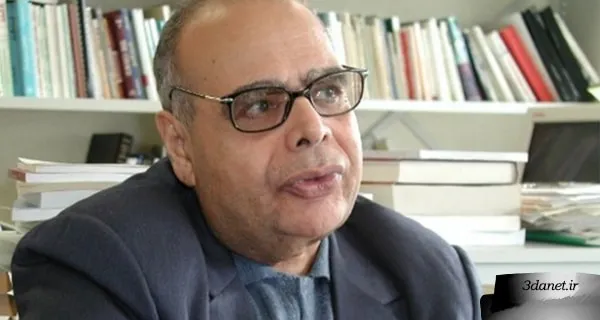
Few are unfamiliar with Muʿtazilite theological thought; a name renowned in the field of Islamic sciences and learning, referring to the theological sect whose chief characteristic is the use of reason in interpreting theological and divine doctrines. The Muʿtazilites emerged in Islamic history under the leadership of figures such as Hasan al-Basri and thinkers like al-Jahiz, Qadi Abd al-Jabbar, and others, following the socio-political events and new ideas that had arisen in the nascent Islamic community.
The use of allegorical interpretation (taʾwīl) and figurative language in explicating texts, as well as the employment of reason in understanding Islamic learning and sciences, were at the forefront of their work. Background factors played a role in the emergence of this sect, the discussion of which lies beyond the scope of this inquiry.
Among the activities of the Muʿtazilites was a particular attention to theoretical discussions. While attending to the practical and applied aspects of the Islamic religion in all spheres of individual, social, and political life, they demonstrated a tremendous effort to establish the relationship between reason and revelation. The special focus on the two principles of Divine Unity (Tawḥīd) and Justice (ʿAdl), and the presentation of the two doctrines of free will (ikhtiyār) as opposed to predestination (jabr), and rational good and evil (al-ḥusn wa al-qubḥ al-ʿaqlī) as opposed to revealed good and evil (al-ḥusn wa al-qubḥ al-sharʿī), are among the important innovations of the Muʿtazila. In fact, this can be seen as a reaction against the intellectual conditions prevailing at the time. Although the belief in predestination and divine decree and destiny was initially advanced and promoted with the aim of exalting the Divine Essence and granting Him absolute agency over the world, over time it became a tool in the hands of oppressive rulers to attribute the deplorable conditions of the people to divine will and providence, citing religious reasons, and thereby dominate them.
Today, a group of contemporary neo-thinkers and modernists, mainly in Arabic-speaking Islamic countries, drawing upon this important aspect of the Muʿtazilites' work—namely, providing a rational interpretation of revelation and Sharia—strive, by reviving this school of thought in Islam and applying its views and teachings to the new issues that have arisen following the transformations of the modern era, to find appropriate solutions and stances for these issues. Of course, neo-thinkers in Iran, both in the past and present, have also arrived at such a perspective, have shown great effort and diligence, and have left behind valuable works. Figures such as Engineer Bazargan, Abdolkarim Soroush, Mohammad Mojtahed Shabestari, and others. However, what we seek in this writing is an acquaintance with one of the most controversial of them in the Arab world, who drew many eyes toward himself, and that person is none other than Dr. Nasr Hamid Abu Zayd. Whether rightly or wrongly, we are not in a position to judge his views and opinions, as we see ourselves neither possessing the capacity for it nor being of the stature to undertake such a task, and we only attempt to present what we ourselves have understood of this subject.
Biography
Dr. Nasr Hamid Abu Zayd was born in 1943 in the city of Tanta, Egypt. In 1968, he began studying Arabic language and literature at the Faculty of Arts, Cairo University, and after receiving his bachelor's degree (1972), he taught at the same faculty. He received his master's degree in 1977 and his doctorate in 1981 in the same field from the same faculty. The title of his master's thesis was "The Issue of Figurative Language (Majāz) in the Qurʾān and Rational Tendencies in Qurʾānic Exegesis According to the Muʿtazila," and his doctoral dissertation was on "The Interpretation (Taʾwīl) of the Qurʾān According to Ibn Arabi." In addition to teaching at the Faculty of Arts, Cairo University, he taught and conducted research at the American University in Cairo (1985-1988), Osaka University in Japan (1985-1989), the University of Khartoum, and the University of Pennsylvania in the USA (1977-1980). In 1992, by submitting 13 of his books and articles to the university's promotion committee, he requested a review and promotion from the rank of assistant professor to full professor. After seven months, one member of this three-person committee deemed these writings a handful of weak works filled with eclecticism and misguidance, but the other two reviewers provided a positive report and evaluation. Ultimately, seven members of the permanent university promotion committee voted for the first opinion, while six others agreed with the second opinion, and finally, Abu Zayd failed to attain the rank of full professor. Two months later, a lawsuit was filed in court by seven professors from Dar al-Ulum and al-Azhar, and after this lawsuit was once rejected by the court, upon a renewed appeal by these individuals, the appeals court ultimately ruled Abu Zayd an apostate.
Eventually, after leaving his homeland, Abu Zayd officially began working as a researcher and professor of Islamic studies at the INIS institute affiliated with Leiden University in the Netherlands, and after fifteen years of exile from his homeland, he passed away in a hospital in Cairo, the capital of Egypt, on July 5, 2010, due to an unknown illness.
Abu Zayd's works include (12 or 13) volumes of books, (74) articles in Arabic and (8) articles in English, (5) translations, and several other written works. Among his most important works are: al-Ittijāh al-ʿAqlī fī al-Tafsīr (The Rational Trend in Exegesis), al-Khiṭāb al-Dīnī (Religious Discourse), Falsafat al-Taʾwīl (The Philosophy of Interpretation), Mafhūm al-Naṣṣ (The Meaning of the Text), Naqd al-Khiṭāb al-Dīnī (Critique of Religious Discourse), and so on.
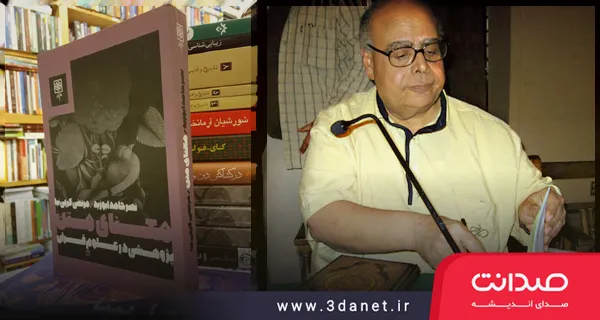
Dr. Nasr Hamid Abu Zayd is a thinker whose most fundamental religious and Quranic views are presented in his most important book, The Meaning of the Text (Mafhūm al-Naṣṣ). This book is, in fact, the product of his teaching on Quranic sciences to students at Cairo University, which immediately attracted the attention of many researchers and critics upon its publication. The importance of this work lies in the fact that, contrary to prevailing and traditional views of the Quran, he attempts to look at the Quran with a new perspective, using modern tools and methods, and to explore and examine it. In this respect, his work is considered innovative and new, as it provides a fresh reading of Quranic sciences by employing theories of textuality and methods of textual and linguistic research, compelling every researcher to reflect.
According to Abu Zayd, confining the goals of religion and the purposes of Sharia to legal and jurisprudential rulings and the like is a view that ignores the goals and purposes of revelation in legislating these limits. In his view, Islam established itself in step with the formation of Islamic reality. For this reason, we find the content and structure of the Quranic text differing between the Meccan and Medinan periods, and this difference is nothing but a reflection of the difference between these two stages in the formation of revelation. The first period is the period of establishing a new community against the ruling and dominant community in Mecca. In this period, the Quranic text emphasizes founding the new thought of monotheism and negating polytheism in society. At this stage, no practical law was needed. The second period in the formation of revelation is the period of social organization and making this organization law-abiding. Therefore, laws emerged one after another in this period.
The opposing view to the traditionalists in contemporary religious discourse is the new-thinking movement. This movement believes that heritage always contributes to shaping our consciousness and affects our behaviors, consciously or unconsciously. Although we cannot ignore this heritage and disregard it, we equally cannot accept it wholesale; rather, we must reconstruct it, meaning we should discard whatever is incompatible with our time, emphasize its positive aspects, and rebuild it anew in a language befitting our time. It must be added that new-thinking built on an ideological basis without the backing of a scholarly understanding of heritage is no less dangerous than imitation.
Perhaps Abu Zayd can be placed in the second category: a new-thinker who tries to present a new reading of Quranic and religious research using scientific methods. He believes that the Quranic text, in its essence and substance, is a cultural product. That is, this text was formed over more than 20 years within Arab reality and culture. Furthermore, the language of the Quran, which is Arabic and the most important tool of a people for understanding and systematizing the world, is in no way detached from the culture and reality of society. Abu Zayd notes that the statement "the text is a cultural product" regarding the Quran pertains to the period of its formation and completion. However, after this stage, the Quranic text became a producer of culture. That is, this text became the ruling and dominant text against which other texts were measured and by which their legitimacy was determined. In other words, the relationship between the Quranic text and culture is a complex dialectical relationship that transcends all the ideological theories of culture in our time concerning the Quranic text.
Dr. Hamid Abu Zayd considers the text to be a cultural product that must be studied within its historical horizon. In examining any text, one must address the culture of its time; the relationship of the text with culture is also dialectical, as it is influenced on the one hand and exerts influence on the other.
Dr. Abu Zayd considers the Qurʾān a linguistic text that must be studied using the method of linguistic analysis. He also accepts that the understanding of the Qurʾān is multi-layered, although he acknowledges that not everyone has the capacity to grasp it. He regards the study of the text within its historical horizon as indicating that rulings find their meaning in connection with the time of their revelation, and in this respect, some rulings no longer possess the efficacy they once had today.
From Dr. Abu Zayd’s perspective, in every age and time, one must undertake a fresh reading and interpretation of the text. The role of the reader in understanding the text is also of interest. He considers the culture of the time to be reflected in the Qurʾān, and consequently disregards some of its concepts, such as jinn and Satan, which pertain to the era of its revelation and are incompatible with modern sciences. Dr. Abu Zayd also touches upon Gadamer’s hermeneutical view and believes that Gadamer’s hermeneutics can help the exegete to reconsider their cultural heritage and to involve the perspectives of each age in the interpretation of the text. It is here that we can say, to some extent, that Abu Zayd has benefited from the ideas of thinkers such as Gadamer.
Revelation
Dr. Nasr Hamid Abu Zayd, with reference to the points raised by al-Zarkashī in al-Burhān fī ʿUlūm al-Qurʾān, emphasizes that there are two theories regarding the language of revelation:
1- Some believe that God taught His Word to Gabriel, and he in turn revealed the same to the Prophet. According to this view, Gabriel revealed both the wording and the meaning. In other words, he revealed the Qurʾān to the Prophet in this very Arabic language.
2- The other theory is that Gabriel only revealed the meanings to the Prophet, and after learning the meanings, the Prophet himself cast them into linguistic form and presented them.
In Abu Zayd’s view, revelation is the sending of the divine message to Gabriel, and he in turn sends the message to the Prophet so that he may convey it to the people. He entertains no doubt on this matter. Moreover, he considers the Qurʾān a linguistic message that no one has the right to tamper with in its outward form or to distort. In his view, the linguistic nature of revelation can be understood by considering the following verses, which forbid the Prophet from hastening while receiving revelation: {1}
«Do not move your tongue with it to hasten it. Indeed, upon Us is its collection and its recitation. So when We have recited it, then follow its recitation.» (al-Qiyāmah / 16-18).
Although the Qurʾān was revealed in clear Arabic and used the conventional vocabulary of this language, it has sometimes helped to strengthen the Arabic language and culture by changing the meanings of words. For example, the word rabb in the verse «Recite in the name of your Lord who created. Recite, and your Lord is the Most Generous» originally meant owner and guardian, pertaining to the domain of human attributes, which the Qurʾān elevated and also applied to God. Similarly, the word karīm was used by the Arab people in the domain of human attributes; the Qurʾān took it into a new semantic domain that was novel for the people of that age and time. {2}
Thus, it can be concluded that in his view, the Qurʾān possesses a special linguistic system, because it has sometimes changed the meanings of certain words and clothed them in the garb of its own culture, such as the words ṣalāt, zakāt, ṣiyām, and ḥajj. {3}. . . customary transferred terms, religious transferred terms, and. . .
The Relationship between the Text (Qurʾān) and Culture
We said earlier that Abu Zayd considers the text a cultural product. In accordance with this view, he also considers the Qurʾān a linguistic text dependent on a specific culture, and this theory stands in opposition to the view of those who consider the Qurʾān a sacred text, meaning that, due to its divine origin, they do not take a linguistic and cultural approach to it.
He accepts the divine nature of the Qurʾān, but does not consider the Qurʾānic text to be unrelated to the cultural, social, and political context of the time of its revelation. In other words, the Qurʾān is a cultural product because it was formed within a specific cultural-social context, and its language is not separate from the culture of its time. Religious texts were revealed in accordance with their cultural conditions, and language is what shapes their system of meaning. Therefore, in examining any text, one must pay attention to the culture of its era, and no text can be considered separate from the culture and reality of its time. In fact, every text finds meaning within the framework of its own specific linguistic and cultural system. And from this perspective, the Qurʾān is not immune to this rule.
Abu Zayd considers the relationship between text and culture to be dialectical, meaning that: on the one hand, it is influenced, and on the other, it exerts influence. Although the Qurʾān emerged within a specific culture, it had a profound impact on the culture of its time. To demonstrate the reflection of the culture of its time—the era of revelation—in the Qurʾān, he points to the verses of Sūrat al-Jinn, which speak of the connection of the jinn with the heavens and also with some humans:
« وَأَنَّهُ کَانَ یقُولُ سَفِیهُنَا عَلَى اللَّهِ شَطَطًا (٤) وَأَنَّا ظَنَنَّا أَنْ لَنْ تَقُولَ الإنْسُ وَالْجِنُّ عَلَى اللَّهِ کَذِبًا (٥) وَأَنَّهُ کَانَ رِجَالٌ مِنَ الإنْسِ یعُوذُونَ بِرِجَالٍ مِنَ الْجِنِّ فَزَادُوهُمْ رَهَقًا (٦) وَأَنَّهُمْ ظَنُّوا کَمَا ظَنَنْتُمْ أَنْ لَنْ یبْعَثَ اللَّهُ أَحَدًا (٧) وَأَنَّا لَمَسْنَا السَّمَاءَ فَوَجَدْنَاهَا مُلِئَتْ حَرَسًا شَدِیدًا وَشُهُبًا (٨) وَأَنَّا کُنَّا نَقْعُدُ مِنْهَا مَقَاعِدَ لِلسَّمْعِ فَمَنْ یسْتَمِعِ الآنَ یجِدْ لَهُ شِهَابًا رَصَدًا (٩) ». (al-Jinn/ 4 - 9) The foolish among us used to speak outrageous things about God. And we thought that humans and jinn would never tell lies about God. And some men among humans used to seek refuge with some men among the jinn, and they increased them in error and rebellion. And they thought, as you thought, that God would never raise anyone as a prophet, and would never resurrect anyone. We sought to reach heaven, and found it filled with mighty guards and meteors. We used to sit in positions there to eavesdrop, but now whoever listens finds a meteor lying in wait for him, aimed at him ».
In his view, the possibility of communication between humans and the jinn was considered part of the Islamic culture—of the era of revelation—to the extent that Islamic philosophers and mystics, based on this very idea, explained the phenomenon of prophethood with the theory of imagination. {4}
The Revelation of the Text (the Qurʾān)
Many exegetes believe that the Holy Qurʾān had two revelations: one a single, instantaneous revelation and the other a gradual revelation.
The instantaneous revelation occurred all at once on the Night of Decree (innā anzalnāhu fī laylat al-qadr), and its gradual revelation took place over 23 years in response to external factors and conditions.
Abu Zayd does not accept this view and interprets the sending down (inzāl) in the first verse of Sūrat al-Qadr as meaning the beginning of the Qurʾān's revelation. {5} His criticism of his opponents is that an instantaneous revelation serves no wisdom, and the Holy Qurʾān was never revealed all at once outside of this earthly sphere—which is the scene of events and particular matters. In his critique of the instantaneous revelation of the Holy Qurʾān, he raises the following objections:
a) At the beginning of Sūrat al-Qadr, we read that the Qurʾān was revealed in the month of Ramadan, which indicates the beginning of the Qurʾān's revelation.
b) This interpretation is incompatible with the issue of abrogation (naskh).
c) The past tense form « anzalnā » indicates a past time.
The Separation of Religion from Religious Knowledge
According to Abu Zayd, a distinction must be made between religion and religious knowledge. Religion is a sacred matter and historically definitive, whereas religious knowledge is nothing but human understanding of religion. Human reflections and interpretive efforts (ijtihād) concerning religion are mutable and may well change from one era to another. {6} Failure to attend to this very point has led to interpretations of religion made in every age and time being regarded as religion itself.
In his view, scholars' understandings of religion differ, and no understanding should be considered sacred and beyond question. The readings of religion by scholars have always been diverse, and sometimes one scholar's understanding has gained dominance and, due to specific political and social conditions, has been presented as the official interpretation of Islam. The readings of religion by scholars should not be equated with religion.
It is religion that possesses sanctity, not religious knowledge, which has a human aspect; and the sanctity of religion should not cause the understanding of scholars to be regarded as sacred. Religious knowledge consists of the scholarly endeavor or human ijtihād to understand religious texts, and these forms of knowledge may well change. He himself, by negating sanctity from religious knowledge, considers a secular (ʿalmānī) interpretation of religious texts to be the best type of religious knowledge. In his view, the answers to many worldly problems should not be sought from religious texts; rather, solutions to difficulties should be found by referring to the human sciences. He cites this hadith from the Prophet: "You are more knowledgeable about the affairs of your world (antum aʿlam bi-shuʾūni dunyākum)," and takes it as evidence for the secular nature of religious thought.
Abu Zayd even considers the Prophet's reading of the Quran to be a human understanding. In other words, upon its revelation, the Quran encounters human intellect and understanding and, as it were, becomes a "human text." In his view, the Prophet's understanding should not be considered identical with the inherent signification of the text itself, and if someone claims that the Prophet attained the inherent signification of the text, they have fallen into shirk (polytheism) and have imagined the Prophet as God-like. In his view, such a conception causes the human dimension of the Prophet to be forgotten and for him to be declared sacred. Whereas not only is the Prophet's understanding human, it also never possesses sanctity.
The Method of Linguistic Analysis
Following linguists, Abu Zayd considers language to be a system of signs that categorizes all thoughts. Language is a tool with which realities can be presented in a specific way. _ In this context, one can refer to the views and theories of thinkers such as Wittgenstein _
With this explanation, to understand the Quranic text, one must use the method of linguistic analysis, because the Quran is a linguistic text that took shape over more than twenty years, and its formation was also in accordance with the realities and culture of its time. {7}
In examining the Quranic text, Abu Zayd raises the question of whether the method of textual analysis can be applied to it or not. This doubt arises from the fact that the origin of the Quranic text is non-human, and how can one approach a divine text with a human method.
Dr. Abu Zayd believes that since God willed to present His message to humans, He used human language. It is from this point that the method of linguistic analysis is the only way to understand the divine message. In other words, in his view, the Quran follows the characteristics of human texts. We, too, must understand it as human and imbued with its earthly attributes. The Quran must be understood based on the criteria of meaningfulness and signification of language, because the Quran speaks to humans with human language, and its understanding is also subject to the rules of human language.
According to Abu Zayd, the message latent in the text has two types of signification: one is the apparent signification (dalāla ẓāhiriyya) and the other is the inner signification (dalāla bāṭiniyya). {8}
The meanings of the text must be understood solely through the text itself and in interaction with reality. Of course, the apprehension of the text's meanings, by referring to the interior of the text, is carried out by the reader and interpreter, and here a kind of dialectic between human reason and the text is observed. Human reason can also derive new meanings from the verses, with attention to the context of the verses. This context is determined by the occasions of revelation (asbāb al-nuzūl), because the Qur'an was revealed over twenty-some years, gradually, and many verses were revealed in response to external factors. The philosophy of this gradual revelation was, on the one hand, consideration for the state of the recipients of the revelation, and on the other hand, attention to the realities of the time.
In Dr. Abu Zayd's view, attention to the occasion of revelation has only been considered for the verses of rulings (āyāt al-aḥkām), whereas one must step beyond that. Although attention to the occasion of revelation acquaints us with the events during which the relevant verses were revealed, the meaning of the verses should never be limited to those same events, nor should one fail to move beyond particular events in understanding the verses. {9}
In his view, exegetes have mostly paid attention to the generality of the wording and set aside the specific occasions of revelation, whereas one cannot always rely on the generality of the wording. He does not accept the dual division of "generality of the wording" and "specificity of the occasion," because he does not see it as compatible with the reality that constructs the text. In other words, some verses pertain only to specific events, and general rulings cannot be deduced from them.
He believes that moving beyond the specific tradition and deducing a general ruling must be done with attention to Qur'anic indicators, and since the structure of language has a generalizing aspect, many Islamic thinkers have therefore striven to give generality to Islamic rulings.
In his view, the Qur'anic text possesses both clarity and complexity. In other words, we have both clear and definitive verses (muḥkam) and ambiguous and allegorical verses (mutashābih). Of course, he believes that the text possesses semiotic keys with which the reader can unveil the complexities of the text.
Exegesis (Tafsīr) and Interpretation (Taʾwīl)
In Abu Zayd's view, exegesis (tafsīr) consists of revealing a hidden matter with the help of an intermediary that guides the exegete. The text is the guide to meaning, and through it, meaning can be discovered. The Book is the signifier, and meaning is its signified.
He believes that, with attention to the Qur'anic verses, two usages for interpretation (taʾwīl) can be mentioned in the Qur'an:
1- Revealing the hidden significations of actions; through interpretation (taʾwīl), one refers back to the origin of reality so that the meaning latent in an act or a speech is unveiled.
2- Reaching the ultimate end and final outcome of matters.
He also considers the word taʾwīl in Surah Āl ʿImrān, verse 7, to mean reaching the ultimate end and final outcome of matters.
In his view, these differences must be considered between interpretation (taʾwīl) and exegesis (tafsīr):
a) In exegesis (tafsīr), the relationship between the object of knowledge and the subject of knowledge is mediated, but in interpretation (taʾwīl), this relationship is direct.
b) Exegesis (tafsīr) takes place with attention to factors external to the text, such as the occasions of revelation, the abrogating and the abrogated, Meccan and Medinan, etc.
c) Exegesis (tafsīr) is a prelude to interpretation (taʾwīl). Through exegesis, preliminary knowledge for interpretation is provided.
d) In interpretation (taʾwīl), the role of the reader cannot be ignored.
"One of the fundamental aspects of the process of interpretation (taʾwīl), namely the role of the reader in encountering the text and discovering its meaning, lies precisely in this difference. The role of the reader or interpreter is not absolute and unaccountable here, such that they may interpret the text as they please; it is necessary that interpretation be based on the knowledge of a set of essential sciences concerning the Qur'anic text—which are encompassed in the definition of exegesis (tafsīr)." {10}
He accepts the multi-layered nature of understanding the Qurʾān. In his view, the ordinary reader attains only a superficial understanding of the Qurʾānic verses and does not gain access to the significations that lie in its depths, but the distinguished reader can penetrate the deeper layers of the text's significations.
Abū Zayd is concerned with the objective interpretation of texts, and for this reason he critiques certain hermeneutical schools opposed to objectivism. Of course, he does not regard objectivity as an absolute matter, for he believes that with the evolution of methods of textual analysis, the hidden dimensions of the text can be uncovered.
"The objectivity attainable in the interpretation of texts is a cultural objectivity within the framework of time and space, not an absolute objectivity, which is nothing more than an illusion and one of the heresies of the ideology of the colonizing West. Such a cultural objectivity is achieved when the reader employs all analytical methods and tools to discover the text's signification and, in the position of interpretation, strives to dissect all the inner layers of the text. Then, if analytical tools and methods evolve in later times and other dimensions of the text are discovered that were not known until that time, there is no fault upon the interpreter. The flow of the text in time and space is a movement within a living and evolving reality, and the discovery of new significations in texts does not mean discarding the previously discovered significations." {11}
In understanding the Qurʾān, Dr. Abū Zayd speaks of the proportionality of the verses with one another. He does not consider the understanding of the internal relations of the verses, which is based on linguistic, sensory, and rational context, to be an objective matter independent of the thought of the reader and exegete; rather, he regards it as arising from the dialectic between the reader and the text. {12}
In his view, where a verse is not a definitive text (naṣṣ), it is therefore apparent (ẓāhir), meaning it has two meanings, one of which is preponderant, and the role of the reader cannot be denied, because the reader's cultural background intervenes in its understanding. {13}
Contemporary Religion
Dr. Naṣr Ḥāmid Abū Zayd is a proponent of religious renewal. He sees his perspective in confrontation with Salafism. In his view, today one can no longer be a mere imitator of past thinkers. These thinkers have left us a legacy which, although it influences us, cannot be accepted in its entirety. Religious thought must be reconstructed so that whatever is incompatible with our age and time is set aside, and whatever is in harmony with our era is reconstructed anew in a language appropriate to the present age.
He considers Islam to be a secular religion and believes in a secular interpretation of religion, and he holds that in the interpretation of religious texts, one should not attend to political approaches. He also considers himself a secular thinker, or, in the Arab term, ʿilmānī.
We previously noted that Abū Zayd regards the Qurʾān as a cultural product that was formed in specific cultural and social conditions, and that even its language is not separate from the culture of its time. His conclusion from these matters is that Islamic rulings find their meaning in connection with the time of their revelation, and those who today wish to implement jurisprudential rulings, especially the Islamic ḥudūd punishments, separate the Qurʾānic text from reality and consequently deny the purpose of religion, because their conception is that the Qurʾān is an absolute text applicable to an absolute reality.
He considers the correct method in understanding the Qurʾān to be viewing it from the angle of "the connection of revelation with reality," meaning that to understand the Qurʾān, one must turn to the reality and culture of the era of the Qurʾān's revelation and pay attention to the role of the culture of the era of revelation in its formation. Through this method, the reader of the text, instead of dealing with absolute and non-objective matters, turns to tangible and objective truths.
Since the text is subject to the culture of its own time, it must always be reread and reinterpreted, for multiple readings can be derived from the text. Abu Zayd's view of the text is hermeneutical, specifically Gadamerian hermeneutics. One must enter into dialogue with the text and make it speak.
In Abu Zayd's view, the role of the reader in understanding the text must not be overlooked. It is for this reason that he opposes thinkers who focus solely on the author of the text and disregard the reader's share in the reading of the text.
In his view, the text has two aspects, general and specific: its specific aspect is the semantic dimension of the text, which refers to the historical and cultural contexts of the text's emergence, and its general aspect pertains to the living and dynamic dimension of the text, which is renewed with every reading.
In fact, his emphasis on the cultural and historical contexts of the text (naṣṣ) is aimed at trying to regard many Islamic rulings as temporary and belonging to a past era. In his view, Islamic society at the time of the Messenger of God (PBUH) was a tribal society based on slavery, and the slave trade was one of the main elements of that society's economic system; therefore, many rulings, such as those on marriage and the freeing of slaves, were suited to that time. Today, when the system of slavery has been abolished, those rulings no longer apply and must be set aside. The rulings on jizya and usury (ribā) are of the same kind. According to him, the Holy Qur'an only prohibited the usury of the Prophet's era. He also interprets the difference in inheritance between men and women based on this same perspective, because the rulings concerning women in the Qur'an were given with regard to the culture of that time, and Islam, by stating those rulings, sought to restore value and status to women.
The fundamental goal of Islam was to rescue women from the deplorable situation of that era and to steer them toward equality in rights with men. Therefore, the rereading of the text must take into account the overall spirit of the Qur'anic objectives.
Abu Zayd not only offers a specific interpretation of Islamic rulings but also holds his own particular views on Islamic beliefs. In his view, the material in the Qur'an concerning jinn, Satan, and magic must be reinterpreted. "The text transformed devils into obstructing and harassing forces and made magic one of their tools for captivating and dominating human beings." {14}
The Three Categories of Texts
We mentioned that Abu Zayd divides the text, from the aspect of signification, into two parts, general and specific: the specific signification of the text indicates the cultural and historical reality of the time of its emergence, while its general signification indicates the plurality of readings of the text, that is, the text's capacity to allow a new reading to be presented in every age. In his view, any religious concept that is incompatible with the realities of the time must be discarded. Based on this view, he divides texts into three categories:
1- Historical texts
2- Interpretable texts
3- Texts that lead the reader from meaning to intent.
Historical texts: This category of religious texts narrates the social realities of the time of their emergence. Given that the text is a cultural phenomenon and draws upon the realities existing in its own era, the culture of the time is thus manifested in the text. The presence of the culture of the age of revelation is also clearly observable in the text of the Qur'an. As we have previously indicated, some rulings were contingent upon the socio-economic conditions of early Islam, such as the system of slavery, the slave trade, the existence of concubines, and the inequality among human beings, which must be set aside, because they pertained to a specific era and, due to social evolution, there is no longer any necessity to accept them. In his view, concepts such as jinn, Satan, magic, and the evil eye also belong to the mental structure of the pre-Islamic Arabs, and since they have no basis in reality, they too must be discarded. {15}
Interpretable texts: Some concepts present in the texts should not be discarded, but rather must be interpreted in a certain way. During the era of the text's revelation, the relationship between God and humanity took the form of servitude—meaning slavery. The acceptance of the concept of servitude also justifies the governance and dominion of states. Abu Zayd examines the meanings of the word "ʿabd" (servant) in the Qur'an to show that the word ʿabd signifies human freedom, not slavery. The human relationship with God in Qur'anic culture is based on mercy and affection. It is from this point that the literal meaning of texts must sometimes be transformed into a figurative meaning. Interpretable texts are those that possess multiple meanings.
Texts that lead the reader from meaning to intent: Abu Zayd distinguishes between meaning and intent. Meaning is what is directly obtained from the text. By analyzing the structure of the text and its historical context, one can derive the textual meaning, but the intent of the text is something else. According to Abu Zayd, there are two fundamental differences between "meaning" and "intent":
a) Meaning has a historical aspect, meaning that the meaning can be derived by considering the socio-cultural context of the text.
b) Meaning possesses relative stability, whereas intent is changeable. In every age and time, a different reading of the text can be presented, and through that reading, access to the text's intent can be achieved. One researcher of Abu Zayd's works says:
"It becomes clear from Abu Zayd's explanations that by intent he does not mean jurisprudential analogy or the general objectives of Sharia; rather, with a degree of latitude, it must be said: by intent he means understanding the current objectives of revelation in every period and era, and dynamic and effective ijtihad is that which can realize the general goals of Sharia by understanding the current objectives of religion, and this task is facilitated in the light of the transition from meaning to intent." {16}
In his view, the intent of the text is sometimes concealed within its meaning, and the exegete must strive to access it. In other words, the hidden objectives of the text must be uncovered. An example can clarify his view. He believes that although the two sexes, male and female, are equal in terms of the reward for their deeds, they differ regarding inheritance, and this is a matter derived from the "meaning" of the text, and this difference was also contingent upon the socio-cultural conditions of the time of the text's revelation. However, by considering the "intent" of the text, which lies behind its meaning, a different reading of the text can be presented and the disparity in inheritance shares can be resolved in a certain way.
The Qur'an and the Culture of the Time
As we noted earlier, Abu Zayd considers the Qur'an a cultural text, meaning that the culture of the time of the text's revelation is reflected in it. This statement has been made not only by him but also by others. In his view and that of others, the Holy Qur'an was influenced by the culture of the time in several respects.
1- The vocabulary and expressions of the Arab people’s language: for example, the similes and allegories that were prevalent in the pre-Islamic era found their way into the Qur’anic text. Such as “the footsteps of Satan” (al-Baqarah/168), “the heads of devils” (al-Ṣāffāt/65), “the ties of the unbelieving women” (al-Mumtaḥanah/10), or the fact that among the Arabs, rainwater held a special value and they used the expression “ghayth,” meaning aid, for it. Hence, it is stated in the Qur’an:
“And if they call for relief, they will be relieved with water like molten brass, which scalds the faces.” (al-Kahf/29)
2- The beliefs and culture of the era of revelation: the pre-Islamic Arabs believed in matters such as jinn, Satan, magic, etc., and even attributed certain actions to jinn and Satan. Such as: that Satan makes contact with humans, leads them astray, and causes individuals to go mad.
“... Those who disbelieve say of the truth when it has come to them, ‘This is obvious magic’ (7)” (al-Aḥqāf / 7) As soon as the truth comes to the disbelievers, they immediately say of it: This is clear magic.
“... the one whom Satan has confounded by touch...” (al-Baqarah / 275) ... except like one whom Satan has severely driven to madness.
Mr. Bahāʾ al-Dīn Khurramshāhī, who is a proponent of this theory, says the following on this matter:
“Since jinn and fairies were highly prevalent in the literature of the Arab people, the Holy Qur’an brought a chapter named al-Jinn and revealed verses about the account of some of them coming to faith and their enraptured listening, even though it is unlikely that today’s science or scientist would affirm the existence of jinn. {17}
3- The endorsement of certain legal, political regulations and social customs and traditions, such as: rulings related to transactions, marriage, divorce, inheritance, and some rulings pertaining to Hajj.
4- In describing the Resurrection and matters related to Paradise and Hell, the Qur’an took into consideration the culture of the society of that day; and it is from this that it names fruits and foods that were suited to the type of livelihood of the Arabs of that time.
A number of Dr. Nasr Hamid Abu Zayd’s most important works are as follows:
1- al-Ittijāh al-ʿAqlī fī al-Tafsīr, Dirāsa fī Qaḍiyyat al-Majāz fī al-Qurʾān ʿinda al-Muʿtazila, Dār al-Tanwīr, Beirut, 1982.
2- Falsafat al-Taʾwīl, Dirāsa fī Taʾwīl al-Qurʾān ʿinda Muḥyī al-Dīn ibn ʿArabī, Dār al-Tanwīr, Beirut, 1983.
3- Mafhūm al-Naṣṣ, Dirāsa fī ʿUlūm al-Qurʾān, al-Hayʾa al-Miṣriyya al-ʿĀmma lil-Kitāb, 1990.
4- Naqd al-Khiṭāb al-Dīnī, Ruʾya Naqdiyya, Dār al-Thaqāfa al-Jadīda, Cairo, 1990.
5- al-Imām al-Shāfiʿī wa Taʾsīs al-Īdiyūlūjiyya al-Wasaṭiyya, Sīnā lil-Nashr, Cairo, 1992.
6- Ishkāliyyāt al-Qirāʾa wa Āliyyāt al-Taʾwīl, al-Markaz al-Thaqāfī al-ʿArabī, Beirut, 1992.
7- al-Tafkīr fī Zaman al-Takfīr, Ḍidd al-Jahl wa al-Zayf wa al-Khurāfa, Sīnā lil-Nashr, Cairo, 1995.
8- al-Naṣṣ wa al-Sulṭa wa al-Ḥaqīqa, al-Fikr al-Dīnī bayna Irādat al-Maʿrifa wa Irādat al-Haymana, al-Markaz al-Thaqāfī al-ʿArabī, Beirut, 1995.
9- al-Qawl al-Mufīd fī Qaḍiyyat Abū Zayd, compiled and introduced by Nasr Hamid Abu Zayd, Maktabat Madbūlī, Cairo, 1996.
And his most well-known articles include:
al-Sīra al-Nabawiyya, Sīra Shaʿbiyya, Journal of Osaka University of Foreign Studies, Japan, No. 71, 1986.
Qirāʾat al-Turāth wa Turāth al-Qirāʾa (fī Kitābāt Aḥmad Ṣādiq Saʿd) [Egyptian Economist], research in the book of the symposium Ishkāliyyāt al-Takwīn al-Ijtimāʿī al-Dhikrayāt al-Shaʿbiyya fī Miṣr, Arab Research Center, Cairo, 1990.
al-Kashf ʿan Aqniʿat al-Irhāb, Baḥthan ʿan ʿAlmāniyya Jadīda, Adab wa Naqd Magazine, No. 58, 1990.
Introduction to the book (Bushido: The Soul of Japan by Inazō Nitobe), Silsilat al-Mi’at Kitāb, Baghdad, 1990.
The Culture of Development and the Development of Culture, Al-Qāhirah Magazine, no. 110/111, 1990, 1991.
The Syncretic Middle Ideology in the Thought of al-Shāfiʿī, Al-Ijtihād Magazine, no. 8, 1990.
Religious Texts between History and Reality, Qaḍāyā wa Shahādāt Magazine, no. 2, ʿAybāl Foundation, 1990.
The Concept of the Text: Linguistic Signification, Ibdāʿ Magazine, no. 4, 1991.
The Concept of the Text: Interpretation, Alif, Journal of Comparative Rhetoric, no. 12, 1992.
Heritage between Utilitarian Use and Scientific Reading: The Authority of the Text in Confrontation with Reason, Adab wa Naqd Magazine, no. 79, 1992.
The Vehicle of Metaphor: Who Drives It and Where To? Alif Magazine, American University in Cairo, 1992.
An Attempt to Read the Unspoken in the Discourse of Ibn ʿArabī, Al-Hilāl Magazine, Cairo, 1992.
The Waste of Context in the Interpretations of Religious Discourse, Al-Qāhirah Magazine, no. 122, 1993.
Woman: The Missing Dimension in Religious Discourse, Al-Qāhirah Magazine, no. 123, 1993.
Disobedience to Religion or Disobedience to the State? Al-Nāqid Magazine, no. 73, London, 1994.
Generalized Orthodoxy: When Social History Merges with the Sacred, Kitāb al-Nāqid (Fundamentalist Violence, Deputies of Earth and Heaven), Riyāḍ al-Rayyis for Books and Publishing, London, 1995.
He also, in collaboration with (Sīzā Qāsim), translated a collection of articles by renowned semioticians such as “Charles Sanders Peirce” and “Yuri Lotman” into Arabic, with the following details:
Introduction to Semiotics, Dār al-Ilyās al-ʿAṣriyya, Cairo, 1986.
.
.
Endnotes:
*: For further reading on this subject, we refer friends to al-Ashʿarī, Abū al-Ḥasan ʿAlī ibn Ismāʿīl, Maqālāt al-Islāmiyyīn wa Ikhtilāf al-Muṣallīn, edited by Muḥammad Muḥyī al-Dīn ʿAbd al-Ḥamīd, Cairo, al-Nahḍa al-Miṣriyya, first edition, 1369 AH.
1- Mafhūm al-Naṣṣ, p. 45
2- Ibid., p. 68
3- Ibid., 184
4- Ibid., p. 36
5- Ibid., p. 100
6- Naqd al-Khiṭāb al-Dīnī, p. 197
7- Mafhūm al-Naṣṣ, p. 25
8- Ibid., p. 59
9- Ibid., p. 103
10- The Meaning of the Text, p. 388 ; Mafhūm al-Naṣṣ, p. 234
11- The Meaning of the Text, pp. 397 - 398 ; Mafhūm al-Naṣṣ, p. 240
12- Ibid., p. 168
13- Ibid., p. 182
14- Murtaḍā, Karīmī-Niyā, The Views and Thoughts of Dr. Hāmid Abū Zayd, p. 66 ; Naqd al-Khiṭāb al-Dīnī, p. 212
15- Naqd al-Khiṭāb al-Dīnī, p. 213
16- Saʿīd, ʿAdālat-Nizhād, Critiques and Reviews on the Thoughts of Naṣr Ḥāmid Abū Zayd, p. 85
17- Bayyināt Magazine, no. 5, p. 95
The biography of Dr. Naṣr Ḥāmid Abū Zayd is taken from this source:
ʿAdālat-Nizhād, Saʿīd, Critiques and Reviews on the Views and Thoughts of Naṣr Ḥāmid Abū Zayd, Tehran, Center for Cultural-International Studies, Mashq-e Emrūz Publications, 1380 [2001].
For the translation of the verses, the following was used:
Khorramdel, Moṣṭafā, Tafsīr-e Nūr, second edition, Tehran, Nashr-e Eḥsān Publications, 1380 [2001].
.
.
Abu Zayd and the Book The Meaning of the Text (Mafhūm al-Naṣṣ)
Author: Salmān Īrānī
.
.


Discussion5 comments
سلام و ادب و سپاس مختصر و عالی.
عالی بود. ممنون
اگر سایت خاصی را معرفی بفرمایید که بتوانیم کتابهای ابوزید را از آنجا تهیه کنم به نظرمشکل حل میشود
سلام من قصد دارم از مطالب آقای سلمان ایرانی در نوشته ام استفاده کنم.چگونه باید ارجاع دهم؟به همان منابع یا به شکل دیگری.لطفا راهنمایی بفرماییدتاحقی ضایع نشود.متشکرم از مطالب مفیدتان
جناب سلمان ایرانی ممنون از نوشته ی بسیارخوب و مفیدتان در مورد نصر حامدابوزید.بسیار کمک کننده بود.با آرزوی موفقیت شما.