Philosophy
Power Means the Presence of All: A Talk by Javad Kashi on Hannah Arendt and Her Thought
In his reading of Arendt, Javad Kashi sees politics as dependent on the world of collective beliefs and opinions, not merely on the logical truths of experts. For him, power means the presence of all and collective appearance, not the solitary pursuit of truth.
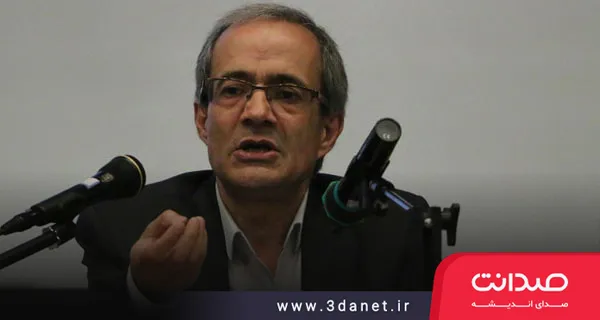
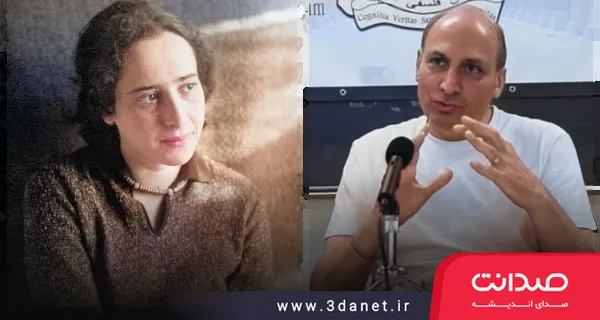
The following text is a lecture by Javad Kashi, professor of political science at the Faculty of Law and Political Science of Allameh Tabataba'i University, delivered in Shiraz on Hannah Arendt's book On Violence. In this session, Kashi discussed Hannah Arendt and her thought, excerpts of which, as reported by the "Siasatnameh" column of the Etemad newspaper, you can read below. The audio file of the session is also attached.
Most other Western philosophers—such as Popper, Sartre, and others—are figures who belong to specific intellectual traditions. But Arendt is among those philosophers about whom it is genuinely unclear what tradition she belongs to, and in this respect she is special and unique. Of course, Arendt is also a difficult philosopher who writes in a complex manner, and engaging with her in a specialized sense is not very feasible here. Especially since I first need to address Arendt’s main and complex issues before arriving at this book, because this book is only comprehensible as a branch of her major works. Therefore, I will try to present the general spirit of her discourse through various examples, and particularly by bringing Arendt into our own lived sphere. One of Arendt’s important characteristics is that she is a woman; women are more capable than men of reflecting on matters based on their specific lived experiences. Men have, to some extent, a logical and macro-level perspective, and a large part of Arendt’s distinctive qualities also stem from this very power of expressing things from the perspective of the deep, subcutaneous experiences of her everyday life. So I thought that if I, too, could express her from the perspective of our own lived experiences, I might be able to manage this weighty task. Let me begin with this very simple example to open a window from here onto one of the angles from which one can start with Arendt. Children, while playing, make up and fall out; sometimes they love one another and sometimes they hate each other. They are absorbed in play, and we adults are accustomed to observing from the outside and telling our own child or another who won’t share their doll with a friend that this is not fair or polite. We constantly present the moral, principled, and logical codes that exist in our minds to children, and in this endeavor we are partly successful and partly unsuccessful. If children were to act entirely according to what we tell them in a logical, principled way and in accordance with moral principles, playing would become altogether impossible for them, and neither their love nor their hatreds would be possible. We do not understand the world of children’s play, and they do not understand our logical world. In any case, play proceeds between this and that, and between the logical formulations of our minds and the chaotic world full of pleasure and enjoyment of the children. The Power of Thinkers in the Non-Rational World Move from the world of children into the social and political arena; a state similar to this also exists in the macro socio-political arenas. People, in this entirely ordinary manner of everyday life, have resentments, sufferings, poverties, and aspirations. In their daily lives they are humiliated, they place hope in one another, they sometimes engage in collective behaviors, and amidst the humiliation, encouragement, predicaments, and openings of everyday life, they do things that occur to their reason and carry them out. They gather together and produce a power, they create a world for themselves, they summon their myths until they build a common world, and from within this common world and collective beliefs, they shape their collective resentments or their love and passion toward a person or persons, or classes, or matters. This world, like the world of children, is not very rational; it is full of love, excitement, desire, and aspiration. People also do things in accordance with this love and aspirations, and sometimes, like children, they fall into a pit, but in any case, this common world in which a power is produced, a world is built, and a force and energy is created, lies within the heart of this very everyday life, their myths, beliefs, and interests. But in the world of everyday life, as in the world of children, there are also grown-ups who appear in the role of philosophers, scientists, and experts, and like the role that parents play for children, they point out to the people their behaviors, beliefs, or mistakes, and the order and framework of issues. Because within this very common world of beliefs and interests, they sometimes also create catastrophes. The question is whether people can even have a common world according to those logical, specialized, expert rules of those elders. Will any power even be produced anymore? If people feel discrimination and inequality in their daily lives and, based on these very collective beliefs, come together, raise a cry, and cause a disturbance, their goals are partly realized and partly not. But when they sit in their homes, where is the power of those very logical philosophers who see everything correctly and precisely, that they can move anything? Political Life: Opinion or Truth? Arendt separates the system of consciousness between the concept of truth and belief, or opinion.
Opinions are a system of beliefs that are not only rational but also full of feeling and emotion, and are in a way related to people's lives. By virtue of opinions, people love one another, feel a sense of familiarity with each other, have a common world, and so on. Opinions are not the specialty of experts; people, young and old, are engaged with opinions. Without these opinions, we are merely bodies and physics. In contrast to this, Arendt posits the concept of truth, which consists of certain, logical, precise, and complex beliefs. Beliefs that my reason and yours, as ordinary people living everyday life, cannot attain. They are understood by philosophers, experts, theologians, and jurists. The crux of the matter for Arendt is: with which of these systems of consciousness is political life connected? If I were to summarize Arendt's entire project, for the greater part of her intellectual and philosophical life, she considered political life dependent on the world of opinions. But at the end of her life, something happened to Arendt that shook her; Arendt did not abandon this belief, but at the same time, she said that truth cannot be ignored either. Therefore, at the end of her life—when she did not have the chance to develop this second Arendt—she believed that political life, in a way, needs both of these systems. In her view, the foundation of politics or political life is power and our will to power. As you know, Arendt is influenced by Nietzsche, so human beings are not seekers of knowledge but, first and foremost, seekers of power, and power means life, appearing, and flourishing. So do not have a negative view of power. Therefore, we are engaged in the field of competition, power, coalition, conflict, and strife before we are confronted with abstract concepts called supreme truths. Life is of the nature of passion, creation, and invention. The will to power, in the Nietzschean account, is precisely this, and Arendt holds the same view. In searching for ourselves, proving ourselves, and creating and inventing in this world, we find one another and form coalitions. It is impossible for power and its pursuit to happen in solitude, precisely contrary to philosophy and the attainment of truth, which happen in solitude. I want to be a great poet, but if you are not there to listen to my poetry, I will be nothing. Arendt's Critique of Capitalist and Modern Society Thus, power is intertwined with the other. The condition for acquiring power is that you exist, and it is here that the common fields of human life are formed; people gather and become creative producers of power. Arendt's entire critique of Marx and capitalist and modern society is that they have taken this will to power from human beings and entangled them in the daily life of their livelihood. There is only one arena where human beings can elevate the will to power to its highest degree, and that is political life. Politics, according to Arendt, means a realm of collective life in which we seek nothing but the search for ourselves in relation and coalition with others. Politics is a tumultuous field of groups, all of whom are seekers of power, and this society is alive. Basically, if in your model of political understanding you always see a pyramid with a single apex from which everything cascades down to the base, in Arendt it is precisely the opposite; you see a trapezoid that has no apex, and everything bubbles up from below. Arendt is a republican, and in her view, free, aspiring, active people who form coalitions with others are the gems and engines of power production in the public sphere. The highest and most sublime political action, according to Arendt, appears in speech; there where we gather around one another and speak. Arendt has a beautiful allegory; she says imagine an oval table, chairs are arranged around this table, and people are seated around it. Around this oval table—because of the place where they sit around the table—no one is like anyone else, and each person has a unique perspective. A free political society is also a society where each individual has a unique, singular perspective, but these many people, each with their own special perspectives, have gathered around one table, and this table is their common world. If this table did not exist, they would not encounter one another. Arendt, the Enemy of Plato and the Philosophers Politics means a common world that gives us the opportunity for each of us to be unique subjects, and now, through speech, we can fertilize and enrich this common world. In this sense, for an important part of her life, Arendt is the enemy of Plato and the philosophers. She says philosophers want to take this very common world away from us. In her view, the philosopher destroys the common world of humanity and becomes the propagator of truth, turning that trapezoid into a sharp pyramid. Instead of the action of unique, creative, and inventive human beings, he creates a herd. I will make a brief reference to this book and to why Arendt somewhat revised this idea of hers. In this book, Arendt says if power is what I say it is; power means the presence of all. Knowledge may be an individual possession, but power is collective property and takes shape only through the number of people. In the realm of politics, every step you retreat from power, every step power withdraws, and every degree to which power is weakened, violence takes its place. If you see violence in politics, understand that the root of power is being torn out. The example this book gives is that when the game is one of power, it is all against one, and when the game is one of violence, it is one against all. That is why power needs no tools. In our revolution, Imam Khomeini (RA) said blood triumphs over the sword because all were present and were against one, and his instruments could advance nothing. The Transformation of Death into an Object of Pleasure and Desire Arendt says it is truly very difficult to distinguish between violence and power, but power commands, has authority, and exercises a will, but it is the will of all. When you are present in the heart of a field of power, you understand that your soul and spirit are under pressure, but that pressure is the very essence of the feeling of freedom, the very essence of the feeling of creativity and creation, and it wells up from within you. But if in the field of politics you find yourself faced with commands that torment your moral conscience and your body and soul, that force you to lie in order to continue living, that turn the lie into the main text of life, and if you see that to obtain a job you have endured obligation, been humiliated, and heard many irrelevant words, this means that authority and power have died here and politics has appeared in its violent face. That is why she says that violence is fundamentally perpetrated by rulers; the people are, in principle, the agents of power. In the Arendtian view, we never encounter any of these forms in a very pure state. The people are never so free as to be the total arena of a creative and generative power, nor is the ruler ever so capable as to be the manifestation of total violence. She says if you imagine the most despotic ruler in history, he certainly has some people who grant him power. In other words, every model of violence requires a minority of power, and every model of power is also intermingled with a minority of violence; that is, the game is a composite one. Therefore, Arendt does not speak about violence like the liberals, who say everything in politics is logical and planned and one must be patient. Arendt says they launch some studies on zoology and say that when man commits violence he becomes like animals, and they seek the root of violence not in human reason but in his animal nature. But Arendt says violence is also a part of human action. When a large mass of people are humiliated and no new door is to be opened to them, they will inevitably dream of violence in their desires. There is a secret in violence that the wretched and the overlooked have no choice but to cling to, and this secret is that perhaps the game will suddenly be disrupted, perhaps a door will be opened this way, and if not, I will die and be at peace. Therefore, Arendt says in conditions where the path for people's political engagement is not open so that people can naturally gather around each other based on their sufferings and desires and create power, they dream of violence. That is, death becomes an object of pleasure and desire. A Little Plato is Also Necessary This is the framework of Arendt's discussion. For a large part of her life, Arendt thought this way; she was an enemy of philosophers, she had no affinity with logical thinking outside the game. She said everything is in the field of play, in these very opinions, wants, and beliefs that take shape within the texture of life. That passed; you know that Arendt is Jewish, was in danger during World War II and somehow fled Germany, and in Auschwitz, a vast multitude of her compatriots were also burned in the fire, so you can understand how great Arendt's hatred of the fascists is. The theoretician of these human incinerators is a person named Eichmann. After the end of World War II, he is kidnapped and brought to the area we know today as the Zionist regime, and his trial sessions are convened. Arendt attends these sessions as a female journalist.We imagine that the image of Eichmann in Arendt’s mind must be that of a terrifying demon, but in that courtroom she stares at Eichmann, who happens to be a slight, rather incapable man, and then begins writing a series of notes—the theory of the banality of evil—for which she is also attacked, and she says how banal this evil is, that Eichmann is a nobody. In other words, that terrifying demonic image suddenly turns into a slight individual. There, a major mental jolt occurs for Arendt: if I were to confine myself solely to the world of opinions and the world disseminated in everyday life, well, this poor wretch (Eichmann) has also done something. Eichmann himself says in his defense that I did not know what I was doing and my impression was that I was saving humanity and would remain a hero in history. It is here that Arendt realizes the dignity of philosophy. Of course, she does not abandon her opinions; she still believes in the world of opinions and beliefs and so on, but she says that at the same time, there must be a free reason independent of the field, so that at any moment, whatever the field demands, I can withdraw myself from the field for a moment and ask myself: is this action right and humane? It was then that Arendt realized that perhaps a little Plato is also necessary, because the ever-turbulent world of the general public does not always resolve the story. Everyone must flow into the texture of everyday life, but one item of it is also Platonic-Kantian reason. —Arendt specifically engages in dialogue with Plato and Kant— so that I do not merely follow whatever people say, but rather step back for a moment and reflect on its correctness. Thus, it seems Arendt was choosing between the two positions of spectator and actor; the philosophers said that in the political arena one must be a spectator, Arendt says that in the political arena, one must become an actor. Politics is a field of play, not a field of deep contemplations. In the battle between actor and spectator, Arendt, in the final months of her life, reaches the conclusion that in the political arena one must be an actor, but not entirely abandon the spectator’s position.
.
.
Audio of Javad Kashi's lecture at this session
.
.
Power Means the Presence of All: A Talk by Javad Kashi on Hannah Arendt and Her Thought
Javad Kashi (Professor of Political Science, Allameh Tabataba'i University)
.
.


Discussion0 comments
No comments yet; let yours be the first voice.