Philosophy
Hannah Arendt in Plain Language, by Sahand Iranmehr
Hannah Arendt, examining the Eichmann trial, arrived at the concept of the 'banality of evil'—how ordinary people, within a totalitarian structure and having lost empathy, become agents of violence; an analysis of the stages of normalizing crime and the alliance between elites and the mob.

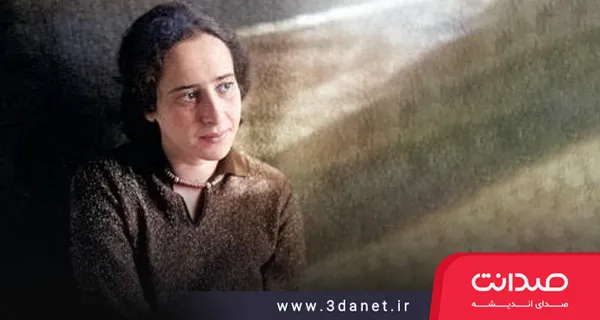
Today is the birthday of Hannah Arendt, the German Jewish political philosopher. Well, one could engage in a lot of rhetoric and bombast right now, but philosophy can also be understood very simply and enjoyably, so I decided to briefly tell you what interesting things Hannah Arendt has to say about the violence that has occupied the world and our minds these days:
One of Hannah Arendt's concerns is the subject of violence and obedience. After the Second World War, when Eichmann, the chief executor of the Holocaust crime, was captured, Hannah Arendt examined the behavior of this ordinary and seemingly very pitiable man to understand how such immense violence could emanate from such a simple person. During this research, Arendt arrived at an interesting concept: “the banality of evil.” This means that if people go through a specific process, they very easily become like Eichmann, and crime becomes a banal matter; then a university professor, a kind child, a calm woman, a romantic man, or a lovable old man easily becomes a full-fledged criminal! You see concrete examples of this matter in every corner of the world, yesterday and today, and you have witnessed or are witnessing how respectable people are placed in the position of committing the most unjustifiable acts and, to everyone's astonishment, commit them. But how does this event and its stages unfold?
A Documented Example:
“It has been said that Eichmann considered himself so ethical that he had not the slightest financial corruption in his file, and during the trial, he proudly said: ‘I could have forced a Jew in Auschwitz to teach me Hebrew for free, but I paid him for it.’ Eichmann never even considered what explanation there fundamentally was, within this peculiar ethical-mindedness, for imprisoning that Jew and then burning him. Himmler also said: ‘We did not extort even a cigarette or a mark from the prisoners and carried out our heavy duty without corrupting morality.’”
(Martha Gelhorn,”Eichmann and the Private Consciece”: In The View from the Ground.p259).
According to Arendt's research, first of all, it is necessary that you cannot think or that you cannot express your feelings well. When you cannot think properly and your feelings are also suppressed, the first thing that happens is the loss of the capacity for empathy (1). But what can cause this situation? Arendt believes that for this situation to arise, we need a “legitimate authority,” meaning a structure that seems to us to be a coherent structure, and the license that structure gives us to commit acts can ease our conscience and make our will resolute. For example, if we are told: “Connect a small amount of electrical voltage to so-and-so's body!” If we are alone, we will not agree, but if a reputable institution asks us and we see ourselves among 1000 volunteers, we are even ready to press the high-voltage button, because it is impossible for us to doubt the correctness of an advanced system with all those people who have accepted it (search for the Stanley Milgram experiment on the internet).
Suggested Films on the Subject of “Hannah Arendt”
According to Arendt, that institution which wants us not to think and not to express feelings arising from empathy, and begins its work with legitimate authority, does this in several stages:
1- In the first step, it tries to inculcate in us the image of a perfect, flawless human being and present that as our model, so everything real, from our instincts to our feelings, is suppressed as sin or betrayal.
2- The boundary between us, who want to be perfect and flawless humans, and the imperfect, flawed human becomes sharper by the moment.
3- Our hatred for those who do not want to be perfect gradually increases, and simultaneously, the cohesion among us perfectionists, who have become members of this structure, grows to the point where "us" stands on one side and "them" (insiders vs. outsiders) on the other, and our ruthlessness toward them is considered courage and commitment to the idea of the perfect human.
4- Now an effort is made to normalize malice, ruthlessness, and crime for us perfectionist humans, but this normalization requires a division of labor.
A: Individuals who can exercise violence in person and establish a direct relationship between the body and crime.
B: Elite individuals, including academics, managers, elites, etc., who are incapable of direct violence (desk-bound murderers).
The totalitarian structure dispatches the first group to the front lines of conflict with simple means, but what about the people in the second group? For these people, through "physical distancing from crime" and placing them within the vast and sprawling bureaucratic system, it creates a kind of local anesthesia so that they cannot understand at all how the speeches they deliver, the texts they write, the words they utter, or their signatures ultimately lead to crime and bloodshed, and all of this is done to destroy their sense of empathy. Hannah Arendt, by dissecting this process, in fact showed that people's hands becoming stained with crime is nothing strange, just as Eichmann's weeping for his chick in prison and the burning of thousands in the crematoria become understandable from this perspective.
The outcome of this process is fascism. In Arendt's view, fascism simultaneously puts the mob and the elites to work. Hannah Arendt says in this regard (2): "Fascism tolerates no private sphere in human social life and becomes the prelude to the emergence of totalitarian movements. An important feature of such conditions is the alliance of 'the elites and the mob.' Totalitarian movements hold a strong attraction not only for the mob but also for the elites of society... The elites of totalitarian movements possess the characteristic traits of the mob, and past experience shows that the temporary alliance of the elites with the mob rests largely on the fact that the elites, with genuine delight, watch the spectacle of the destruction of personhood and individuality by the mob."
Now, with the knowledge of the simple language I have used to explain Hannah Arendt's views, you can very easily understand how a devout Christian or Jew commits the most heinous crimes, how a praying Muslim in white robes, smelling of perfume, in the guise of ISIS, severs a person's head, or how such-and-such a mufti or preacher, with all that courtesy, calm, and luminosity, utters words whose outcome is blood and violence, or how such-and-such a person educated in the West or East, in the role of a speaker behind a university podium or anywhere else, practically becomes a desk-bound murderer and a collaborator in an unbroken line of violence and repression. Furthermore, from now on, you can very easily laugh at the ignorance of those who think that relying on the faith-based and moral characteristics and merits of individuals can prevent the emergence of corruption, ruin, and crime, and who forget that great crimes are the product of a precise and calculated structure, a structure that utilizes modern means and, through a process of normalization, makes crime banal and forms the most terrifying political structures.
.
.
Hannah Arendt, in Plain Language
Author: Sahand Iranmehr
1-empathie
2-Origins of Totalitarianism
.
.


Discussion7 comments
پاسخ درست آن نیست که آرنت ارائه کرده پاسخ اومانیسم اروپایی است که دو طرف مدعی آن در دو جنگ میلیون ها انسان را قتل عام کردند. وقتی از دین رو برگردانیم نابودی و قساوت هیتلر چرچیل و روزولت جایگزین می شود. تحت تاثر نام غرب بخاطر تکنولوژی آن ها قرار نگیریم
کمی فلسفه سیاسی بخوان تا تفاوت دانش سیاسی با فلسفه سیاسی را بدانی .
موضوع خیلی مهمیه و بیش از این جای صحبت داره. به گمانم دلمشغولی هانا آرنت برای ما هم کاملا موضوعیت داره، البته با شرایط خاص فرهنگی و تاریخی خودمون. فکر میکنم میشه با خط فکری ایشون مثلا فاجعه ی کربلا رو بررسی کرد تا ببینیم چه عواملی باعث شد که عده ای انسان - ظاهرا عموما - معتقد ، قربتا الی الله ، اون جنایات رو مرتکب بشن. و این که آیا عوامل مذکور همچنان در فرهنگ و اندیشه ی ما حضور دارند یا نه؟ برای آآرنت حس همدلی سرکوب شده جلب توجه کرده. به گمانم تعریفی از ولایت که اخلاق ، وجدان و عقل افراد رو میگیره و همه رو در اطاعت از مقام ولایت خلاصه میکنه، همین کارکرد رو ممکنه داشته باشه
یک اشکال بزرگ در کلام شما هست جای قربانی و جلاد را خلط کردید. هانا آرنت از همان فرهنگی است که میلیون ها انسان را در جنگ های بزرگ پس از شکل گیری مدرنیته با قساوت پاره پاره کرد به آتش کشید. تظاهر هم حدی دارد بابا محسن.
شجاعت داشتید و می گفتید و به جای فلان واعظ، فلان روحانی!
با سلام. متنی که از ایشون منتشر شده است یک سرقت علمی از کتاب جنگ تحمیلی نوشته ی عباس صادقی زرینی می باشد. اطلاعات کتاب: جنگ تحمیلی نشر جنگ زدگان چاپ اول تابستان 97
عالی بود! نویسنده ی محترم مهارت خاصی در ساده کردن مفاهیم و نظریه های پیچیده دارند. سپاس فراوان