Sociology
Hannah Arendt's Article 'Authority, Violence, and Totalitarianism'
Totalitarianism becomes possible only when authority has collapsed. Arendt sees the breakdown of authoritative institutions and common sense as the precondition for totalitarianism, warning that authority gives way to terror and intimidation.
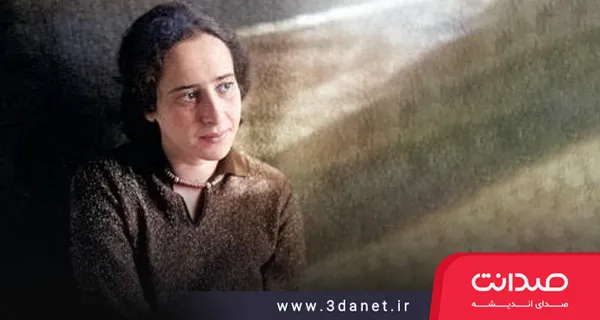
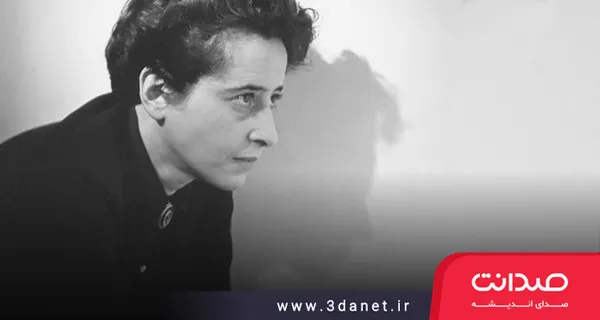
Authority, Violence, and Totalitarianism
Author: Hannah Arendt
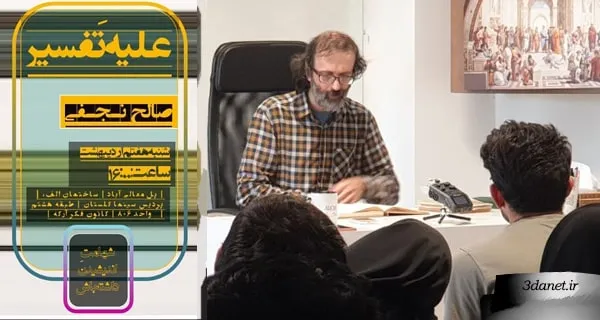
Translator: Saleh Najafi, Shargh Newspaper, January 1, 2006
Translator's Note (Saleh Najafi): In his book Authority (translated by Bagher Parham, Shirazeh Publications, 1999), Richard Sennett considers authority to be among the fundamental needs of human beings. Just as children need authority figures to guide them and give them assurance, adults also need to play the role of an authority figure in order to realize their own existence to some extent.
Richard Sennett identifies the characteristic of the modern age in confronting the issue of authority as this: individuals, instead of fearing the weakening of the force of authority and its collapse (a fear that dominated people in pre-modern societies), fear the very existence of authority (that is, authority per se). In his view, there is a strong tendency within the human being to be protected, to feel that someone, some institution, or some force (human or superhuman) is taking them under its shelter.
In modern life, however, other fears have emerged that have made individuals afraid of authority itself and its sources and agents: the fear of being deceived, the fear of freedom being sacrificed in the name of security, the fear of the will-less and gullible masses, and, of course, a disinclination to follow sources that no longer deserve to command. Nevertheless, the desire to be guided, to have security, and stability remains in place. Five decades ago (in the lecture whose translation you are reading), Arendt pointed out the crucial fact that the collapse of authority paves the way for totalitarian and tyrannical regimes. The absence of authority, whether in the realm of inner life or in the realm of collective life, is catastrophic.
In his book The Authoritarian Personality, published in the post-war years, Adorno showed how anti-Semitic sentiment reflects the need of those who lacked a capable and authoritative figure in their childhood and therefore felt a sense of powerlessness within themselves; it is these same people who seek to shift their guilt onto others by any means possible. Arendt's discussion reminds us that one of the manifestations of the crisis of the modern world has been the collapse of all sources of authority and the taking root of totalitarianism in various spheres of human life.
Totalitarianism is only possible when every form of authority has already collapsed. Authoritarianism is, in many respects, the polar opposite of totalitarianism. What is authority? Authority can be defined on two levels:
1- Authority in the general sense of the word is the authority we have over our children. We all know well that without our guidance, children would not survive and would not grow enough to enter the common world of adults. We are the representatives of the common world into which children step as strange and helpless beings. This very fact grants us authority. The collapse of this authority means that adults no longer wish to take responsibility for the world in which their children are growing up.
2- But what does authority mean in the specific sense of the word, that is, in our Western world? The origin of the word goes back to ancient Rome; the Greeks were not familiar with it. It was from the Roman era that authority became linked with tradition and religion: authority was inherited through tradition, authority was the property of the ancestors, the past had command over the present, because the past was the beginning, the foundation, and the basis of Rome.
Anyone who felt a sense of belonging to this beginning was pious and religious and felt a sense of duty toward the gods, the state, and their family.[1] With the emergence of the Catholic Church, this same interpretation of authority was accepted; the only difference being that instead of the foundation of Rome, the foundation of the Church was spoken of, which was manifested in the existence of Christ. Thus, the Roman trinity of authority—religion—tradition remained in force until the beginning of the modern age.
3- The process of the collapse of the Roman trinity: First, following the strengthening of the natural sciences, tradition became a subject matter dealt with only by specialists and was no longer binding for the common people. In the second stage, religion, as a system of beliefs with general acceptance, became a subject matter pertaining to the private sphere of individuals, which no longer had any standing in the public sphere. Religion was no longer among the pillars of the common world of human beings.
Finally, it was the turn of political authority. Political authority was finished, because its legitimacy was inevitably dependent on the other two. Now political authority was equated with the exercise of violence, whereas previously violence had always been the exact opposite of authority. To say that violence and authority are one is like claiming that the armed robber to whom I am forced to hand over my wallet has authority over me. Wherever a political system requires violence, know that it has completely lost its authority.
Authority gave way to common sense: common sense was apparently based on interest. It was common sense that prepared me to enter the common world, and what prepared me for political activity were interests, interests that are common among us and bring us together as a group. What ruled over human beings at this stage was common interest, the very thing that, according to the formulation of Rawān[2], holds the reins of kings.
In the second instance, common sense was considered the epitome and manifestation of general standards of right and wrong and universal rules of judgment, rules and criteria under which every individual could subsume particular and disparate issues. These rules and criteria were at the same time common among all those who lived within a single community. The said rules and criteria rested upon the common world. The process of the collapse of common sense: the emergence of the masses eliminated the category of interest. Unlike classes, the masses are composed of individuals who have nothing in common, neither a common world nor a common interest.
After that came the collapse of our rules of judgment, which, though we had not known it before, were founded on utilitarian concepts of interest. The collapse of common sense was simply another name for the collapse of the common world. More precisely, the collapse of common sense was the collapse of the political world. The characteristic feature of the world in which we live is the fact that we can no longer rely on any authoritative reference to understand it, nor can we trust our common sense.
Totalitarianism is in many respects precisely the answer to this confusion and bewilderment. Does this mean that only totalitarianism has risen to the challenge of our time? Has the free world been defeated in this struggle? We shall see. One thing is certain: the collapse of authority and common sense, or in other words the crisis of our time, is perceived in a tangible and visible manner only in these displacements and new, unprecedented forms of domination.
The so-called spiritual crisis always remains fraught with ambiguity, and for this very reason it is highly susceptible to misunderstanding. On the other hand: since the preliminary conditions necessary for the emergence of totalitarian domination are the very general conditions of our period and era, no one can say, "Autocracy and totalitarianism cannot possibly become a reality here." Everywhere, there is the possibility that authority will be replaced by terror, and common sense [or sound judgment], when it reaches a dead end in justifying matters, may at any moment cling to an ideology that explains everything to it wherever common sense fails to grasp the situation.
If you open your eyes, this is what has happened all around you, at every level: at the level of ideology, Americanism has risen up to confront Communism, and at the level of practical life, the terror of public opinion casts its shadow everywhere. The truth is that no one can live outside a common world: recall the story of the guard who, when he told the people that the enemy was approaching, was himself the last to flee. He had built a common world by means of a lie, and when this world was realized in the existence of the people who rushed to the city walls and ramparts to confront the enemy, even the guard himself became a member of that world.
Under these conditions, we encounter difficulty in understanding matters when we apply our usual standards. The apparent characteristics of the abnormality of our time are these:
1. The relationship between party and state: The state has not failed in its work but persists as a façade. The center of power is hidden, whereas in all ordinary and normal governments nothing is clearer or more visible than the seat of power. More importantly, the party itself has become the façade of that façade—first the elite groups, and finally the party leader. The more visible something is, the less power it has.
2. The relationship between the police and the government or party: The police appear to be an all-powerful force that can nevertheless never seize power. Recall the Beria affair.[3] The police have become the executive arm of the government but possess no power or authority of their own. They cannot even acquire power comparable to that of military dictatorships.
3. The exposure of the futility and uselessness of forced labor camps and extermination. A categorical denial of the notion that the Nazis exterminated certain members of society because they deemed them useless. The Jews were exterminated in the midst of a vast war. Likewise, a categorical denial of the notion that it would have been better to send these segments of society to labor camps instead of exterminating them.
In Russia, too, we have witnessed slave-like labor camps and the extermination of human beings, yet slave labor proved far less useful and productive than free labor. This was perhaps an alternative to the forced labor forces that still exist. The sole utilitarian economic principle is financing the costs of the police apparatus.
4. As soon as opposition diminishes, terror intensifies. There is no escape!
To this set, we must add other, more subtle but equally important confusions and perplexities:
a. Movements that come to power through revolution but do not enact a new body of laws, laws known as "posited laws." The constitution in Germany and Russia did nothing but demonstrate that law in itself has no force or power. Nevertheless, we cannot speak of lawlessness in these two countries in the same way we speak of the arbitrary will of a tyrannical and despotic ruler.
The totalitarian ruler governs in accordance with the law of History or the law of Nature. Tyranny must be distinguished from totalitarianism. What is the relationship between these laws (the law of History or Nature) and the laws according to which we live? From time immemorial, as long as God has been God, laws have been likened to walls, fences, or boundaries.
It makes no difference where their authors drew inspiration from or on what authority they posited them—from the law of Nature, as the law ruling the entire universe, or based on divine commands and revelation—once the laws in question assumed the form of established law, that is, the form of a law that defines right and wrong or correct and incorrect for any given community, it seemed as though these laws had shaped and constituted that community, just as frontiers and boundaries constitute the physical existence of a country.
These laws were by no means permanent, but they appeared far more permanent than the actions or even the lives of the human beings whose lives and deeds they were meant to regulate and order. Laws were forces that lent stability to the community, to the city-state within which human movements could occur. Laws allowed human beings to move and act. What moved was human action, and what was relatively stable was the law. The law of History or the law of Nature, which are in truth one and the same, are laws of movement; the defining concept in both is evolution or process: these are laws according to which a particular process or course of evolution occurs and proceeds. It is believed that these laws can be known and then applied. The totalitarian ruler applies the laws governing the course of evolution and accelerates the movement that is proceeding in any case.
It does not kill people; it merely dispatches moribund classes or races that are no longer worthy of living into non-existence. What now moves and surges forward is a kind of process, and what the ruler must seek to stabilize is human beings themselves. And since human beings possess the capacity to think and act, he must endeavor to strip them of this capacity.
For this very reason, he is never content with the voluntary and willing submission of people; on the contrary, he does not trust their voluntary submission. Someone who today decides of their own free will to obey the ruler can change their mind tomorrow. This means freedom from the bonds of history or nature.
B – Facts and Lies: Not propaganda in the strict sense of the word, but the actualization of lies in such a way that every lie somehow becomes truth. Consider unemployment: reducing the unemployment rate by continuously cutting unemployment benefits, so that no unemployment remains at all; what remained was merely beggary. Another example: the issue of race; Hitler selected SS members based on photographs of individuals. Through such things, a kind of common world, or something resembling it, emerges in which whatever you say is possible, nothing is impossible. This is what the slogan accomplishes. The sole necessary condition is coherence and non-contradiction.
If we hear that everyone has confessed to the same crimes, we do not believe it, or if, for example, we are told that every single Jew is a member of the “Elders of Zion[4]” group. Here we have the reverse of the matter: subjects that are the result of logical deduction.
If we view totalitarianism as a form of government, it must be said that the edifice of totalitarianism rests on two pillars: ideology and terror. Totalitarianism is not the same as tyranny, because tyranny is synonymous with lawlessness and reflects the political sphere in a far more limited concept. Tyranny deprives men of the capacity to act, because it isolates human beings. Totalitarianism, inevitably, like other forms of government, relies on a kind of common experience. The common experience of human beings under totalitarianism is always loneliness: loneliness is the product of the collapse of a kind of common world.
The feeling of rootlessness, the feeling of superfluousness, and the like. It is terror that binds isolated individuals together; ideology, by the force of its inner logicality, shackles individuals and compels them to follow it. Recall the arguments, cold and soulless as ice, of Hitler and Stalin. The mighty and terrifying arm of all kinds of logics, that is, the very law of the process. What you have started, you must carry through to completion; as the saying goes, the one who finishes the job is the one who did it! In loneliness, I lose common sense; I no longer sense what we have in common, meaning I will have no perception of our commonalities. I can only rely on matters that are self-evident and obvious in themselves, which I know without needing any kind of experience. This is why logicality holds such great allure and temptation for modern people.
Terror and intimidation bind me to people with whom I have lost my connection. Ideology binds me from within, terror from without. Totalitarian domination draws its strength from the loneliness of individuals and produces the same, just as tyranny draws its strength from isolation and produces it, just as a republic, in principle, draws its strength from the love of equality and fosters it, just as monarchy relies on the love of distinction and augments it.
Nevertheless, while equality and distinction, even in opposition to one another, are considered political principles, isolation and loneliness are by no means among the principles and foundations of politics. The sterility and futility of totalitarian regimes are, in this respect, similar to the sterility and futility of tyrannical regimes. But these regimes are like sandstorms that today appear as a towering, terrifying mountain and tomorrow are utterly forgotten. Stalin, Hitler, isolation: I can live in isolation, but not in loneliness. In the relentless onslaught of processes, I lose myself and forfeit my self.
Totalitarianism is a manifestation of ruin, yet it nonetheless answers the challenge of the modern world. Should the free world act in the same manner? Is there no way left to devise a new order in government? End and beginning. Different perspectives: from the historian's perspective this means an end, but in the view of a political scientist it is a kind of beginning, for man as a being who acts continually begins. Yet a beginning can never succeed right from the start. Each of us is always a new beginning: our age is a time of disintegration, a time of enmity and malice, a cursed situation that I was born to set right, to clarify its task:
(Initium ut esset homo creatus est)[5] [Man was created so that a beginning might come to pass] This judgment always holds true. Now, however, we are aware of a strange beginning: the hydrogen bomb. For the first time, we can decide for ourselves whether the human species should continue its life or vanish forever from the face of the earth. To be or not to be. Just as philosophy, which deals with man in the singular, only begins its work in full force when man can say yes or no to human life, so too politics, which deals with men in the plural, perhaps only begins its work in earnest when we know whether we can say yes or no to the human species.
This brings anew before our eyes the oldest question of man: the potential immortality of man and the connection of this immortality to politics, a connection that has been lost since the age of the Greeks. A question that has been forgotten, partly because we have become convinced that we can do nothing about it, and partly because we have lost interest in the problem of the immortality of the soul.
.
.
Translator's Notes:
[1] Arendt uses the word pietas here. To explain, the Romans viewed the expansion of the Roman Empire and the universalization of its laws as a grand project that drove the course of history toward its perfection. Every subject of the empire, from farmer to soldier, philosopher to even the emperor himself, had to strive for the realization of this ideal. With this meaning in mind, Roman philosophers spoke of two central values: officium (duty) and pietas (respect for the source of authority). Pietas was originally the name of a goddess who was the protector and patron of the empire.
[2] Henri de Rohan (1579–1638), known as the Duke of Rohan, was a soldier, writer, and leader of the French Protestants in the 17th century. He left behind books describing the ins and outs of civil wars and the history and art of war, in which he sought to draw lessons from the battles of the Roman emperors for combat in the modern age.
[3] Arendt refers to the life story of Lavrentiy Pavlovich Beria (1899–1953), a politician and head of the Soviet Union's police during the Stalin era. His name is often reminiscent of Stalin's vast and infamous political purges of the 1930s, although in reality he was only responsible for the final stages of the purge. The peak of his power dates back to the years of World War II and after. Following Stalin's death, Stalin's successors removed him from office and eventually executed him.
[4] The "Elders of Zion" or "Protocols of Zion" is the name of a group with an ambiguous identity and history, whose protocols were published for many years by anti-Jewish organizations in various countries, and it was made to appear as though they sought to conquer the entire world and deceive all "non-Jewish nations."
[5] This sentence is a phrase Arendt quotes from St. Augustine's "City of God." Arendt first turned to interpreting Augustine's views in 1929 while working on her dissertation. Later, in the 1950s and shortly after this very lecture, she wrote elsewhere: "To begin is the highest capacity of man; and, as Augustine said, man was fundamentally created so that a beginning might be made. The birth of every human being guarantees the survival of the beginning; every human being is, in fact, a beginning."
.



Discussion2 comments
این که هانا آرنت از فلسفه و فلسفی خواندن نگاشته های خود ابا داشت و ناراضی بود شاهدی بر این است که توان ارائه مبنای عقلی و تجربی(فلسفی) برای عقلانیت، صدق و شدنی بودن و مانایی و پایائی سایاست و حکومت برآمده از رومانتیسم فکری و fantaziaخود را نداشت. هانا آرنت ابتدا بایست در جهانی واقعی زندگی کند و و توصیه ا ی خود را برشالوده جهان عملی و واقعی گذارد. خیال پردازی wishful thinkingارزش و کابرد مفید ندارد فقط نازیسم و المان هیتلری را می تان با آن کوبید .
برای شناخت هانا آرنت insight بینش هایی که sociology of science تاریخ جامعه یهودی و تلاش انها برای survival بقا , و سپس supremacy تسلط بر دیگران می تواند روشنگر باشد. این که ما از موضع شک به همه چیز و اندیشه بر پایه نگاه یونان باستان نام نگاه خود را عقلانیت بگذاریم و همه چیز را که با عقل ما سازگار نیست را محکوم کنیم یا معیوب بخوانیم با خود عقلانیت سازگار نیست. هانا آرنت یهودی شباهت همان تکاپوی یهود در جهان است که به زبان اقلیت در حال تلاش بیرون امدن از انزوا و ضعف سخن می گوید.