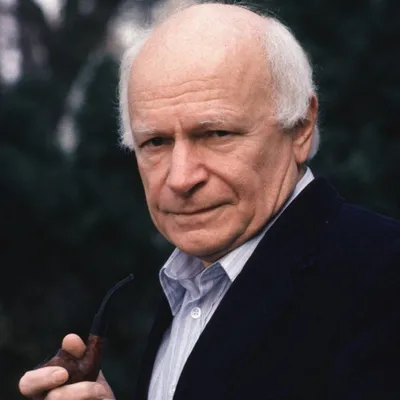
Foreign thinker
Reinhart Koselleck
Reinhart KoselleckConceptual History and Philosophy of HistoryGerman1923–2006
Concepts are not merely indicators of social and political change; they are also factors in that change.
In their times
Open in the Timeline of Thought


Life and Thought
Reinhart Koselleck was a German historian and theorist recognized as one of the founders of the “conceptual history” (Begriffsgeschichte) approach. By examining the transformation of political and social concepts in the modern era, he showed how political language reflects historical changes and social experiences.
Reinhart Koselleck was born on 23 April 1923 in Görlitz, Germany, and is regarded as one of the most important German historians of the twentieth century. After the Second World War he studied history, philosophy and sociology and, under the influence of various intellectual traditions including German historicism and historical sociology, developed a new approach to the study of history.
Koselleck is best known for his role in shaping “conceptual history,” an approach that investigates the changing meanings of key political and social concepts within historical contexts. He held that concepts such as freedom, revolution, progress and the state are not fixed terms but carriers of the historical experiences and social expectations of different periods.
Among his most important works are Critique and Crisis (Kritik und Krise), Futures Past (Vergangene Zukunft) and his principal contribution to the major project Basic Historical Concepts (Geschichtliche Grundbegriffe). In his writings he addressed notions such as the “acceleration of history,” “historical time” and the relationship between past experience and future expectation, exerting a lasting influence on the philosophy of history, the history of political thought and contemporary social sciences.
He died on 3 February 2006 in Bad Oeynhausen, Germany; his intellectual legacy continues to be studied in historiography, social theory and the analysis of political concepts.