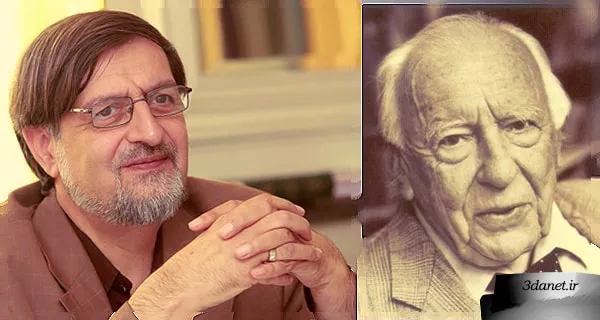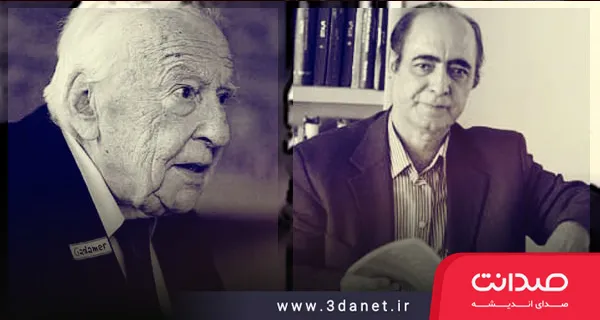
In truth, history does not belong to us, but we belong to history.


Life and Thought
Hans-Georg Gadamer (1900–2002) was a German philosopher and one of the principal figures of philosophical hermeneutics. His book Truth and Method framed human understanding within a historical and linguistic horizon, exerting a broad influence on the humanities.
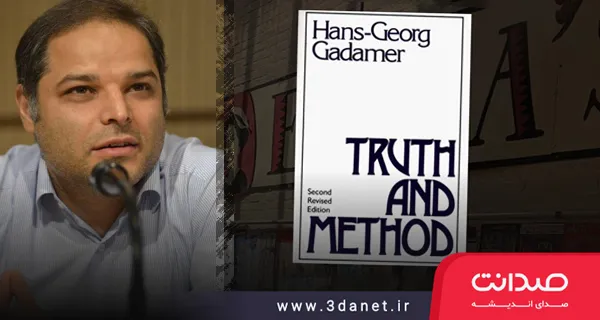
Hans-Georg Gadamer (February 11, 1900 – March 13, 2002) was a German philosopher and one of the most important figures of philosophical hermeneutics in the twentieth century. His fame rests above all on Truth and Method, a work in which he reformulated understanding, interpretation, language, tradition, and history, showing that human understanding always occurs within a historical and linguistic horizon.
Gadamer was born in Marburg, Germany. His father was a professor of pharmaceutical chemistry and expected his son to follow the natural sciences, but Gadamer was drawn from the start to literature, philosophy, classical languages, and the humanities. He studied at the University of Marburg and became acquainted with the neo-Kantian philosophical tradition. He then came under the influence of phenomenology, especially the thought of Martin Heidegger—an influence that permanently transformed his intellectual path.
Gadamer’s encounter with Heidegger was one of the defining events of his philosophical life. Heidegger taught Gadamer that understanding is not merely a scientific method or a technique for interpreting texts, but a fundamental mode of human being-in-the-world. Gadamer expanded this idea, moving hermeneutics beyond the narrow domain of interpreting religious and literary texts and turning it into a philosophy of understanding itself.
In Truth and Method, Gadamer opposes the notion that the humanities must imitate the methods of the natural sciences in order to be valid. He argues that understanding in the humanities is always bound up with history, language, prejudice, tradition, and dialogue. For him, prejudice is not necessarily an obstacle to understanding; rather, every understanding begins from a prior horizon. Human beings never understand from a completely neutral standpoint outside history.
One of the central concepts of Gadamer’s thought is the “fusion of horizons.” Understanding occurs when the horizon of the interpreter and the horizon of the text or the other meet in a living dialogue and a new horizon emerges. Interpretation, therefore, is neither a mechanical reconstruction of the author’s intention nor the imposition of the interpreter’s taste; it is a linguistic and historical event in which meaning is disclosed.
Gadamer regarded the role of language in understanding as utterly fundamental. In his view, language is not merely a tool for expressing thought, but the very space in which understanding appears. We experience the world in language, and tradition reaches us through language. Hence, Gadamer’s hermeneutics is not only a theory of reading texts, but a philosophy of dialogue, historicity, and human life.
Gadamer also paid special attention to art. He considered the experience of art a form of knowledge, not merely aesthetic pleasure. In his view, the artwork enters into a play with its audience and reveals a truth that cannot be reduced to scientific methods. This perspective made his thought influential in the philosophy of art, literary criticism, theology, law, architecture, and the humanities.
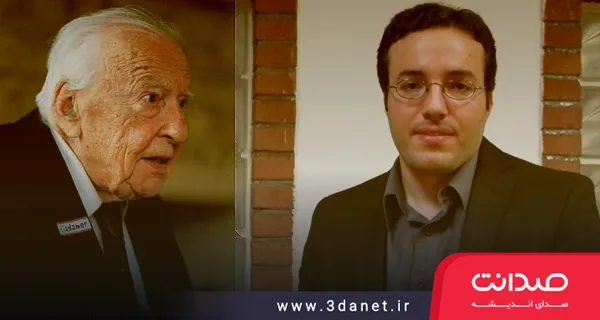
After the Second World War, Gadamer taught at various German universities and eventually became one of the central figures of German philosophy at the University of Heidelberg. He lived a very long life and continued to engage in dialogue, lecturing, and writing into his final years. Gadamer died on March 13, 2002, at the age of 102.