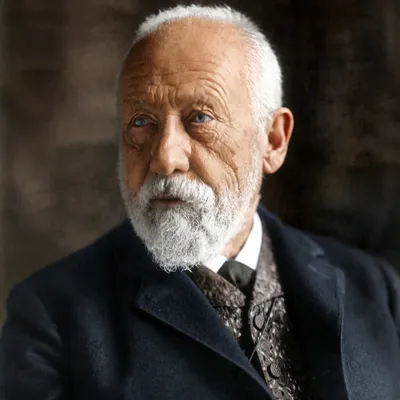
Foreign thinker
Wilhelm Dilthey
Wilhelm DiltheyPhilosophy of history, hermeneutics, and the humanitiesGerman1833–1911
“We explain nature, but we understand psychic life.”
In their times
Open in the Timeline of Thought


Life and Thought
Wilhelm Dilthey was a German philosopher, historian of ideas, and theorist of the humanities who played an important role in the development of modern hermeneutics and the methodology of the human sciences. He sought to explain the distinction between the natural sciences and the human sciences through concepts such as “understanding” (Verstehen) and lived experience. His works influenced philosophers such as Martin Heidegger, Hans-Georg Gadamer, and Paul Ricoeur.
Wilhelm Dilthey was born on 19 November 1833 in Biebrich, in the Duchy of Nassau (present-day Germany). He grew up in a religious family and, after studying theology, philosophy, and history at the universities of Heidelberg and Berlin, devoted his research to the history of ideas and the foundations of the human sciences. He taught at several German universities and became one of the leading figures of nineteenth-century German historicism.
Dilthey’s central philosophical concern was to establish an independent foundation for the human sciences (Geisteswissenschaften) in contrast with the natural sciences. He argued that while the natural sciences rely on causal explanation, the human sciences should focus on understanding meanings, experiences, and structures of human life. The concept of “lived experience” (Erlebnis) occupies a central place in his thought and refers to the way human beings experience their historical and cultural world.
Among his important works are Introduction to the Human Sciences and his writings on worldviews, history, and hermeneutics. By developing a theory of historical understanding, Dilthey became recognized as one of the founders of modern philosophical hermeneutics. His ideas later influenced Martin Heidegger, Hans-Georg Gadamer, and other thinkers in continental philosophy.
Dilthey died on 1 November 1911 in Seis, Germany. His intellectual legacy remains important in the philosophy of history, the methodology of the human sciences, and theories of interpretation and culture.