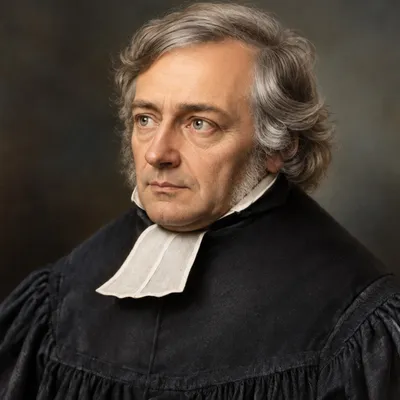
Foreign thinker
Friedrich Schleiermacher
Friedrich SchleiermacherPhilosophy of religion, theology, and hermeneuticsGerman1768–1834
“Religion is neither metaphysics nor morality, but the sense and taste for the infinite.”


Life and Thought
Friedrich Schleiermacher was a German philosopher, theologian, and thinker who is regarded as one of the founders of modern hermeneutics and a major figure in modern Protestant theology. He emphasized religious experience, the feeling of absolute dependence, and the importance of understanding texts within their historical and linguistic contexts, leaving a lasting impact on philosophy of religion, interpretation studies, and the humanities.
Friedrich Schleiermacher was born in 1768 in Breslau into a Protestant family connected with the Reformation tradition. He studied theology, philosophy, and classical works at the University of Halle and later worked as a pastor, university professor, and influential writer in Berlin, contributing significantly to the intellectual climate of early nineteenth-century Germany.
Schleiermacher is considered one of the founders of modern hermeneutics. He argued that interpretation requires attention not only to texts but also to language, historical conditions, and the author’s intention. His ideas about interpretation prepared the way for later developments in hermeneutics by thinkers such as Wilhelm Dilthey, Martin Heidegger, and Hans-Georg Gadamer.
In philosophy of religion, his important work On Religion: Speeches to Its Cultured Despisers (1799) presented religion not as a system of theoretical doctrines or moral rules, but as an inner experience and awareness of “absolute dependence” on the infinite. In The Christian Faith (1821–1822), he attempted to provide a systematic account of Protestant theology. His thought influenced philosophy of religion, theology, linguistics, and the methodology of the human sciences.