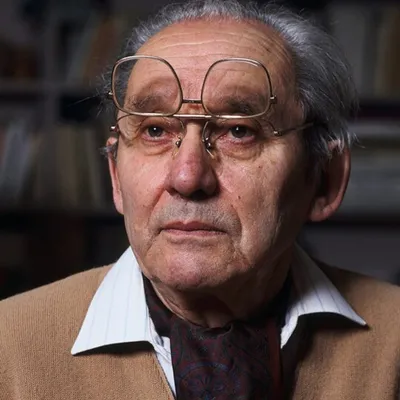
Foreign thinker
Paul Ricœur
Paul RicœurHermeneutic philosophy, phenomenology, philosophy of actionFrench1913–2005
“Life is not a text, but it is like a text that can be interpreted.”
In their times
Open in the Timeline of Thought


Life and Thought
Paul Ricœur was a French philosopher and one of the most important twentieth-century thinkers in hermeneutics, phenomenology, and the philosophy of narrative. By connecting traditions of continental philosophy, the humanities, and the analysis of language, he had a wide influence on contemporary philosophy, literary theory, and interpretive studies.
Paul Ricœur was born in 1913 in Valence, France. He lost both of his parents during childhood and was raised under the care of relatives. Ricœur studied at the University of Rennes and later the Sorbonne, where he became familiar with Edmund Husserl’s phenomenology and existentialism. After World War II, he taught philosophy at institutions including the University of Strasbourg, the Sorbonne, and the University of Chicago.
Ricœur’s thought developed at the intersection of phenomenology, hermeneutics, philosophy of language, and philosophy of action. He sought to address both human lived experience and the role of language, symbols, and narratives in shaping human understanding. For him, hermeneutics was the process through which human beings interpret signs, texts, and narratives in order to understand themselves and the world.
His major works include Time and Narrative, Oneself as Another, Freedom and Nature: The Voluntary and the Involuntary, The Conflict of Interpretations, and The Rule of Metaphor. In Time and Narrative, he showed how narrative transforms fragmented experiences of time into meaningful structures, while in Oneself as Another he explored personal identity, ethics, and the relation between self and other.
Ricœur also sought dialogue between different philosophical traditions, from phenomenology and existentialism to analytic philosophy and social theory. His works have had a significant impact on theology, the humanities, literary criticism, memory studies, and moral philosophy.