
Foreign thinker
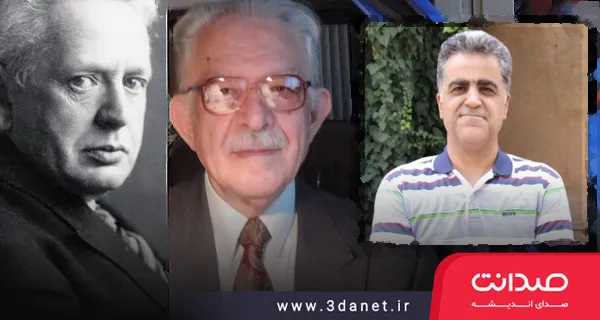
Ernst Cassirer
Ernst CassirerPhilosophy of culture, Neo-Kantianism, and philosophy of symbolic formsGerman1874–1945
Man no longer lives in a merely physical universe; he lives in a symbolic universe.


Life and Thought
Ernst Cassirer (1874–1945) was a prominent German Neo-Kantian philosopher and one of the twentieth century’s most important theorists of the philosophy of culture. He described human beings as “symbolic animals” and, through his philosophy of symbolic forms, offered a new interpretation of culture, language, myth, and science.
Ernst Cassirer was born in 1874 in Breslau, then part of the German Empire and today Wrocław in Poland, into a Jewish family. He studied at the universities of Berlin, Leipzig, and Marburg, where he learned Neo-Kantian philosophy under Hermann Cohen, one of the founders of the Marburg School. Cassirer later became president of the University of Hamburg, but after the rise of the Nazi Party in 1933 he was forced to leave Germany. He later taught at Oxford and Gothenburg and spent his final years in the United States at Columbia and Yale universities.
His major work is the three-volume “The Philosophy of Symbolic Forms” (1923–1929). In this work, Cassirer expanded Kant’s critique of knowledge from scientific cognition to the whole of human culture, arguing that human beings understand the world through symbolic forms such as language, myth, religion, art, and science. In his well-known book “An Essay on Man” (1944), he described humans not merely as rational animals but as “Animal Symbolicum.”
Cassirer was also known for his work in the history of philosophy, especially on the Enlightenment and Renaissance, and for his famous 1929 Davos debate with Martin Heidegger. Throughout his life, he defended the values of reason, freedom, and humanistic culture. He died in New York in 1945.



.webp)
.webp)