Iranian thinker
Esfandiar Tabari
Esfandiar TabariPolitical and social philosophyIranianb. 1962
Ideology can be religious or nonreligious.
Life and Thought
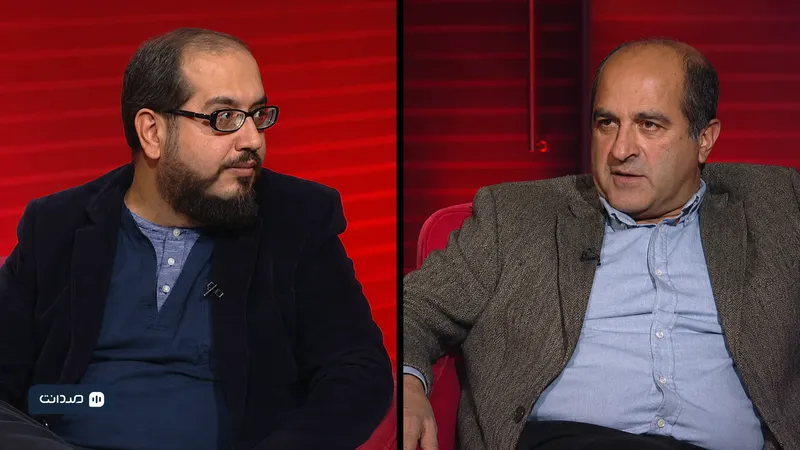
Esfandiar Tabari is an Iranian philosopher and researcher, trained in physics and holding a doctorate in philosophy from the University of Stuttgart. His research ranges from John Rawls’s political philosophy and theory of justice to Suhrawardi’s intercultural philosophy, digital philosophy, and the philosophy of ageing.
Esfandiar Tabari was born in Iran on 2 June 1962. He first studied physics and received a diploma in the subject before turning to philosophy. His doctoral dissertation, accepted in 2007 at the Faculty of Philosophy and History of the University of Stuttgart, was titled A Methodological Study of Critique and Rationality in Suhrawardi in the Context of European Philosophy. German sources identify John Rawls’s theory of justice, Ernst Cassirer’s philosophy of culture, and twelfth-century Iranian philosophy among his principal research areas.
One major focus of Tabari’s work is intercultural philosophy. In Suhrawardi Read Interculturally, he examines the philosophy of Shihab al-Din Suhrawardi in relation to Islamic traditions, ancient Iran, Greek philosophy, and European philosophy. His attention in this work is not confined to Suhrawardi’s mystical dimension; the critique of logic and rationality, and the relation among philosophical traditions, also occupy a central place.
Political philosophy and the theory of justice form another part of his work. Justice and Impartiality addresses the relationship between justice and impartiality and examines different theories of justice. His Persian writings also cover democracy, legitimacy, religion and government, nation and society, secular ethics, and the political philosophy of feminism. In his article “The Political Philosophy of Feminism,” Tabari emphasizes the normative and ethical examination of feminism within political philosophy.
In recent years, Tabari’s research has expanded to philosophical questions arising from technological change. His German book Philosophy of Digitality: A Critique of Political Technology, published in 2023, examines the consequences of digitalization from the perspective of social philosophy, addressing identity, knowledge, communication, digital power, artificial intelligence, the phenomenology of the digital, alienation, and transhumanism.
Tabari has also worked on the philosophy and phenomenology of ageing. Two of his German and English works on rethinking ageing were published in 2024 and examine such themes as the existential experience of old age, ethics, intergenerational justice, epistemology, and the social construction of ageing. His independent research on intergenerational justice also connects the theories of Aristotle, Rawls, and Dieter Birnbacher with the problem of generations.
Since 2009, Tabari has worked as an affiliated researcher with UMIT University in Austria. In 2014, he founded and edited the Persian-language philosophical journal Khorramgas. His body of work represents an effort to connect contemporary political and social philosophy with intercultural philosophy, the Iranian philosophical tradition, and emerging questions such as digitalization and ageing.