Iranian thinker
Ahmad Pakatchi
Ahmad PakatchiLinguistics and SemioticsIranianb. 1963


Life and Thought
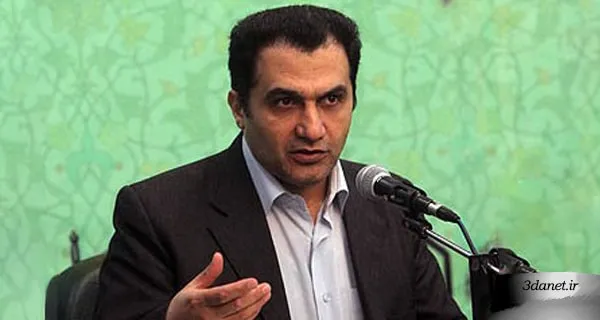
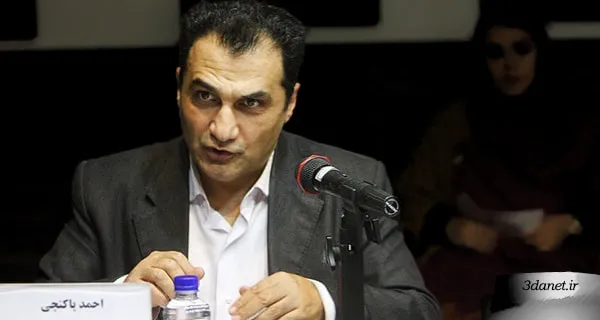
Ahmad Pakatchi (born 1963) is an Iranian scholar of religion, Quranic studies, linguistics, and encyclopedism. He is an associate professor at the Institute for Humanities and Cultural Studies and the Permanent Representative of Iran to UNESCO.
Ahmad Pakatchi, born in 1963 in Tehran, is an Iranian scholar of religion, Quranic studies, hadith studies, linguistics, and encyclopedism. He earned his bachelor's degree in history from the University of Tehran and then continued his studies at the Kazakh State University in Almaty in the fields of religious studies and historical linguistics. In the official introduction by the Iranian National Commission for UNESCO, he is also described as a graduate of history, religious studies, and historical linguistics, and an associate professor at the Institute for Humanities and Cultural Studies.
Pakatchi is one of the prominent figures in encyclopedism in Iran. From the late 1980s, he collaborated with the Center for the Great Islamic Encyclopedia, where he has held membership and scientific management roles in the fields of jurisprudence, Quranic sciences, and hadith. The Center for the Great Islamic Encyclopedia has introduced him as a member of the Supreme Scientific Council and the director of the Department of Jurisprudence, Quranic Sciences, and Hadith, also noting his role in the encyclopedia's English section, "Islamica."
His main areas of work include Quranic and hadith sciences, the history of exegesis, the history of hadith, hadith jurisprudence, the history of Imami jurisprudence, Islamic sects, Central Asian studies, historical linguistics, semiotics, and encyclopedism. Pakatchi has also been active in the field of semiotics of art at the Iranian Academy of the Arts and has been associated with the Tehran Semiotics Circle.
In addition to his academic and research activities, in January 2021 he was appointed as the Ambassador and Permanent Representative of Iran to UNESCO. The news of his appointment was published by the Iranian National Commission for UNESCO and the Center for the Great Islamic Encyclopedia.
Pakatchi can be considered an interdisciplinary researcher. A significant part of his work relates to the Islamic tradition, but his method is usually not solely intra-religious; he uses history, linguistics, semiotics, textual criticism, and comparative studies to analyze Islamic texts and traditions. For this reason, his works bring together topics such as the history of hadith, textual criticism, Quranic translation studies, Islamic sects, Sufi currents, scientific terminology, and Iranian and Semitic languages.
Bibliography
Writings and transcribed lectures22 titles
Schools of Imami Jurisprudence in Iran from Shaykh Tusi to the Establishment of the Hilla School
Philosophical Elements in the Heritage of Ancient Iran: Tracing Indicators for Classifying Mazdaean Schools
History of Exegesis
Research Methodology with Emphasis on Islamic Studies
General Research Methodology
Textual Criticism
History of Hadith
Ilal al-Hadith, with an Appendix on the Recognition of the Text of Misbah al-Sharia
Salafi Fundamentalism
Sufi currents in Central Asia
The Foundations and Method of Imam Sadiq's Scientific Thought
Dimensions of the Personality and Life of Imam Reza
A Study of Sunni Hadith Collections
The History of Qur'anic Exegesis
Reflections on Topics in Islamic Culture
Methodology of History
Fiqh al-Hadith: With an Emphasis on Verbal Discussions
Texts and Studies on Nahj al-Balagha and Its Author
Translation Studies of the Holy Quran: A Theoretical and Applied Approach
Islam: A Historical and Cultural Study
Iran: History, Culture, Art
Mawlid Amir al-Mu'minin: Texts Extracted from the Islamic Heritage
Sedanet articles about Ahmad Pakatchi