Philosophy
A Survey of Hermeneutics Books in Persian; Alireza Azad
Hermeneutics has evolved from the interpretation of sacred texts to the philosophies of Heidegger and Gadamer, creating challenges for religious studies. Introducing Persian-language books offers a path to understanding the development of this discipline and its relationship with Islamic sciences.
The central problem of hermeneutics is the analysis of the mechanism of understanding and the examination of the conditions of interpretation and the manner of exegesis. Hence, wherever "understanding" takes place, hermeneutics is also present. The historical vicissitudes of this science have led to the formation of different definitions and the crystallization of various goals for it, the most important of which are:
Understanding sacred texts, the art of achieving a complete understanding of speech and writing, theorizing about the principles and rules of interpretation and exegesis, providing an appropriate methodology for the human sciences, the existential interpretation of human understanding, reconstructing the past for use in solving today's problems, understanding the meaning hidden in symbols, understanding the nature of understanding, and so on.
The discipline of hermeneutics, as its name suggests, had a Greek origin. The oldest and most common application of hermeneutics was the explication of the principles and foundations of interpreting sacred texts, which began in antiquity with the allegorical interpretations of Homer's works and continued in the Middle Ages with the efforts of Jewish and Christian theologians.
The Reformation movement and the Protestant movement had a tremendous impact on the evolution of the science of hermeneutics, because their proponents, by declaring independence from the official authorities of scriptural interpretation, needed, above all, to formulate independent and practical criteria and standards for interpreting religious texts.
The emergence of Kantian philosophy and the delimitation of the boundaries of knowledge and perception on the one hand, and the growth of natural theology on the other, prompted Schleiermacher to bring classical hermeneutics to perfection by combining the foundations of the Romantic school and the principles of Kantian philosophy. He proposed grammatical and psychological interpretation as two stages of interpretation and formulated rules to avoid misunderstanding. It was through his work that hermeneutics found specific frameworks and was presented as a science.
On the threshold of the nineteenth century, Dilthey, who attributed the successive successes of the empirical sciences to the application of their appropriate methods, thought of establishing an appropriate methodology for the human sciences and employed hermeneutics in this path. His conception in understanding a text was that through historical reconstruction and empathy with the author, one could reproduce the mechanism that led to the creation of the work.
Twentieth-century hermeneutics owes its development to the philosophical efforts of Heidegger. He believed that philosophers after Plato, under the pretext of the self-evidence of the concept of Being, had turned from the question of the truth of Being and its understanding to the understanding of beings. Contrary to this trend, he considered the goal of true philosophy to be answering the question of the meaning of Being, and among beings, he regarded human existence, which he termed Dasein, as the sole path to knowing Being.
Thus, he considered the analysis of the existential structure of Dasein as a prelude to ontology, and he called this phenomenological endeavor to interpret the truth of human existence hermeneutics. The hermeneutics he envisioned neither addresses the principles and rules for explaining and expounding texts, nor is it a tool for establishing an appropriate methodology for the human sciences; rather, it is a phenomenological explication of the truth of human existence.
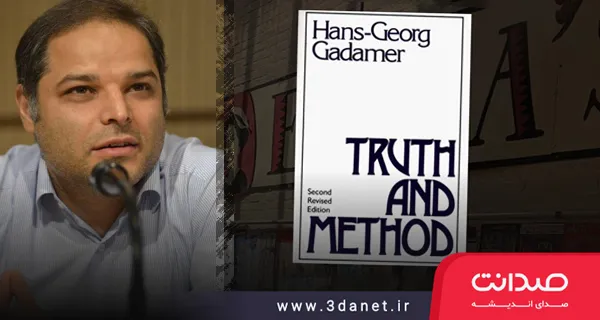
After Heidegger, his students, led by Gadamer, tried to continue his path. Like his teacher, Gadamer gave an ontological foundation to hermeneutics and distanced himself from methodological hermeneutics, but the goal he pursued was not the knowledge of the truth of Being or the analysis of Dasein. Rather, the main goal of Gadamer's hermeneutics was to understand the nature of interpretation and exegesis and the ontology of understanding. Gadamer explained the foundations of his thought in his writings, especially his famous book "Truth and Method," and for the first time gave the name philosophical hermeneutics to this school of thought.
After Gadamer's efforts, the discipline of hermeneutics took a new direction, especially in the fields of literature, symbology, and literary criticism, through the reflections of Ricoeur, but many critics accused philosophical hermeneutics of relativism and semantic pluralism. Betti, with his book "The General Theory of Interpretation," and Hirsch, with his book "Validity in Interpretation," defended objectivism in interpretation. Figures like Habermas also leveled critiques against philosophical hermeneutics, with an emphasis on the social sciences.
Although hermeneutics emerged not with the intention of overthrowing traditional conceptions of the text but with the aim of reviving them, and had not posed a serious challenge in the domains of religious, literary, legal, and historical reflection before the twentieth century, the philosophical hermeneutics of the twentieth century, with its new understanding of the mechanism of understanding and the nature of meaning, confronted the conventional methods in various fields, including religious studies, with serious questions and challenges. This is because most religions are text-centered, and the prevailing tradition among religious scholars is the interpretation of sacred texts based on the possibility of achieving an objective understanding of these texts. A change in these interpretive foundations and theories of understanding may undermine the authority and validity of traditional interpretations and conceptions. Hence, hermeneutic discussions have drawn attention, especially from religious reformists.
In what follows, you will briefly see a course of study for familiarizing oneself with hermeneutic discussions, and then you will become acquainted with works that directly or indirectly address the common topics between hermeneutics and Islamic sciences and the field of religious studies.
1. Introduction to Hermeneutics
The Logic and Subject of the Science of Hermeneutics, Mohammad Reza Rikhtegaran, Kongreh Publications
Hermeneutics, Richard Palmer, Hermes
Comparative Hermeneutics, Qasem Pourhassan, Islamic Culture Publishing Office
An Introduction to Hermeneutics, Ahmad Vaezi, Research Institute for Islamic Culture and Thought
Modern Hermeneutics: Nietzsche, Heidegger, Gadamer, and..., Markaz Publishing
2. Hermeneutics and the Interpretation of Sacred Texts
Quranic Exegesis and Classical Hermeneutics, Alireza Azad, Bustan-e Ketab
A History of Exegetical and Hermeneutical Schools of the Bible, Robert Grant and David Tracy, Research Institute for Islamic Culture and Thought
The Theory of Text Interpretation, Ahmad Vaezi, Research Institute of Hawzeh and University
3. Hermeneutics and Theological Discussions (Classical and Modern)
Hermeneutics and the Logic of Understanding Religion, Ali Rabbani Golpayegani, Publications of the Management Center of Qom Seminary
Hermeneutics and Religious Reformism, Jahangir Masoudi, Islamic Sciences and Culture Academy
4. Hermeneutics and Literature
Philosophical Hermeneutics and Literary Theory, Joel Weinsheimer, Phoenix
1. Introduction to Hermeneutics
1-1 The Logic and Subject of the Science of Hermeneutics, Mohammad Reza Rikhtegaran, Kongreh Publications
In this book, the most important hermeneutic ideas, especially those of twentieth-century hermeneutics, are introduced. The present book, which is largely a summary of two books, "A Reading of Hermeneutics" by Mueller and "Hermeneutics" by Palmer, has four chapters. The first chapter examines the literal meaning and historical roots of hermeneutics, paying attention to Hermes and his mythological status in ancient Greece and his place in the writings of Plato and Aristotle.
The second chapter describes the grounds for the renewed attention to hermeneutics in the modern era and sets forth the principles and foundations of the hermeneutics of Chladenius, Schleiermacher, Boeckh, Droysen, and Dilthey. At the end of this chapter, a summary of Husserl's phenomenology, which, alongside classical hermeneutics, paved the way for the emergence of twentieth-century hermeneutics, is explained.
The third chapter addresses twentieth-century hermeneutics. It first discusses the relationship between phenomenology and hermeneutics, and then Heidegger's discussions concerning the nature of understanding and the structure of Dasein. Continuing this chapter, the topics of Gadamer's philosophical hermeneutics—such as the interpretation of works of art, historicity, prejudice, effective history, the hermeneutic circle, the structure of experience, and dialectics from his perspective—are elaborated, and the discussions between Gadamer and Bultmann, as well as the Gadamer-Habermas debates, are also mentioned.
The fourth chapter of this book was written with the aim of assessing the feasibility of applying hermeneutics to the discussions raised among Muslim scholars. Although the author has not been able to fully accomplish this important task in this chapter, he has tried to open a door in this field and enumerate some of the common issues between hermeneutics and Islamic interpretations, especially mystical exegeses (ta'wil).
1-2 Hermeneutics: Interpretation Theory in Schleiermacher, Dilthey, Heidegger, and Gadamer, Richard Palmer, Hermes
This book is written by one of Gadamer's most famous students. He is one of the most renowned commentators on hermeneutics, and his book is one of the primary sources for familiarizing oneself with hermeneutics in the world.
This book is organized into three parts. Richard Palmer begins this book with a discussion about the word hermeneutics, an analysis of the historical roots of the formation of hermeneutics, and an explanation of the importance of hermeneutics in today's world and the influence it has on various scientific disciplines, especially literary criticism. He then points to six stages of the historical developments of hermeneutics and states the definition of hermeneutics and the description of its tasks in each of these eras, which are: 1. The theory of biblical exegesis 2. Philological methodology 3. The science of linguistic understanding 4. The methodological foundations of the human sciences 5. The phenomenology of Dasein and the phenomenology of existential understanding 6. The system of interpretation. Continuing this chapter, he addresses hermeneutics from the perspective of Ebeling, Bultmann, and Fuchs, and elaborates on the opposition of Betti and Hirsch to Gadamer.
In the second chapter, which is the most important chapter of this book, the main views of four great theorists of hermeneutics—namely Schleiermacher, Dilthey, Heidegger, and Gadamer—are presented, and alongside them, the views of figures such as Ast, Wolf, and Husserl are also mentioned. With the help of his close familiarity with Heidegger and Gadamer, the author has been able, through solid references, to express the distinguishing aspects of twentieth-century hermeneutics from the hermeneutics that preceded it and to explain Heidegger's theoretical turns and Gadamer's hermeneutical reflections.
In the third chapter, which serves as the conclusion of the book's discussions, Palmer poses the question,
In the third and fourth chapters, which are the most important parts of the book, a summary of the views and approaches of Gadamer and Ricoeur, as two of the most renowned thinkers of philosophical hermeneutics, is first presented, and then the most significant aspects of their thought are raised and subjected to critique and examination. The author has endeavored to also draw upon the criticisms of figures such as Hirsch and Habermas, and has himself added to the volume of these critiques.
In the fifth chapter, which serves as the conclusion of the book's content, the author addresses several central issues of hermeneutics, namely pluralism, certainty and relativity in interpretation, pre-understanding, and so on, and delineates the similarities and differences between hermeneutical approaches and the thoughts of Islamic philosophers and exegetes in this domain, paying particular attention, on the one hand, to the views of Augustine, Aquinas, Schleiermacher, Dilthey, Gadamer, and Ricoeur, and on the other hand, to the views of Mulla Sadra, Allameh Tabatabai, and Dr. Soroush.
1-4 An Introduction to Hermeneutics, Ahmad Vaezi, Research Institute for Islamic Culture and Thought
The present book aims, in the first step, to provide a comprehensive understanding of the most important currents of hermeneutics, especially twentieth-century hermeneutics, and to compensate for the deficiency of reliable Persian sources in this field, and in the second step, to devote its efforts to critiquing those hermeneutical ideas that stand in opposition to the prevalent theory of understanding among Islamic scholars, at the forefront of which are the proponents of philosophical hermeneutics such as Heidegger, Gadamer, and Ricoeur.
This book consists of six chapters. The first chapter is dedicated to stating definitions and explaining the necessity of attending to the subject of hermeneutics. The second chapter deals with the history of hermeneutics up to the twentieth century in a concise and useful manner. The third and fourth chapters are dedicated to the examination and critique of the hermeneutics of Heidegger and Gadamer. In these two chapters, which account for about 60 percent of the book's volume, the author explains the most important parts of the hermeneutical thoughts of Heidegger and Gadamer as the principal founders of philosophical hermeneutics, and enumerates the most significant results they bring to the field of textual understanding. He then devotes his efforts to criticizing the foundations and achievements of their philosophical hermeneutics, and attempts to critique the philosophical hermeneutics of Heidegger and Gadamer by drawing upon the critical perspectives of other Western hermeneuticists and also by seeking assistance from the interpretive heritage of Islamic thinkers and the rules they have articulated in the science of usul al-fiqh, literature, exegesis, Islamic theology, and so on. The fifth and sixth chapters are dedicated to presenting the hermeneutical views of Habermas, Ricoeur, Betti, and Hirsch, with greater attention paid to their critical stance toward certain aspects of the philosophical hermeneutics of Heidegger and Gadamer.
In the conclusion of this work, the author provides a brief introduction to 25 of the most important books written or translated into English on the subject of hermeneutics.
1-5 Modern Hermeneutics, Nietzsche, Heidegger, Gadamer and…, Markaz Publishing
This book is a translation of articles and writings by ten famous philosophers and theorists on hermeneutics and related discussions. The present book is divided into an introduction and four sections, each section containing three writings.
In the introduction, for the purpose of familiarization with the generalities of modern hermeneutics, the translation of the entry on Hermeneutics from the Encyclopedia of Contemporary Literary Theory, authored by Anthony Kerby, and the translation of the entry on Philosophical Hermeneutics from the Dictionary of Cultural and Critical Theory, authored by Andrew Bowie, are provided.
The first section deals with the general topics and discussions of modern hermeneutics and includes a selection of Nietzsche's writings on interpretation, an article by the later Heidegger on the ontology of thinking, and a piece by Gadamer on the universality of hermeneutics.
The second section seeks to explain the relationship of interpretation with life and truth. In the first essay of this section, Ricoeur describes the relationship between hermeneutics and ontology. In the second essay, Vattimo presents an account of the problem of truth in modern hermeneutics. The third essay is Foucault's lecture on Nietzsche, Freud, and Marx. This piece is important because it provides a thought-provoking account of Nietzsche's view on interpretation.
The third section is devoted to explaining the modern hermeneutic approach to language and text. It begins by quoting a passage from the third chapter of Gadamer's Truth and Method, which points to the analysis of the nature of language and its role in hermeneutic experience. This section continues with a text by Ricoeur explaining the nature of writing, and concludes with Eco, in a sharp critique of deconstruction, addressing the issue of hermeneutics and the interpretation of the literary text, attempting to clarify the limits and boundaries of interpretation and the extent of the audience's authority and freedom in meaning-making.
The fourth section is dedicated to examining the approach of the early Heidegger. At the beginning of this section, a short text by Dreyfus is presented to show why Heidegger and his thought are important, followed by two writings by Cosgrove and Mühlhahn explaining paragraphs 31 and 32 of Being and Time to clarify Heidegger's view on interpretation and its relation to language.
2. Hermeneutics and the Interpretation of Sacred Texts
2-1 Quranic Exegesis and Classical Hermeneutics, Alireza Azad, Bustan-e Ketab
The author argues that the existence of shared subjects and concerns between Quranic exegesis and the discipline of hermeneutics necessitates a conscious dialogue between these two fields of thought, and that comparative studies lay the groundwork for such inquiries. Therefore, he seeks to compare the foundations of five principal methods of Quranic exegesis with the perspectives raised in classical hermeneutics, presenting his discussions in four chapters.
The first chapter comprises preliminaries and generalities, explaining the subject, stating the necessity and objectives of this research, and describing the relationship between hermeneutics and Islamic sciences. It also presents and responds to a number of reasons given by opponents of employing hermeneutics in the field of Quranic studies.
In the second chapter, after explaining the lexical and technical meanings of exegesis (tafsir) and interpretation (ta'wil), the principles of Quranic exegesis according to Muslim exegetes are described, and the Quran-by-Quran, narrational, literary, rational, and esoteric methods are explained.
The third chapter begins with explanations about the nature of hermeneutics and a survey of its history, and the ideas of eight of the most important classical hermeneuticists—namely, Hauer, Chladenius, Ast, Wolf, Schleiermacher, Boeckh, Droysen, and Dilthey—are presented.
The fourth chapter is dedicated to a comparative study of what was presented in the second and third chapters. In this way, first the general foundations of Quranic exegesis and classical hermeneutics are examined in three stages, and their common and specific foundations are stated; then, the specific foundations of each exegetical method are compared with the opinions and ideas of the classical hermeneuticists. The author's aim has been, by enumerating points of disagreement and agreement, to provide the basis for achieving a better understanding of the foundations of Quranic exegesis and classical hermeneutics, and to show that despite some differing presuppositions and epistemological principles, there are similarities between their foundations.
2-2 A History of the Exegetical and Hermeneutical Schools of the Bible, Robert Grant and David Tracy, Research Institute for Islamic Culture and Thought
This book recounts the history of the vicissitudes of understanding the Bible and the process of the formation of its major interpretive methods, showing what conditions compelled the exegetes of these sacred texts to adopt various methods.
The present book consists of three parts. In the first part, Robert Grant recounts the history of biblical exegesis, providing a report on the most important interpretive methods of the Bible from the past to the present day. He focuses most of all on describing the exegetical schools of Alexandria and Antioch during the Middle Ages, the approach of the religious reformers during the Renaissance and the Enlightenment, the expansion of modernism in the Roman Catholic Church, and the emergence of modern Protestant interpretations, thereby revealing the course of historical development and the extent of gradual changes in these interpretive methods.
In the second part, David Tracy first defines hermeneutics and explains the place of Gadamer's philosophical hermeneutics, defending some of the achievements of modern hermeneutics while criticizing others. Then, drawing on what was said in the first part, he examines the effects this hermeneutics has had and will have on the interpretation of the Bible in doctrinal and theological discussions. Tracy's aim is, on the one hand, to show that the contemporary turns toward hermeneutics in biblical studies are indeed a clear theoretical reflection of the history of interpretation, and on the other hand, to demonstrate how hermeneutics can be applied to the understanding of the Bible.
The third part of this book, which is an addition by the translator, undertakes a critique of the two preceding parts and a comparison of the interpretive approaches to the Bible and the Quran, as well as an assessment of the feasibility of applying hermeneutics to the understanding of the Word of God. It concludes by enumerating the differences between the foundations of Quranic and biblical interpretation and the difference between revelation and religious experience.
2-3 The Theory of Text Interpretation, Ahmad Vaezi, Research Institute of Hawzah and University
The emergence of new theories concerning language, understanding, and interpretation, some of which stand in opposition to the conventional and accepted approach among Muslim thinkers, has raised questions and doubts about the legitimacy and validity of these approaches. The author, previously in the book An Introduction to Hermeneutics, had introduced and critiqued the most important emerging theories on the understanding and interpretation of texts, especially the discussions raised in philosophical hermeneutics. In this book, he articulates the main issues in the domain of language, understanding, and interpretation, presents his own chosen and accepted viewpoint in the form of a comprehensive theory of text interpretation, and responds to the doubts that have been raised.
The present book consists of four chapters. In the first chapter, the meaning of the theory of interpretation and its relation to other issues in the field of interpretation is stated. It also points to the role of sciences such as the philosophy of language, linguistics, semiotics, and hermeneutics on the one hand, and the discussions of verbal expressions in the principles of jurisprudence (usul al-fiqh) on the other, in the development of the theory of interpretation.
The second chapter discusses the nature of meaning. In this chapter, referential, behavioral, use, propositional, and ideational theories, as well as the theory of the denial of meaning, the intentionality of meaning, semantic determinacy, and the longitudinal plurality of meaning, are examined and critiqued. The author ultimately states his own chosen view on the quiddity and nature of meaning.
In the third chapter, the author first explains the foundations of philosophical hermeneutics, neo-pragmatism, structuralism, and deconstruction, critiquing them based on the prevalent view among Islamic scholars. He then articulates the various perspectives on the mechanism of achieving understanding, particularly the views concerning the author, the interpreter, the text, and the context, and the role of each in the realization of understanding and the performance of interpretation.
The fourth chapter is dedicated to the discussion of the ethics of meaning. By the ethics of meaning, the author means that every conception of the nature of meaning, understanding, and interpretation entails certain requirements and obligations. Accepting the existence of an ethics for meaning and interpretation is a commitment to the point that the process of understanding a text is a rule-governed, criterion-accepting matter, and there is a clear distinction between misreading a text and a rule-governed reading of it. After discussing the general ethics of interpretation, the author states his own chosen view on this matter and articulates the hermeneutical requirements and ethical obligations of interpreting revealed texts.
3. Hermeneutics and Theology
3-1 Hermeneutics and the Logic of Understanding Religion, Ali Rabbani Golpayegani, Publications of the Management Center of the Qom Seminary
This book attempts to prove that many hermeneutical topics have previously been discussed within various Islamic sciences, including philosophy, theology, mysticism, exegesis, and the principles of jurisprudence. The author argues that some hermeneutical approaches, such as relativism and considering prejudices as contributing to the process of understanding, are among the hermeneutical approaches that pave the way for any kind of interpretation based on personal opinion and are therefore contrary to the principles of understanding religion.
This book consists of four parts. The first part deals with the definition of hermeneutics, its background in the West, and its relationship with Islamic sciences. The second part presents the specific foundations of understanding religion and religious texts. The third part is devoted to a discussion of the claims of classical hermeneutics and philosophical hermeneutics and their difference from the claims of linguistics and the philosophy of linguistic analysis. In the fourth part, which is the most important part of the book, the most important rules put forward by Islamic thinkers for understanding the text are expressed. At the end of this part, the claim of two of the most renowned founders of philosophical hermeneutics, namely Heidegger and Gadamer, regarding the role of prejudice in understanding and interpretation is described and then critically examined.
3-2 Hermeneutics and Religious New-Thinking, Jahangir Masoudi, Islamic Sciences and Culture Academy
This work can be considered among the works related to the study of intellectual currents. The importance of religious intellectualism prompted the author to re-examine one of the intellectual sources of this current and to investigate its use by the religious modernism movement in Iran. The author seeks to descriptively explain the introduction of philosophical hermeneutics teachings into the discourse of some Iranian Muslim intellectuals and new-thinkers, and to analytically address the why and how of the infiltration of Gadamer's philosophical hermeneutics ideas into the intellectual and epistemological framework of Iran's Muslim new-thinkers.
The author has attempted, by utilizing various analytical methods, to reach the conclusion that the main goal of the intellectuals' efforts is the "reconciliation of tradition and modernity," and that the examination of the category of understanding and the existence of elements such as the historicity of understanding, the endlessness of interpretation, etc., in Gadamer's philosophical hermeneutics can fulfill the desire of Muslim new-thinkers in realizing this goal, and for this reason, it has attracted their attention.
The present book has six chapters. The first chapter is dedicated to stating the definition and importance of the subject. In the second chapter, the most important characteristics of Gadamer's philosophical hermeneutics are expressed, and through this, some similarities between his intellectual framework and the epistemological characteristics of a number of Iran's religious new-thinkers are pointed out. In the third chapter, some of the hermeneutic foundations and teachings used by religious new-thinkers are subjected to criticism. In the fourth chapter, a brief history of the encounter between Islamic civilization and the West, as well as a concise overview of the history of religious new-thinking in contemporary Iran, is presented. The fifth and sixth chapters are also dedicated to expressing the aspects of similarity between Gadamer and the modernist new-thinkers.
4. Hermeneutics and Literature
4-1 Philosophical Hermeneutics and Literary Theory, Joel Weinsheimer, Phoenix
Philosophical hermeneutics is one of the most important branches of contemporary philosophy, and the present book has succeeded well in introducing it. In this book, without engaging in critical aspects, the author seeks to show what insights, fruits, and consequences Gadamer's philosophical hermeneutics brings to the field of literary theory.
He dedicates the first chapter of his book to a historical review of modern hermeneutics and clearly reveals the relationship of Schleiermacher and Dilthey's hermeneutics to Kant's philosophy and the difference between Gadamer's hermeneutics and them.
The second chapter is devoted to a discussion of the philosophical dimension of philosophical hermeneutics and its difference from hermeneutic philosophy, and the author tries to prove that many critics overlook the important point that philosophical hermeneutics is not a theory alongside other theories.
In the third chapter, the criticisms Gadamer leveled at Kant's Critique of Judgment are discussed, the historical-aesthetic approach as Gadamer envisioned it is described, and attention is also paid to the effects this view has on the conception of the ethical.
In the fourth chapter, Weinsheimer pays attention to the metaphorical aspect of language and the metaphorical conception of philosophical hermeneutics regarding the category of understanding, in order to show that in the event of understanding, just like in metaphor, a relationship of identity emerges between the horizon of the understander and the horizon of the text, despite their differences.
The focus of the fifth chapter is an examination of the nature of language and words, and a critique of the traditional understanding of the relationship between words and meanings. In this chapter, Weinsheimer explains how Gadamer turns away from the traditional view that treats words as mere signs and instead presents words as images and symbols of meaning.
In the sixth chapter, the author attends to the characteristics of interpreting and explicating classic texts and, from the perspective of philosophical hermeneutics, seeks to address these questions: How can one maintain a balance between these texts and their reader, without neglecting either in favor of the other? And how can these texts, which carry a supra-historical message, be understood within a historical context? His aim is not necessarily to answer these questions, but at times to enrich them.
Reading this book is particularly useful for Persian-speaking readers, as it corrects certain misconceptions about Gadamer's thought and presents an example of applying hermeneutic ideas in other academic fields, especially literature.




Discussion1 comments
با تشکر خواستم بدانم ایا کتابی در باره هرمنوتیک در پزشکی هم وجود دارد؟