Foreign thinker
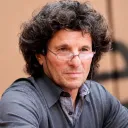
Quentin Skinner
Quentin SkinnerHistory of political thoughtBritishb. 1940
“Liberty is not just a matter of being able to act without restraint. It consists of independence from the possibility of restraint.”


Life and Thought
Quentin Skinner (born 1940) is a British intellectual historian and political philosopher. He is regarded as one of the founders of the Cambridge School in the history of political thought and is internationally renowned for his work on the methodology of intellectual history, republicanism, and concepts of liberty.
Quentin Robert Duthie Skinner was born on 26 November 1940 in Oldham, England. He studied history at Gonville and Caius College, University of Cambridge, graduating with first-class honours in 1962. Skinner began teaching at the University of Cambridge in the 1960s and served as Regius Professor of History there from 1996 to 2008. From 2008 until his retirement, he was Barber Beaumont Professor of the Humanities at Queen Mary University of London.
He is one of the most important figures associated with the “Cambridge School” in the history of political thought, which emphasizes understanding texts within their historical and linguistic contexts. In his influential 1969 essay “Meaning and Understanding in the History of Ideas,” Skinner developed a new methodology for studying the history of political thought, focusing on speech acts and the author’s intentions within their historical context. His two-volume work “The Foundations of Modern Political Thought” (1978) established him as one of the most influential historians of ideas.
In his later works, Skinner reinterpreted Roman republicanism and developed the concept of liberty as non-domination. His book “Liberty Before Liberalism” (1998), along with his studies of Hobbes and Machiavelli, represents some of his most important contributions to contemporary political theory. Skinner has received numerous awards, including the Wolfson History Prize in 1979 and the Balzan Prize in 2006.




.webp)