Political Science
The Article “Max Weber, Ethics and Politics” by Abolghasem Fanaei
Max Weber seeks the relationship between ethics and politics not in 'post-hoc justification' but in 'ex-ante justification'; Abolghasem Fanaei offers a more precise formulation of Weber's claim: 'Politics within the framework of ethics' or 'ethics within the framework of politics'?
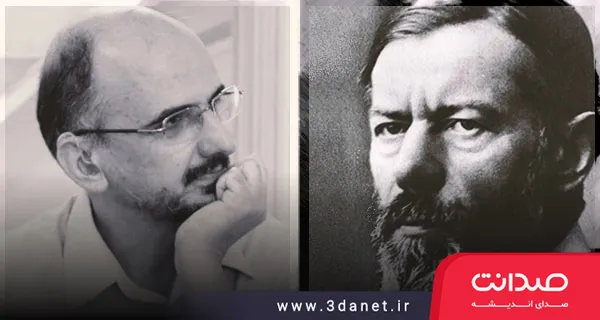
Max Weber, Ethics and Politics
Abolghasem Fanaei
The full article file is available for download at the end.
Abstract: Max Weber (1846-1920), the renowned German sociologist and political economist, in his classic essay, “Politics as a Vocation,”[1] examines the relationship between ethics and politics from a sociological perspective. In the author's view, while the essence of Weber's claim on this matter is acceptable, his formulation of this claim in vague and inappropriate terms has provided fertile ground for misunderstanding. In this article, I attempt, as far as possible, to review the various formulations Weber employed to state his claim and to provide a precise and defensible formulation of it.
Weber's essay, which was originally the text of a lecture, is lengthy and covers a variety of topics, including “the definition of politics,” “the definition of political community,” “the differentiation of types of politicians and political actors,” “sources of political legitimacy,” and “types of the state.” The final question Weber poses in the concluding section of his essay and attempts to answer is the question of the relationship between ethics and politics (p. 136).[2] At the beginning of his discussion, Weber states that the answers of different worldviews to this question are incompatible with one another, and we are compelled to choose among these answers, but first and foremost, we must disambiguate the subject under discussion (ibid.). When we speak of ethics, we do not mean “rationalization”/ “legitimization”/ “post-hoc justification”[3] but rather “ex-ante justification.”[4] Post-hoc justification is a seemingly ethical reason that an agent puts forward after performing an ethically wrong act to make that act appear justified to themselves and/or others and to defend themselves against the criticism of others, without their behavior having originated from that reason.[5] Such an act is, in fact, a form of self-deception and/or deceiving others. Ex-ante justification, however, is a reason that forms the basis of an agent's decision-making and behavior; such a reason both justifies that behavior for the person and is their motive in performing it.
Therefore, the subject of Weber's discussion is “the connection and relation of ex-ante justification to politics.” When we ask about the relation of ethics to politics, we mean whether (1) “political decision-making and behavior, before its occurrence, is subject to ethical value judgment or not?” i.e., “Are there ethical considerations that a political agent, in the position of decision-making and action, is obliged to take into account and follow, or not?” and if yes, (2) “What type of ethics is appropriate for the realm of politics?” Weber's answer to the first question is affirmative. That is, contrary to the proponents of “realist politics,”[6] he does not entirely negate the possibility and existence of “ethical politics” and the relation of ethics to politics; rather, his claim is merely that among the various conceptions of ethics, only one/some of these conceptions are appropriate for the realm of politics.
In other words, the question is “What values and norms should political actors follow in the position of political decision-making and behavior?” i.e., “Are the values and norms that must be followed in the realm of politics ethical values and norms, or are they of a different kind and type?” If these values and norms are ethical, the politics that will be shaped based on this conception will be “politics within the framework of ethics” (= ethical politics), but if these values and norms are of a different kind, then, if anything of ethics remains in the realm of politics at all, it will be “ethics within the framework of politics” (= political ethics).[7] In the first type of conception, non-ethical considerations are subjugated by ethical considerations, whereas in the second type of conception, ethical considerations will be subjugated by non-ethical considerations.
An important and shared presupposition here is that there are values and norms that political actors must follow. Even proponents of “realist politics,” who deny any connection between ethics and politics, accept the presupposition that the realm of politics is not a value- and norm-free “free zone.”[8] If there is a disagreement, it is over the type and kind of values and norms that should be followed in the realm of politics, not over the very existence of these values and norms, nor over the necessity of following them.
.
.
[1]. Weber, M. (2008) “Politics as Vocation” Max Weber’s Complete Writings on Academic and Political Vocations, ed. John Dreijmanis (Gordon C. Wells, NY: Algora Publishing), pp. 155-207.
[2]. In-text references are to the Persian translation of Weber’s essay in the following book: Weber, Max (1389 [2010]) Religion, Power, and Society, trans. Ahmad Tadayyon (Tehran: Hermes Publishing), pp. 91-149.
[3]. rationalisation
[4]. justification
[5]. In Weber’s view, this is morally ugly and wrong. He writes: “If there is an ‘ugly’ deed, it is precisely this, namely using ethics as a means to ‘prove rightness’” (p. 138).
[6]. real politics
[7]. Here I use the term “political ethics” in the loose sense common in contemporary political parlance in Iran. By political ethics I mean ethics bound by politics or ethics within the framework of politics, which is another expression for the negation and denial of ethical politics.
[8]. Realism in politics is different from moral nihilism.
.
.
Download the PDF of the article “Max Weber, Ethics and Politics”
.
Max Weber, Ethics and Politics
Author: Abolghasem Fanaei
.
.






Discussion1 comments
با سلام و سپاس از زحماتی که میکشید. لطفا گزینه پی دی اف را نیز فعال کنید تا در صورت لزوم از نسخه پی دی اف استفاده شود. با سپاس مجدد