Foreign thinker
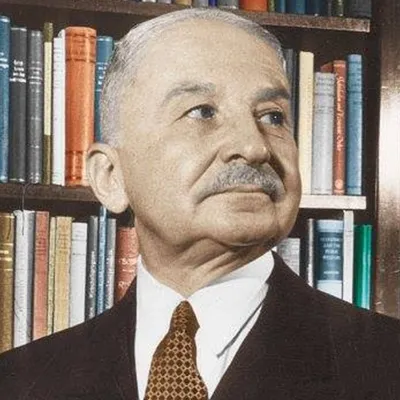
Ludwig von Mises
Ludwig von MisesAustrian School Economics and Political PhilosophyAustrian
Freedom is always freedom from the government.
Life and Thought
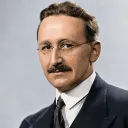
Ludwig von Mises (1881–1973) was a prominent economist, philosopher, and theorist of the Austrian School and a leading defender of classical liberalism. By formulating the science of "Praxeology" and providing a comprehensive critique of the possibility of economic calculation in socialist systems, he had a fundamental impact on twentieth-century economic and political thought.
Ludwig von Mises was born in 1881 in Lemberg (in the Austro-Hungarian Empire). He studied law and economics at the University of Vienna, where he was taught by professors such as Eugen von Böhm-Bawerk. Mises worked for many years as an economic advisor to the Vienna Chamber of Commerce and, in the 1920s, ran a famous "private seminar" in Vienna from which great thinkers like Friedrich Hayek and Alfred Schutz emerged. With the rise of the Nazis, he first emigrated to Switzerland and then, in 1940, to the United States, where he began teaching at New York University.
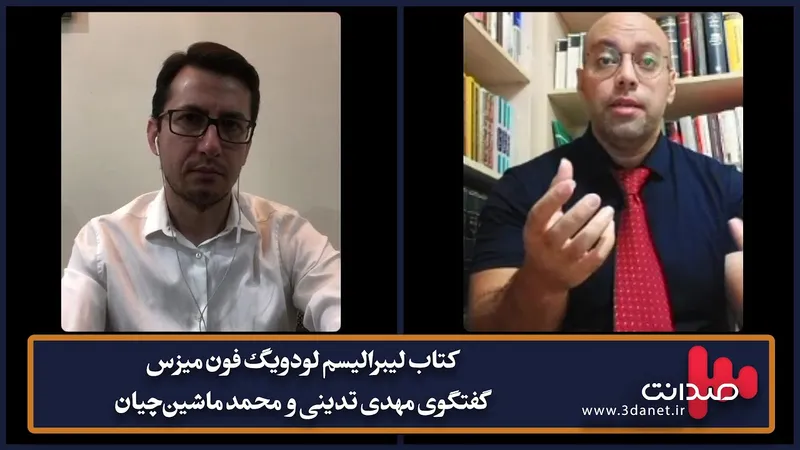
His magnum opus is the book "Human Action" (1949), in which he redefines economics based on the general science of human action, or "Praxeology." According to this view, economic laws are not empirical hypotheses but logical deductions from the fundamental axiom of purposeful human action to improve one's condition. His other important work is the book "Socialism" (1922); in this work, he presented the argument for socialism's inability to perform economic calculation, demonstrating that without private ownership of the means of production and the absence of a price mechanism, the efficient allocation of resources is impossible.
Mises was a staunch defender of individual liberty, the free market, and limited government, opposing any form of state interventionism and collectivism. His ideas formed the main foundation for the revival of the Austrian School and classical liberalism in the second half of the twentieth century and profoundly influenced a generation of subsequent economists and political philosophers. He ultimately passed away in New York in 1973.

.webp)