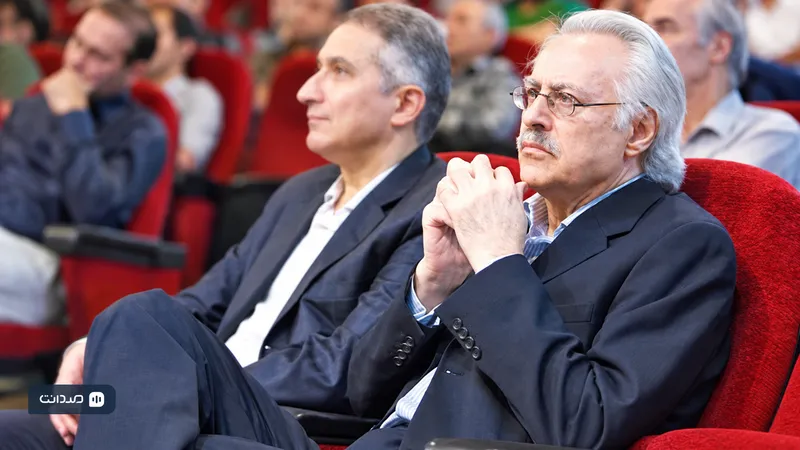
This lecture addresses the relationship between liberalism and bureaucracy in the thought of Ludwig von Mises. In the third session of the Ideology Studies series, accompanied by Mohammad Ali Tavana, Mehdi Tadayoni reviews some of Mises's intellectual foundations concerning freedom, the state, the market economy, and the administrative mechanism.
This video is from the third session of the "Ideology Studies" series within the Discourse and Thought meetings and is dedicated to the topic of "Liberalism, Bureaucracy." The main focus of the discussion is a review of the works of Ludwig von Mises, the Austrian liberal economist and theorist, and the relationship of his thought with the state, the market, individual freedom, and the bureaucratic administration of society.
In this meeting, Mehdi Tadayoni, with the presence and collaboration of Dr. Mohammad Ali Tavana, approaches the question of how classical liberalism and the Austrian School of economics understand bureaucracy. From Mises's perspective, the distinction between the logic of the market and the logic of bureaucratic administration is of fundamental importance: the market is measured by profit, loss, consumer choice, and competition, but bureaucracy operates in domains where the criteria of economic profit and loss are not easily applicable.
The significance of the discussion lies in the fact that the issue of bureaucracy is not merely an administrative matter but is tied to the relationship between freedom, the state, the economy, and public responsibility. Understanding Von Mises's view of bureaucracy can help clarify some contemporary disputes about the limits of state intervention, administrative efficiency, economic freedom, and the possibility of reforming governance structures.
This video is suitable for those interested in liberalism, political economy, the history of economic thought, the Austrian School, and theoretical discussions about the state and the market; especially for those who wish to examine the relationship between ideology, administrative institutions, and economic order more precisely.