Economic Sciences
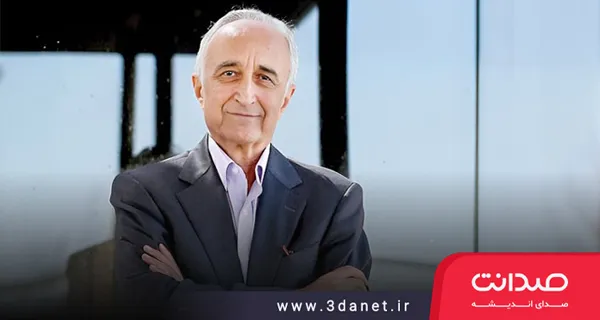
Masoud Nili's essay “An Economy Awaiting Politics”
Debates degenerated into financial promises while economic imbalances were ignored. Oil revenue has hit a sixty-year low, leaving the next government trapped between sanctions relief, structural reform, austerity, or high inflation.
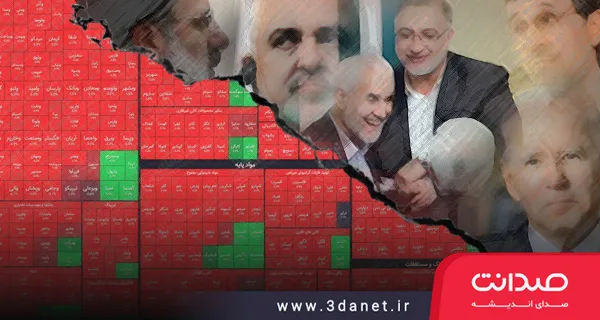
Following the electoral debates and observing the quality of the discussions raised in them, these days many economic experts have grown deeply concerned about the conditions facing the country's economy, the kind of decisions that await it, and the consequences of these decisions for macroeconomic imbalances. Unlike the debates of previous periods, whose political drama glued people to their television sets, the debates in this cycle have degenerated into a questionable collective condemnation of the government for the poor state of economic indicators on the one hand, and the holding of financial auctions and the making of various monetary promises on the other. When the government's financial situation is such that one can grasp the pressure the treasury endures even to pay the monthly salaries of its employees, hearing strange financial promises from the majority of candidates reflects the regrettable reality that either our politicians are vastly disconnected from the country's tangible economic conditions, or they are unaware of the public's level of awareness, or they are banking on the people's forgetfulness after passing through the election phase without accountability.
The dimensions of the budget imbalance, equivalent to 50 percent of the budget (most similar to the dimensions of 1988, the country's worst financial year), occur while the volume of government spending at constant prices (read: the level of public services) is at its lowest in about the last 20 years. The reliance on financing over 50 percent of current expenditures through government debt securities last year managed to temporarily, and of course through the easiest path, prevent a hyperinflationary shot from hitting its target, at the cost of imposing greater pressure on the budgets of subsequent years. But in the blink of an eye, the budget for 2021, and thereafter 2022 and the years beyond, will arrive, tightening the straitjacket of resources ever more tightly around the body of public services and increasing the probability of subsequent shots hitting their mark if the country's general conditions do not change. When we examine the figures for per capita oil exports at constant prices from the first year such statistics were created in the country, i.e., from 1959 onwards, we realize that this vital resource has never, in the past 60 years, been at the low and negligible level of 2020. The entirely alarming amount that is added 'daily' to the liquidity volume as a result of these financial imbalances is equivalent to the total liquidity volume figures for 'each of the individual years' at the end of the 1980s.
Unfortunately, no attention is paid to this complex situation and the strategies and policies needed to navigate it, and not even a small question on these matters is posed to the candidates. The conditions described leave a very limited field for the next government, even with the aim of preserving the status quo without granting any concessions of the kind raised in the electoral debates. This great contradiction either stems from the esteemed candidates being so uninformed about the serious financial impasse facing the country's economy, or they harbor openings in their minds based on a major miscalculation that they do not express, or they have prepared themselves to undertake deep structural reforms and the resources resulting from them. The holding of non-partisan elections, which leads to the entry of candidates who, without any prior preparation, are supposed to untie numerous and varied knots that have become severely tangled in a very important position under one of the most complex economic conditions in the country, has turned the highly costly arena of people's economic lives and their meager welfare into training workshops for these politicians to practice governance.
The next government must either change the political assumptions surrounding the budget for 2021 and the years thereafter, transform its economic assumptions, submit to an austerity budget, or entangle the country in high inflation and once again prepare even worse indicators to be criticized by public opinion and its future rivals in the election four years hence. A fifth option does not occur to the author.
Changing the political assumptions of the budget means, at a minimum, resolving the sanctions problem, re-establishing the possibility of oil exports, and adding an income of around 50 to 60 billion dollars to the country's resources, which requires the next government to enjoy strong support from the political establishment at home. Although this amount of resources is very tempting and utilizing it is very necessary, on the one hand, it has no effect on the large figure of the budget's operating deficit, and on the other hand, suddenly channeling it into the country's economy merely to win people's hearts would inflict a shock on Iran's frail economy similar to the shock caused by the announcement of the cutoff of these revenues in the winter of 2018. The absolutely essential removal of sanctions is one issue, and the manner in which oil revenues enter the economy, and especially the government budget, is another. Unfortunately, for many years, these two have been considered one and the same. By suddenly channeling oil revenues into the economy and the budget, production and employment will suffer serious damage, the exchange rate will experience an unsustainable decline, and will once again be primed for the next leap.
However, changing the economic assumptions of the budget, which means implementing structural reforms in the economy, has never been feasible in the country's economy, even under much more cohesive political conditions over the past decades. Naturally, in the shaky conditions ahead, it has no chance of being implemented. Structural economic reforms have two prerequisites: technical and political. The former can be met with the appropriate quality of the bureaucracy and the capacity to design reform programs, and the latter will be achievable with the full backing of the entire political system. One group of our politicians has the capacity to provide the former but is deprived of the latter, and the other group has the latter but cannot provide the former.
In a situation where political and economic reforms are not applied in the environment surrounding the budget—meaning that, while maintaining the constraints of sanctions and the massive waste of economic resources due to incorrect economic policies, achieving fiscal balance is put on the agenda (one-dimensional fiscal reform)—spending pressure must be significantly reduced, which means implementing an austerity budget. In this approach, salaries must be considerably reduced and public services must become even less than they are now. This means imposing more pressure on the lives of people whose tables have been shrinking almost every day for twenty years. I would recall that the government's capital expenditures have lost their relevance for years. For an economy that, in terms of infrastructure capacity, requires public sector investment of 3 to 5 percent of GDP, this figure has fallen to just over one percent. For several years now, the main part of budget expenditures has been comprised of personnel payments, water and electricity services, and subsidies. Therefore, this option is fundamentally irrelevant as well.
In the fourth option, the winning candidate, especially if they win with a not-very-large number of votes and do not wish to pursue any of the proposed options, will entangle the country in the strategic error of an approach called "directing liquidity." The strategic error is to imagine that by channeling a flood of liquidity towards production, their financing problem will be solved and production will get moving. Whereas we know from the fundamentals of economics that when excess liquidity flows towards consumption, it first causes price increases in consumer goods, and when it flows towards production, it will increase the prices of goods and services from the producer's side. The governance of the economy in our country is such that not one driver, but a large group of drivers are sitting behind its wheel, and their common feature is pressing the gas pedal by creating liquidity for a vehicle that is itself on a downhill slope. This group rebukes anyone who even attempts a slight tap on the brakes as someone who says "we cannot."
In just a few days, one person will be elected who is supposed to, with their mental power and the specialized ability of their colleagues, implement this year's unbalanced budget and also prepare next year's budget as soon as they take office. They are supposed to decide on the unbalanced banking system and think about the bankrupt pension system and the unbalanced social security fund. If they too press the gas pedal, the group of drivers will become coordinated and will ignite the matchstick of inflation in the large tank of liquidity.
Among these four options, if we set aside the second and third, which have little chance of being implemented, we arrive at the first and fourth. That is, choosing between lifting the JCPOA sanctions and channeling oil revenues into the economy without economic reforms, or resorting to greater liquidity creation and further stoking the fires of inflation. As can be seen, structural economic reforms are absent from either of these two options. The first option injects an effective shot of cortisone into the economy, keeping it on its feet for about two years, while the fourth will entrap us in high inflation from the very outset.
On the whole, it seems that the financial constraints facing the next government will be far more decisive than anything we can influence through our choice. The disciplining rod of the budget has yet to chastise a segment of our politicians, keeping them—who, as it happens, are highly influential over the country's fate—in an imaginary realm detached from realities. Perhaps this election will cause this faction of our politicians to become acquainted with the inevitable consequences of resource constraints, and their four-year workshop on governance will lead to long-term breakthroughs for future generations.


Discussion2 comments
« شاید این انتخابات باعث شود که این جناح از سیاسیون ما هم با پیامدهای اجتنابناپذیر محدودیت منابع آشنا شده و کارگاه آموزشی حکمرانی ۴ سال آیندۀ آنان، منجر به گشایشهایی بلندمدت برای آیندگان شود.» نمی شود زیرا آن قدر مسایل و مشکلات پدید می آید ـ از جمله با ندانم کاری اینان ، ـ که این نکته ها اصلاً به چشم نمی آیند .بعد غ قاعده در ایران نپذیرفتن مسئولیت و انداختن بار آن بر دوش دیگران است : خوب بود، کار من است ( اگر نه فقط من ، بیشتر من ) بد بود ، کار همه است الا من .
نقل قول از نویسنده: " مناظرهها در این دوره به محکوم کردن قابل بحثِ دستهجمعیِ دولت بهخاطر وضعیت نامناسب شاخصهای اقتصادی از یک طرف و برگزاری مزایدههای مالی و دادن وعدههای مختلف پولی تنزل پیدا کرده است. " دفاع با صدای گرفته و کوتاه جامعه مدعی technocracy و تخصص و عم و درک فنی از واقعیت غیر قابل دفاع رفتار administration حاضرو دولت مورد تبلیغ بی بی سی و جامعه فهمیده و تحصیل کرده ایرانی که مورد دفاع و تبلیغ سلبریتی و امروزی و دانشگاهی بود نشانه تعصب جامعه شیفته توهم welfarism مهر علی زاده، technocracyاقای روحانی، democracy خاتمی و علم علم علم کردن های جامعه متخصص و روشنفکر است. تعصب جامعه دانشگاهی و متخصص جزم موجودو مقصر است نه آن چه مرتب در جامعه علیه اش پروپاگاندا می شود. عجیب است که قشر نویسنده و فرهیخته هیچگاه سر توپخانه به اصطلاح فهم، انتقاد، تحلیل و تخریب را به سوی خود متوجه نمی دانند. invincibility و untouchable بودن تخصص و متخصصین مطلبی است که شایان توجه است.