Economic Sciences
The Story of Imbalances: Which Issues Threaten the 'Future of the Land' and 'Societal Sustainability'?
Three critical governance challenges—fiscal and environmental imbalances, foreign relations, and social and cultural divides—threaten the nation's future and societal sustainability. Solving these escalating problems requires strategic reform and a change of course.
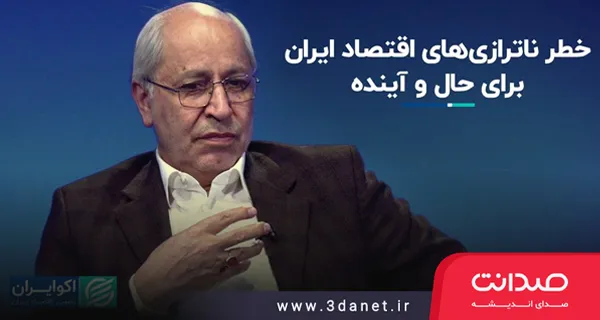
Masoud Nili
AuthorThe Story of Imbalances
To listen to the audio of Masoud Nili's lecture titled "Ceasefire; A Prerequisite for Resolving Economic Imbalances," please refer to the end of the article.[1]
In a political structure devoid of parties, the intellectual organization of governance is a difficult and complex task. In the vacuum created by the absence of parties, this responsibility falls upon individuals who have social influence and examine the various forms of governance's engagement with society. In this regard, a serious problem in our country is the scant amount of dialogue among individuals who should be able to engage in collective thinking. We live in a society where dialogue is scarce and usually accompanied by a hint of violence. Constructive and affirmative dialogue, aimed at what can and should be done, rarely takes shape in our society. Currently, with the changing political and social conditions, a glimmer of hope has emerged that, simultaneously with the new government taking office and a renewed opportunity being provided for society, different thoughts and disciplines can be brought together to reach a unified discourse through dialogue and collective reflection. However, if we want the scope of dialogue and the height of our perspective on the country's issues to be affirmative, we must address the entire governance system, not just the government as the executive branch, and articulate the dos and don'ts. Naturally, the choice of the government's path is very decisive.
Iran's important issues today can be categorized using two important and fateful criteria: first, issues that challenge the country's territorial existence or future, and second, issues that threaten societal sustainability. Issues that meet one or both of these criteria are the country's most critical problems, and solving them requires a "strategic reform." Strategic reform means that a change in the course of movement must occur. However, in some cases, an "approach reform" can be used, which means a change in perspective. Naturally, approach reform precedes strategic reform, because in some issues, acceptable achievements can be reached with this very change in perspective. The next step is "policy reforms," meaning that within the same path we are moving, localized improvements can be made, and finally, if necessary, we can move towards strategic reform and fundamentally change the course of movement.
· Three Critical Governance Issues
In categorizing the country's most critical issues, we must limit and specify the scope and arrive at the issues that are the most vital of all, and in this case, apply a measure to determine which of these vital issues has the greatest urgency. Often, the problem arises that a policymaker considers an important issue to also be an urgent one and thinks they must go and solve it, without considering the necessary prerequisites that must first be established. In screening the existing issues, three problems confront the governance system. Of course, this does not mean that the governance system itself necessarily accepts these three as the main problems. This is where we must convince the country's governance system of how vital and urgent these three issues are, and that the continuation of governance in the country depends on the type of engagement with these three issues. Naturally, the first step is to first accept them as the main problems. These three issues are "financial and environmental imbalances," "the critical state of foreign relations," and "deep intergenerational and intragenerational social and cultural gaps."
Among these three issues, financial and environmental imbalances are the most critical, the reasons for which I will explain below, but this most critical issue is not necessarily the most urgent one. Imbalances constitute the first vertex of the country's crisis-generating triangle. We have a relatively comprehensive list of imbalances in the country, a common feature of which is that they are chronic. The second characteristic of these imbalances is that they are escalating or constantly growing larger. For example, the electricity imbalance that everyone is grappling with these days is a very clear crisis that has disrupted both people's businesses and their lives and well-being. We have a serious problem in supplying gasoline and are forced into increasing imports, whereas just a few years ago we were a gasoline exporter. The situation is similar for natural gas and diesel. In the budget, despite the very low level of public service provision and the negligible amount of investment being made, and despite the pressure exerted on the lives and well-being of government employees, whose salaries have been adjusted far behind inflation over the past three years, there is still an imbalance that has also put pressure on the banking system. The banking system has faced other imbalances as well, and the budget imbalance has exacerbated the situation, the outcome of which is liquidity growth and inflation. The foreign exchange imbalance also has a clear problem statement. A multiple exchange rate system has always been in place in Iran's economy. This exchange rate system has repeatedly suffered very large shocks on a global scale and has undergone four major currency crises over 12 years. This is while many countries around the world have not experienced a currency crisis even once in their entire economic history. These currency shocks have caused macroeconomic instability and the formation of corruption and rent-seeking.
On the other hand, both civil and military pension funds have been completely absorbed into the government budget, to the extent that the concept of a fund practically no longer has any meaning for them. The crisis of water resources, soil erosion, and air pollution have also threatened and degraded the country's ecosystem. The condition of the country's labor market is such that out of a working-age population of approximately 65 million, we have fewer than 25 million employed, which is one of the lowest employment-to-population ratios on an international scale. Whereas under normal conditions, about 38 million of the country's working-age population should be employed. Currently, the ratio of the inactive population in the country is very high. Furthermore, within that existing number of employed, the quality of employment is highly disproportionate and low compared to the rising level of education and the very low share of women's employment in the labor market (fewer than four million, and those in low-income jobs). The composition of the educational level of the employed and unemployed also suffers from a high degree of disproportion, such that the greatest weight among the unemployed is held by the educated, while the majority of the employed have a high school diploma or education slightly above it. Another evident imbalance in the labor market is clear from this statistic: the share of the educated population out of the total population is 23 percent, while the share of the educated population among the unemployed is 42 percent; this shows that the country's higher education system continuously trains personnel, but the labor market has no place to absorb them.
Alongside these fundamental issues, we face a series of other problems, such as the entry of ordinary goods needed by the people through smuggling via impassable routes; goods that in other countries of the world are made available to people through conventional trade; or that on one hand we import gasoline, and on the other hand, the same gasoline is exported as contraband! The informal economy and corruption have become widespread, and despite decision-makers always talking about justice and income distribution, today we have wealthy individuals on a global scale and, at the same time, very, very severe poverty. In the midst of this, strange cases are also observed; for instance, the more important a commodity is, the more numerous its problems; for example, although decision-makers attach great importance to automobiles, our biggest problem is in the automobile market, or while everyone believes that bread is very important and the main pillar of the country's food security, our biggest problem is with wheat.
· Nightmarish Statistics
In this section I will refer to statistics that make me wonder how anyone can see and know these figures and still sleep at night. To begin, it is worth knowing that since 2011, energy consumption has grown by 60 percent. This is while total private household consumption, which includes that same 60 percent energy consumption, has grown by 12 percent. That is, if we remove energy, the 12 percent growth in total household consumption becomes somewhat lower. It is currently said that at peak electricity consumption times we have a shortfall of about 18,000 megawatts, and estimates show this figure will reach nearly 40,000 megawatts within the next 10 years, which will essentially destroy the functioning of the electricity grid. The gas imbalance at peak times is equivalent to 28 to 30 percent of total consumption. The country's water reserve deficit, according to statistics available up to 2020, has increased by about 40 percent, and per capita renewable water has decreased by 25 percent. Each of these statistics alone is shocking and alarming, yet today all these problems have surfaced together.
The statistics on pension fund imbalances are also very worrying. Close to 500 thousand billion tomans of this year's government budget is spent on pension fund deficits. This figure has increased at least 120-fold from 2011 to today, meaning its average annual growth is 48 percent. These statistics warn us of the collapse of a massive avalanche from the age pyramid of the employed. Due to the large-scale hiring in the early years after the revolution and the excessive growth of the government, a large group is now retiring, while in subsequent decades we had no hiring, and as a result a large-scale imbalance has been created. During this period, subsidies for essential goods have increased 30-fold. Compare these figures with the 22-fold increase in the general price level. This means that figures with growth of less than 22 times indicate a decrease in purchasing power and relative weakening, and vice versa. A much more important statistic shows us that in this period, the general price level has increased 22-fold, while government expenditure payments, i.e., services including pensions and subsidies for essential goods, etc., have increased only 13-fold, which shows that the government has become very weak and incapacitated in our economy. Also compare that government investment has increased only 8.5-fold, which also indicates the low level of investment in infrastructure.
As mentioned, the accumulated inflation since 2011 is reflected in the 22-fold increase in average prices, meaning that, for example, a good that was 100,000 tomans in 2011 is two million and 200,000 tomans today. Usually in economic calculations, it was always the practice that government employees' salaries would, on average, increase slightly more than inflation. But now, for the first time, the reverse has happened. Taking into account the 22-fold increase in inflation, if we examine government resources, we see that oil revenues in the budget have increased 10-fold, which shows the role of oil has diminished. Tax revenues have increased 14.7-fold and other revenues have increased 9-fold. Therefore, the government has become weaker in terms of revenue sources, and at the same time, government debt to commercial banks has increased 35-fold. While the government fundamentally should not borrow money from commercial banks. We usually seek the independence of the central bank in discussions related to it, while in our governance system, even commercial banks lack independence, let alone achieving central bank independence. This shows that the government in our economy has reached a real financial dead end. All its activities are at a very low level, yet even at this low level, it faces large deficits. Hence, it turns to commercial banks, as if the banks are part of the state treasury. This is while the real wages of government employees today are about 35 percent lower than in 2017.
Pension costs, along with the financial burden of social security, are almost equal to oil revenues in the budget and even slightly higher; although, fundamentally, pensions should not be in the budget. In fact, today's government budget is entirely non-oil, because the oil revenues seen in the budget are only spent on covering the deficit of pension funds. The next figure concerns the exchange rate, which has increased 60-fold since 2011, meaning an average annual growth of 41 percent. If the exchange rate were to increase based on inflation, it should logically have been less than 22 times higher, but the rate of exchange growth is much greater. The reason for this surge in growth is that the supply side of foreign exchange has suffered very large shocks due to sanctions. The country's dollar-denominated oil revenues have fallen to one-third compared to 2011, and total foreign exchange earnings have been reduced to less than half. In addition, capital flight has also greatly increased, and while we have seen a decrease on the supply side, the demand for foreign exchange, influenced by high liquidity growth and the concentration of created demand on the most limited resource—namely foreign exchange—has grown with greater intensity than other items. The set of mentioned factors has caused the exchange rate to experience much higher growth than inflation. Also note that the country's foreign exchange earnings had increased about 4.5 times during the 2000s, while in the 2010s they fell to less than half; yet no macroeconomic management was applied to foreign exchange as the most important resource by which the country is administered. That is, when foreign exchange earnings increased 4.5 times, all that foreign exchange was spent, and when these earnings halved, the entire shock was inflicted on the economy and people's lives. If we did not have sanctions, the exchange rate today would logically be around 20,000 tomans. Of course, I emphasize that this proposition does not mean that if sanctions are lifted, the exchange rate will become 20,000 tomans; this matter is no longer reversible, but if there were no sanctions and supply-side shocks, the exchange rate would logically have settled around this level.
The important point to note is that the imbalances of Iran's economy are not a new or recent issue, and we have been facing them for years, but from 2018 in one stage and from 2021 in another, the dynamics of the growth of imbalances have greatly accelerated. Banks' debt to the Central Bank from 2021 to the end of 2023 grew by an average of 115 percent annually. This growth is extremely high and strange. This is where I say, how can anyone truly know these nightmarish statistics and sleep at night? I can continue by mentioning another statistic; among them, the average annual growth of gasoline consumption in the world is one percent. This figure was six percent in our country for years, but from 2021 to today, it has increased to 15 percent per year. That means gasoline consumption doubles in less than five years, and if we now consume 120 million liters of gasoline per day, at this same growth rate, in five years we will consume 240 million liters per day, while there is no capacity to produce this amount of gasoline, and it is fundamentally not logical to create this much gasoline production capacity.
The electricity imbalance at peak times has reached from eight thousand megawatts to 12, then to 15, and finally 18 thousand megawatts. Fundamentally, what is the reason for this intensity of energy consumption? Why should we produce and consume this much electricity? In this interval, while energy consumption has grown by 60 percent, total GDP has grown by only 17 percent. That means a large portion of energy in our country is not consumed for production.
· Crisis-Inducing Policymaking
After presenting these statistics, I want to draw attention to another issue. The data shows that all indicators of Iran's economy face a strange imbalance in terms of number, diversity, comprehensiveness, and continuity. But all these imbalances relate to the policymaker. In fact, if you present this picture to an economist unfamiliar with Iran's economy, the big question that arises for them is what our entire policymaking system is doing. The order, coordination, and continuity observed in these statistics is such that it is as if one part of the governance system is responsible for creating the electricity crisis and another part bears the same responsibility in the area of gas and other items. The answer is that our decision-making system is fundamentally imbalance-driven and cannot provide any greater welfare to the people unless it exacerbates the imbalance. This is an important and alarming point for a country that holds the world's second-largest gas reserves and fourth-largest oil reserves and is today caught in such a massive imbalance in energy supply. In each of these areas, the level of coordination is also very high. For example, agricultural and macroeconomic policies work in a completely coordinated manner not only to enlarge the dimensions of the water crisis but also towards crises in other energy items. Similarly, monetary, fiscal, trade, and foreign exchange policies synergize in such a way that the economy has minimal job creation and shapes the development of goods smuggling. In short, it is as if our decision-makers have set goals and formed coordinating committees to intensify the water, electricity, and gas crises and to ensure that an economy needing more jobs uses more capital; meaning the share of employment in our production function is the lowest and the share of capital is the highest. Importantly, this does not happen by itself but is the result of policymaking. Similarly, foreign exchange and trade policy are formulated so that the result is an increase in smuggling; foreign policy and exchange rate policy are adjusted so that bribery and corruption spread from customs to the central bank and other institutions. The governance strategy in our country is based on natural resources, but not the development of natural resources, rather their consumption. Saudi Arabia is also a country whose governance is based on natural resources, but based on their development. Our difference with Saudi Arabia is that without investing in oil and gas, we make the economy and politics as dependent on oil as possible.
From another dimension, our governance is based on creating liquidity and generating inflation. The performance of governance in all dimensions of Iran, including politics and economics, is completely reliant on enlarging the dimensions of imbalances; meaning that fundamentally, without enlarging the imbalances, the country cannot be administered. That is, if 8,000 billion tomans are not added to the country's liquidity in a single day, the country's movement will be disrupted and its affairs will not proceed.
None of these matters mentioned are new. The destructive trend of these issues has not only been warned about repeatedly, but specific solutions have also been provided for them. The latest solution presented was the book "How to Overcome the Super-Challenges," about which I stated at its unveiling that the real name of this book could be "The Cookbook of Iran's Economy." Because it tells the policymaker exactly what to do in each sector, for example, the banking system or the budget. So, in my view, our problem is not a technical solution, such that we say we have no solution or that we lack economists who can offer proposals to the policymaker to solve problems. These pervasive imbalances have occurred without exception as a result of deliberate policies and policy decisions with completely predictable consequences, and it has not been the case that we can say the cause of these imbalances was ignorance. Although ignorance on the part of the policymaker may have been a factor in some circumstances, it has not been the dominant cause. Therefore, we arrive at a very important question: why, despite the observability of the problems and the predictability of their increasing dimensions, and despite the existence of specific solutions, has no change of course been created in their trend, and the maximum efforts made in the past have been to place temporary speed bumps on it, rather than creating a change of direction?
· The Contradiction of Welfare and Imbalance
There is no doubt that from an expert and scientific perspective, all those concerned for the country agree that, based on the two criteria of the future of the land and societal sustainability that I mentioned at the outset, the continuation of governance depends on resolving the imbalances. At the same time, we know that the functioning of the governance system in Iran is such that any welfare for the people is achieved only by increasing imbalances. So here we are faced with a paradox or contradiction. If you pay attention, the proposition of "economic reforms" is very neglected in our governance system, and this term is essentially not used. I do not recall any official using this term and saying that they have come to carry out economic reforms. The term reforms is mostly directed at political issues. The reason why economic reforms are not a dominant proposition in our governance system is that governance in our country is fundamentally accompanied by imbalance. Implementing economic reforms would certainly cause problems in running the country, and if an official is proposed to seek to resolve imbalances, they imagine that by doing so they are pulling the rug out from under their own feet. As I have been told many times, your proposal for economic reforms is like putting a watermelon rind under our feet. The reality is that one cannot expect someone who runs the country with imbalances to strive to resolve them. Therefore, the problem statement for Iran's future is: how can this paradox be resolved? Naturally, all threats to Iran's future are not limited to imbalances, but if these imbalances are not resolved, the country's future will be in great danger.
The conclusion is that we must put all possible options on the table and discuss which one can be implemented. The first option is inaction. Doing nothing. During the late Raisi administration or even during the presidential elections, officials constantly said not to worry; we are not going to raise the price of gasoline or do anything else. The officials of our governance system constantly assure the people that the "inaction" option is their chosen option. The second option is the temporary resolution of one imbalance. This is what has happened repeatedly over the past years. For example, a one-off, temporary increase in the price of gasoline. The third option is the sustainable resolution of one imbalance. This option is inherently inconsistent. The reason is that imbalances are interconnected, and one cannot choose one of them and see it through to a sustainable conclusion. When the targeted subsidy plan was proposed during Mr. Ahmadinejad's administration, it seemed as though one imbalance was going to be resolved sustainably, because a law was passed in parliament that set the task and stipulated that price reform must continue within the framework of the targeted subsidies law, but the targeting was implemented only once. Temporarily removing one imbalance from the set of imbalances is a meaningless act. In the history of each of today's imbalances in the country's economy, there is a series of reform measures. That is, actions were taken in the past that we see did not work and were not effective. So if we want to effectively remove the imbalances, the solution for resolving them must be sustainable. In that case, we must turn to the option of "comprehensive economic reforms." Meaning that we try to fix the banking imbalance, the budget imbalance, the energy imbalance, the water and environmental crisis, and in short, the country. Comprehensive economic reforms are not at all a matter of saying a minister should solve the electricity crisis. In fact, these comprehensive reforms are not at the level of the executive branch; the issue is a governance strategy.
Of course, we are aware that the sustainable resolution of the set of imbalances cannot happen all at once and requires the passage of time. At this stage, social issues become important, because if the governance system is to traverse a relatively long path, it must have the society's support. But the problem here is that in the past, governance performance has been binary; that is, it has either done nothing or suddenly made a decision like changing the price of gasoline.
The Equilibrium of Fear
The economy and politics in Iran are caught in an equilibrium that I have termed the "equilibrium of fear." When the decision-maker does not feel their footing is firm, they naturally turn to inaction. Meaning that they avoid taking any action towards economic reforms as much as possible, and if they are forced to take an action, they ultimately submit to it once regarding one imbalance over one or even two presidential terms.
The equilibrium of fear has also taken shape at the firm level; a firm struggling with financing, energy, raw materials, parts and machinery, and skilled and expert human resources, facing declining demand for its products and cut off from access to markets and modern technology, asks the governance system to at least refrain from taking any further action that imposes additional pressure on it. The firm asks the governance system to leave it alone so it can at least preserve itself under these difficult conditions, because it lacks the capacity to withstand the pressure of economic reforms. The same applies to households; real wages have fallen, jobs are of poor quality, and there is no prospect of when a household might be able to secure its own housing or buy a car. The youth unemployment rate is very high. A very significant and unfortunate event that has occurred since the beginning of the 1390s [2010s] is that, according to official statistics, 10 million people have been added to the population below the poverty line, which is a very large figure. The government, too, cannot take the initiative in this area, because its own revenue situation is worse and it cannot provide any assistance to households. Currently, investment is less than two percent of GDP, and the government undertakes almost no new investment in infrastructure. The wheat subsidy alone is almost equivalent to the education budget or the entire development budget, which is never fully realized anyway. That is, wheat itself has become a macroeconomic variable. Our budget, by standard definitions, is an austerity budget, and given the lack of resources, reducing expenditures is a very difficult and complex task.
· Exiting the Equilibrium of Fear
So, at present, all three main economic actors—the government, the firm, and the household—are in unfavorable economic conditions and trapped in an equilibrium of fear. Now that we have concluded that the country's survival depends on comprehensive economic reforms, the main question is: how do we exit this equilibrium of fear? Are the reforms feasible in terms of political and social capacity and the government's expert and managerial capacity? Does the political system even accept economic reforms? Global experience shows that some countries, including Eastern European countries, have experience with comprehensive economic reforms, but those that carried out reforms and rectified conditions were different from those that had created the unfavorable economic conditions. The only experience where we see that the very same actors who ruined the economy were able to fix it is in China. Even there, Mao, who was responsible for the collapse of the Chinese economy, did not do this, but a shift in perspective within the Chinese Communist Party led to a change of course and the rectification of affairs. So, we must be able to engage in dialogue with politicians and policymakers and see whether the necessary political capacity for economic reforms exists or not. For instance, one cannot unify the exchange rate with a single prescription and without regard to political and social capacities. Moreover, the machinery of the state is worn out, dilapidated, and broken, and changing the driver does not alter the condition of the vehicle.
It must also be examined whether economic reforms are conceivable under conditions of diverse international and regional tensions and in situations extremely close to military conflict? We truly do not know, each night when we go to sleep until we wake in the morning, whether something will happen in the realm of conflicts and tensions. So how can we have a prescription for economic reform for the next 10 years and say that the exchange rate is the first priority, then energy, and so on? We must see whether the governance system actually pays attention to these issues or not. Also, can comprehensive economic reform succeed under conditions of vast intergenerational gaps, which have manifested themselves in the non-participation of a significant portion of the voting-age population? With what backing of popular votes can a president carry out economic reforms? How much social support does economic reform itself require, even just to avert crisis? And finally, how can comprehensive economic reform succeed within the organizational structure of our governance system? The organizational structure of governance in our country is very complex, and the president must be able to bring the entire governance system along with him to carry out comprehensive economic reforms. The president must first understand the depth of the problem himself, and in the next stage, be able to bring the other pillars of the state along with him; otherwise, any reform measure is, in a sense, a leap in the dark. We are not at all in a position to act rashly. The entire governance system must stand behind comprehensive economic reform and accept its risks. The sustainable resolution of the set of imbalances requires the passage of time, and in the interim, the distressing effects of the imbalances persist. On this transitional path, a relationship based on mutual trust between the government and the people is of utmost importance. The government and statesmen must have authority and acceptability so that if they make a promise, it is believable to the people.
· Moving Beyond the Statement of the Problem
Now that the statement of the problems has become relatively clear, we must enter the affirmative part of the discussion. First, we must consider that there is a very interesting order and coordination among the imbalances. So we must see whether these coordinated imbalances were created separately or have a single root. The answer to this question is a purely economic discussion. The second part, which falls within the domain of political economy, is addressing the question of which incentive system has led our decision-makers in this direction? That is, what basis and motivation does a decision-maker have who knows their action will create an imbalance in gasoline, yet still does it? The answer to this question, especially considering the catastrophic results of these policies, is very important and in line with explaining the mechanisms of political economy, because it relates to the motivation of politicians in economic decision-making. In explaining economic mechanisms, we are limited to the rules within the economy, but in explaining the mechanisms of political economy, we are inevitably compelled to address extra-economic factors as well, which is a separate discussion, and for now, we will focus solely on intra-economic rules.
The governance system in our country has two value-perceptual anchor points, which have been, in a sense, the ideology of governance in the country. One is that welfare has been viewed at the level of subsistence, and therefore the governance system has merely sought a subsistence-level welfare and has recognized itself as responsible for state-subsidized consumer affordability. The people, too, have always preferred cash, and an unwritten agreement has been formed between the people and the government. The second relates to the dimension of external relations, where the governance system is not willing to have the kind of interaction with the Western world that other developing countries have established over the last two or three decades. Because it fundamentally does not accept the Western world, even in the scientific field. Therefore, our view of the world has been one of self-sufficiency, and of the absolute self-sufficiency type. Ultimately, with much effort and bargaining, this self-sufficiency has been somewhat moderated and, in some areas, has reached an import substitution strategy. Because in many cases, self-sufficiency was practically impossible. For a governance system with abundant oil resources, these two policy anchors seem entirely feasible and achievable.
The government in our country, with the same welfare-livelihood approach I mentioned, when the price of oil rises, somehow feels that all its dreams have come true; therefore, it spends everything. This is why, compared to other oil-producing countries that all created national wealth funds, only our country and Venezuela did not take such a measure. We spend whatever we earn. If oil revenues quadruple, we spend four times as much, but if they are halved, we cannot spend half. When oil revenues increase, the budget expands in proportion to the increase in resources, but when oil revenues decrease or a sanctions shock occurs, we cannot reduce the budget, because we cannot tell a government employee that we are halving your salary. Therefore, liquidity growth increases asymmetrically when oil prices fall compared to when oil prices rise. On the other hand, the inflationary effect of liquidity rises sharply when oil prices fall, which I think is quite clear. A 10 percent liquidity growth during a period of falling oil prices creates much higher inflation than a 10 percent liquidity growth during a period of rising oil prices.
When the government faces a shortage of resources, it also puts more pressure on the banking system, which further contributes to liquidity growth. When these conditions are accompanied by external tensions, the supply of foreign currency decreases. That is, the budget deficit provides the firewood, the banking system provides the flammable liquid, and finally, the striking of the match is done by foreign currency, with the result being the scorching fire of inflation and an economy that, with high inflation, falls into instability. You know that the average inflation rate of Iran's economy before the sanctions of 2018 was about 20 percent, and after the sanctions, it reached over 40 percent, which is an example of that very mechanism of increased inflationary effect of liquidity during times of oil revenue shortage. As inflation rises, the government is called into question and naturally takes action. The government is incapable of controlling the inflation it has itself created, so it chooses the pricing mechanism, denies inflation, and reduces the issue to mere high prices. Consequently, it goes after businesses and, for example, fixes the price of pasteurized milk, because it believes milk is an important commodity for the people. The business says it buys milk from the livestock farmer, so the government must set the price there. The livestock farmer is not opposed to price-setting either, provided that the price of fodder is also determined and fixed. The government goes to set the price of fodder, and there the farmer says, isn't the government itself pursuing self-sufficiency? So why is it setting the price of fodder by decree? The government reaches a contradiction, so it makes an exception, but in return, to supply the fodder needed by the livestock farmer, it imports fodder with a preferential exchange rate. Here, the government enters a cycle that creates coordination among the imbalances.
Another example is in the housing sector; to prevent housing prices from rising, the government does not allow steel and cement producers to increase prices and sets the price of their products low. In return, these producers, who are energy consumers, ask the government to lower energy prices. The government provides gas to steel at a low price and electricity to cement at a low price. As a result, steel and cement factories are no longer sensitive about energy consumption and produce as much as they can and consume energy. In this way, imbalances are transferred to one another; that is, the imbalance is transferred from the factory's product to energy. Continuing its fight against inflation, the government sets prices for home appliances and, in response to the producer's request for cheap imported raw materials, gives them a preferential exchange rate from oil revenues, the result of which is a foreign exchange imbalance. With the foreign exchange imbalance, the home appliance factory asks for another form of support from the government, because it cannot compete with imported finished goods. The government imposes very high tariffs on the import of home appliances or simply bans their entry. Consequently, instead of entering through customs, home appliances enter through impassable mountainous routes, and smuggling takes shape.
Consequently, the coordination of imbalances stems from the fact that they are all the bitter fruit of a single tree. To keep prices low for firms, the government provides one with cheap energy, another with cheap foreign currency, and creates a monopoly for yet another through import bans. Yet inflation persists and prices continue to rise. As a result, it tells the bank to give these firms cheap loans. It provides agriculture with free water and cheap electricity. Thus, it also creates banking imbalances and water resource imbalances. The interesting point is that these very actions activate the dynamic of increasing inflation. When the policy is to be self-sufficient in wheat while also providing cheap bread to the people, we fall into a contradiction. Because the government is forced to buy wheat from the farmer at a high price and sell flour to the bakery at a low price. That is, it buys wheat from the wheat farmer at 19,500 tomans per kilo and delivers flour to the baker at 650 tomans per kilo. It covers the vast gap between these two from the budget, which is why we annually spend an amount equivalent to the education budget just on purchasing wheat.
Another example is that the government provides a barrel of crude oil to the refinery at a price far lower than the export price. To compensate for the refinery's costs, such as wages and other items, it buys gasoline at 17,000 tomans per liter and sells it at 1,500 or 3,000 tomans per liter. The gap between these two prices also turns into a budget deficit, inflation rises further, and this destructive and defective cycle continues.
· Comprehensive Economic Reforms
In economic literature, reforms are divided into two levels. One layer is stabilizing reforms and another is market reforms, and these two must be carried out together. Stabilizing reforms bring down inflation, and market reforms correct the price ratios. If reforms are not undertaken at the root, reform measures are temporary, as we have experienced many times. Today, many also raise the question: how much should the price of gasoline be? They think the issue is just a single number and that if the price of gasoline is set at that number, the problem is solved. Whereas this measure has been taken several times and has still been fruitless, because the denominator of the fraction, which is the general price level, constantly grows larger with inflation. In 2010, the average price of energy carriers was increased by 530 percent, but today we are at the historical nadir of gasoline prices. Because not only were stabilizing reforms not carried out, but the imbalance was exacerbated. Because at that juncture, the differential obtained that was supposed to be paid to the people was 20,000 tomans, but a subsidy of 45,000 tomans was given. Comprehensive economic reform does not at all mean mobilizing the entire country so that the price of gasoline changes and rises from midnight.
Some economists and other thinkers, assuming that sanctions are not currently removable, propose plans for carrying out a series of economic reforms; grand plans including, for instance, giving every person a gasoline quota regardless of whether they own a car or not, or giving every household a quota for electricity and gas and creating a market for selling it. In my opinion, these plans are good, but the crucial point that cannot and should not be overlooked is sanctions. Sanctions in our country have not merely been a fixed restriction; rather, we are constantly faced with sanctions shocks. Iran's economy came under sanctions attack in 2012. Then negotiations took place and the JCPOA was concluded, but in 2018 the second wave of sanctions began. After that, regional conflicts and numerous successive sanctions attacks have occurred up to this day. Each of these sanctions attacks has been followed by a currency leap, and these leaps have destroyed everything that had been done in the name of economic reform.
Reforms under sanctions are like shooting at a moving target. All forces cooperate to implement a reform measure in the energy market, but a currency surge renders all measures ineffective again. Therefore, without reforming foreign relations, economic reforms are merely a very costly and socially and politically debilitating process. The wisdom and prudence that can grasp the necessity of comprehensive economic reform must first grasp the necessity of reforming foreign relations. It is a grave mistake to think that in our governance system, an understanding of the relations of economic reform can take shape, but an understanding of reforming foreign relations cannot. Reform of foreign relations certainly takes precedence over economic reforms.
In a situation of persistent budget deficits and the systematic imbalance of the banking system, a liquidity growth rate below 30 percent does not seem to be a realistic target. Under conditions of high liquidity growth and if sanction attacks continue (note that I do not say sanctions, but rather sanction attacks), currency rate surges will persist, and the exchange rate will remain the leading, turbulent variable of the country's macroeconomy. In this case, other economic reforms, including the reform of the energy market and the banking system and other matters, will be of the type of temporary resolution of an imbalance in one market, which, although better than continuing the status quo, will become disappointing for society. In most countries of the world, they carried out economic reforms once and it was over. After that, only policy adjustments are needed, but we are supposed to carry out economic reforms for several decades.
The minimum requirement for sustainable, yet very gradual, economic reform from the foreign policy side is that if it cannot reach an agreement within about a year, it should at least achieve a ceasefire option. Because we are currently in an economic war. That is, although the transaction cost in our economy has risen, it should at least remain at this level and no further sanction attacks should be imposed on the economy. This is the least demand of the economy from the country's diplomatic apparatus and foreign relations: a ceasefire that does not lift sanctions, but eliminates sanction attacks, so that the effect of sanctions remains at this level and its dynamic is halted.
[1] Download the audio of Masoud Nili's lecture titled "Ceasefire; A Prerequisite for Resolving Economic Imbalances"



Discussion2 comments
سلام ،چرا نسخه صوتی آنرا پخش نمیکنید
سلام. اصلاح شد