Economic Sciences
“What Threats Will Iran Face in the Coming Months?” by Masoud Nili
Masoud Nili: In the coming months, Iran faces an almost impassable bottleneck of multiple threats—from sanctions to energy imbalances and poverty. The root cause is the absence of a unified analysis and the dominance of political-security approaches over economic ones.
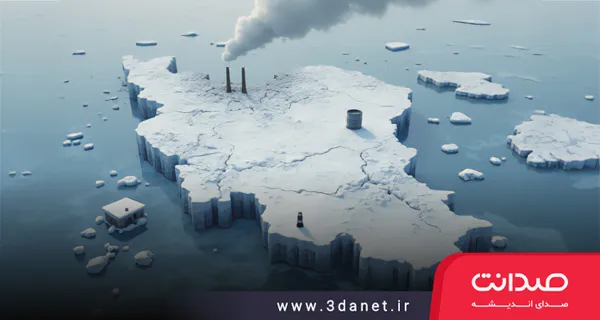
The Danger of Frostbite for the Rulers
Masoud Nili (Economist)
Source: Donya-e-Eqtesad, Saturday, December 28, 2024, Issue 6188
I recall that in years long past, when I worked at the Plan and Budget Organization, I was tasked on several occasions with preparing reports titled "The 10-Year Outlook for Iran's Economy." The main purpose of this work was to reveal, at the very outset, the dimensions of gaps and imbalances that were not tangibly observable at that point in time but were on an increasing trajectory over time. For example, the dimensions of the budget deficit or imbalances in the balance of payments, and so on, would thus become clear and specific for the policymaker. There was also an implicit assumption in undertaking this work, which was that the decision-maker considers themselves responsible for solving problems and therefore, naturally, avoids confronting major and critical issues. Over the past few months, the multiplicity and diversity of major problems have increased sharply, and we have moved beyond the stage of worry. What was warned about occurring in the future has now materialized in the present and has revealed its damaging dimensions. Here, I will refer to a list of these issues:1. External Issues
1-1. The election of Trump as President of the United States, and the knowledge gained from his performance in his previous presidential term, raises various possibilities, perhaps one of the first and most obvious being that he will intensify the restrictions on the country's oil exports that were reduced during the Biden era, thereby seriously affecting our foreign exchange market, budget, production, and inflation. Naturally, the greater this probability, the more misleading the assumptions considered for next year's economy will be. 1-2. The leaders of major European countries, in a letter to the UN Security Council, have raised very serious issues regarding the activation of the snapback mechanism and the reinstatement of Security Council sanctions next year. Naturally, if such conditions materialize, the situation next year will be even more difficult than what was mentioned in the previous paragraph. 1-3. The events that took place in the Middle East region, first in Gaza and then in Lebanon, have ultimately led to a direct military confrontation between us and the Israeli regime, which will certainly, regardless of its complex military and political dimensions, have decisive economic consequences. 1-4. The developments that have occurred in Syria are very significant, and their effects will be of great importance, and in addition, they will likely affect the relationship between Iran and Turkey as well.2. Economic Issues
2-1. The energy imbalance, as is evident, has taken on a completely critical form. The energy crisis, for a country with the world's second-largest gas reserves and fourth-largest oil reserves, places a heavy sorrow on the heart and a sweat of shame on the brow. I have no doubt that the energy crisis in our oil-and-gas-rich country will be recorded and mentioned in basic economics textbooks as a cautionary case. The energy crisis has shut down half the country in conditions where the air temperature has not yet become fully wintry. Estimates, with an acceptable degree of approximation, of the energy gap and its decisive impact on the paralysis of economic and administrative activities next year and the years after, are very simple and very painful. 2-2. Air pollution, which stems not from industrialization and high economic growth, but arises from an economy that is stagnant in production yet, in consumption, is destroying the country's present and future, carries dense, carcinogenic toxins into the lungs of our country's vulnerable children and elderly, and ruthlessly commits generational genocide. 2-3. Land subsidence across the country's geography is rapidly expanding and has exposed Iran's territorial future to destruction. 2-4. The dimensions of the budget deficit for a government that is weak in providing public services, poor in improving the welfare level of its employees, and lacking the capacity for infrastructural investments, and which internally also bears the heavy burden of the pension system's bankruptcy, are alarming, even with the assumptions considered in next year's budget. This heavy burden has also caused a warning imbalance in the ailing banking system. 2-5. The large and destructive fluctuations of the foreign exchange market, along with high inflation, which has become a constant and permanent component of our economic life, only signal instability and uncertainty.3. Social Issues
3-1. The addition of 10 million people to the population below the poverty line, which has occurred in recent years, is a very significant event and should logically have become the greatest concern of the governance system. The consequences of this major event can be identified in addiction, divorce, and the occurrence of various crimes. 3-2. The relatively frequent release of information that surfaces from time to time about corruption in the lives of the country's officials or their children, alongside non-private, non-governmental rentier enterprises, when accompanied by the severe economic pressures imposed on people's lives, further weakens the foundations of the governance system's social capital. Surveys conducted on the attitudes of Iranians show that the state of the governance system's social capital is at its historical nadir. 3-3. The existing socio-cultural rifts within society, especially among the youth, are a completely alarming fire under the ashes which, although it issued its warnings by flaring up in the year 1401, the evidence regarding the handling of the filtering issue and similar cases shows that these warnings have not been taken seriously enough.4. Conclusion
The various crises mentioned in the realms of foreign relations, the economy, and social challenges, taken together, have placed the country in a perilous position. The coming months and the next year could be a tortuous and difficult pass for dear Iran. An error in assessing the situation could incur irreparable historical costs. Navigating this pass requires a unified analysis and an integrated resolve within the entire decision-making system of the country to traverse it with minimal cost. In the view of the author of these lines, the greatest affliction of our governance system is the existence of differing strategic analyses, along with the assignment of completely different weights to issues, among the country's principal decision-making officials. Political and security issues are discussed on one separate island, economic issues on another island, and social issues are usually not discussed anywhere. The islands of political-security and economic issues are not only separate but also have a hierarchical relationship with one another. This means that political-security approaches have organizational dominance over economic approaches. This mode of governance organization not only lacks efficiency in guiding the country through the very difficult pass ahead and could create a very heavy cost for the country's future, but it also results in strategic miscalculations. The organizational system of governance in our country is such that no center or institution has been foreseen for examining all these issues together. The magnitude of the problems and their political, social, and economic nature necessitates that, first, the political path be opened and social trust be enhanced simultaneously so that the possibility of carrying out economic reforms is provided. For a long time, policy solutions without political disentanglement have lost their functionality. Therefore, the rules governing our political system have deprived the executive branch of the possibility of single-branch planning to address economic problems independently of the other two political and social dimensions. For example, suppose the government tries to reduce the gap between exchange rates. But when the economy is constantly exposed to external political shocks, political attacks naturally nullify the efforts made. The fundamental and very important question is: on the desk of which responsible official or decision-making institution does the list of issues mentioned in this piece, or similar ones, currently lie in a unified manner, and is there currently any planning underway anywhere regarding how to navigate the critical challenges ahead in the coming months and year? The list mentioned in this piece, in the truest sense of the word, sends shivers down one's spine and robs one of sleep. No responsible official should rest until they are assured that the manner of not confronting some of these issues—by warding them off—and the manner of confronting others—by navigating through them—has been determined. But the signs being received do not indicate such importance and sensitivity. The most thriving market in our country remains the market of political quarrels and preoccupation with destroying the internal capacities of the political system and annihilating the meager remaining amount of social capital of the decision-making system. It suffices for someone to examine and see what the main preoccupation of our influential politicians has been amidst all these terrifying problems. One group devotes all its effort to persuading decision-makers to fall into the arena of military conflicts. Another group is tirelessly working for the dismissal of a certain responsible official and the resignation of another responsible official, and some are anxious about the delay in the promulgation of the Hijab law. On the other hand, at the highest levels of government, there is still talk of 8 percent growth and the implementation of the Seventh Development Plan, and the Islamic Consultative Assembly is seriously and time-consumingly reviewing a budget whose main assumptions are very unlikely to be realized, as if every institution is trying to distance itself from the main issues and occupy itself with secondary matters. The degree to which the concerns of most of our rulers are removed from the important issues mentioned is sometimes such that it seems as if they bear responsibility in another country. Hence, this concern arises that perhaps our politicians have become like mountaineers who, in the mountain cold, have succumbed to frostbite and, consequently, fallen asleep. Although this note has been written very bitterly, I hope its bitterness will be a lancet that awakens these individuals from their frostbitten slumber. Our people have the right to know what plan the decision-making system has for confronting conditions whose probability of occurrence is very high and which will completely affect their lives.
If the decision-making system has a document in preparation for the difficult conditions ahead, it needs to announce to society how we are going to emerge from such a deadly situation. If we proceed in the same manner, society will be afflicted by a pandemic of despair, the consequences of which I hope are truly understood. The time has come to make decisions, however bitter, but very important and difficult, as quickly as possible. The moment of falling asleep in a state of hypothermia will lead to certain death. Beware of the pandemic of despair.

Discussion2 comments
خلاصه نتایج BBC خط به خط مطالبی که media به ایرانی میگوید برای تکمیل فشار غرب به ایران و تفوق آنان بر اقتصاد و سیاست ایران و ایرانی. چگونه فردی که مدعی اندیشه است بازیچه سیاست ضد ایران و ایرانی میشود جای تعمق دارد.
مواضع این متن، لغت به لغت با برخی اندیشکده های یک کشور مطابق است. یا معجزه آست و یا نویسنده تحت تاثیر اعتبار منابع قدرت است و اهل ارزیابی القائات آنان نیست.