Political Science
Iran and the Future Event: The 12th Annual Conference of the Iranian Political Science Association
The 12th conference of the Iranian Political Science Association focused on Iran's future; Kashi emphasized peace over resistance and surrender, while Tajik spoke of the coming event.
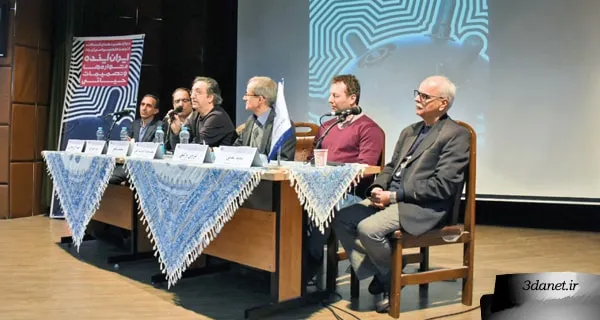
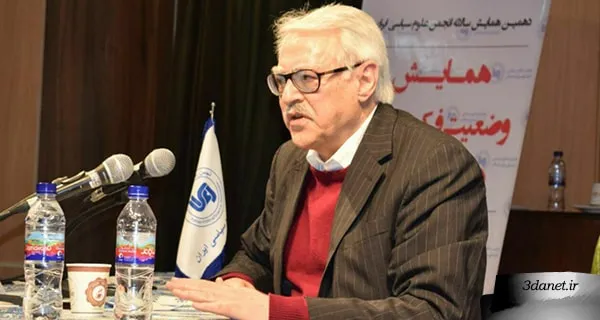
Mohsen Azmoudeh: Dilemmass and Vital Decisions was the subtitle of the 12th Annual Conference of the Iranian Political Science Association, which was held on Thursday, February 28, at the House of Humanities Thinkers, with speeches by nearly 40 prominent professors and researchers in the social and political sciences of Iran. The central concern and main title of this conference was the future of Iran, and the common thread among the speeches was that Iran today is suffering from fundamental problems and afflictions and, consequently, requires serious decision-making. At this conference, Mohammad Javad Kashi emphasized the necessity of a fundamental turn in our approach to politics, Mohammad Reza Tajik spoke of the future event, Saeed Madani insisted on an institutional solution for overcoming the difficulties, Mohammad Maljoo enumerated the structural problems of Iran's political economy, and Ahmad Golmohammadi stressed the necessity of redefining the state and returning it to its essential functions. Shervin Vakili and Javad Heydari also, from a theoretical perspective, one by pointing to the distinction between the Iranian and Western civilizational traditions, called for a return to our own heritage, and the other, by reviewing the solutions presented in the Western constitutionalist tradition, spoke of the possibility of a synthesis between security and different understandings of equality. At the beginning of this conference, Ali Esmaeili Ardakani, the executive secretary of the conference, and Seyed Abdolamir Nabavi, the president of the Iranian Political Science Association, spoke of the necessity of this conference in the current times. What you are reading is a report on the speeches of the first panel of this conference, which raises more general concerns. It should be noted that what these researchers present about Iran's politics today is from a scientific and academic perspective, and therefore it is open to commentary and criticism.
***
On the Necessity of Peace and Coexistence
Mohammad Javad Kashi
Our conference, besides its scientific and academic aspect, also has a promotional and public dimension and is a kind of warning from the country's scientific community about today's critical situation. In truth, today's dilemmas, although they require analysis and evaluation, are not very ambiguous. Sometimes dilemmas become so complex and numerous that they reach people's flesh and skin and go beyond the level of words and analyses. What is more important is decision-making of a vital nature in these conditions. Politics is the arena of decision-making, and in every situation, policymakers are expected to make decisions. But sometimes decisions go beyond the conventional type and become vital decisions, meaning decisions that are supposed to fundamentally transform the way we confront affairs, and we are in such a situation today. This type of decision-making is inherently difficult. Ideological systems and those arising from a revolutionary heritage are primarily afflicted with problems. All the world's revolutions are like this. They always come to the scene with the promise of a set of ideals and lofty perspectives. But humanities specialists know that human goods and desiderata cannot all be gathered together at once. Securing any good, whether we like it or not, means harming another good, and we cannot gather all desiderata in this world.
Ideological political systems come to the scene with a basket of a set of goods, but a set of factors, including historical events and limitations, the conditions of the agents and their psychological characteristics, and social conditions, etc., in practice cause one good to be placed at the center and other goods to be marginalized, and this later becomes a source of trouble. What has been placed at the center over the past 4 decades is Iran's independence from foreign influence. This has indeed happened, which is, of course, auspicious. But as was said, advancing one good is not compatible with advancing other goods. Then, to the same extent that these agents act in the direction of this human good, they marginalize other goods such as justice, freedom, etc., and gradually the apparatus of their political system advances and is demarcated within the framework of this very good. Today, the situation is critical. Moral, political, social, cultural, and international affairs have all converged, but everything has been reduced to a binary of resistance and surrender. This binary is the result of the experience of the past 4 decades. It is as if we have no escape or alternative to this binary, and then this binary creates a feeling of deadlock and plunges decision-making into crisis.
In practice, however, we see that neither of these has any authenticity; sometimes resistance becomes a shopfront for certain groups, and patterns of capitulation become another shopfront for other groups, because apparently that is not the issue at all, and when problems become more complex at a deeper level, the issue is something else entirely. Yet the limitations of the ideological and rhetorical apparatuses set in motion at the political level have restricted horizons and made decision-making impossible. Perhaps one of the tasks of political science professors (including at this seminar) is to break open these rhetorical and ideological limitations. We do not have to choose between resistance and surrender; we can stroll through the garden of political goods and choose other goods. Over the past four decades, in the light of this good—which has indeed been a good—we have accumulated many problems; it is necessary to take a promenade in the garden of political goods and choose other goods. To remove the shortcomings we have had over these four decades from the country's political and social atmosphere. For instance, can we not choose goods such as peace over the binary of resistance and surrender? For years we have not thought about something called peace and coexistence. We have incurred enormous losses on the domestic stage and caused a revolution that was truly the voice of the entire society to lose this characteristic and no longer possess the power to represent the whole; and on the international stage, we have crafted an image of ourselves that is not always defensible. Today, the smell of war emanates from the throats of the most fascistic global circles, from Trump to Netanyahu. They reap enormous benefits from the flames of war igniting in this region. Truly, the most horizon-shattering slogan and political good in today's conditions, both on the domestic and the global stage, is peace and national and international coexistence. What harm is there if those who were commanders of defense and resistance also become commanders of peace and coexistence? The great revolutionaries and decision-makers on the political stage are those who possess the power for such turns on the global stage, without it truly meaning surrender. Today, we suffer losses and are in a deadlock both in the light of the ideology of resistance and in the light of ideologies that, under any name, advance surrender. Why do we not make our vital decision around one of the sweet fruits of politics that has fallen into eclipse, namely peace and coexistence? If we make such a turn, we will deliver ourselves, the people, and the people of the region from many of the evils in whose shadow we find ourselves today.
Scientific Secretary of the Conference
***
The Future Event
Mohammad Reza Tajik
Hegel says: everything depends on understanding and expressing. Following Hegel, we must say that everything depends on our seeing, hearing, understanding, and speaking in the current conditions. Today we must speak both about the real of society and the real of the community. I speak of two future events: one is an event that is coming into being, that is, in Derrida's terms, on its way—an event whose signs, traces, and shadows are present in our here and now, but whose full and complete presence is deferred to the future; the second is an event that descends from everywhere and nowhere, has no trace or shadow, occurs spectrally, and brings down foundations, without being predictable—in Badiou's terms, an event, and in Lacan's terms, a real (the real).
What is common between these two future events is what Lacan called danger or threat. Both of these future events are accompanied by danger and appear gigantic and terrifying, in the form of a total and complete otherness, and challenge all the foundations and frameworks of our intellectual, symbolic, linguistic, discursive, ideological, and political order. This is the danger we must expect from these future events.
These two events turn the situation into a non-situation. A situation, in Badiou's terms, is ordered when the multiple becomes the One and the unique. Multiplicities find combination and substitution and are placed in a chain. But a non-situation is a condition in which this multiplicity is anarchic, disrupts order, empties realities, and activates rupturing faults that are subversive and foundational. The second event eludes symbolization and explicability and occurs suddenly, without being estimable. We witnessed a form of it in Dey 1396 [December 2017–January 2018]. In the future, we will experience the second type of event in various forms, but the signs of the impending occurrence of the first can be understood. Sometimes our measures act reflexively and themselves become part of the problem. In the current conditions, we are facing a traumatic situation in psychoanalytic terms. In a traumatic situation, something attacks the inside and outside of the spirit, psyche, feelings, convictions, and beliefs of a society and throws it out of balance and cohesion. In traumatic conditions, humans are incapable of establishing a logical and meaningful relationship with phenomena. Today, many factors torment the spirit and psyche of society. To the extent that we witness a
Another condition of our society is a kind of agonistic self-interpellation. That is, a situation has emerged similar to what Jean-Paul Sartre described as hell being other people; individuals interpellate and condemn one another. In other words, everyone plays a role in the emergence of this condition, and there is no possibility of escape from the self. Also, in our society, in psychological terms, a sadomasochistic, paranoid, and hysterical condition is evident. It is as if a kind of war of all against all is taking shape, and the intolerance among people is alarming. A kind of self-harm and the elimination and exclusion of one another can be observed in our society.
These conditions are traces which, if no measure or prudence is exercised regarding them, we should expect a great event of the first type. Of course, the second event, as I said, is unpredictable and does not fit into a theoretical framework. But in a situational analysis, these various conditions aggregate and overlap, and if they combine with the external situation, they can pave the way for a great event in our society. The stewards of the house must not allow such conditions to aggregate and deepen; otherwise, management will become very difficult and hard.
But what is my estimation of the future? In my opinion, under the current circumstances, if the trends and conditions of society remain as they are without prudence, we are moving towards a non-situation that I will describe. Society turns into a mere aggregation, and a kind of atomization and individuality replaces the collective spirit. Of course, I believe that we still exist in a pre-national condition, and consequently, our group and tribal spaces take precedence over national interests. But this very individuation of ours increases under the current circumstances. That is, we are moving from collectivity towards individuality, and a kind of self-expressionism is taking shape in our society today. We are also witnessing a slow passage from conventional and familiar politics towards economics. That is, in the future, the mega-component operating in our society and shaping demands, desires, actions, and reactions will be economics more than politics. We will also witness a movement from identity to post-identity. Identities, in Derrida's terms, become hybrid, mixed, and patchwork. We will also pass from utopia to retrotopia, meaning we will search for the ideal in the past instead of the future. We are moving from pleasure, in the psychoanalytic sense, to "jouissance" (enjoyment), meaning pleasures depart from a normal state, a loose and unrestrained state is created, and a kind of abnormality and anomie takes shape. A kind of passage from conventional Sharia to Tariqa takes shape among broad segments of society. A kind of Sufism, even Native American and Indian, and metalism and new age metalism grows among the youth in society. We pass from ideology-orientation and move towards cynicism. We move from idealism towards realism. Politics also loses its utopian state. Everyday life and everyday politics gain predominance... I think a kind of passage from philosophizing to living occurs in our society. In Deleuze's terms, first live, then philosophize. Finally, we pass from the universal intellectual and arrive at the specific intellectual, in Foucault's terms; intellectuals who do not want to solve all of society's problems and focus their attention on specific issues.
I will conclude with an interpretation from Derrida. It is well-known that politics is the art of the possible; Deleuze and Derrida say politics is the art of the impossible, meaning where there is no possibility for prudence or decision, if you create a possibility, that is politicking. Where a possibility exists, everyone decides; politics finds meaning where prudence and decision become locked. Today, more than ever, we need politicking and political subjects who can understand the conditions. In the words of the Buddha, what we are today comes from what we willed yesterday. Our future is also a matter of our will, not our prediction. Let us will a better life for our children and this land.
***
What is the way out of the crises?
On the necessity of structural reform
Saeed Madani
I consider crisis to be the key situation in my analysis. In the social sciences, crisis is defined in various ways, and types of crisis have been enumerated, such as national identity crisis, political legitimacy crisis, penetration crisis (the system's inability in certain social and political domains), participation crisis, solidarity crisis, and distribution crisis. A combination of these crises exacerbates the situation. My definition of crisis is this: a major disruption that incapacitates the entire system, confronts the organization with significant problems, and, by endangering the survival and life of the organization, necessitates serious effort. That is, structures lack the possibility of solving issues and problems through current mechanisms and therefore require major, structural reforms.
In a crisis situation, everyone anticipates an impending danger, we witness a lack of certainty, and the possibility of decision-making does not exist. There is no agreement within the group that is to make decisions to overcome the crisis. In crisis conditions, the desired goals or the high ideals of the political system are threatened, and an emergency situation exists, while making a decision is difficult. Also, at the onset of a crisis, there is an element of surprise. A crisis is not a point; it is a process that may constantly repeat. The start of a crisis is the point where existing mechanisms lack the possibility of solving problems, the disorder resulting from this inability in decision-making increases, systems fail to contain them, and the established system is unable to adapt itself to the new conditions and typically resists. Resistance causes various political and social groups to seek solutions for the problems. Thus, we are faced with a cycle of crisis.
Crisis does not refer to a single situation, and in this respect, one can speak of the typology and breadth of crises. Crises can occur at local, regional, national, and transnational levels. Our problems are mainly crises at the national and transnational level, although there are regional crises such as the water crisis and the drought crisis in the south of the country and the crisis of ethnicities in some regions, but the major aspect of our crisis is national and transnational.
Various perspectives have been proposed regarding the origin of crises. One origin is policymakers and the nature of their planning. Certain social factors such as ethnic, gender, and economic cleavages are also involved in this matter. Of course, this second category is influenced by the first origin, namely policymaking. Natural factors must also be mentioned, such as the water crisis, which is, of course, again influenced by the first category of factors. However, some classify crises in terms of temporal types: immediate crises, gradual crises, and sequential crises. Our current conditions seem to be the latter situation, meaning over time and at various junctures, we are faced with a set of issues, each of which turns into a crisis. Crises have also been categorized in terms of intensity: conventional crises (predictable and controllable), unexpected crises (controllable to some extent), recalcitrant and hard-to-contain crises (intervention in them is possible but difficult), and fundamental crisis (the final stage of the persistence and accumulation of crises).
Crises are categorized into two groups, low or high, in terms of predictability and preventability; for example, an economic crisis, because it occurs gradually, has preventability, but a regional crisis has less preventability. Crises also differ in terms of their ability to impact the existing situation. Therefore, in terms of impact and predictability, we are faced with these two categories: 1. Unexpected crises: low predictability and low impact level 2. Fundamental crises: high predictability and high impact level.
In terms of intensity, the closer crises get to the national level, the more effects and consequences they have, such as the existing stagflation crisis and the corruption crisis, which is very difficult to control. In a final assessment, eight possible states for crises are conceivable, the simplest of which is an administrative crisis and the final level of which is a fundamental crisis. It seems that we are at the high levels of this spectrum. With this picture, I will present a perspective on the existing crisis. In the picture that Dr. Bashir has presented of the three decades after the revolution, in the first decade (1980s), there was no crisis; in the second decade (1990s), a crisis emerged in the areas of penetration and distribution; in the third decade (2000s), the scope of crises expanded, and, for example, the identity and penetration crisis and the distribution crisis manifested themselves.
My assessment is that in the fourth decade (the 2010s), in addition to the continuation of the aforementioned crises, a crisis of legitimacy and a crisis of participation have also been added. These recent crises are, in fact, the cumulative result of the crises mentioned. In my opinion, if the current situation persists, these crises will manifest themselves in next year's elections. We are also witnessing a succession of crises in a movement society; a movement society is one where discontent turns into protest. But is it possible to exit these crises? When crises approach a fundamental crisis, structural reform becomes a necessity. That is, we need serious and structural reforms. The causes of these crises can be traced back to primary, inhibiting, and contextual causes. But above all, one must focus on the primary causes. The current crisis is a set of internal causes that relate to the political, economic, and social structure, as well as external causes. The problem, of course, is that external causes are exacerbated by internal causes. The solution to resolving the crisis is the reform of the political structure and the social structure. Both of these reforms require macro-level decisions. Structural reform means reforming the existing power structure, which must take place within institutions. Otherwise, we face a situation similar to the Plasco building.
Sociologist
***
The Sixfold Dilemmas of Political Economy in Contemporary Iran
The Defective Links of the Chain
Mohammad Maljoo
Until a few years ago, using the term crisis in official media regarding Iran was difficult, and the term challenge was often used, and when challenges became widespread, they were referred to as super-challenges. Today, in many of the country's issues, one cannot discuss matters concerning Iran without using the word crisis. Crisis has become our collective lived experience. As far as it relates to the economic sphere, which is, of course, connected to other spheres, we have six key crises, and other crises, at least in the economic domain and to a large extent in the social and cultural domains, are the product of these six crises. I have extracted these six crises from the mode of functioning of Iran's economy, specifically derived from a particular analytical framework concerning Iran's economy. I will not delve into that analytical framework during the discussion and will only refer to it at the level of conveying meaning. The analytical framework of my discussion is the chain of capital accumulation in Iran's economy. If the wheel of capital accumulation does not turn well in Iran's economy, which in my view is a type of capitalist system, economic growth decreases, indicators of economic health such as low unemployment, low inflation, economic growth, inequalities, etc., deteriorate, the ultimate reflection of all of which is a decline in the quality of life among the population. Therefore, the chain of capital accumulation is a lens that explains the quality and standard of living and the issues derived from this matter. This chain has 6 links. The manner in which each of these links is realized has engendered a specific crisis in Iran's economy.
1- The Crisis of Wealth Concentration
become a minority that controls economic resources, acting as agents of investment, whether in the state, quasi-state, or private sector. In this loop, we witness the concentration of economic resources in the hands of a minority of society's members, to the detriment of the majority—a process that does not occur through the production of goods and services but is made possible through other mechanisms. In Iran's economy, the manner of liquidity creation and the inflation it generates, along with its unintended redistribution in society, is one such pathway; the privatizations that began in 1991 are another mechanism. By the same token, one can speak of the distribution of banking facilities, economic corruption within the state apparatus, the pattern of taxation, the pattern of government expenditure distribution, and the state's retreat from fulfilling its duties as stipulated in the constitution in the spheres of health, treatment, public health, higher education, and the commodification of these spheres. Through this set of mechanisms in Iran, a minority—often the closer to political cores—has, to an unprecedented degree and at the expense of the majority, concentrated economic resources, wealth, means of production, and so on in their own hands. The crisis resulting from this unprecedented concentration of economic resources in the hands of a minority is specifically a crisis of inequality in household consumption, income, and wealth, which has reached an unprecedented level in contemporary Iran.
2- The Crisis of Disruption in the Social Reproduction of Labor Power
If the aforementioned minority is to engage in economic activity, it requires, firstly, labor power and, secondly, various environmental capacities as two factors of production. The second loop relates to labor power. The more accessible and cheaper these two factors of production (labor power and environmental capacities) become, the more this occurs in the second and third loops of the capital accumulation chain. In the second loop, the power relationship is between human and human, between labor forces and employers. In Iran, particularly in the years following the eight-year war, this power relationship has been unprecedentedly skewed to the detriment of workers and in favor of employers, especially through five state-crafted policies: 1- the casualization of labor contracts; 2- the emergence of human resources supply contracting companies; 3- the exclusion of vast segments of the labor force from the scope of labor law; 4- the downsizing of state human resources, particularly from lower job levels; and 5- the anti-union approach of all post-revolution governments regarding the collective identities of labor forces. These five policies have altered the power relationship between labor power and employers such that today, labor forces (broader than the working class) possess minimal bargaining power in the workplace and the labor market; in other words, this power relationship between workers and employers determines the working conditions of workers—that is, components such as wages, workplace safety, job security, housing conditions, work intensity, amount of leisure, working hours, and so on. Thus, the second loop, namely the commodification of labor power and the rendering of the owners of labor power more powerless in Iran's economy, alongside other factors, has led to a crisis of disruption in the social reproduction of labor power; in other words, vast segments of households (60 percent of society, by my estimate) are incapable of reproducing their labor power in accordance with historical standards in the fields of health, treatment, public health, education, leisure, and so on.
3- The Crisis of Accelerating Environmental Degradation
The third link is making environmental capacities ever more accessible and cheaper. Here, the power relationship between human beings is mediated by nature. That is, the debate is over the extent to which humans have the power and ability to alter nature in accordance with their own desires: water, the vertical space of cities, soil, mines, and other environmental capacities that are the primary factor of production everywhere. This exercise of human power over nature occurs through the mediation of property rights over environmental capacities. In Iran’s economy in the post-revolutionary years, three types of property rights over environmental capacities expanded dramatically, while another type—which, admittedly, did not have a large share to begin with—lost its negligible share. Specifically, private property rights over environmental capacities have expanded; the right of state appropriation over environmental capacities, in the absence of an environmentally conscious society, has expanded intensely; endowed property rights over environmental capacities have expanded greatly; and cooperative property rights, which already had little share, lost that same negligible share. With the expansion of these three types of property rights (private, state, and endowed), a particular kind of exercise of human power over the environmental capacities of this land—that is, the manner in which the third link in the chain of capital accumulation is realized—has brought about the crisis of escalating environmental destruction.
In the three links above, the relationship between classes (upper and lower classes) is at issue. The upper classes have been able to concentrate economic resources in their hands, not through the production of goods and services, and the majority, who appear mainly in the form of labor power—with this concentration occurring to their detriment—have become ever more powerless regarding their working conditions vis-à-vis the minority that manifests as employers. The employer minority, in the role of holders of property rights (private, state, or endowed), have also been able to exercise ever greater power over environmental capacities in line with their own interests. However, the next three crises are not shaped by the realization of the power relationship between the upper and lower classes, but arise from the type of power relationship among the various factions of the ruling political-socio-economic class. That is, the intra-class relationship is at issue.
4- The Crisis of Value Production
The fourth link in the chain of capital accumulation is the discussion of value production (goods and services). In Iran, unproductive forces in the three sectors—state, private, and quasi-private—dominate over productive forces. The result is a crisis of value production, that is, a crisis in the production of goods and services; especially if we set aside oil and petroleum derivatives, as the diplomatic crises of recent years have done.
5- The Crisis of Value Realization
Let us suppose that enough goods and services are produced in Iran, but is there effective demand for them? To a large extent, we are suffering from a crisis of value realization, meaning a shortage of effective demand for goods and services produced within the national economy, excluding oil and petroleum derivatives. This crisis, for its part, creates a rupture in the chain of capital accumulation.
6- The Crisis of De-accumulation
This crisis is the product of the manner in which the re-accumulation of capital is realized. Let us suppose that the minority which has employed labor power and the environment and produces, also has effective demand, yet does not reinvest the surplus it obtains at the end of the financial year in Iran’s economy. In Iran’s economy, the balance of forces within the factions of the ruling political-socio-economic class is such that the extraction of capital from Iran’s economy has, with its ups and downs, always predominated over investment. The result is the crisis of de-accumulation in Iran’s economy, which has functioned as a kind of national hemorrhage.
These six crises have long existed structurally, to varying degrees, as a potential tendency in Iran's economy. But it is in the current situation that we experience their actualization in our daily lives, because before this, oil revenues existed and largely compensated for the shortage in the production of goods and services. The role of these oil revenues has diminished more and more in recent years, and as a result, these crises are increasingly turning from the potential state they structurally held in Iran's economy into an actual state, which, at their peak, operate as an uncontrollable crisis of Iran's economy depending on how various political and economic agencies shape events. If the state of foreign diplomacy remains the same and no fundamental revision occurs in inter-class and intra-class relations among the dominant political-economic-social classes, then, insofar as it relates to the role of structures, the possibility of predicting a full-scale collapse of Iran's economy—at a pace of which we are unaware—is very high. But the extent of this possibility depends on the way various agencies and actors play their roles, which is beyond the scope of the present discussion.
Economist
***
A Reflection on the State in Iran
Return to the Institution of Institutions
Ahmad Golmohammadi
My discussion concerns crisis in a different sense. I call the problematic the crisis of the state, I outline its cause, and finally, I discuss what can be done. My discussion, therefore, is a pathology of the state in Iran from an institutionalist perspective, in three parts.
To understand the crisis of the state in the Islamic Republic, it must be specified what the state is, what the crisis of the state is, and what the crisis of the state in the Islamic Republic is. The state has two aspects: first, as an institution, and then, as the institution of institutions. The state as an institution is a product of social life. In the formation of social life, inequality and consequently the exercise of force are inevitable. Consequently, for the survival and advancement of social life, this inequality and exercise of force must be institutionalized. The most important aspect of this institutionalization is political institutionalization, that is, organizing force within the framework of the state. From this perspective, the establishment of the institution of the state, in the Weberian and institutional sense, is to guarantee the survival and advancement of social life through the organization of the exercise of force. That is, the state organizes the exercise of force by monopolizing it and suspending and conditioning it upon law. From this perspective, the state is a law-abiding, law-making, and law-guarding institution. But the state is also the institution of institutions, because the establishment of the state in the aforementioned institutional sense requires it to stand above other institutions as well.
But the crisis of the state, within this same framework, means the state's increasing inability to compel subjects to obey the law; in other words, the state's increasing inability to prevent law-evasion and lawlessness. Of course, this crisis is relative, and no state operates at one hundred percent in its ability to secure law. However, over the past four decades, the state's ability to compel subjects to obey the law has diminished day by day. No Iranian can be found who does not witness law-evasion and lawlessness daily. All of us, to some extent, evade the law. The tragedy is that the rational aspect of the story has been inverted, meaning the costs of adhering to the law have increased and the costs of not adhering to it have decreased!
اما چرا چنین شده است؟ نمیتوان از یك علت واحد سخن راند. اما از منظر نهادگرایانه عامل اصلی چنین اختلال فزایندهای، نوعی اختلال نهادی است. یعنی شاهد اختلال در فرآیند نهادینه شدن امر سیاسی یا قدرت سیاسی در جمهوری اسلامی هستیم. خود این اختلال نهادی محصول یك بازتعریف ایدئولوژیك است كه در انقلاب رخ داد، یعنی بازتعریف ایدئولوژیك ماهیت و بر اساس آن اهمیت دولت. در آن بستر ایدئولوژیك كه از سوی نخبگان فكری و روشنفكری و سیاسی از پیش از انقلاب صورت گرفت، دولت به گونهای بازتعریف شد كه شأن آن به عنوان نهاد و به عنوان نهادنهادها مختل شد. یعنی بازتعریف دولت به گونهای صورت گرفت كه گویی كار اصلی دولت قانونسازی و قانونبانی نیست. گویی ما اكراه داشتیم كه دولت را نهاد انحصاری اعمال زور بخوانیم و در نتیجه دولت شأن نهادیاش را از دست داد و ماهیت تاریخیاش كه از دل جامعه برآمده، مخدوش شد. در نتیجه دولت به جای اینكه خادم جامعه باشد، گویی مخدوم جامعه شد.
مهمتر از آن نه فقط به عنوان نهاد فراتاریخی مطرح شد، بلكه به عنوان یك نهاد مقدس همه دان و همه توان تعریف شد. روی دیگر سكه اصالتزدایی و اعتبارزدایی از جامعه بود، یعنی جامعه به گونهای تعریف شد كه گویی صغیر و فسادپذیر است. نتیجه این بازتعریف، مشروعیت بخش و بسترساز بازتعریف كارویژه متفاوتی از دولت شد. یعنی گویی كار دولت به جای اعمال انحصار زور مشروع، كار جامعه را انجام داد و به كار اقتصادی و فرهنگی و علمی و اخلاقی پرداخت. نتیجه آنكه كارویژه اصلیاش یعنی امنیت آفرینی از طریق قانونسازی و قانونبانی را از دست داد. در نتیجه دولت روزبهروز متورم شد و نتوانست كار خودش را بكند. یعنی دولت چابكی و چالاكی لازم را روزبهروز از دست داد. این باعث شد دولت روزبهروز توانایی واداشتن اتباع به پیروی از اراده خود را از دست بدهد و روزبهروز قانونگریزی افزایش یافت تا جایی كه امروزه میتوان از بحران شتابان دولت به این معنا سخن بگویم.
اما راهكار برونرفت از این بحران چیست؟ باید در دو سطح دولت را بازتعریف كنیم، یكی بازتعریف نهادی است. یعنی شأن اصلی به دولت بازگردانده شود. بعد از این اقدام باید بازتعریف سازمانی نیز صورت بگیرد. این كار بسیار دشوار است، زیرا وقتی دولت از آن ماهیت و اهمیت اولیهاش پایین آمد، شبكهای از منافع را شكل داد كه این شبكه منافع، هم به لحاظ سختافزاری و هم از نظر نرمافزاری چنان قدرتمند هستند كه هزینه هرگونه اقدام برای بازتعریف را چنان بالا ببرند كه كسی جرات به آن نكند. مگر اینكه بحرانهایی پدید آید و از این دقایق بتوان استفاده كرد.
استاد علوم سیاسی
***
بازسازی سیاست ایرانشهری؛چالشها، فرصتها و راهبردها
چارچوب گفتمانی خودمان
شروین وكیلی
بحث كنونی درباره دشوارهها یعنی بحران پیشرو و تصمیمهاست و در نتیجه گویی ارتباطی عقلانی میان این دو یعنی دشوارهها و تصمیمات برقرار است. شاید اختلال ناشی از شیوه اندیشیدن ما به آن دشوارههاست كه شیوه نظاممند، عینی و نقدپذیری نیست، یعنی شاید مشكل روششناختی است. بحث من از درون چارچوب نظری نظریه سیستمهای پیچیده (CST) صورت میگیرد. این نظریه بعد از جنگ جهانی دوم مطرح شد، در دهههای 1970 و 1980 بسیار مطرح بود، در دهه 1990 افول كرد و طی یكی، دو دهه اخیر بار دیگر بازسازی شده و مورد كاربرد است. آنچه من میگویم به شدت با ایدئولوژی مخالف است و پیشنهاد شیوهای برای پیكربندی مفهوم قدرت و ساختارهای برآمده از آن است كه در یك چارچوب عقلانی و علمی و عینی در یك شیوه روشمند رسیدگیپذیر انجام شود.
وقتی به مفاهیم علوم اجتماعی اعم از دولت و قدرت در مورد ایران زمین مینگریم، درمییابیم، برخی امور بدیهی و روشن است، اما به دلایلی نادیده و انكار میشود. نخست اینكه در ایران زمین به عنوان یك جغرافیا ما یك حوزه تمدنی داریم، یعنی با یك سیستم تكاملی درهم تنیده و پیوسته روبهرو هستیم كه بسیار دیرپاست. گسستها و پیوستگیهایی در آن وجود دارد. یعنی وقتی از دولت ایرانی سخن میگوییم، از یك ساختار تكامل یافته جامعهشناختی حرف میزنیم كه در یك بستر تمدنی شكل گرفته است. منابع در این زمینه بسیار است. با در نظر داشتن این نگاه، شیوه صورتبندی مساله پیشرو تغییر میكند.
In systems theory, this condition is called chaos. One of its characteristics is that small changes lead to large-scale transformations and behaviors become nonlinear. Formulating chaos requires a theoretical apparatus. Without looking at the evolutionary background that created the current situation, such a thing is impossible.
Looking at that background is difficult, because we are dealing with 5,000 years of history and an area of about 10 million square kilometers, a realm that now includes 30 countries (modern national units). In 90 percent of this 5,000-year history, we have had a state—indeed, one of the largest states on earth—with circuits of power and mechanisms for producing and reproducing resources. That background, along with a new component, namely the wave of modernity, has led to the current situation. Therefore, there is no doubt that modernity must also be recognized, understood, digested, and absorbed. But if we try to understand everything we now have with modern concepts, we may fall into conceptual confusion.
For example, in Iran we have a background of the modern state that goes back to the Constitutional Revolution, but we also had a state before that. The structure of this state and the way power is defined must be understood, because many of its elements have persisted. Therefore, understanding today's situation is impossible without identifying this background, and many questions have not been answered objectively and precisely. For instance, the periodization of Iranian history into pre- and post-Islamic is not accurate, because the structure of the state in the Abbasid period is the same as the structure of the state in the Sasanian period, and for example, Khwaja Nizam, although he speaks about the new structure of the Caliphate, all his references are to the state in the Sasanian period. Therefore, for accurate periodization, one must pay attention to the level of complexity of the mechanisms of power production and distribution.
The history of the Iranian land is the history of the evolution of a form of state that is encoded within itself and has been called Iranshahri at least since the Sasanian period onward. Of course, this does not mean that the state is limited to this historical period; rather, the state has existed in Iran from the very beginning, before the two terms "Iran" and "Shahr" (meaning power) took shape. This Iranshahri state, which has faced ups and downs throughout history, has from the outset been confronted with another formation of power, which is the Egyptian mode—another type of power that later turned into the Roman state. The Roman state is the result of superficial borrowings from the Iranshahri state with the skeleton of the Egyptian state. The history of politics in our country is the history of the struggle between Iranian politics and Egyptian politics, the struggle between Iranshahri politics and Roman politics. A form of Roman politics that was internalized in Damascus during Mu'awiya's time under the title of the Caliphate, which acquired Iranian codes. Its structure and bureaucracy are exactly those of the Roman state.
My aim in raising these discussions is to show that we can look at the questions before us from another angle, and the question is: why are we the way we are now? From the perspective of this methodical view, many problems find answers. My proposal is an interdisciplinary method, that is, a systems approach to dealing with sources. From this perspective, even the emergence of ISIS fundamentalism can be explained. Without understanding these concepts, the result is chaos and theoretical confusion. My suggestion is that we need to refine our vocabulary. These questions have clear scientific answers that are not very hermeneutic, and their specific meaning can be found from historical data. Another way is to combat conceptual confusion, which produces discursive violence and ambiguity. The result of ambiguity is also unrealistic boundary-drawing and ignoring points of commonality and distinction. We are faced with confusion in concepts such as national interests and power, and the solution to resolving this ambiguity is nothing but thinking about it. The engineered strategies we constantly experience yield no result other than the current situation. Therefore, my suggestion is to consider the modern framework as one of the paradigms, because this framework is a discursive configuration of power within the European civilizational sphere, just as the Confucian framework is a discursive configuration. Thus, our task is to discuss the situation of Iran within our own discursive framework.
Social Science Researcher
***
The Main Problem of Us Iranians and Speculation for a Way Out of This Situation
Partiality or Equality?
Javad Heydari
I will try to look at the problem of contemporary Iran from the perspective of Thomas Nagel, the contemporary American political philosopher, and Douglass North, the contemporary economist. These two thinkers, from two different perspectives—one from a philosophical and theoretical viewpoint, and Douglass North from an empirical and reality-centered viewpoint—arrive at a common view. The main problem of politics from Nagel's view is: how do we move from partiality to equality? And from North's view, the problem is: how do we move from a limited-access order to an open-access order?
The greatest thinker who viewed politics from the perspective of partiality was Thomas Hobbes. Hobbes believed that humans, firstly, have a desire for survival and, secondly, self-interest. He believed that based on these two components, we must create a situation that leads to stability and security. For this purpose, he raised the issue of sovereignty. Sovereignty is an element in Hobbes's thought that can create a kind of harmony among individuals' self-interest. He always emphasized the two elements of compromise and the balance of power. Sovereignty, with the balance of power, leads us to a great ideal in politics, which is security.
But to move from partiality towards equality, the meaning of equality must be specified. Equality has had three important forms and manifestations throughout history; the first manifestation is the issue of rights. The thinker defending this understanding of equality is John Locke. From Locke's view, rights grant humans equal dignity and status. From his view, this equal dignity and status protect us from aggression. The most important aggressors against rights, from Locke's view, are the state and other humans. Locke's ideal was liberty; therefore, in Skinner's interpretation, Hobbes was the founder of security with an emphasis on partiality, and Locke was the defender of liberty with an emphasis on the immunity of rights. Right itself is a constraint on action. In the second conception of equality, the important ideal of politics is utility. Utility in old political thought has two main ancestors: one is Hume, and the other is John Stuart Mill and Jeremy Bentham. From the view of Mill and Bentham, a sympathetic observer sits above and considers humans as equal, and tallies up the happiness and unhappiness of humans; the result should be the greatest happiness for the greatest number. This utilitarianism has serious defenders in the twentieth century, such as Peter Singer and Joshua Greene. These thinkers consider the goal of politics to be the greatest happiness for the greatest number. We see the third conception of equality in Kant and John Rawls. In this conception, instead of an observer from above who calculates the happiness and unhappiness of individuals, a kind of empathy must take place. From their view, we must address the most urgent needs of the most deprived strata of society. This view creates a hierarchy among the needs of different individuals and gives priority to the most urgent needs of the strata of society. On this basis, Rawls always gave priority to the most urgent needs of this specific minority over the pleasure and happiness of the other majority. This is an important dilemma in policymaking, namely the dispute between utilitarianism and Rawlsian egalitarianism.
In present-day Iran, the appointive aspect of governance seems to pursue security based on the Hobbesian model. Even secularists in Iran today defend this security, but the elective aspect of governance in Iran has experienced all three models of equality (Lockean liberty, Benthamite-Humean utilitarianism, and Kantian-Rawlsian egalitarianism). For example, Mr. Khatami's government emphasized rights and liberty above all, or the late Mr. Hashemi's government emphasized utilitarianism and its offspring in the political arena, namely economic development. But the third approach, namely the Kantian-Rawlsian one, can be attributed, with some latitude, to Engineer Mousavi's government, meaning it pursued a kind of socialism or priority for the most urgent needs of the lower strata of society.
What I have outlined fits within the rich and highly effective tradition of constitutionalism. That is, we started with Hobbes, who is the defender of security, and reached Locke, who is the defender of liberty, and then we transitioned to the welfare of John Stuart Mill, and finally reached the justice of John Rawls. Meaning, this tradition, throughout its history, has been able to move from security to liberty, then to welfare, and finally to justice. On this basis, four policies and four important ideals can be proposed within this constitutionalist tradition.
Our main problem now is how to bring together these four goods (security, freedom, welfare, and justice) without sacrificing one for another. Some may say that these several ideals cannot be combined. But perhaps molecules can be created from the combination of some of these four atoms. For example, in North's interpretation, in China, security has been combined with welfare (the third model of equality) to form a model, but our main problem is how to link this ideal of security, which the appointive part of the sovereignty in Iran pursues, with the three ideals of equality, which the elective part of the sovereignty pursues, without one being sacrificed for the other?
Political Science Researcher
***
Challenges Ahead
Ali Morshedizad
Iran is currently in a special situation that requires consultation among experts and civil institutions on the one hand, and policymakers on the other. These challenges and their accumulation at the present time make dialogue a necessity for politicians and political thinkers so that, through collective thinking, they can find a way out. Among the most important of these challenges is the issue of sanctions, which needs management and attention, and the collective wisdom of experts in this matter can better guide us toward a solution. Environmental challenges and the importance of finding a model for solving these problems, and on the other hand, reconciling development with the environment, is another issue that cannot be overlooked. Unfortunately, over these years, neglect of this matter has caused great damage to forests, natural resources, water, and so on. The country's cultural situation and the erosion of social capital, and what is referred to as distrust, is another issue that requires serious attention. Turmoil in the cultural sphere can lead to identity challenges that have a detrimental effect on legitimacy. On the other hand, over the past decades, Iran has increasingly faced challenges at the regional and international levels. Conflict resolution strategies and the ability to overcome international challenges are subjects that political science graduates are knowledgeable about and can assist politicians with. They have learned that statecraft must be accompanied by prudence, flexibility, and engagement. The existence of new technology and cyberspace, and how to interact with it, is a new and emerging issue where, again, attention to dialogue and consultation with social and political science experts is essential. Cyberspace cannot be rejected outright, nor can it be left uncontrolled; rather, a model and pattern must be devised so that we can benefit from its advantages and remain safe from its harms.
Considering these issues and the necessity of dialogue and consultation to solve them, the Iranian Political Science Association has held its twelfth annual conference on the theme of Iran and the Future: Dilemmas and Critical Decisions. In fact, the association's goal in this conference, and indeed in past conferences, has been to establish a connection between political scientists and politicians so that the country's political apparatus is not deprived of their knowledge. Those contemporary governments that have strengthened the humanities and social sciences, especially political science, have also enjoyed its benefits, and countries that considered these sciences merely as tools for expressing and repeating their own words and did not allow this field to grow, not only did not benefit from this science, but also constantly complained themselves about why these disciplines are ineffective. Unaware that weakening these disciplines has prevented them from being able to assist politicians in times of need. In any case, the Iranian Political Science Association hopes that this link and the strengthening of the connection between political scientists and politicians can, through dialogue and consultation, help in overcoming the existing challenges.
.
.
Audio file of this session
PDF file of this report in Etemad newspaper
.
.
A Report on the 12th Annual Conference of the Iranian Political Science Association
Iran and the Future Event
The Future of Iran: Dilemmas and Critical Decisions
Source of the report text: Etemad Newspaper / Mohsen Azmoudeh / 2 March 2019
.
.

Discussion0 comments
No comments yet; let yours be the first voice.