Political Science
An essay by Mohammad Javad Kashi: “We have all become minorities”
Mohammad Javad Kashi sees narcissism as the malady of the age and the root of political problems; Islamists mistook majority status for righteousness, and today we have all become minorities yet still feel righteous. The cure lies in accepting the other.
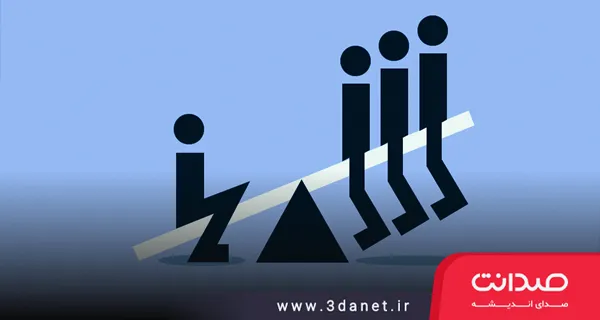
Every age suffers from a malady, and our age suffers from the malady of narcissism (Christopher Lasch). We are narcissists, and its symptoms can be found both at the individual level and at the political level. I am not a psychologist; I am interested in politics, and I find the roots of many of the problems in our political life today in our individual, collective, and political narcissisms.
In my youth I experienced the revolution; I was among the Islamists. I still am. As those who were the victors in the field of political competition, we contracted the narcissism afflicting the new age. With this malady we undermined both the credibility of Islam and the foundations of the political community. We weakened the roots of social empathy and damaged the moral life of society.
Everything perhaps stemmed from a misunderstanding. We were the majority, but it was not clear why we also felt a sense of righteousness. In making political decisions, it goes without saying that the vote of the majority is the basis for action. The minority must comply. But this obvious point in no way means that the majority is also the possessor of truth and the minority is deviant, astray, and in need of cultivation and guidance. The vote of the majority must form the basis of decision-making. This is a political principle and arises from the necessity of political life, but that the majority is also the possessor of truth was not something we Islamists deduced from the necessity of political life. Insofar as we were revolutionaries, we considered the voice of the majority to be the voice of God and the voice of the minority to be the voice of Satan. Of course, we were also Islamists; we saw the people who had voted for our preferred model as converts to the school of truth, and others as having deviated from the truth.
The criterion of righteousness in the political arena is neither the minority nor the majority. The criterion of righteousness is a rule that can be acceptable to all conscientious and ordinarily reasonable human beings, regardless of their beliefs, gender, religion, or way of life. The universality of the rule determines righteousness in the arena of political life. That which has the capacity to include all the people of Iran, regardless of majority and minority and regardless of belief in this or that religion, the criterion of righteousness in the national arena is inclusiveness. But even this is not enough; what possesses the characteristic of inclusiveness at the national level must, at the same time, also be acceptable to every impartial conscience throughout the world.
We Islamists had a majority, but in order to also possess righteousness, we had to test our beliefs and actions and ensure that what we said and did conformed to the rule of inclusiveness. But as soon as we were assured of our majority status, we enacted every belief and action on which we more or less had a consensus. We essentially took no account of minorities. We outright denied the existence of some of them.
Having a majority, and at the same time feeling righteous, is precisely what I refer to as narcissism.
The problem, however, also ensnared us. The same narcissism that prevented us from seeing others also prevented the acceptance of our own internal plurality. We Islamists were not of one voice and one color. Thus, the virus of narcissism penetrated our closed identity. We asked which Islamist voice was the majority and more compatible with Islamic righteousness. This was the beginning of settling scores with one another. Gradually, we pushed each other out of the circle. Those who remained inside were not spared the effects of this narcissism virus either.
The saga continued in this way until those Islamists who had remained at the core were, according to their own vote, possessors of righteousness but lacked a majority. They became a minority without ever accepting this point. Because if they had accepted it, they would then have had to submit to that other rule that the majority has the right to make decisions in the executive affairs of the country. Thus, the habit of arbitrary rule gradually grew stronger in us.
This affliction is not exclusive to one faction within the political system; the affliction of narcissism also runs rampant among the opposition. Before any fire has even warmed up, they claim to be the majority and, along with it, claim righteousness. The truth is that in today's Iran, no one constitutes a majority. We have all become minorities, and at the same time, we all feel righteous. Woe to a society that becomes like this.
We must expel the virus of narcissism from our souls, our lives, our identities, and our cultural and historical heritages. The condition for this is openness to the other. We must all test ourselves: how willing are we to listen to the other and to observe the other? How willing are we to accept responsibility for that other who is not the same as us, who has a different identity and thinks differently?
The majority can be counted and distinguished from the minority. But the matter of legitimacy in the political sphere is always uncertain. We must always ensure whether our rule or decision is fully inclusive or not. This question can never be answered straightforwardly. Therefore, the feeling of legitimacy must always be deferred. In light of deferring the feeling of legitimacy, we become a little doubtful, but gradually narcissism departs from among us, and gradually new feelings emerge within us. We gradually realize we have found the capacity to love others. Gradually, we will no longer rejoice at anyone's death. Gradually, we will cease our daily effort to distinguish the list of martyrs from the list of the perished and the damned. We can even sit beside the corpses of our enemies and weep. We can regard the one who tortures us as a victim and kiss their face.
.
.
1- This note was written in response to the critique by Mr. Mohammad Ali Beygi, which was published in the thought page of the Farhikhtegan newspaper.
2- Regarding Christopher Lasch's view, refer to Dr. Abdolkarim Rashidian's article: Abdolkarim Rashidian, The Culture of Narcissism: An Examination of Two Perspectives, Research Journal of Humanities, No. 49, Spring 2006, 215-234.
.
.
We Have All Become Minorities
Author: Mohammad Javad Kashi
.
.



Discussion0 comments
No comments yet; let yours be the first voice.