Philosophy
A Reflection on “Cultural Narcissism” and Its Link to Dogmatism
Shafiei Kadkani, avoiding both cultural narcissism and self-alienation, sees tradition not as 'the worship of ashes' but as 'the passing of fire from hand to hand.' Moving beyond dogmatic thinking and critiquing tradition is the key to cultural awakening and the struggle against the collective ego.
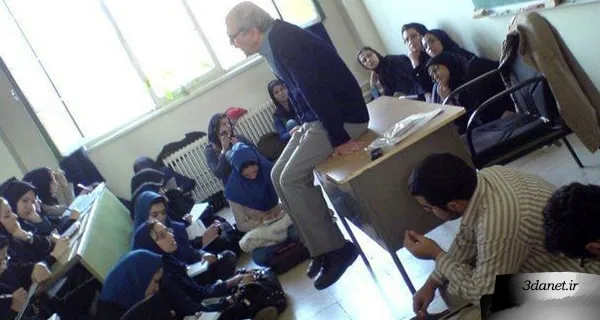
I am trying, from another perspective, to look at these two texts—one written, one visual—and to compare them in a way. In my view, both instances are two deeply human and highly admirable manifestations of this esteemed professor; one should be regarded as an exemplar of his good deeds, and the other as an instance of his good thoughts.
.
A Reflection on “Cultural Narcissism” and Its Link to “Dogmatism” (With Reference to a Discourse by Dr. Mohammad-Reza Shafi’i Kadkani)
Recently, in some Telegram groups, I have witnessed a number of critiques and opinions about Mohammad-Reza Shafi’i Kadkani, on two different pretexts. The first was his demeanor and conduct in a short video that had caught the attention of many devotees of ethics and culture. In this case, most analyses were accompanied by praise for Shafi’i Kadkani’s character and personality, and admiration for his behavior; due to this professor’s unfeigned humility in reacting to a poem a student had recited in his praise. But the second instance was this short quotation from him, which had become intensely controversial, and the opinions and views of its proponents and opponents were also extremely divergent:
“When we want to compile a culture or an encyclopedia of human thought, the share of the latecomers of the Islamic world is nearly zero. All Muslims in recent centuries have not presented as much thought as one year of Wittgenstein’s philosophical life. We stand on no ceremony with anyone.”
I am trying, from another perspective, to look at these two texts—one written, one visual—and to compare them in a way. In my view, both instances are two deeply human and highly admirable manifestations of this esteemed professor; one should be regarded as an exemplar of his good deeds, and the other as an instance of his good thoughts. Nevertheless, that written text, for reasons I will mention, is, in my opinion, extraordinarily more important, more thought-provoking, and even more admirable. Of course, if this truncated quotation is to be genuinely illuminating and questioning for the reader, it must be returned to the context of the text to which it belongs, so that the sentences and phrases before and after it are also made available to the reader, and even beyond that, it must be situated within the author’s intellectual context and framework, and specifically examined and reflected upon with regard to an important essay of his in this connection, titled “The Structure of Structures.”
Undoubtedly, many of us have seen great figures in the world of contemporary thought and culture, or have read about many great figures of past ages who were exceedingly humble, as if devoid of any “individual narcissism.” But, in my view, among them, and fundamentally in our history, those who also lack “collective and cultural narcissism” and do not harbor a kind of bigotry and dogmatic thinking about their historical and cultural identity—which is typically tied to a nationality, religion, language, ethnicity, or race—are exceedingly rare. This is while “cultural narcissism” is far more dangerous than “individual narcissism.” And alas, this cultural affliction is a general calamity among us Iranians; it is very widespread, yet seemingly incurable.
It should not go unsaid that I am now expressing this matter irrespective of the specific content of Dr. Kadkani’s writing. Although I must say in confidence that I am in sympathy with his viewpoint on this matter; both for reasons of my own and with regard to the logic he expresses in the essay “The Structure of Structures” and also in this passage from his introduction to the Ghazals of Shams Tabrizi.۱ In my opinion, contrary to those who had inferred a kind of cultural self-loss from this text, I believe that “cultural self-loss” in no way emerges from this text, and it does not suffer from such a problem; especially if—as was mentioned—this text is placed within the context of the totality of Shafi’i Kadkani’s thoughts and works. Of course, addressing this important matter cannot be contained in this article, and it requires another article and another occasion to evaluate this statement and the claim implicit within it, and for this cultural critique itself to be subjected to criticism.
What I find admirable in Kadkani is his simultaneous avoidance of both cultural narcissism and cultural self-effacement. Kadkani, as a “heritage scholar” who has devoted his entire life to preserving and reviving the Iranian-Islamic literary and mystical tradition, is neither a “tradition-worshipper” nor “tradition-bound.” This takes on added value when we recall that Kadkani owes almost all of his scholarly reputation and cultural standing to his deep connection and intimate bond with tradition; indeed, a considerable part of contemporary Iran’s, and generally the modern world’s, acquaintance with the Iranian-Islamic cultural heritage and many of its notable figures and significant currents is indebted to him and to his efforts and distinguished works. If we merely take a cursory glance at the descriptions he offers, in this very introduction, of Rumi and his poetry and thought, we would no longer permit ourselves to casually attribute “cultural self-effacement” to him.
Where Kadkani sees light in tradition, he boldly expresses it, and where he sees darkness, in his own words, he does not stand on ceremony. This critical faculty and spirit of moderation in Kadkani is admirable. One could say that cultural insight belongs to one who possesses the ability to see the chiaroscuro of culture. Blind is the one who is only enamored of the lights and abandons the darknesses. I praise this capacity for clear-sightedness and discernment in Kadkani, for it is the greatest need of us Iranians for cultural awakening, dynamism, and flourishing.
Kadkani is a critic of tradition, not its transmitter; he rightly knows that no tightly bound knot will be untied except through the innovative and creative adaptation of a tradition; not a passive adaptation, of course, but a critical one that sees and weighs both the limitations and the possibilities of a tradition. For Kadkani, tradition, in Thomas More’s phrase, is not “the worship of ashes,” but “the passing on of fire.” In his dialogue with tradition, Kadkani seeks to understand why, in recent centuries, this passing on of fire has ceased in the Islamic world, and why the torch of thought and wisdom no longer possesses its former brilliance?
In any case, if we do not overcome this “cultural narcissism,” and if, out of feigned ignorance and ceremony, we do not acknowledge and confess to this undeniable lethargy and stagnation of ours, then, like a patient who does not accept their illness, we have no chance for a cure. If only many humble and ethical people, whether mystic, scholar, or layperson, would realize that when they have not harmed any specific individual in life, they are still at the beginning of the path of self-reformation and the rite of piety remains unfulfilled; for perhaps, through various forms of regressive and identity-based beliefs, such as “cultural narcissism,” they have harmed “humanity,” which is a far greater and more destructive sin. One can boldly say that the greater part of the Greater Jihad is the struggle against the “collective ego” and “group egoism,” not the “individual ego” and “personal egoism.” Surely, if a truth-seeking, justice-demanding person grasps this point, sleep will become forbidden to their eyes, for they will see that their entire life, and as the saying goes, seventy years of worship, has been wasted. Perhaps only then will there be an opportunity for them to understand the depth of this wise saying that one hour of reflection is superior to seventy years of worship.
It can be said that cultural narcissism has a lasting link with dogmatism, and from one perspective, cultural narcissism is a prominent form of dogmatism. On the other hand, it can be said that among mental illnesses, dogmatism bears the closest affinity to leprosy among physical illnesses. Dogmatism is cultural leprosy.
Given these details, how is dogmatism, in general, and cultural narcissism, in particular, treated? Will cultural narcissists, fundamentally, understand the severity and intensity of their own illness, the gravity of their condition, and the possibility of its contagion to others? We know that leprosy is a chronic and contagious disease with a long incubation period of many years. On the other hand, the catastrophic aspect of leprosy is that the more the disease progresses and the extent of the malady increases, the patient's awareness of pain decreases and they feel less pain. Leprosy is treatable, but one of the most significant obstacles to treating leprosy is the patient's loss of sensitivity to their own disease and its painful sites, such that it can transform into a kind of resistance to treatment. Dogmatism has a similarly sorrowful tale: the dogmatist also lacks pain awareness and not only lacks the necessary readiness and openness for the treatment process, but also shows resistance and creates obstacles. The dogmatist, with utter obviousness, makes virtues out of their own flaws, just as, with utter foolishness, they claw at the sun of truth and, like Don Quixote, fight every reality and shut their eyes to every obvious fact. Dogmatism leads to illusionism.
We know that Shafi'i Kadkani, in one of his poems, in this famous couplet by Sa'di: "Sa'di, over ages, a love has settled in the heart | It cannot be removed except by ages," replaces the word "except" with the word "even" and says: "Sa'di, over ages, a love has settled in the heart | It cannot be removed even by ages." Now, perhaps apart from that amorous poetic context, one can agree with this change and offer another aspect to justify it. It seems this change is necessary, especially when we refer to the love that dogmatists have for their deep-rooted and ancient beliefs, or allude to the intimacy that cultural narcissists have with the beloveds of their cultural childhood. With this interpretation, we too can make this change in Kadkani's poem:
"Sa'di, over ages, a dogma has settled in the heart | It cannot be removed except (even) by ages"
Interestingly, this witty and profound statement by Wittgenstein aptly reveals the difficulty of conveying pain to dogmatists and cultural narcissists, and the paradox of this misguided fortune: "Telling someone something he does not understand is pointless, even if you add that he cannot understand it."
.
.
Endnote:
1 — The complete form of Dr. Shafi'i Kadkani's writing on the intellectual state of Muslims in recent centuries, as well as the PDF file of the article "The Structure of Structures," for friends interested in becoming acquainted with the intellectual foundations of his judgment on this matter. (On the author's Telegram channel)
.
.
A Reflection on "Cultural Narcissism" and Its Link to "Dogmatism"
Author: Masoud Zanjani
Author's Telegram Channel
Shafi'i Kadkani's Telegram Channel
.
.

Discussion4 comments
بنظر بنده شفیعی کدکنی با فلسفه و عرفان نظری اسلامی پس از صدرا آشنا نیست وگرنه چنین نمیگفت... حرفهای نغز و نظریات تخصصی علامه طباطبایی آخرین حکیم صدرایی گواه خطای ایشان است بویژه آنکه آنان را به مصاف ویتگنشتاین میبرد آن هم یک عمر نه بلکه یک سال... فکر نمیکنم حتی با ویتگنشتاین هم محققانه آشنا باشند. سخنانی این چنینی در فضای عمومی و روشنفکری عمومی سروصدا و گل میکند ولی اگاهان به فلسفه میدانند چقدر تهی از واقعیت است
البته در کتاب خشت و ایینه ایشان گفته در کار شاملو هیچ اشتباهی ندیده( از لحاظ دستوری و رعایت قواعد شعری) که همین تمجید از شاملو است
با سلام عین عبارت استاد کدکنی چنین است: شاملو رتوریک شعر فارسی را عوض کرد نیما تا حدی این را آهسته و با ترس و لرز انجام داده بود ولی این فرزند زنازادهی شعر به طور لجام گسیختهای با رتوریک شعر سنتی فارسی و شعر توللی در افتاد و هوای تازهای وارد شعر فارسی کرد. من این نحو سخن گفنم را از جانب هرکسی که باشد خوشایند نمی دانم.
سلام بد نیست نویسنده محترم به شیوه موهنی که استاد شفیعی از احمد شاملو یاد می کند مراجعه ای کند تا بداند استاد شفیعی گاه تا چه اندازه بی انصاف تواند بود.