Political Science
An Essay by Mousa Ghaninejad Titled “Reformism in the Slaughterhouse of Socialism”
The reformists came to power by moving beyond the ideological discourse of the first decade and championing modern slogans, yet the religious intellectualism aligned with them shied away from engaging with private property and market economics due to its conflict with the Islamic left's economic record.
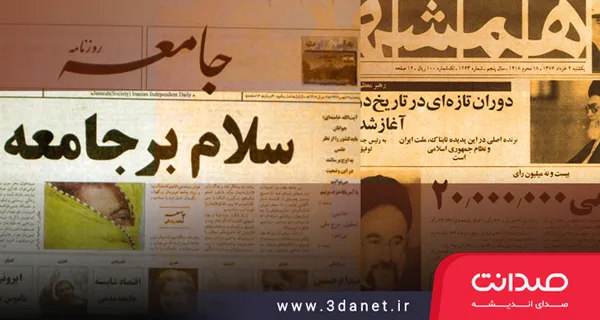
The first edition of this book was published in 1998, a year after the victory of the old Islamic leftists, in the guise of the new reformists, in the presidential election of May 23, 1997, when discussions about civil society, democracy, and political freedom were intensely heated. More than twenty years have now passed since then, and with the utmost surprise, and perhaps regret, it must be said that the discussions in this book are still relevant to our society. The May 23 Movement, later known as reformism, attracted the majority of public votes, especially those of the youth, and came to power by proposing ideas and slogans that were more or less outside the familiar discourse of the ruling ideology. This new discourse largely revolved around concepts such as civil society, citizenship rights, freedom of thought, and the like. It seemed that nearly two decades after the Islamic Revolution, the official governmental ideological discourse, which pertained to “traditional” values, no longer had as many buyers as before, and a significant portion of the new generation born from the lap of the revolution in the 1980s was more interested in a different, “modern” view of humanity and society. Of course, there is no doubt that the discussion of “tradition and modernity” had, in a sense, begun in the years leading up to the revolution, the dominant aspect of which was an ideological struggle against modernity or manifestations of “Western” life; but this time the difference was that not only was the entirety of modernity not criticized in forms such as “Westoxification,” but sympathy with some of its aspects had become an important part of the reformists’ discourse. This new approach of the leftist forces was incomprehensible and indigestible to their former comrades-in-arms from the traditional spectrum, who later became known as the principlists, for they observed that the former extremists were now teaching their rivals lessons in tolerance and forbearance! The passionate youths who climbed the wall of the U.S. embassy and planted the seed of gratuitous extremism in international relations in the country, or who, with narrow-mindedness and exclusivism, “purged” cultural and artistic spheres, in their own opinion, of non-insider or non-revolutionary forces, and were persistent advocates of confiscations and expropriations, had now taken up the banner of civil society, modernity, and citizenship rights. In any case, this transformation from extremism to reformism was met with the approving astonishment of most neutral observers, intellectuals, and non-governmental researchers. In this way, the reformists found a broad social base among the educated and middle strata of society, and shortly after the unexpected victory of May 23, 1997, they won a remarkable majority in the sixth parliament in 2000. These unexpected victories took everyone, including the reformists themselves, by surprise. In a short period, reformist books and periodicals flooded society with unprecedented circulation numbers, and intellectual and theoretical discussions flourished in academic and intellectual circles just as they had in the early years of the revolution.
The reformists (the former leftists) considered themselves the rightful heirs of the revolution and believed that the “deviation” that occurred in the revolution’s path after the end of the imposed war, which marginalized leftist forces on the political scene, had to be corrected through the reformist movement. Having entered the scene with “modern” and “liberationist” slogans, they rarely addressed their own past record in their discussions and pretended as if all the extremism, narrow-mindedness, and monopolism of the early revolutionary years had been the work of their “traditional right-wing” rivals. Since the traditional right-wing forces, by their very nature, lacked the propaganda power and influence comparable to the reformists among various strata of society, especially the educated and intellectuals, they put undemocratic methods, such as resorting to pressure groups to preserve their position and power, on their agenda, thereby inadvertently helping to confirm the reformists’ claims. The incorrect approach of the traditional right in this struggle gradually led to the further weakening of their social base and the strengthening of their reformist rivals among the middle and educated classes. The great weakness of the traditionalist revolutionaries, which inevitably drove them down this contradictory path, was in fact nothing but the lack of a “revolutionary theory” compatible with their thinking. It should not be forgotten that the slogans and, fundamentally, the initial ideology of the Islamic Revolution were largely inspired by the leftist ideas prevalent at the time among political activists and intellectuals opposed to the Shah’s regime. The traditional religious adherents did not have a coherent revolutionary theory of their own, and this was not apparent in the atmosphere of the early revolution when all political groups and factions emphasized the overthrow of the monarchy. Immediately after the victory of the revolution, when the confiscation of private sector production units and the property and assets of the wealthy began, the traditional religious adherents were naturally not in favor of these extremist methods, but given the dominance of the revolutionary atmosphere, they also lacked much power to openly oppose these methods. The first decade of the revolution was the era of the practical and theoretical dominance of Islamic leftist revolutionary ideology, the result of which can be seen in the creation of a kind of inefficient state economy and a closed political-cultural atmosphere under strict supervision and censorship. The economic reforms that began in 1989, contrary to popular belief, were not merely due to the end of the war and the necessity of post-war reconstruction, but more because of the dead end of the state economy and the closed cultural atmosphere, which fueled public discontent and no longer seemed sustainable. These reforms required a new, pragmatic approach outside of leftist ideological discourse, measures such as economic liberalization and giving space to the private sector, which were interpreted by some leftist forces as a regression to “degenerate Western capitalism.” For this reason, they broke ranks and became critics of the government of the time (the Reconstruction Government). Ironically, parts of the extremist traditionalists also gradually became attracted to this critical approach to economic reforms. In any case, distance from power apparently provided an opportunity for some thinking forces of the Islamic left to engage in theoretical studies and research, the result of which was the emergence of a current known as “religious intellectualism.” Concepts such as “Islamic civil society” and “religious democracy” in the form of a “modern” reading of political Islam can be considered the product of this type of intellectualism.
One of the important characteristics of “religious intellectualism” can be considered its disregard for economic issues, with an emphasis on vague, general philosophical, political, and cultural discussions. Given the importance of concepts such as personal property and free exchange in modern thought, one can say that this disregard for economic issues is questionable and unjustifiable, yet at the same time explainable. Apart from the fact that the leaders of religious intellectualism often lacked even the rudiments of economic knowledge, it seems they were fundamentally disinclined to enter into economic discussions and the necessity of setting aside the state economy, because such measures—which had inevitably been initiated by the Reconstruction government—would call into question the past performance of the Islamic Left in its entirety. Religious intellectuals, in the guise of spokesmen for the later Reformists or the former Islamic Left, were never willing to enter into the subject of economics and its decisive place in modern thought, and their justification for this was always the concocted theory of prioritizing political development over economic development. By political development, they meant an emphasis on the development of democratic institutions, a multiplicity of parties, freedom of speech, freedom of assembly, and the press—which they collectively referred to as “civil society.” In their civil society, apparently, private property, voluntary exchange, or a free economy (capitalism, in the parlance of the Left) had no place, or at least they had no inclination to enter into such discussions. Although the Reformist government, especially during Mohammad Khatami’s second presidential term, practically continued the economic reform policies begun under the Reconstruction government—which was accompanied by relatively significant achievements in the macroeconomic sphere, such as unifying the exchange rate and calming turbulence in the growth and inflation rates—it could not deepen these reforms toward economic liberalization. Market-suppressing institutions such as the Protection Organization, the Ta’zirat Organization, and the “Market Regulation” headquarters continued their existence behind the scenes and, like the Sword of Damocles, waited at every moment to descend at the discretion of the responsible authorities. It is interesting to note that the Sixth Parliament, with an overwhelming majority of Reformist representatives, obstructed the reform of energy subsidies in accordance with the Third Development Plan and paved the way for populist policies in this regard in the Seventh Parliament. The Sixth Parliament, with its overwhelming Reformist majority, shelved and did not pursue the very important and effective proposal of the then-independent representative from Sanandaj, the late Engineer Baha’eddin Adab, to abolish the discriminatory Selection Law. The overall performance of the Reformists shows that the majority of them, rather than having a genuine concern for reforming affairs, sought to gain and preserve political power within the framework of the status quo, and considered slogans such as civil society and freedom more as a means to an end than as an end in themselves. The events of the first and second City Councils and, subsequently, the ninth presidential election (2005) clearly demonstrated how the dispute was over Mullah Nasreddin’s quilt, and not civil society, freedom, or national interests. An examination of the views and performance of the religious intellectual and Reformist currents over the past two decades shows that they “did not advance, but rather sank.” The Reformists’ defeat in the first round of the fateful 2005 election was clearly due to the multiplicity of candidates and intra-factional disputes; and in the second round, their lack of genuine support for the initiator of economic reforms—someone accused by the former Left of supporting “capitalism”—brought the populist candidate to power. The results of the second round of voting showed that a significant part of the Reformists’ mass voter base had swung in favor of the populist candidate. In other words, a segment of the so-called Reformists, in the second round of the election, according to their leftist tendencies, preferred “populism” over “capitalism.” Religious intellectuals and Reformist theorists were never able, or never wanted, to explain the public reception and victory of the populist current, because entering into this discussion would have revealed the contradiction in their thought and action.
The reformists’ confrontation with the populist current supported by the principlists, which wrested power from them in 2005, is highly instructive and indicates that their concern was primarily a return to power in the subsequent election, and that engaging with the theoretical issues of reform had no place in their intellectual preoccupations. The reformists’ main candidate in the 2009 election was someone who, consciously or unconsciously, sought to raise the banner of left-wing populism against right-wing populism, and whose principal desire was a return to political activism in the style of the 1980s. Since the former leftists imagined that the reason for the public’s embrace of populism in 2005 was a radical critique of the political record of governments that had drifted from the ideals of the revolution after 1989, it seems the reason for a large segment of reformist political leaders’ agreement on the selection of this candidate was his “popular,” “anti-aristocratic,” and “revolutionary” approach, in the style and value-laden discourse of the revolution’s early years. In other words, they wanted to defeat right-wing populism with the weapon of left-wing populism and return to the seat of power once more. Mir-Hossein Mousavi, the prime minister of the early years of the revolution and the war era, who had withdrawn from the world of politics for many long years, gradually returned to the public sphere after right-wing populism came to power. In interviews and speeches in 2007, he defended the value-oriented, popular, and revolutionary approach of the revolution’s first decade and implicitly considered the reformists’ defeat in 2005 and the rise of Ahmadinejad’s populism to be the result of politicians and power-holders drifting away from such an approach. In his speech on the occasion of the anniversary of the 7th of Tir bombing, he identifies the fading of the revolution’s initial ideals, the severing of officials’ connection with the people, and the setting aside of emotions and ethics in relation to economic issues as the source of our society’s economic problems, especially poverty. He recommends that experts “go and read Hafez and Rumi” so that a “moral economy” can take shape, because “our country’s development depends on a moral economy and a moral politics, and without this we cannot connect with the people.” (Ham-Mihan newspaper, 24 June 2007, p. 3) At the same time, Mr. Mousavi considers one of the flaws of the economic decision-making system to be that in our country, with the passage of time and the distance from the early years of the revolution, the mention of certain “views and slogans, for example, reference to the revolution, exporting the revolution, and the condition of the oppressed” in the preamble of economic reports by the “Management and Planning Organization, the Central Bank, and the Ministry of Economic Affairs and Finance” has been forgotten. (Ibid., p. 2) In his remarks, he places special emphasis on Article 43 of the Constitution: “I think this article is so important and decisive for the Islamic Revolution that, as a rule, other articles of the Constitution, when they are interpreted, should be interpreted with reference to and consideration of this article” (Ibid., p. 3). Here he is alluding to the new interpretation of Article 44 of the Constitution, which was proclaimed under the title “General Policies of Article 44 of the Constitution” in the years 2005 and 2006 and concerns the privatization of the economy and providing opportunities for the private sector. Instead of directly criticizing the “General Policies of Article 44 of the Constitution,” he emphasizes Article 43 and says that any interpretation of the articles of the Constitution must be carried out taking into account the considerations of the content of this article. This stance is highly significant because Article 43 of the Constitution is, in fact, the quintessence of the economic thinking of the leftist revolutionaries at the beginning of the revolution, a thinking that is the root of most of our economic problems and predicaments over the past four decades. According to this article, “in order to ensure the economic independence of society and to eradicate poverty and deprivation and to fulfill human needs in the course of development, while preserving human dignity,” the economy of the Islamic Republic of Iran must be based on nine criteria, which are, in summary: “the provision of basic needs: food, clothing, housing, health, medical care, education …”, “… the attainment of full employment and the placing of the means of work at the disposal of all those capable of working …”, “the regulation of the country’s economic program in such a way that … each individual, in addition to professional effort, has sufficient opportunity and ability for spiritual, political, and social self-improvement and active participation in the leadership of the country …”, “the observance of the freedom to choose an occupation and … the prevention of the exploitation of another’s labor”, “the prohibition of inflicting harm on others, and of monopoly, hoarding, usury, and other invalid and forbidden transactions”, “the prohibition of extravagance and wastefulness in all matters related to the economy …”, “the utilization of science and technology … for the development and progress of the country’s economy”, “the prevention of foreign economic domination over the country’s economy”, and finally, “emphasis on the increase of agricultural, livestock, and industrial production” to achieve “self-sufficiency” and liberation from “dependence”.
با دقت در اهداف و ضوابط اصل ۴۳ قانون اساسی میتوان به طور منطقی نتیجه گرفت که تحقق بخشیدن به آنها مستلزم ایجاد نظام اقتصادی دولتی است. در واقع ارزیابی نخست وزیر سابق ظاهرا این است که کنار نهادن این آرمانها و اهداف، مسئولان سیاسی (اصلاح طلب) را از مردم دور کرده و موجب اقبال مردم به جناح سیاسی رقیب و قدرت گرفتن اصولگرایان سنتی در قامت پوپولیست هایی شده که «ریاکارانه» بازگشت به ارزشهای اولیه انقلاب را شعار خود قرار داده اند. او در نتیجه گیری سخنرانی خود تحت عنوان «رمز ضرورت بازگشت به اندیشه های شهید بهشتی» در موسسه دین و اقتصاد که پیش از این به بخشهایی از آن اشاره شد، میگوید:
I believe our country's development hinges on an ethical economy and an ethical politics, and without this, we cannot connect with our own people. … One of the reasons for these sudden events that occur all at once in the people's votes, these transformations and these unpredictable issues that come to pass, is precisely this lack of connection with external realities and the real, which I hope will diminish day by day so that we can better have a genuine connection with the people. (Iranian Students News Agency, ISNA, 23 June 2007)
The phrase "sudden events in the people's votes" presumably refers to the victory of the populist Ahmadinejad, representing the rival faction of the reformists (the former leftists), in the 2005 presidential election. The new strategy of the old leftists for returning to power is no longer the modern and luxurious slogans of "civil society" and "freedom and human rights," but a return to the "original values of the revolution" and the "golden decade" of the 1980s. The selection of Mir-Hossein Mousavi as the reformists' main candidate for the presidency in 2009 shows that they were not concerned with understanding civil society and realizing it; rather, their main priority was returning to power by any means possible, including resorting to populist slogans in the form of a return to the "original values of the revolution." In Mousavi's discourse, the topic of civil society has no standing. He openly opposes one of the most important pillars of civil society, namely the free economy, but this issue holds no importance for the religious intellectuals claiming reformism, and for this reason, they select him as their political candidate. The reformists' failure to attain power in 2009 and their marginalization, despite their participation in and support for the "Prudence and Hope" government in the years 2013 and 2017, once again provided them with the opportunity to deepen their theoretical studies and reflect on their political record over the past four decades, but alas, there is no sign of any serious work.
The reformist project of the former leftists was defined from the very beginning within the framework of religious intellectualism and, subsequently, religious democracy; therefore, it can be said that the helplessness and impasse of this project is, in fact, a reflection of the contradiction within the very concept of religious intellectualism. Attaching the adjective "religious" to modern phenomena such as intellectualism and democracy (which they erroneously translate as mardomsalari) indicates an ideological approach and an inability to understand the nature of these phenomena. This approach is, in truth, an elevated form of the obsession of the radical revolutionaries of the early Islamic Revolution with de-“nationalizing” political culture and replacing it with the Islamic adjective. They removed the adjective "National" from the Consultative Assembly and replaced it with "Islamic," without considering that, according to the constitution, representatives from non-Islamic religions are present there and, by rule, enjoy the same rights and powers as Muslim representatives. Intellectualism is a concept derived from the 18th-century Enlightenment movement in Europe and pertains to prioritizing reason and logical argumentation over doctrinal and transmitted disputations in theoretical discussions. Therefore, qualifying it as "religious" entangles it in contradiction. Democracy is a modern tool for the peaceful transfer of political power and for limiting the power of the ruler; what meaning does adding the adjective "religious" to it have, and what problem does it solve? Religious intellectualism is shackled to the ideological thoughts and values that shaped the politics and economics of the early years of the revolution, and one of its important characteristics is the dominance of leftist and anti-economic values (anti-market system, or so-called capitalism). This issue has often prevented religious intellectuals from understanding the necessary relationship between liberalism and the free market economy (capitalism).
A very interesting example in this regard is Dr. Hossein Haj Farajollah Dabbagh, known as Abdolkarim Soroush, who in the early years of the Islamic Revolution was considered one of the first-rank theoreticians of the post-revolution government. In those years, with a Sufi and mystical outlook, he was a fierce critic of the values of the free-market economy and the modern industrial world, and in his countless speeches from official state platforms, he constantly cited examples from Rumi's poetry to promote spirituality and reject modern materialism. The irony is that this same person, in his ideological polemics with intellectual rivals, defends the ideas of Karl Popper and becomes known as an advocate of liberalism! Such a degree of intellectual confusion and contradiction can only be found in religious intellectualism, this inherently contradictory concept. At the same time that Soroush was arrayed against the "Fardidian" circle and was drawing on Karl Popper to expose their beliefs, calling himself a freedom-seeker and his rival a totalitarian, he nonetheless had no qualms about exposing the evils of the modern economy. Regarding free competition, he writes:
Competition is a destroyer of tranquility and serenity; it waters the sapling of enmity, pours oil into the lamp of hostility, fattens the child of negligence, sharpens the fire of rivalry, and in place of a paradise full of peace, bliss, and free of rancor and envy, it establishes a hell full of conflict and flame. … Whatever is the object of that competition and enmity is reprehensible, even if it be knowledge. (Abdolkarim Soroush, "Tafarroj-e Son'" [A Contemplation of Creation], Soroush Publications, Islamic Republic of Iran Broadcasting, 1366 [1987], pp. 301-302)
He who, relying on the concepts of analytical philosophy and Popperian methodology, rose to contend with the Fardid-supporting anti-Westerners, is apparently unaware of Popper's views on the free economy and its place in his political philosophy. His understanding of the modern economy can be guessed from these judgments issued by him:
Human perfection lies neither in greater consumption, nor in greater production, nor in competing and amassing and boasting more. These are the perfections of the machine, not of man. (Ibid., p. 306)
We should consider the principle in industry and technology to be the consumption of carrion, and take no more from it than necessity and need require … The good technology is that which does not exist. (Ibid., p. 312)
It might be said that he made these remarks in the capacity of a "philosopher" and "mystic" and has no expertise in the issues of the "material" world and economics, as he is fundamentally uninterested in these subjects. This justification is not acceptable, because someone who sits in judgment of the modern world must be familiar with at least the basic principles of it. The standard-bearer of the religious intellectuals apparently does not know that competition is one of the fundamental values and founding principles of modern society in the realms of politics and economics, and one who claims to want to reconcile religion with the modern world cannot negate these principles and values. Modern democracies in the Western world are based on a system of representation founded on majority rule, and therefore on a party system and competition among parties. Negating competition means negating the basis of politics in the modern world. The modern economy in the Western world and advanced industrial countries is based on a competitive free-market system. The main engine of progress in the economy, science, and technology is nothing other than competition. How can one negate competition and at the same time be an advocate of progress and the modern world?
Earlier, reference was made to the artificial and illogical dichotomy of political development and economic development, and the emphasis on the priority of the former over the latter among religious intellectuals and reformists; here it is necessary to address another dichotomy that Dr. Soroush raises regarding rights and duties. He considers the new era a period in history in which "rights-centeredness has become the principle" and emphasizes that he uses "rights in opposition to duty." He defines liberalism within this framework:
Liberalism, which is perhaps the most important political, economic, and theoretical school of the modern world, the best translation and interpretation we can offer of it is "the rights-oriented school." … Liberalism is a school that emphasizes rights over duties and gives priority to rights, and instead of defining the human being as a duty-bound animal, defines them as a rights-bearing animal. A being who is first and foremost inherently possessed of a set of intrinsic rights that are inseparable from them, and then, if they have duties, those duties emerge from the heart and core of rights. Whereas if you refer to the pre-modern paradigm, in the era before liberalism, you see that the human being is first and foremost a duty-bound being, and if they have rights, those rights emerge from the heart of their duty. Therefore, we have both rights and duties in this era, just as we have rights and duties in the pre-modern era and in the era of liberalism. But the discussion is about priority and posteriority. The discussion is about which one prevails? In this era, right prevails, and in the previous era, duty prevailed. (Abdolkarim Soroush, "Right and Duty and God," lecture in New Jersey, October 10, 2009)
Dr. Soroush, in the capacity of a "philosopher of religious intellectualism," emphasizing that liberalism is the school of the modern era, says that the greatest philosophers of the modern era, such as Kant and Hegel, are liberal and consider God the creator of a human being possessing rights. In explaining Hegel's rights-oriented philosophy, he writes:
When Hegel criticizes Judaism, his critique is ethical and rights-oriented … He says that in the Jewish religion, God commands and creates and imposes duty, but love does not command; therefore, if we worship God lovingly and recognize God as a beloved, although we accept and act upon whatever He says, what a beloved says is different from what a master says. In the Jewish religion, God acts as a master, as a tyrant, standing with a whip, threatening His slaves and servants and demanding obedience from them, whereas a beloved, through their attraction and magnetism, moves the lover and entrusts them with a task and demands an action from them. Rumi also says in his verses: "Love has no business with the five or the six / Its aim is naught but the attraction of the Friend." Love operates through attraction, whereas a tyrant is not a beloved. (Soroush, same lecture)
One of the characteristics of Dr. Hossein Haj Farajollah Dabbagh, like many orators and eulogists, is setting off for the desert of Karbala. Speaking about the liberalism of modern philosophers, he suddenly heads for the desert of Karbala of mysticism and Rumi, and it remains unclear what liberalism has to do with mysticism and love! He then returns, without any explanation of this connection, to the subject of liberalism and rights-based governance, and with a scholarly reminder that “the declaration and charter of human rights was also written in this very era, that is, in the late first half of the twentieth century,” he proceeds to his own definition of the concept of right. Aside from the fact that declarations of human rights date back to the eighteenth century and were rewritten and expanded in the twentieth, this religious intellectual philosopher’s conception of right speaks volumes about the depth of his thought and logic on the matter. He puts forward three suggestions for defining right: first, right “means permission, that is, you are allowed to do something”; second, it means “a privilege that some people have, special rights they acquire, and this is not our subject”; “and the third, which is the most important meaning of the word right, is demand and being a creditor. This meaning of right is our subject and the subject of legal scholars. It is in opposition to this right that duty arises.” (Soroush, same speech) None of these definitions of right possesses logical coherence. If right is permission, one must determine what the source of this permission is and what its limits are? Who granted this permission? Does a human being also have permission to kill others? If not, what is the reason? The second definition is truly spectacular: right is the same as privilege and special rights. This is not a definition; it is a tautology. And as for the third definition of right, which in his view is the most important, it consists of “demand and being a creditor,” except our philosopher does not specify from whom this demand is made and for what reason? Let us recall that he previously said the human being is an “entitled animal” and “inherently” possesses “inherent” and “inalienable rights.” If we consider right to be a demand, we must answer the question: who is the debtor of these inherent and inalienable demands of the human being? From whom or what authority is the human being a creditor, and for what reason? A human being who steps into this world is inherently a creditor; what loan did he give to whom before birth that he is now a creditor? This philosopher, who claims religious intellectualism, begins with right and liberalism, suddenly delves into Hegelian mysticism, love, and Rumi, then returns to human rights, and finally arrives at the concept of right in ancient Persian literature and, ultimately, the Quran. The reason for such confused thoughts and nonsense can, in the most optimistic scenario, be attributed to a lack of methodical and coherent thinking. If, instead of flitting from branch to branch in various fields of knowledge, he had conducted a methodical study of books on the history of Western thought, he would have realized that the concept of right in the modern sense of the word has its roots in the thought of John Locke in his book “Two Treatises of Government.” The concept of right in modern thought essentially returns to the necessity of preserving life and personal property, the ownership of the human being over his own body and soul, in the capacity of an independent individual. In the view of this philosopher, the first right and, at the same time, duty of the human being pertains to the preservation of his own life, which naturally leads to property. Locke’s argument, in summary, is this: every human being who comes into the world has the right to life, and no one can violate this right because God has given him this right. The corollary of this right is the individual’s ownership of his own body and soul, because otherwise, others would claim ownership over him and he would become a slave, whereas God created all free and equal. It is from this right of ownership over one’s own body and soul that the other rights and freedoms of modern man are derived. Right and duty in modern thought are not separate from each other, and neither has “priority” or “predominance” over the other, because these two concepts are like two sides of the same coin. Locke explains that to realize their rights, human beings are duty-bound to respect the rights of others. We have explained this subject in the first part of this book.
Following the statement that “liberalism is the school of the new era,” Dr. Soroush claims that “socialism lies at the heart of liberalism,” except that liberalism emphasizes negative freedom more, “meaning remove the obstacles so that people may do whatever they want, but in positive freedom, the free person decides what to do, and Marx, in fact, enters the scene at this second level and stage and wants to tell free human beings what to do and what not to do, what decisions to make, and what economic order to establish.” (Soroush, same speech) This level or depth of understanding of the “school of the new era” requires no further explanation. If negative freedom means removing obstacles so that people may do whatever they want, then what is its difference from anarchy? In the same vein, positive freedom means that Marx enters the scene and tells free human beings what economic order to establish! Taking the very important theoretical discussions of the new world lightly is apparently a characteristic of religious intellectuals. It seems these gentlemen have heard things about the relationship between socialism and liberalism but have not grasped the main point. In the early days of the revolution, Dr. Soroush was the theorist of the struggle against Marxism from the perspective of philosophical-mystical thought, relying on modern Popperian thinking, without ever explaining, of course, what the Austrian philosopher’s falsificationist theory has to do with theoretical mysticism. At the same time, from the left wing of religious intellectuals, Dr. Habibollah Peyman fiercely attacked political liberalism and defended socialism. The common feature of these Islamist intellectuals is a superficial and incorrect understanding of the foundations of modern thought. It is interesting that Dr. Peyman, as one of the prominent representatives of the Islamist left, has also recently addressed the topic of the relationship between liberalism and socialism and, in a press interview, while admitting that his critique of Engineer Bazargan’s government forty years ago was mistaken, has displayed his inability to understand this subject after four decades:
Our belief as a radical, “radicalism,” was with the preservation of the foundations of liberalism; this means that liberalism, in its foundations, posed no problem for us, because socialism was essentially built on the foundations of liberalism. Since the bourgeoisie destroyed those foundations and did not pursue them, alongside it were the concepts of liberty, equality, and fraternity (the slogan of the French Revolution). But when the bourgeoisie came and co-opted liberalism, it discarded “fraternity” and “equality” and even defined freedom in its own bourgeois conception. It was on this basis that “socialism” became necessary to continue that very “liberalism” project. I believe we should have thought about these issues back then, that we should not have written off liberalism as the “paving stone of imperialism,” because the foundations of liberalism are the very foundations we believe in. We have a problem with capitalist liberalism. (Dr. Habibollah Peyman, Sazandegi newspaper, Sunday, June 8, 2019)
This quotation bespeaks the theoretical poverty of one of the most important theorists of the Islamic Left and shows that it has taken forty years for this brother to realize the unity of the foundations of liberalism and socialism, but presumably another forty years will be needed for him to understand that the deviation from these foundations was the work of the socialists and not the bourgeoisie! Actually existing socialism, from the October Revolution of 1917 until now, in every society where it has set foot, has slaughtered all the institutions of civil society—and, in the first place, freedom—under the pretext of creating equality and fraternity (social justice), and has ultimately imposed the arbitrary will of the holders of political power on the lives and property of the people. The final result of the establishment of socialism has been the destruction of civil society and the eradication of all three ideal foundations, namely liberty, equality, and fraternity. The cause of this has been clearly explained by freedom-loving (liberal) philosophers, but apparently leftist intellectuals do not lend an ear to these arguments. Freedom can only be realized and sustained in the shadow of the rule of law and the limitation of the powers of political authorities, whereas socialism inherently has functions in precisely the opposite direction. The rule of law is the opposite concept to the rule of particular wills, and it pertains to the rule of universal, all-encompassing general rules for the purpose of protecting life and property, that is, the individual rights and freedoms of the people. Civil society is conceivable under such conditions, a place where human beings can work and live freely within the framework of the law and under its protection, free from the imposition of the particular wills of the holders of power. Political and cultural freedoms, party politics, freedom of thought and expression, and the freedom to create artistic works are inconceivable without the economic independence of actors (political and cultural activists) from the ruling political power. Actors whose activities are financed by the state and the pillars of the ruling political power cannot have real freedom of action because their vital artery is not in their own hands. The economic independence of citizens from the state and the ruling power is a necessary condition for the formation of civil society institutions, at the head of which are political and cultural freedoms. If all citizens are employees and, in a sense, dependents of the state and the ruling power, speaking of civil society and the institutions of freedom will be an empty slogan. Those who claim the priority of political development over economic reforms for the realization of a free-market system are, in fact, blowing the horn from the wide end. Someone who criticizes “capitalist liberalism” and at the same time defends the foundations of liberalism (liberty, equality, and fraternity) is in truth incapable of understanding the conceptual foundations of liberalism. Individual freedom is the other side of the coin of personal ownership or private property, and this is the cornerstone of the free-market system, or so-called capitalism. Liberalism entails the concept of freedom of exchange and is inconceivable without it. Of course, one should not lose hope; if it took forty years for the theorist of the Islamic Left to reach the conclusion that he should not have raised the slogan “Liberalism is the highway paver for imperialism” at the time of the Islamic Revolution, perhaps forty years later he will say that pitting liberalism and capitalism against each other was a mistake. But the question that remains unanswered in the meantime is: what is the opinion of these revolutionary theorists regarding the heavy historical costs they have imposed on the Iranian nation? They who turned political action into a plaything of their own illiteracy and bear a heavy responsibility in a part of contemporary Iranian history—do they not still consider themselves morally obliged to apologize to the vast multitude of those who have suffered harm?
***
Articles have been added to the book in this new edition, forming sections five through seven. Two articles appear in section five, which are in fact responses to the claims of one of the fashionable critics of liberalism and the free economy. Yousef Abazari is a leftist (secular) intellectual who apparently has followers among students and educated youth and has seemingly gained some notoriety in the fight against the free economy and liberalism. In his articles and speeches over the past decade, he has expressed grave concern about the "hegemonization" of liberal discourse in present-day Iran, but he does not explain why, if liberal discourse has truly become hegemonic in this country, the economy remains heavily state-controlled! What relation does liberalism have with a state-run economy? I have responded to Mr. Abazari's baseless claims and unjust accusations in two articles. These two articles have been added to the contents of this book in the new edition, in section five. The first article points out his glaring errors and his incorrect understanding of economic issues. But in his lengthy reply, which was published after more than a year and a half, Mr. Abazari not only failed to correct any of his mistakes and unjust judgments but also insisted on his previous false claims and added to the scope of his unjust accusations and slanders. The title of this lengthy piece is "Market Fundamentalism, a Reflection on the Philosophical Foundations of Free Market Schools." An examination of this very long article reveals interesting points. First, nowhere in it can one find any explanation of what is meant by "market fundamentalism." The second point is the absence of the concept of "reflection" throughout this lengthy text. Reflection means pausing and delving deeply into a subject, whereas this text is filled with cursory, sloganistic judgments and distorted and misrepresented quotations. Given the blunder the professor had committed in this reply, it was expected that he would not respond to my second article, in which the realities of these "philosophical reflections" were unveiled. And thus another curtain fell on the spectacles of leftist Don Quixotes, similar to my previous written debates with Homayoun Katouzian.
Section six is a brief critique of the utilitarian interpretation of liberalism, titled "Property, Efficiency, and Ethics," and it discusses the very important yet neglected subject of ethics in modern society. This article, in fact, pursues the topic raised in section three, namely the relationship between ethics and economics, and emphasizes the crucial point that the dominant utilitarian approach in modern economics (mainstream economics) is indefensible and leads to contradiction. The article seeks to demonstrate that the primary goal of establishing private property, or more precisely personal property, is not economic efficiency, but the realization of ethical principles based on individual freedom. Economic efficiency is, in reality, the blessed "spillover" of the establishment of private property and the freedom resulting from it. In other words, freedom is not a means to achieve economic efficiency (the optimal allocation of scarce resources); freedom is an end in itself, or the ultimate end, but the effort to attain it simultaneously increases economic efficiency and leads to the optimal allocation of resources.
Section seven takes another look at the theory of the primacy of political development over economic development and addresses the relationship between "political freedom, economic freedom, and democracy." The content of this article overlaps significantly with the discussions in the first section of the book, and its aim is primarily to respond to the criticisms of leftist intellectuals and proponents of the primacy of political development (democracy) over economic development, as well as to clear up misunderstandings that some so-called "institutionalist" economists have raised about the economic developments of the modern world. This article points out the incorrect and incomplete understanding of the concept of democracy among intellectuals, and that imagining a true democracy without a free economy is impossible. Another topic discussed in this article is the experience of the Scandinavian countries and the economic growth of communist China, which leftist intellectuals have used as a pretext to reject the theory of the free market economy, whereas in reality, both of these experiences are nothing but examples confirming that theory.
.
.
Reformism in the Slaughterhouse of Socialism
Author: Mousa Ghaninejad
The above piece, which is the introduction to the new edition of the book Civil Society, was published in the journal Siasat Nameh, No. 12, Autumn 2019, under the title “Reformism in the Slaughterhouse of Socialism,” and the Sazandegi newspaper has also republished it on its website.
This content has been taken from the Boomrang website.
.
.

Discussion0 comments
No comments yet; let yours be the first voice.