Political Science
Musa Ghaninejad Responds to “Liberty-Seeking at the Slaughterhouse of Anti-Equality” with “The Irrationalism of the Religious Intellectual”
Responding to Alireza Alavitabar, Mousa Ghaninejad dismisses his critique as riddled with fallacies and unwarranted accusations. Rejecting a genealogical account of reformism, he traces the current's roots instead to the ideology of the Islamic Left and the record of the revolution's first decade.
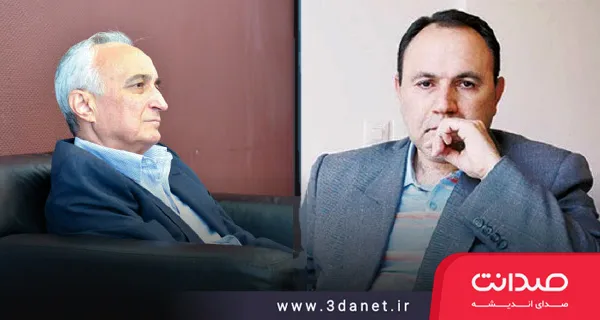
Mr. Alireza Alavitabar, in an article on the Sazandegi newspaper website, has criticized my piece in Siasatnameh No. 12, which, as is usual with the writings of religious intellectuals, is full of fallacies, incoherence, and contradictions, and is nothing but the repetition of platitudes and evading answers to fundamental questions. Before entering the discussion, it is necessary to explain that my piece is in fact an introduction to the new edition of the book “Civil Society”, which will be published soon. The title chosen for it in Siasatnameh is not mine, and had the magazine’s colleagues consulted me, I would have opposed this title because the subject of my discussion in this book and its introduction is a larger issue that goes beyond religious intellectualism. Of course, Mr. Alavitabar has pointed out in his critique that he addresses only five of my claims in that piece, not the whole of it. One of Mr. Alavitabar’s problems is precisely that, like his like-minded peers, he thinks and acts “selectively” without grasping the totality of the subject.
Mr. Alavitabar’s fallacy begins right from his critique of the “first claim.” Without providing a single direct quotation from my writings throughout his entire piece, he attributes confused notions to me and then proceeds to critique them. This practice is unfair and unacceptable in the conventions and etiquette of debate. He has described my “first claim” as follows:
The current that later became known as the “reformist movement” encompassed a broad spectrum of intellectual and political forces, each drawing from a different intellectual “source.” What united them and brought them under a single banner was their opposition to the process that had begun to homogenize the government and eliminate the diversity and plurality existing within it. They saw that the “oligarchy” that had formed after the war, making political activity and presence possible within a small sphere, was turning into a “monocracy” and the elimination of all partners in power. When yesterday’s partners are being eliminated, it is clear what will befall opponents and critics! (Alavitabar, Sazandegi website)
All of what was quoted is a product of Mr. Alavitabar’s imagination and has nothing to do with my writing. Those familiar with my writings know that I deeply detest word games like “oligarchy” and “monocracy” and do not use such a lexicon. Placing these terms inside quotation marks and attributing them to me is an instance of straying from integrity and fair debate. But what I wrote in the genealogy of the reformist movement, and what Mr. Alavitabar has not directly addressed, is this:
The reformists (the former leftists) considered themselves the rightful heirs of the revolution and believed that the “deviation” that occurred in the revolution’s path after the end of the imposed war, which marginalized leftist forces on the political scene, had to be corrected by the reform movement. Having entered the scene with “modern” and “liberty-seeking” slogans, they rarely addressed their own past record in their discussions and pretended as though all the extremism, narrow-mindedness, and monopolism of the early years of the revolution were the work of their “traditional right-wing” rivals. … The great weakness of the traditionalist revolutionaries … was in fact nothing but the lack of a “revolutionary theory” compatible with their thinking. The slogans and, fundamentally, the initial ideology of the Islamic Revolution were largely inspired by the leftist ideas prevalent at the time among political activists and intellectuals opposed to the Shah’s regime. The traditional religious adherents had no coherent revolutionary theory of their own, and this was not apparent in the atmosphere of the early revolution … . … The first decade of the revolution was the era of the practical and theoretical dominance of Islamic leftist ideology, the result of which can be seen in the creation of a kind of inefficient state economy and a closed political-cultural atmosphere under strict supervision and censorship. The economic reforms that began in 1989, contrary to popular belief, were not merely due to the end of the war and the necessity of post-war reconstruction, but rather more because of the dead end of the state economy and the closed cultural atmosphere, which fueled public discontent and no longer seemed sustainable. These reforms required a new, pragmatic approach outside leftist ideological discourse, measures such as economic liberalization and giving space to the private sector, which were interpreted by some leftist forces as a regression to “degenerate Western capitalism.” (Policy Letter, No. 12, p. 35)
What I have written in the genealogy of the reformists is this, not the points Mr. Alavitabar has written about “oligarchy” or “autocracy” and attributed to me. After distorting my words regarding the roots of the reformist current, he expresses his own opinion on this matter and names three main sources of reformist political discourse, in which leftist discourse apparently has no place! Apparently, this ploy is carried out to paint an innocent picture of the reformist current and, at any cost, seeks to hide its real roots from the young generation who did not experience the “golden era” of the 1980s. According to Mr. Alavitabar, one source of reformist political discourse was a discourse based on “dynamic ijtihad in secondary rulings” and “ijtihad with consideration of time and place,” which “the groups known as the Imam’s Line coalition benefited from.” The second source of discourse emerged from “the overlap of the Kiyan circle and the circle arising from the Center for Strategic Research.” And “the third source of discourse was that which formed around Ayatollah Montazeri and was promoted by his students.” To clarify public opinion, especially for the youth, I recommend that Mr. Alavitabar, given his “intelligence” mastery, announce the names of the prominent figures of these three sources along with their political backgrounds, so that their relationship with extremist leftist thoughts becomes clear. Here, based solely on “hearsay,” I declare that one of the most prominent figures of the “groups known as the Imam’s Line coalition” is Ayatollah Seyyed Mohammad Mousavi Khoeiniha, whose role in the seizure of the American embassy and the extremism of the early years of the revolution requires no further explanation. And regarding the circle arising from the Center for Strategic Research, I must say that based on hearsay and also my personal meetings with some individuals from this circle, they were mainly dissatisfied leftists marginalized during Mr. Hashemi Rafsanjani’s presidency, for whom Mr. Hashemi apparently created the Center for Strategic Research within the presidential institution to appease them and placed that center at their disposal. And as for the connection of Ayatollah Montazeri’s views on the first decade of the revolution to the reformist current, it truly raises questions. Throughout this decade, almost all key positions in the three branches of government were in the hands of leftists (whether supporters of Ayatollah Montazeri or otherwise), and as far as I remember, they did not show sympathy, at least publicly, with Mr. Montazeri’s critical views on the events of the 1980s at the time.
In another part of his piece, Mr. Alavi-Tabar has criticized my claim regarding the internal contradiction of the concept of religious intellectualism. Here too, instead of referring to my writing on religious intellectualism, he has critiqued his own conceptions of my thought and has also sagely dispensed a philosophical lesson. To clarify the matter, let us take a look at his philosophical subtleties. He writes:
The second claim. To demonstrate the internal contradiction of the concept of religious intellectualism, he presents an essentialist definition of intellectualism. While he himself, in another piece of writing, introduces nominalism—which is the polar opposite of essentialism—as the philosophical foundation of his accepted individualism and the modernity based upon it. It is unclear why, here, to prove his claim, he attempts to speak of religious intellectualism with definitive and trans-historical judgments. All essentialist definitions seek a definition that holds true in a pre-empirical manner. Even if there are individuals who do not conform to this definition, one must doubt their existence! … In nominalism [sic in original], definitions do not revert to the essence of entities and are not pure objective expression or true reflection; rather, they are conceptions that we ourselves have posited about things and matters. Of course, I believe that just as essentialism is problematic, nominalism is also not a solution and creates many difficulties of its own. Employing the concept of “family resemblance” might be effective. The concept of intellectualism is derived from the induction of common characteristics of a group called intellectuals. The universal and exemplary intellectual is not found in reality. (Alavi-Tabar, Sazandegi website)
Mr. Alavi-Tabar’s interpretation of nominalism and essentialism indicates a serious inattention to philosophical knowledge, but it seems he possesses such self-confidence that he can easily make definitive pronouncements about the most fundamental philosophical concepts and, on his own, propose a new philosophical concept called “family resemblance” as an effective substitute for the two schools of thought in the history of philosophy! Contrary to Mr. Alavi-Tabar’s conception, it must be emphasized that not all essentialist definitions are necessarily pre-empirical; Aristotle’s approach is based on a kind of general empirical method, and attributing “pre-empirical” to it does not seem correct. Which essentialist philosopher has said that “even if in reality there are individuals who do not conform to this [essentialist] definition, one must doubt their existence!”? These incorrect, vulgar statements have nothing to do with my writing. But Mr. Alavi-Tabar’s conception of nominalism is surprising. He says: “… in nominalism, definitions do not revert to the essence of entities and are not pure, objective expression or true reflection; rather, they are conceptions that we ourselves have posited about things and matters.” That is, in his interpretation, nominalism is a “folksy” philosophical approach which, of course, “creates many difficulties of its own,” hence it is better to employ the concept of “family resemblance,” which might be effective! This effective concept is apparently the same as the “induction of common characteristics,” of which the concept of the intellectual is an instance. Mr. Alavi-Tabar’s conception of nominalism and its place in modern thought is not precise. He apparently does not realize that nominalism is, in fact, the very epistemological approach upon which the modern sciences are founded. This approach is based on hypothetical thinking, but this does not mean “our own conceptions” of realities. And, a fortiori, the meaning of this approach, contrary to Mr. Alavi-Tabar’s conception, is not the negation of any “definitive and trans-historical judgments” either. As it happens, many scientific findings, though certainly not all of them, are definitive and trans-historical, especially findings that have a negative aspect. It is true that we do not have complete and absolute knowledge of the sun and the earth, but we know with certainty and conviction that the sun does not revolve around the earth. Mr. Alavi-Tabar has accused me of speaking about intellectualism and religiosity with “definitive and trans-historical judgments” despite my belief in philosophical nominalism. He has presumably confused nominalism with methodological relativism; otherwise, what I have written about religious intellectualism is not in contradiction with the nominalist approach, in addition to the fact that his proposed concept of “family resemblance” or “induction of common characteristics” has no place in scientific methodological discussions.
What I have written in criticism of the concept of religious intellectualism and, subsequently, religious democracy is perfectly clear, but it seems that Mr. Alavi Tabar, instead of responding to it, has, as usual, digressed. What I have written on this matter is this:
Intellectualism is a concept derived from the eighteenth-century Enlightenment movement in Europe and refers to the prioritization of reason and logical argumentation over doctrinal and traditional contentions in theoretical discussions. Therefore, qualifying it as religious renders it contradictory. Democracy is a modern instrument for the peaceful transfer of political power and for limiting the power of the ruler; what meaning does adding the religious adjective to it have, and what problem does it solve? Religious intellectualism is shackled by the ideological thoughts and values that shaped the politics and economics of the early years of the revolution, one of whose characteristics is the dominance of leftist, anti-economic values... This issue has meant that religious intellectuals have often been unable to grasp the necessary relationship between liberty-seeking (liberalism) and the free economy. (Siasatnameh, No. 37, pp. 36-37)
And in the following, I have presented the confused and contradictory thoughts of the “greatest” contemporary religious intellectual, namely Dr. Hossein Haj Farajollah Dabbagh, known as Abdolkarim Soroush, as evidence for my statement—someone who, on the one hand, is enamored with Rumi’s mysticism and, on the other, introduces himself as a liberal supporter of Popper! There, I have shown why Dr. Soroush is incapable of understanding the instruments of the modern world, including liberalism. This intellectual confusion and inability to comprehend the reality of liberalism has apparently been transmitted from Master Soroush to his student. Since Mr. Alavi Tabar, like his master, has been unable to achieve a correct and coherent understanding of liberalism, he presents an incomplete and unstable conception of it and says:
Liberalism, in short, is “a political ideology with two main guidelines.” The ultimate ideal of liberalism … is “the attainment of the maximum possible and responsible individual freedom and autonomy in society.” … Everyone must be free to decide for themselves but also accept responsibility for the consequences. To achieve this ultimate ideal of liberalism, there are two main guidelines. The first guideline is “the separation of the sphere of society from the sphere of government.” … The second guideline of liberalism is “the limitation of government power by law and individual rights and freedoms.” Other characteristics attributed to liberalism, such as the defense of private property rights, prioritizing freedom over equality, defense of diversity, and so on, are of secondary importance and are, in some cases, disputed. (Alavi Tabar, Sazandegi website)
This definition of liberalism that Mr. Alavitabar offers is incomplete, unsound, and full of contradictions. His main problem, like that of most leftists, is that he treats private property—or more precisely, personal property—as a secondary matter, whereas logically no concept of freedom is conceivable without personal property. This problem arises because these gentlemen, without consulting the original texts and merely relying on quotations and hearsay, opine with an extraordinary self-confidence. When Mr. Alavitabar writes in his definition of liberalism, “everyone must be free to decide for themselves,” he fails to notice that the precondition for any free individual decision is the individual’s ownership of their own life and property, and without this precondition the above statement is meaningless. What freedom does a slave who owns neither life nor property enjoy? Every decision of theirs is contingent upon the master’s permission, and the “freedom” of their choice and decision-making is in fact a privilege granted by the master; otherwise, they possess no independent right of their own. As John Locke said, man was created free; therefore, every person owns their own life and has the right to life. But the requisite for preserving this right is the possession of the means of life, that is, property; hence, Locke believed that ownership of property is an extension of ownership of one’s life, and these are the preconditions of individual freedom. If all the means of life belong to the state, it is as if the state sits in the position of the master and the people are the slaves of this new kind of master. The actually existing socialism of the twentieth century, and now in a few countries like North Korea, has clearly demonstrated this reality. As long as we do not grasp the logical necessity of personal property for the realization of freedom, we will in fact understand nothing of the concept of freedom and liberalism. I have explained this matter in my Siyasatnameh article in a critique of the views of Dr. Soroush and Dr. Peyman, but Mr. Alavitabar, disregarding these discussions, has repeated their baseless statements in another form. To evade accountability regarding the necessary and indissoluble relationship between freedom and personal property—which inevitably leads to the necessity of a free-market economy for the preservation and continuation of freedom—Mr. Alavitabar resorts to an incoherent concept of democracy. Democracy, contrary to the notion of Mr. Alavitabar and most left-leaning intellectuals, is not an independent, self-subsisting ideal and goal; rather, at best, it is a means for the peaceful resolution of political disputes and the matter of power transfer. Democracy, like any means, can serve the worst and most vicious anti-human ideologies such as fascism and Nazism, a reality witnessed in the twentieth century. Democracy in the service of systems based on the rule of law and liberty-seeking (liberal) is a source of good, but when it serves populist ideologies it can lead to a collective tyranny worse than individual tyranny. Democracy is not an alternative to liberalism, nor can it be.
اما در پاسخ به نقد من به موضوع مورد علاقه و تاکید اصلاح طلبان یعنی تقدم توسعه سیاسی بر توسعه اقتصادی، آقای علویتبار بازهم از اصل بحث طفره رفته اند و موضوع اهمیت نهادها در توسعه اقتصادی را به عنوان تقدم توسعه سیاسی بر توسعه اقتصادی مطرح ساخته اند. نقش نهادها در توسعه اقتصادی بسیار مهم است و من از نخستین کسانی بودم که اقتصاددانان نهادگرای مهمی مانند داگلاس نورث و رونالد کوز را به فارسی زبانان معرفی کردم. اما بحث نهادگرایی به معنای واقعی کلمه ربطی به موضوع تقدم توسعه سیاسی بر توسعه اقتصادی ندارد. تا جایی که می دانم هیچ اقتصاددان نهادگرای قابل اعتنایی از تقدم توسعه سیاسی بر توسعه اقتصادی سخن نگفته است. علت این امر روشن است. اقتصاد و سیاست در اندیشه مدرن غربی به قدری درهم تنیده است که تفکیک آنها امکان پذیر نیست. من در مقاله ای تحت عنوان «ظهور اندیشه آزادی و پیوند آن با اقتصاد سیاسی» در مجله اطلاعات سیاسی- اقتصادی (شماره ۸۷-۸۸، آذر و دی ۱۳۷۳) به ریشه یگانه مبانی اندیشه سیاسی و اقتصادی دنیای جدید در نظریه حق طبیعی جان لاک اشاره کرده بودم و اینکه «رمز پیشرفت مادی خارق العاده این جوامع در همین نکته نهفته است: اقتصاد و سیاست آنها دو شاخه از یک ریشه است و بدین لحاظ در یک جهت و هماهنگ باهم رشد کرده، و برخلاف جوامع دوران قدیم هیچ یک مانع رشد دیگری نشده است.» این مباحث آن زمان مورد اعتنای رفقای چپ و روشنفکران دینی قرار نگرفت به طوریکه وقتی چند سال بعد جنبش دوم خرداد پدید آمد سراسیمه موضوع تقدم توسعه سیاسی بر توسعه اقتصادی را مطرح کردند و بر آن پای فشردند. آقای علوی تبار که بر توسعه سیاسی تاکید می گذارند بهتر است نمونه هایی از اقدامات بنیادی اصلاح طلبان را در این خصوص در هشت سالی که بر سر قدرت بودند ذکر کنند تا معلوم شود دعوای آنها با رقبای سیاسی شان بیشتر بر سر کسب قدرت بوده یا پایبندی به برخی اصول؟ آیا اقدام مجلس اصلاح طلب ششم در باره مسکوت گذاشتن پیشنهاد بسیار مهم مرحوم بهاءالدین ادب مبنی بر لغو قانون گزینش را اقدامی مبتنی بر اصول توسعه سیاسی می دانند یا آنطور که به نظر میرسد نتیجه بده بستان سیاسی برای حفظ خود در برخی مراکز قدرت؟
.
.
خردگریزی روشنفکر دینی
نویسنده: موسی غنی نژاد
این مطلب از سایت بومرنگ برداشته شده است.
.
.



Discussion0 comments
No comments yet; let yours be the first voice.