Political Science
Alireza Alavitabar’s Critique of Mousa Ghaninejad’s Article: Libertarianism on the Altar of Anti-Egalitarianism
Alireza Alavitabar critiques Mousa Ghaninejad's views on reformists and religious intellectualism. By enumerating the diverse sources of reformism and rejecting essentialism, he challenges the notion of a reformist monopoly and its inherent contradiction.
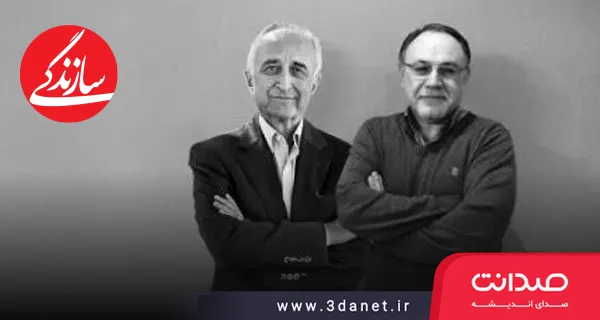
Dr. Mousa Ghaninejad has written an article titled “Reformism in the Abattoir of Socialism” with the aim of explaining “why religious intellectuals and left-leaning reformists failed in the reforms.” This article was published in the quarterly Siyasatnameh (Issue 12, Year 3, Autumn 2019). In this article, he has put forward various claims, all of which are open to discussion and debate in their own right. Among these claims, I will examine some that seem more important and offer some considerations regarding them. The five more important claims of his article are as follows:
First. “Religious intellectualism” has been the main source and support for the conceptual and theoretical framework of political reformism in Iran.
Second. Religious intellectualism is an internally contradictory concept.
Third. There is a necessary link between political liberalism and the acceptance of a capitalist economy.
Fourth. The performance of reformists in Iran has been contradictory, because they defended civil society and political freedom but did not defend a free economy and minimal government.
Fifth. The slogan of prioritizing “political development” over “economic development” is fabricated and irrational.
I will briefly mention some points regarding each under the headings “First Claim…Fifth Claim.”
First Claim. The current that later became known as the “reformist movement” encompassed a broad continuum of intellectual and political forces, each drawing from a different intellectual “source.” What united them and brought them under a single title was their opposition to a process that had begun to homogenize the government and eliminate the diversity and plurality within it. They saw that the “oligarchy” that had formed after the war, which allowed political activity and presence within a small sphere, was turning into a “monocracy” and the elimination of all partners in power. When yesterday’s partners are being eliminated, it is clear what will happen to opponents and critics!
The political discourse of the reformists drew from several main sources. One source was a discourse based on “dynamic ijtihad in secondary rulings” and “ijtihad with consideration of time and place,” which had formed among a section of clerics following Ayatollah Khomeini and challenged official interpretations of the revolution’s values and the constitution. The groups known as the Imam’s Line coalition benefited from this source. The second source was a discourse that emerged from the overlap between the Kiyan circle and the circle arising from the Center for Strategic Research. The axis of this source’s discourse was “democracy” and “comprehensive development.” The third source was a discourse that formed around Ayatollah Montazeri and was promoted by his students; a view that looked critically upon the first decade of the revolution and defended innovation in thought and practice within the framework of religious concerns. These intellectual-political circles were, of course, connected to one another, and the reformists’ discourse was the product of their interaction and internal dialogue with each other.
A combination of different intellectual sources and various motivations made the reformists a continuum within which it is difficult to speak of a single political discourse. It should not be forgotten that even the most prominent figure of reformism in Iran (Seyyed Mohammad Khatami) had, at times, defended interpretations and a view of the West that stood in direct opposition to the view of the religious intellectuals based in the Kiyan circle. Dr. Ghaninejad’s first claim does not tell the whole truth and constructs an image of an event that serves the representation of a particular purpose. It appears he has relied more on hearsay rather than the written sources of the reformists.
The second claim. In order to demonstrate the internal contradiction of the concept of religious intellectualism, he offers an essentialist definition of intellectualism. Yet in another piece of writing (Unfulfilled Libertarianism, 1380:79) he himself introduces nominalism—the polar opposite of essentialism—as the philosophical foundation of his own accepted individualism and the modernity based upon it. It is unclear why, in this instance, he attempts to speak of intellectualism and religiosity with definitive and transhistorical judgments in order to prove his claim. All essentialist definitions seek a definition that holds true in a pre-empirical manner. Even if, in reality, there exist individuals who do not conform to this definition, one must doubt their existence! He must be reminded that in nominalism, definitions do not revert to the essence of entities and are not pure objective expressions or true reflections, but rather conceptions that we ourselves have posited about things and matters. Of course, in my view, just as essentialism is problematic, nominalism is not a solution either and creates many difficulties of its own. Employing the concept of “family resemblance” might be effective. The concept of intellectualism is derived from an induction of the common characteristics of a collective called intellectuals. A universal and exemplary intellectual is not found in reality. I will not elaborate further on this discussion here.
Another point worth mentioning here is that Dr. Ghaninejad, while remaining faithful to Hayek’s epistemological views, judges such a contradiction to exist. We more or less know that in Hayek’s view (following Kant), one cannot construct a concept of the world that bears no trace whatsoever of human experiences and interests. It is interesting that a theorist who believes in the supremacy or priority of tacit or practical knowledge (the primary embodiment of our knowledge of the world and society in practical exercises and skills) should speak of a contradiction in the concept of religious intellectualism! It must be added that Mr. Ghaninejad does not pay attention to the fact that religious intellectualism in Iran has, from the beginning, had two different but related facets or faces. One is a political and social facet, and the other is a contemplative facet. The political and social facet of religious intellectualism can be examined alongside other intellectual currents and by using the “dominant paradigm” among intellectuals of various periods. Roughly speaking, one can speak of four dominant paradigms among Iranian intellectuals:
The intellectualism of the Constitutional period, the intellectualism of the period of experience (1320–32), the intellectualism of the anti-Western period (1342–57), and the intellectualism of the revisionist period (1367–84). In my opinion, a new era began approximately in 1388, which has not yet been determined. In each of these periods, several components are debatable:
The central idea, the direction of critique and assessment, the factors of transformation, the method of transformation, and the global perspective. Each has also had a historical turning point. What distinguished religious intellectuals from other currents was their emphasis on rethinking religious teachings as one of the preconditions for improving the state of society. In presenting solutions, they also had a concern for observing religious values and did not prescribe solutions that were in definite contradiction with the definitive rulings of Sharia. The concept of “social movement” can also be used to understand and interpret this facet of the theoretical and practical activities of religious intellectuals. Therefore, the suffix “religious” regarding this facet of the religious intellectualism current refers to the priority they give to reforming people’s religious views and the religious concern they have in presenting solutions; hence, it is not a futile and meaningless suffix. However, as mentioned, religious intellectualism also has a “contemplative” facet that is directed at presenting a “research program” in the field of religious studies. The “research program of religious new-thinking” is presented and proposed in comparison with the “traditional religious research program” and, like any other research program, possesses a “hard core,” a “protective belt,” “positive heuristics,” and “negative heuristics.” This facet is specific to religious intellectuals, and other intellectuals do not directly partake in it. The use of the religious suffix for such an activity is certainly entirely justified and logical, and it cannot be considered pointless. The concept of religious intellectualism, even within the framework of Mr. Ghaninejad’s own views, is not a contradictory concept, and the religious suffix for intellectualism has both logic and is illuminating and distinguishing of the activities of this current.
Third claim. First of all, it is necessary to specify my conception of liberalism. Here, I am seeking a definition of liberalism in the sphere of politics, and not in other spheres such as theology.
Liberalism, in short, is "a political ideology with one ideal and two main guidelines." The principal ideal of liberalism, which determines the ultimate goal of every liberal in politics, is "the attainment of the maximum possible and responsible individual freedom and autonomy in society." The freedom and autonomy desired by liberals, firstly, does not conflict with collective life, and secondly, must be responsible and accountable both morally and legally. Everyone should be free to decide for themselves, but must also accept responsibility for the consequences. To achieve this ultimate ideal, liberalism has two main guidelines. The first guideline is "the separation of the sphere of society from the sphere of government." From the outset, liberalism has been an intellectual endeavor aimed at defining the independence of the private sphere (individual, familial, and economic) against governmental authority and defending the sphere of civil society independent of the government. The second guideline of liberalism is "limiting the power of government through law and individual rights and freedoms." Other characteristics enumerated for liberalism, such as the defense of private property rights, prioritizing freedom over equality, the defense of diversity, etc., are of secondary importance and are, in some cases, disputed. From Dr. Ghaninejad's perspective, a liberal political system is only realizable in conjunction with a capitalist economic system. A capitalist economic system, according to the definition, also has several characteristics: private ownership of the factors of production (means of production, raw materials, labor, etc.), allocation of resources and distribution of products through the market mechanism (competitive supply and demand and free exchange), a minimal role for the government in the economy, and the predominance of a decision-making model based on maximizing profit and utility in economic decisions.
The correlation between liberalism and a capitalist economy is a historical reality, but it is not logically necessary. The correlation of these two is a subject that can be examined in its own right. But if we look at this relationship from the perspective of an individual who does not confine themselves to the ideology of liberalism but is committed to democracy and its requisites, can we align with Mr. Ghaninejad's claim or not?
First of all, it must be acknowledged that what is recognized today as the common concept of democracy has emerged from the views and orientations proposed by liberalism and complements them. Some elements derived from liberalism, such as the separation of powers, the distinction between the public and private spheres, civil society, and tolerance towards the beliefs and thoughts of others, are today considered among the intellectual foundations of democracy. However, many democrats also have significant reservations about certain elements of the ideology of liberalism and its economic correlate (capitalism), some of which I will mention.
The first observation concerns “citizenship rights.” If, based on Marshall’s classification, we divide citizenship rights into three groups—civil rights, political rights, and socio-economic rights—both democrats and liberals consider civil rights and political rights to be an inseparable and essential part of themselves. However, liberals resist the acceptance of citizens’ socio-economic rights. The acceptance of civil and political rights is achievable through the government’s abstention from certain actions and is compatible with the role liberals assign to the government. But securing citizens’ socio-economic rights also requires positive assistance and actions. Securing civil rights (freedom of speech, thought, religion, property, occupation, etc.) and political rights (the right of citizens to participate in the exercise of political power) is compatible with a “minimal government.” However, citizens’ socio-economic rights (ensuring a minimum of education, health, welfare, and social security) require the expansion of the government’s roles and functions. The “minimal government” favored by liberals is limited both in terms of authority and in terms of roles and functions. To secure citizens’ socio-economic rights, a government is needed whose authority is limited, but whose roles and functions exceed those of a gendarme state; this government can be called a “constrained government.” Hobbes’s Leviathan represents a government that, although its domain and functions are limited, is unlimited and absolute in terms of authority. Can societies that have recognized citizens’ socio-economic rights and hold the government responsible for securing these rights, but limit the government’s authority through the constitution, legal procedures, and the separation of powers, not be proponents of freedom and popular sovereignty? According to Mr. Ghaninejad’s logic, no, because they fall outside the bounds of capitalist definitions. One should not offer a definition of capitalism that encompasses all the world’s economic systems to the same degree.
The second observation concerns “equality.” Liberals from the outset have insisted on two types of equality. One is equality before the law, and the other is legal equality. In recent years, liberals have also emphasized “equality of opportunity.” This type of equality pertains to the right to benefit from opportunities, not the degree of benefit derived from these opportunities. The issue is that if equality in “opportunity to access resources” is accepted, but there is no sensitivity toward equality in “possession of resources,” then, according to general equilibrium analyses in economics, the functioning of the market mechanism in the subsequent period will, due to the unequal distribution of “primary goods,” generate inequality in income, wealth, employment, and leisure. It can be shown that the consolidation of existing inequalities at the beginning of each period (through indifference toward equality in the possession of resources), combined with the functioning of the market mechanism at the end of the period, leads to an increasing proliferation of inequality. It can be shown that the functioning of capitalism (even in its abstract form) leads to the consolidation and intensification of inequality in wealth and income, and this inequality eliminates the possibility of fair competition in the political arena. For example, based on conducted research, the average electoral expenses of successful candidates for entry into the House of Representatives and the Senate in the United States 28 years ago (1992 AD) had reached $550,000 and $3,600,000 respectively. That is, about 6.5 times the figure for 1976 AD. According to some estimates, this figure has now increased more than sixfold. It is clear what a destructive role inequality will play in such a competitive campaign and to what extent it will empty elections and democracy of their content.
The third observation relates to the “extension of democracy.” Capitalism deprives the government and the public sphere of the possibility of democratic oversight of the economy and the democratization of the workplace. A major part of human life is spent at their workplace, and it is the result of the interactions within this work environment that determines their level of welfare and life satisfaction. Can an important part of life be removed from the realm of democratic oversight and managed hierarchically? How can life be divided into two parts, with one part managed democratically and the other part managed hierarchically and oligarchically? Capitalism entrusts a collective destiny to the decision-making of the private sector and powerful institutions, over which no democratic oversight is conceivable.
With these three considerations, can one still speak of the interconnectedness of freedom and democracy with capitalism? Any democratic system that is based on public consent and interests requires both the institutions of private property and freedom of exchange, as well as the guarantee of fundamental socio-economic rights of human beings and their necessary limitations and controls.
The fourth claim. In examining the third claim, it was shown that what Dr. Ghaninejad calls the behavioral contradiction of the reformists stems from the difference in viewpoint between them and the reformist theorist, and not a contradiction. Mr. Ghaninejad repeats several times that the reformists did not know economics. Given that I knew there were a significant number of economics graduates among the reformists, and that the reformists were the main defenders of the designers of economic policies aligned with market mechanisms, I was somewhat surprised by this repetition. But I told myself, perhaps there is a point behind this denial. Economics graduates are specifically trained in the mainstream and conventional field of economics. The mainstream and conventional current of economics at the micro level is “neoclassical economics” and at the macro level is “Keynesian economics,” which has evolved and been modernized in response to two main criticisms: the criticism that its microeconomic foundations are weak (i.e., any macro theory must have a clear foundation in a microeconomic theory) and that it is indifferent to the reaction of economic agents (as learning and sentient elements) to changes in their environmental conditions. I thought perhaps his reference is to the relationship that exists between the views of the “Austrian School of Economics” and “neoclassical economics.” Specifically, I mean the debates that occurred between Israel Kirzner and Ludwig Lachmann, two of the intellectual leaders of Neo-Austrian economics. Kirzner’s approach was to integrate Austrian insights into the larger neoclassical analytical model, while Lachmann, in his quest, sought to find a theorization independent of the mainstream of economics. Perhaps he wants to emphasize that others, because they saw Austrian economics on the margins of neoclassical economics, lack a deep economic perspective. I do not know; perhaps something else is on his mind. The reality is that the critiques and insights of the Austrian School add nothing to the neoclassical economics framework for explaining economic order and can only help make it more precise in some instances. It is not necessary, in order to be called an economist, to accept all the assumptions and epistemological and theoretical foundations of the Austrian School; knowing the main currents of economics is sufficient for this purpose.
The fifth claim. Regarding the fifth claim, I will merely recall a conventional discussion in the topics of economic growth. As far as I know, Dr. Ghaninejad considers economic development more or less synonymous with long-term economic growth; hence, I draw upon this concept. If we consider the Solow growth model along with the complementary efforts made regarding it, the proximate causes of economic growth are: investment in physical capital, development of education and accumulation of human capital, and enhancement of the level of technology. Sustained, long-term economic growth also leads to an increase in the welfare of citizens (development). But the fundamental causes, of which the proximate causes are themselves effects, are something else. As various economists, especially Douglass North (the economic historian), have shown, the fundamental cause of growth is “institutions.”
The hypothesis of the role of institutions in sustained economic growth is well supported by statistical studies. Institutions are humanly devised constraints that shape political, social, and economic interactions and, consequently, regulate and direct individual incentives in social life. Unlike variables such as luck, geography, and culture, which are exogenous factors over which members of society have no control, institutions are the result of social choice. Although laws and regulations may not be directly chosen by the members of society, and some institutional arrangements are historically persistent in societies, ultimately, the laws, regulations, and policies that govern any society are determined by the members of that same society, and individuals can change them through collective decisions. The most important institutions are: the market institution, contractual institutions (banks, insurance companies, the capital market, and financial intermediary institutions), the institution of property rights (limiting the power of the government and elites to expropriate from the people), and political institutions (institutions for managing conflicts, institutions representing in decision-making, institutions for selecting the goals and tools of public policy). If we look at the content of what has been raised under the title of "political development" in Iran, do we see anything other than the optimization of these institutions? Limiting and making power accountable in its seizure of people's property and lives, finding ways for the participation of all strata in decision-making, managing conflicts according to the social weight of each collective demand, making the political arena competitive, and so on, are all themes of political development. Therefore, the priority of political development over economic development (sustained, long-term economic growth) is neither fabricated nor incorrect. The discussion has become lengthy. Dr. Ghaninejad's problem is that he considers some of his beliefs to be self-evident and accuses others who do not accept these beliefs of ignorance. I remind the friends responsible for the publication of just one point: Is criticizing the views of individuals whose response you cannot (or do not want to?) publish compatible with fairness and chivalry? Why do you do this in all your publications?! Does being a liberal in practice mean treating others who disagree with us in this way?
.
.
Alireza Alavitabar's Critique of Mousa Ghaninejad's Article
Libertarianism on the Altar of Anti-Egalitarianism
Source: Sazandegi Website
.
.



Discussion0 comments
No comments yet; let yours be the first voice.