Philosophy
Michael Sandel's Justice lectures at Harvard University with Persian subtitles
In his Justice lectures, Michael Sandel engages the mind with the hidden angles of decision-making by posing dilemmas such as killing one person to save five. Bentham, Mill, Nozick, and Locke are examined through the lenses of utilitarianism, libertarianism, and natural rights.
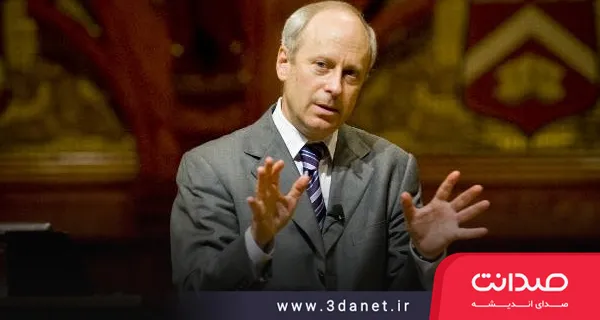
Michael Sandel's Justice lectures at Harvard University are, above all, an exercise in posing questions, and in a way, they try to engage our minds with the hidden angles of fundamental, everyday issues. They begin with seemingly trivial examples and show that, on a larger scale, the same logic and mode of decision-making can prevail—and, of course, the matter is never as simple as we think.
In short, if you haven't seen any of these episodes yet, set aside half an hour and watch the first one. You will certainly enjoy the engaging presentation of these topics.
.
.
Episode One: The Moral Side of Murder
What would you do if faced with one of the following two choices? 1- Kill one person and save the lives of five others. 2- Do nothing, even if you know those five people will die before your eyes.
What do you do? What is the right thing to do? Michael Sandel, a professor at Harvard University, begins his ethics course by posing this hypothetical situation. After the majority of students vote to kill one person to save five others, Sandel presents three similar and complex moral examples. Each example skillfully makes the decision-making more difficult. As the students defend their contradictory choices, it becomes clear that the assumptions behind our decisions are often inconsistent, and the question of what is right and what is wrong is not always black and white.
.
.
Episode Two: The Case for Cannibalism
Sandel begins the discussion of the foundations of Jeremy Bentham's utilitarian philosophy by presenting a nineteenth-century legal case. Four crew members of a shipwreck are involved in this case. After 18 days adrift at sea, the captain decides to kill the young cabin boy, who is the weakest of them all, so that the others can feed on his body and blood to survive. This example sparks a class discussion about the moral validity of utilitarianism and its core principle that "the right thing to do is whatever produces the greatest happiness for the greatest number, regardless of what it produces."
.
.
Episode Three: Putting a Price Tag on Life
Today, companies and governments often use Jeremy Bentham's utilitarian logic under the name of cost-benefit analysis. Michael Sandel presents some contemporary legal cases that have attempted to assign a dollar value to human life through cost-benefit calculation. These cases have provoked considerable opposition to utilitarian logic (the greatest happiness for the greatest number). Should we always give more weight to the happiness of the majority, even if the majority is cruel and base? Can all values be measured and compared using a common scale like money?
.
.
Episode Four: How to Measure Pleasure?
In this segment, Sandel introduces the utilitarian philosopher John Stuart Mill. Mill attempted to defend utilitarianism against criticisms. Mill argues that seeking the greatest happiness for the greatest number does not conflict with protecting individual rights, and that utilitarianism distinguishes between higher and lower pleasures. Mill believes that higher pleasures are always those chosen by a well-informed majority. Sandel tests this theory by showing clips from three very different types of entertainment programs. These programs are: a Shakespeare performance, Fear Factor, and The Simpsons. Students discuss which experience produces a higher pleasure and whether Mill's defense of utilitarianism was successful.
.
.
Episode Five: Freedom of Choice
Sandel introduces the concept of individual rights from the libertarian perspective. Given that only a minimal state is acceptable in this view, libertarians argue that the government should not have the legal power to act in the following cases: 1-Protecting people from themselves by enforcing seatbelt laws. 2-Imposing the moral values of some people on the whole of society. 3-Redistributing income by taking from the rich and giving to the poor. Sandel, while bringing up examples of Bill Gates and Michael Jordan, addresses libertarian thought on taxation. Libertarians believe that taxation for the purpose of wealth redistribution (taking from the rich and giving to the poor) is equivalent to forced labor.
.
.
Session Six: Who Owns Me?
Libertarian philosopher Robert Nozick considers taxing the wealthy to pay for the housing, health, and education of the poor to be a form of coercion. First, students discuss the phenomenon of taxation for the purpose of wealth redistribution. Don't most poor people in society need social services to survive? If you live in a society with a progressive tax system, aren't you obligated to pay your taxes? Haven't many wealthy individuals attained such wealth merely due to good luck or family background? A group of students volunteers as the libertarian team to defend libertarian philosophy against these objections.
.
.
Session Seven: This Land is My Land.
The great philosopher, John Locke, believes that every individual possesses the right to life, liberty, and private property, and these rights were given to humans from the very beginning in the "state of nature." In his view, the "state of nature" is a time when no government has yet been formed and no laws have been enacted. According to Locke's theory, our natural rights are defined by the law of nature, under the title of "the concept of reason," which says we cannot deprive others of these inalienable rights or transfer them to another.
.
.
Session Eight: The Consent of the Mature Individual
If we all possess the inalienable rights to life, liberty, and private property, then how can a government be able to enforce tax laws passed by the representatives of a mere majority? Isn't this an instance of taking people's property without their consent? Locke's answer is that when we agree to live in a society, we have, in a way, acknowledged our "tacit consent" to obey tax laws.
.
.
Session Nine: Hired Guns
During the American Civil War, men whose names were drawn in the draft lottery could hire individuals to go to war in their place. Many students considered this an unjust policy, arguing that it would be unfair to allow the affluent class to avoid military service and risking their lives by paying money to lower-class citizens. This leads to a debate in class about war and conscription. Does such an objection also apply to today's volunteer army?
.
.
Session Ten: Motherhood
Professor Sandel weighs the free market law of exchange in relation to reproductive rights. Sandel begins with a humorous discussion about the trade of eggs and sperm and then describes the story of Baby "M." This story is a famous legal case that raises shocking questions: "Who does the baby belong to?" Students discuss the nature of informed consent, the moral aspect of selling a human life, and the concept of motherhood rights.
.
.
Session Eleven: Mind Your Motive.
Professor Sandel introduces Immanuel Kant, a challenging yet influential philosopher. Kant rejects utilitarianism. He argues that each of us has certain fundamental duties and rights that take precedence over any benefit. Kant rejects the idea that the morality of an action is determined by its consequences. Only when we act out of duty, that is, when we do something because it is right, does our action have moral worth. Kant gives the example of a shopkeeper who does not shortchange a customer only because if other customers found out, it might harm his business. According to Kant's theories, the shopkeeper's action has no moral worth because he did the right thing for the wrong reason.
.
.
Session Twelve: The Supreme Principle of Morality
Immanuel Kant says that what gives our actions moral worth is the degree of finesse we exercise in setting aside our self-interest and inclinations and doing the duty that is right. Sandel recounts the true story of a thirteen-year-old boy who wins a spelling bee contest, but then admits to the judges himself that he misspelled the final word. Using this story and several others, Sandel explains Kant's test for determining whether an action is morally right: identifying the moral principle underlying our action and asking whether this moral principle could become a universal law that other human beings could also act upon.
.
.
Session Thirteen: A Lesson in Lying
Kant's rigorous moral theory accepts no exceptions. Kant believed that lying, even if expedient, violates the dignity of the person who lies. Sandel asks the students to examine this theory of Kant's by considering a hypothetical situation. Suppose a friend of yours is hiding in your house; a person who intends to kill him knocks on the door and asks you where your friend is; is it wrong to lie in this situation? If so, is it moral to mislead the murderer without, in the literal sense of the word, telling a lie? This topic sparks a heated debate about the morality of telling a misleading truth. Sandel ends the session by showing the video of the most famous example of evading the truth in recent times: the video of President Clinton's statements regarding his relationship with Monica Lewinsky
.
.
Session Fourteen: The Supreme Principle of Morality
In this segment, Sandel introduces the modern philosopher John Rawls and his theory of the hypothetical social contract. Rawls argues that the foundations of justice arise from a special kind of agreement. They are the principles we would choose if we had to select the rules governing society under conditions where everyone enjoyed fair bargaining power. Rawls says the only way to ensure no one has an advantage over another is to imagine a situation where no one has any knowledge of their age, gender, race, intelligence, ability, social position, family wealth, religion, or even their goals. Rawls calls this situation the veil of ignorance. What principles would we agree upon behind the veil of ignorance? Would the principles we choose be just? Sandel explains the theory of fair agreement with amusing real-life examples, examples of actual contracts that yield unjust results.
.
.
Session Fifteen: Where Does a Just Starting Point Lie?
Is it right to tax the rich to help the poor? John Rawls says we must first answer this question: if we did not know to which social group—rich or poor—we belonged, what principles for distributing income and wealth would we choose? Would you prefer equality, or maximizing benefit regardless of what happens to the poor? In the end, you might benefit the most. Rawls says even meritocracy—a system of wealth redistribution that rewards effort and hard work—does not go far enough toward equality, because those whom nature has favored more are always ahead. Moreover, as Rawls puts it, individuals who have been favored by nature cannot make any claim, because their success depends on factors as arbitrary as birth order.
.
.
Session Sixteen: What Do We Deserve?
Professor Sandel summarizes the distribution of income, wealth, and opportunities from the perspective of the three theories discussed in class so far. He provides an overview of libertarian theories, the meritocratic system, and Rawls's egalitarian theory. He then opens a discussion on the fairness of pay differentials in modern societies. He compares the salary of former Supreme Court Justice Sandra Day O'Connor ($200,000) with that of television character Judge Judy ($25 million). Sandel asks, is this difference fair? According to Rawls's views, it is not. Rawls believes that individuals' personal successes depend on factors such as luck, genes, and family circumstances, which are morally arbitrary and for which the individual can make no claim. It cannot be said that those at the bottom are worth less because they lack a particular talent that society rewards more, and the only just solution to the problem of social inequalities is for those whom nature has favored more to share their wealth with those less fortunate.
.
.
Session Seventeen: Arguing Affirmative Action
Michael Sandel recounts the 1996 court case of a white woman named Cheryl Hopwood, whose application to the University of Texas Law School was rejected, even though she had higher scores and test results than minority applicants who were admitted. Hopwood sued, arguing that the school's affirmative action program violated her rights. The students in the class then discuss the pros and cons of affirmative action. Should we correct existing inequalities in educational backgrounds by taking race into account? Should we compensate for historical injustices such as slavery and racial discrimination? Is promoting diversity a valid and sound policy? How does such a policy stand up against the argument that a student's efforts and achievements carry more importance and weight than factors beyond an individual's control, which are therefore arbitrary? When a university defines its mission as promoting student diversity, does the rejection of a white applicant's admission mean her rights have been violated?
.
.
Session Eighteen: What's the Purpose?
Michael Sandel introduces Aristotle and his theory of justice. Aristotle disagrees with Rawls and Kant. He believes that justice is about people getting their due and what they deserve. For instance, when the issue of distributing something among people arises, Aristotle believes we must necessarily consider the goal, purpose, and end of the thing to be distributed. For example, the best flute should be given to the best flute player, and the best political offices available should belong to individuals with the highest degree of judgment and civic virtue. From Aristotle's view, justice is about people's positions and roles being fitting and proportionate to their virtue.
.
.
Part One (Sessions One and Two):
Justice with Michael Sandel, Sessions 1 and 2, with Persian subtitles (Watch on Aparat)
Justice with Michael Sandel, Sessions 1 and 2, with Persian subtitles (Watch on YouTube)
.
.
Part Two (Sessions 3 and 4):
Justice with Michael Sandel, Sessions 3 and 4, with Persian subtitles (Watch on Aparat)
Justice with Michael Sandel, Sessions 3 and 4, with Persian subtitles (Watch on YouTube)
.
.
Part Three (Sessions 5 and 6):
Justice with Michael Sandel, Sessions 5 and 6, with Persian subtitles (Watch on Aparat)
Justice with Michael Sandel, Sessions 5 and 6, with Persian subtitles (Watch on YouTube)
.
.
Part Four (Sessions 7 and 8):
Justice with Michael Sandel, Sessions 7 and 8, with Persian subtitles (Watch on Aparat)
Justice with Michael Sandel, Sessions 7 and 8, with Persian subtitles (Watch on YouTube)
.
.
Part Five (Sessions 9 and 10):
Justice with Michael Sandel, Sessions 9 and 10, with Persian subtitles (Watch on Aparat)
Justice with Michael Sandel, Sessions 9 and 10, with Persian subtitles (Watch on YouTube)
.
.
Part Six (Sessions 11 and 12):
Justice with Michael Sandel, Sessions 11 and 12, with Persian subtitles (Aparat)
Justice with Michael Sandel, Sessions 11 and 12, with Persian subtitles (YouTube)
.
.
Part Seven (Sessions 13 and 14):
Justice with Michael Sandel, Sessions 13 and 14, with Persian subtitles (Aparat)
Justice with Michael Sandel, Sessions 13 and 14, with Persian subtitles (YouTube)
.
.
Part Eight (Sessions 15 and 16):
Justice with Michael Sandel, Sessions 15 and 16, with Persian subtitles (Aparat)
Justice with Michael Sandel, Sessions 15 and 16, with Persian subtitles (YouTube)
.
.
Part Nine (Sessions Seventeen and Eighteen):
Justice with Michael Sandel, Sessions Fifteen and Sixteen, with Persian subtitles (Aparat)
Justice with Michael Sandel, Sessions Fifteen and Sixteen, with Persian subtitles (YouTube)
.
.
To be continued...
.
.
Michael Sandel's Justice lectures at Harvard University with Persian subtitles
.
.
Producers of this series:
Parts One and Two Translation team: Mehrebed Mohajer, Behnoush Ameri, Sina Kajbaf, Omid Ardakanian, Sepideh Dadras, Mohammadreza Fakhrabadi, Keyvan Bakhoda, Mohsen Javdani, and Farshid Zoghalchi Editing and revision: Sina Kajbaf, Mehrebed Mohajer, and Behnoush Ameri
Three and Four Translation team: Mehrebed Mohajer, Sina Kajbaf, Omid Ardakanian, Mohammadreza Fakhrabadi, Keyvan Bakhoda, Mohsen Javdani, and Farshid Zoghalchi Editing and revision: Sina Kajbaf, Mehrebed Mohajer, Behnoush Ameri, and Najmeh Rad
Five and Six Translation: Najmeh Rad, Editing: Mehrebed Mohajer, Behnoush Ameri
Seven to Ten Translation: Najmeh Rad, Editing: Mehrebed Mohajer
Eleven and Twelve Initial translation: Arash Ahmadi, Final translation and editing: Najmeh Rad, Revision: Mehrebed Mohajer
Thirteen and Fourteen Initial translation: Parnian Alimi, Final translation and editing: Najmeh Rad, Revision: Parnian Alimi
Fifteen and Sixteen Translation and editing: Najmeh Rad, Revision and final editing: Mehrebed Mohajer
Seventeen and Eighteen Translation: Mehrebed Mohajer, Editing: Najmeh Rad, Coordination and video production: Sina Kajbaf
Coordination, final revision, and video production: Sina Kajbaf
Please report any errors in the translation or Persian writing to the following email:
UWaterloo.Iranians@gmail.com
.
.


Discussion56 comments
سلام دست شما درد نکنه. فکر کنم توضيح جلسه هفدهم و هجدهم با توضيح پانزدهم و شانزدهم اشباه شده. بايد نوشته شود هفدهم و هيجدهم لطفا بررسي بفرماييد. ممنونم.
با سلام و احترام واقعا عالی و آموزنده بود. متشکرم
سلام و درود، خیلی عالی بود، در صورت امکان جلسات بعدی را هم ترجمه کنید. باسپاس
بسیار از کار ارزشمند شما عزیزان سپاسگزارم و بهره بردم. جایگاه این زحمات زمانی بیشتر روشن می شود که نگاهی به وضع اسفبار آموزش در رشته حقوق بیندازیم. شما این فرصت را فراهم کردید که فاصله سطح آموزشی را به چشم ببینیم. شاید انگیزه ای برای یاد گیری و پرسش در دنبال کنندگان این مباحث شکل گیرد. با قدر شناسی دوباره
سلام و عرض ادب خدمت شما عزیزان ببنید ما بجای اینها چرا؟ نهج البلاغه نمی خوانیم که مغز همه چیز را طبق اصالتش و با در نظر داشت طبیعت و مصلحت بشر در هر سطحی بیان نموده اند . وقت انسان نهج البلاغه بخواند می بیند که این مسایل چقدر قشنگ در آنجا بیان شده است. البته این موضوعات مطرح شده برای یک بچه شیعه خیلی پیش پا افتاده است اگر در خانواده عامل بزرگ شده باشد و خود آستین بالا بزند و در عرصه عمل اینها را پیاده نماید .
درود بر شما در این که نهج البلاغه زیباتر از همه ی اینها گفته شکی نیست ولی ضروری است در عصر حاضر با این افکار آشنا شد خصوصا کسانی که دنبال کار فکری و اثر روی دیگران هستند خود استاد علی صفایی حائری متفکران مختلف جهان را دنبال کرد و به کمک اسلام و نهج البلاغه با هنر تمام به آن ها پاسخ داد
عجیبه که با وجود نهج البلاغه اینقدر تبعیض نژادی و اقتصادی و اجتماعی و سیاسی و حقوقی در این کشور و جامعه وجود داره، به نظر میرسه که یا نهج البلاغه عقیم بوده یا واقعاً اگر تفاوتی با مفهوم جهانی عدالت نداره، پس ما صرفاً به یونانیها و جان رالز ها و هزاران فیلسوف و رمان نویس حسودیمون میشه و فقط دنبال پاسخ دادن و موضع گرفتن نسبت به اونا هستیم!!؟
دوست عزیز درود بر شما ما گنج ها و گوهرهای فراوانی داریم که متاسفانه همچنان دست نخورده باقی مانده. کاری که غربیها خیلی خوب بلند رنگ کردن کلاغ بجای قناری است اما ما زیباترین گوهرهای خود را بدون هیچ گونه فرآوری و بسته بندی در اختیار مخاطب می گذاریم نخود خام ماده غذایی بسیار ارزشمندی است ولی برای مصرف باید فرآوری و آماده سازی شود. نخودچی حاصل فرآوری نخود خام است که برای همه قابل استفاده و مفید و جذاب است!
سلام خیلی ممنون از زحمات شما
عرض سلام و ادب و احترام تشکر و خدا قوت برای شروع انتشار قسمت های باقی مانده
با سلام و احترام از تلاش ارزشمندتان بسیار سپاسگزارم. بشخصه از این مباحث مایکل سندل که شما بانی نشر آن شده اید بسیار استفاده کردم. همانطور که می دانید از نقاط ضعف بزرگ اندیشه بومی ما اینست که فلسفه سیاسی در تاریخ اندیشه اسلامی به ویژه تشیع بسیار لاغر است و بجز کارهای اندکی توسط فارابی و خواجه نصیر کار جدیای تا انقلاب مشروطه نشده است. مسلم است که یک جامعه فقهگرا که در اخلاق تمرکزش بر ایجاد عدالت درونی (فردی) است، و در فلسفه هم به دنبال تجرد از عالم ماده و اتصال فردی به ماوراء می باشد به چه مخاطرات تمدنی دچار می گردد؛ کما اینکه برخی اساتید فلسفه و عرفان اسلامی نیز به این تمدنگریز و نامعاشاندیش بودن آن اعتراف مکتوب کرده اند. حوزه فلسفه سیاسی و اخلاق اجتماعی از نیازهای جدی تاریخ معاصر ما است که کم کم در حال خارج شدن از یک گارد غربزدگی به درک ضرورت تأمل و اندیشه در مسائل آن است و از این بابت فعالیت شما بسیار مبارک است. برایتان آرزوی موفقیت روز افزون دارم.
دوست عزیز سلام به نظر می رسد اطلاعات شما درباره فلسفه سیاسی و فلسفه اخلاق اسلامی شیعی چندان دقیق و به روز نیست. من نمی دانم حوزه تخصصی شما چیست ولی ادعاهای عجیب اثبات نشده یا به درستی درک نشده ای مثل «جامعه فقه گرا که در اخلاق تمرکزش بر ایجاد عدالت درونی (فردی) بوده و در فلسفه هم به دنبال تجرد از عالم ماده و اتصال فردی به ماورا می باشد...» کاملا گویای این عدم دقت است که بحث در این باره مجال بیشتری می طلبد.
درود. بسیار از زحمات شما سپاسگزارم.
از سایت وزین صدانت انتظار است قسمتهای باقیمانده رو هم قرار بدهد
سلام ضمن تشکر از ترجمه این 16 جلسه مشخص نیست ترجمه 8 جلسه باقی مانده رو کی تو سایت میذارین؟ ماههاست منتظر بقیه جلسه ها هستیم. فقط هم از سایت شما انتظار ترجمه رو داریم سپاس
سلام و درود پیگیری میکنیم
سلام بنده هم ضمن تشکر فراوان خیلی وقته که همین دغدغه رو دارم ممنون از پیگیرتون
سلام، وقت بخیر با تشکر از سایت خوب و مفید شما، لطفا تمامی فایلها ر به صورت ام پی تری در سایت بگذارید. نظیر مصاحبه برایان مگی با فیلسوفان.
با سلام و خسته نباشید و تشکر بابت مطالب بسیار مفیدی که منتشر می کنید و زحماتی که میکشید. در انتهای جلسه ی شانزدهم میگه که در جلسه بعد میخوایم در مورد فلان موضوع صحبت کنیم. آیا جلسه بعدی دیگه وجود نداره؟ امکانش نیست تهیه بشه؟ با تشکر
سلام فیلمهای ترجمه نشده آن در یوتیوب موجود است. اما این مجموعه به مرور ترجمه میشود و در این صفحه قرار خواهد گرفت.
واقعاجالب بود. متشکریم.
واقعا سپاسگزارم ازتون
با سلام و عرض ادب سپاس از زحمات ارزشمند دوستان بابت زیرنویس نمودن کلاسهای مایکل سندل. برای بهره بیشتر کتاب عدالت: چه باید کرد سندل با ترجمه روان افشین خاکباز را پیشنهاد می کنم. در واقع مباحث مطرح شده در کلاس در این کتاب به طور کامل شرح داده شده است.
بینهایت سپاسگزارم.
با عرض سلام و خسته نباشید اندیشه زیباست و سپاس از شما عزیزان که در اشاعه اندیشه کوشا بودید.
سپاس بیکران - همزمان که مشغول مطالعه ی کتاب عدالت، کار درست کدام است سندل هستم مشاهده ی فایل های تصویری هم برای درک بهتر و جامع تر به من کمک بزرگی کرد.
کتاب عدالت مایکل سندل کتاب عالی و ارزش خواندن دارد
بسم الله الرحمن الرحیم بنده یکی از آثار مایکل سندل را خوانده ام و امروز به نظرم بحث های ایشان بسیار سطحی و خواندن کتابشان اتلاف وقت است.