Psychology
Nobody Cares: A Phrase That Can Both Devastate and Liberate
“Nobody cares” can sometimes lighten the burden of shame and sometimes intensify the feeling that we do not matter. Drawing on psychological research, this article shows that “others pay less attention to our missteps than we imagine” is not the same as “we do not matter to others.”

You may have heard these lines attributed to Nima Yooshij:
“Drink your tea
Do not worry about tomorrow
From your wheat field and mine
A handful of straw will remain for the winds”
These lines can be read as an invitation to take some of our worries less heavily. When we are preoccupied with a minor mistake or with other people’s judgment, remembering how fleeting many of our concerns are can lessen their weight. Someone might express the same consolation more briefly: “Nobody cares.”
But two different issues lie behind this phrase. One is that something that looms very large for me may not stand out nearly as much in other people’s minds. The other, deeper and separate issue is that not only the event itself, but we ourselves—and those who see us—are impermanent. For now, let us follow the first issue.
What exactly does this phrase declare unimportant? If it means that other people probably paid less attention to our misstep than we imagine, it can ease the burden of shame and self-reproach. If it means that our presence or absence makes no difference to anyone, the same phrase becomes painful. The insignificance of an event does not imply the insignificance of the person. “Others do not pay as much attention to my misstep as I think they do” is not the same as “I do not matter to others.”

Under the Spotlight of Other People’s Gaze
In a study published in 2000, Thomas Gilovich and his colleagues asked a group of students to wear a T-shirt bearing an image of pop singer Barry Manilow and briefly enter a room where several other students were present. A preliminary study had shown that most of the students surveyed found wearing such a T-shirt embarrassing. The wearers were then asked how many people would be able to say whose image had appeared on the shirt. On average, their estimates were about twice the number of people who could actually identify the image.[1]
Gilovich and his colleagues called this bias the “spotlight effect”: the tendency to overestimate how much our appearance and behavior stand out to others. On their account, we begin from our own experience and, when considering other people’s perspectives, fail to adjust sufficiently away from it. What is highly salient to us is not necessarily so to those around us. Nor was the effect limited to embarrassing situations; in the same research, participants also overestimated how much their positive contributions to a group discussion stood out to others.[2]
Of course, “less than we imagine” does not mean “not at all.” Some people do notice, and some missteps do have consequences. The value of this finding is that the feeling of being watched should not, by itself, be taken as evidence of how much attention others are actually paying. The shame that lingers in us does not measure how much space the event occupies in other people’s minds.
Attention to a Misstep and the Importance of a Person
A friend may have no memory at all of your verbal slip, yet still be concerned about how you are doing or happy to see you. This simple possibility shows why we cannot infer that a person does not matter from the fact that others paid little attention to one of their mistakes. Research on the spotlight effect measures the salience of appearance and behavior; it tells us nothing about the quality of our friendships or our place in the lives of those close to us.
In a 1981 paper, Morris Rosenberg and B. Claire McCullough used the concept of mattering to describe the feeling of being important to others: the sense that others notice us, care about us, and rely on us. The concept concerns a person’s perception of their significance to others; it is not a measure of their intrinsic worth.[3]
In this sense, attention is one component of the feeling that we matter, but attention to the details of a particular behavior is not the same as caring about a person’s life and well-being. Our friends do not need to monitor our every move for us to matter to them; they may even have noticed our misstep without allowing it to weigh heavily in their judgment of us.
Nor is the need for such bonds merely a habit we ought to outgrow. In an extensive 1995 review of the research, Roy Baumeister and Mark Leary argued that the need to form and maintain positive and relatively stable relationships is a fundamental human motivation. In their formulation, this need is met through frequent, pleasant interactions within the context of an enduring relationship; simply being among other people, therefore, cannot substitute for a bond in which we care about one another.[4]
William James, in The Principles of Psychology, imagines a dreadful condition: a person lives in society, yet no one turns when they enter, no one responds when they speak, and everyone treats them as though they did not exist. This is James’s reflection on the pain of being ignored, not a report of an experiment. What is at issue here is not that a mistake has been forgotten; the person themselves has been deprived of others’ acknowledgment.[5]
At this point, the level of the question changes: what matters is no longer only how salient a particular behavior is to others; the person’s own experience of being seen or ignored now enters the discussion as well.
What Should We Do with These Two Meanings?
For someone who spends hours reproaching themselves after a minor misstep, remembering the limits of other people’s attention can be useful. Their worry may not simply be that others noticed; they may fear that the incident has damaged how others see them. That, too, is a separate question. Across four studies, Savitsky, Epley, and Gilovich found that in situations involving social blunders or failures in front of others, participants expected more negative judgments than observers actually made. So the fact that a mistake was noticed does not necessarily mean that others judged it as harshly as we fear.[6]
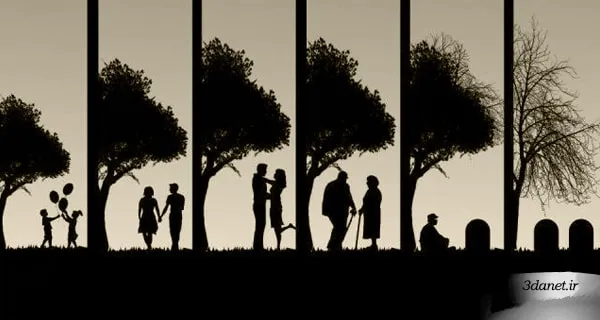
So far, we are still within the bounds of social psychology. The spotlight effect and related research concern how salient our appearance, behavior, and missteps are in other people’s minds, and how harshly others judge us. These findings imply neither death, nor eventual oblivion, nor the meaning of life. This is as far as the spotlight effect can take us: our place in other people’s everyday attention is usually smaller than we imagine. From here, a different question begins—not how much others see us, but how long this life, whether seen or unseen, itself endures.
This question is of a different kind, though the opening of the article had already placed it in the background. Other people are largely absorbed in their own lives. They forget many of our missteps—and many of our successes as well. Some relationships end; some people leave us; those who know and remember us today will not be here forever, and neither will we. There is no guarantee that the world, society, or other people will bear witness to our lives to the extent we expect.
These facts do not settle the question of importance. The fact that neither we nor the memory of us will endure implies neither that life is insignificant nor that it is significant. Nor can the fact that others pay less attention to our behavior than we suppose establish that we ourselves do not matter to them, or that we do not matter in some broader sense. The distinction with which we began still holds: the amount of attention we receive is not the same as the extent to which we matter.
This is precisely where the phrase “nobody cares” must be used with caution. When it comes to attention, we can say: “The world is under no obligation to bear witness to your life.” This is neither a verdict that life is worthless nor a prescription for how one ought to live. It says only that many parts of our lives may go unseen, may not be remembered, or may not occupy as much space in other people’s minds as we expect. Many of our failures will be forgotten, and so will many of our successes.
And this is where the harder question begins: when we set the spectators aside, what remains?
At least these things do not disappear from the reality of life: our choices and their consequences; the things we have done; the opportunities we have missed; the harm we have caused others; the help we have given; and the time that has been spent and will not return. These consequences do not require someone to be their perpetual witness in order to exist. But neither can we extract, without further argument, an “ultimate meaning” of life from these things alone.
The spectators leave, and so do we. This fact resolves neither the question of meaning nor the question of importance. But time that has passed does not return, and what we have done has consequences, whether anyone witnessed it or not. This life passes, with spectators or without them; and no one can live it in our place.
[1]Gilovich, T., Medvec, V. H., & Savitsky, K. (2000). “The spotlight effect in social judgment: An egocentric bias in estimates of the salience of one’s own actions and appearance.” Journal of Personality and Social Psychology, 78(2), 211–222; Study 1, pp. 212–214. https://pubmed.ncbi.nlm.nih.gov/10707330/
[2]Gilovich, Medvec, & Savitsky (2000), “The spotlight effect in social judgment,” Study 3 and General Discussion, pp. 215–216, 219–220.
[3]Rosenberg, M., & McCullough, B. C. (1981). “Mattering: Inferred significance and mental health among adolescents.” Research in Community and Mental Health, 2, 163–182.
The general formulation of the concept also appears in the abstract of the version presented in 1979:
https://eric.ed.gov/?id=ED179903
[4]Baumeister, R. F., & Leary, M. R. (1995). “The need to belong: Desire for interpersonal attachments as a fundamental human motivation.” Psychological Bulletin, 117(3), 497–529. https://doi.org/10.1037/0033-2909.117.3.497
[5]James, W. (1890). The Principles of Psychology, Vol. 1. New York: Henry Holt and Company, Chapter X, “The Consciousness of Self,” pp. 293–294.
The article paraphrases the passage rather than quoting it directly. The chapter text:
https://www.yorku.ca/pclassic/James/Principles/prin10.htm
[6]Savitsky, K., Epley, N., & Gilovich, T. (2001). “Do others judge us as harshly as we think? Overestimating the impact of our failures, shortcomings, and mishaps.” Journal of Personality and Social Psychology, 81(1), 44–56. https://pubmed.ncbi.nlm.nih.gov/11474724/




Discussion0 comments
No comments yet; let yours be the first voice.