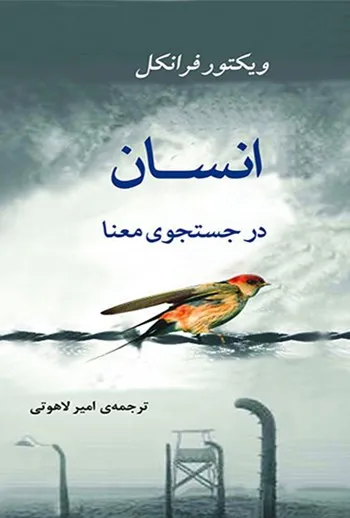
Why this book?
- To become familiar with one of the most influential books on suffering and the meaning of life.
- To understand the foundations of logotherapy and the role of meaning in human resilience.
- For readers interested in existential psychology and human limit-experiences.
- To see that hope is not always a pleasant feeling; sometimes it takes the form of responsibility.
- To reflect on the relation between inner freedom, suffering, and human dignity.
About the book
“Man’s Search for Meaning” is the best-known work of Viktor Frankl, the Austrian psychiatrist and founder of logotherapy. The book has two main parts: the first recounts Frankl’s experience in Nazi concentration and death camps, and the second offers a concise account of his psychotherapeutic view of meaning, responsibility, and the will to meaning.
Frankl does not speak of suffering as something romantic or desirable. The importance of his view lies in showing that even when human beings lose many of their external freedoms, they can still choose an inner attitude toward their situation. This inner freedom, however limited and difficult, becomes a source of human dignity.
Frankl’s logotherapy rests on the belief that the primary human drive is not merely the will to pleasure or power, but the search for meaning. Meaning can be found through love, work, creation, responsibility, or the way one faces suffering. For this reason, the book is both a historical testimony and a psychological and philosophical text about living under difficult conditions.
This work is suited to readers interested in psychology, the meaning of life, ethics, suffering, hope, and resilience. “Man’s Search for Meaning” is a short but profound book that confronts the reader with a fundamental question: in a world where suffering cannot be eliminated, how can one live humanely and meaningfully?