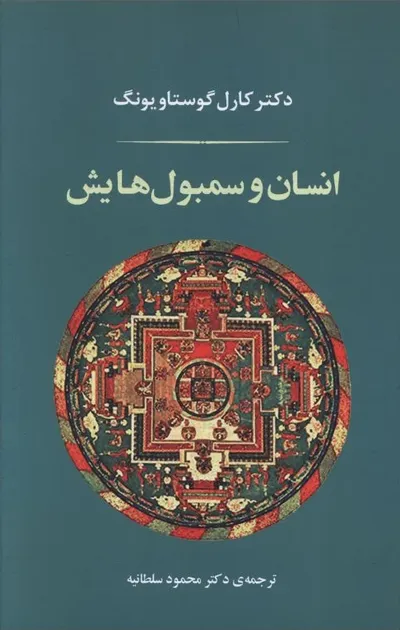
Why this book?
- It is an accessible introduction to Jung’s central ideas.
- It explains the role of dreams and symbols in understanding the unconscious.
- It shows the links between psychology, myth, art, and everyday life.
- It is suitable for entering analytical psychology and the concept of archetypes.
- It was written for general readers rather than in a wholly technical language.
About the book
“Man and His Symbols” is a work written by Carl Gustav Jung and his collaborators to explain the role of symbols in the unconscious psyche. Its importance lies in the fact that, unlike many of Jung’s more specialized writings, it was prepared for general readers and seeks to clarify the complex concepts of analytical psychology through examples from dreams, myth, art, and individual experience.
The book rests on the idea that the human psyche is not limited to conscious awareness. Dreams, images, myths, and symbols point to deeper layers and can help us understand conflicts, anxieties, spiritual tendencies, and the path of personal growth. Within this framework, the concept of the archetype has a central place: psychic patterns that appear in different forms across cultures and human experiences.
The structure of the book is wide-ranging. It begins with an exploration of the unconscious, then turns to ancient myths, the process of individuation, symbolism in the visual arts, and the use of symbols in individual analysis. This breadth makes the book valuable not only for readers of psychology, but also for those interested in philosophy, literature, religious studies, and art.