Why this book?
- To understand Dariush Shayegan's perspective on the dialogue of civilizations.
- To grasp the difference between mythical thinking and modern scientific thinking.
- To become acquainted with Shayegan's analysis of cultural identity in the contemporary world.
- To study the connection between philosophy, myth, art, and Asian culture.
About the book
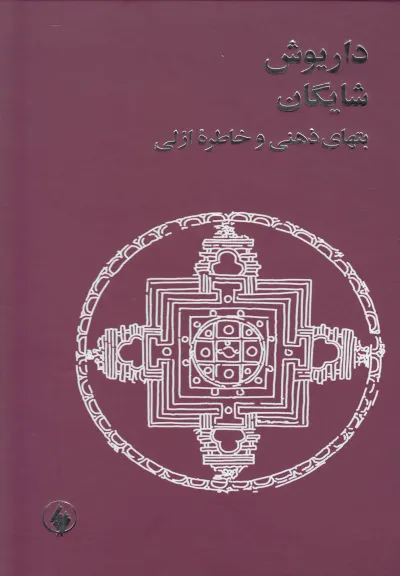
Mental Idols and Primordial Memory is a collection of articles and lectures by Dariush Shayegan in which the author addresses one of the central concerns of his thought: the encounter of great civilizations and the possibility of dialogue between cultures. In this work, Shayegan raises questions about the dominance of Western technical thinking, the differences between Asian and Western intellectual traditions, and Iran's place among the great civilizations.
The book is organized into two parts. The first part includes articles such as "Contemporary Challenge and Cultural Identity," "Mental Idols and Primordial Memory," "Indian Thought and Western Science," and "The Image of a World, or a Discussion on Iranian Art." In this section, Shayegan addresses topics such as cultural identity, myth, Indian thought, and Iranian art.
The second part of the book is dedicated to examining the structure of myths and their role in shaping the human mind. One of the key focuses of this section is a critique of Francis Bacon's concept of "mental idols" from the perspective of Jungian archetypes and an examination of the limitations of humans in completely freeing themselves from cultural and historical presuppositions.
This work is suitable for those interested in the philosophy of culture, the history of ideas, civilizational studies, and the works of Dariush Shayegan, and it is considered one of the important examples of his effort to understand the relationship between Eastern traditions and Western modernity.
This book contains articles and lectures that have been written and delivered over the past few years. Undoubtedly, some of the articles are repeated here and there, but this repetition each time appears in a different text and manifests from a different perspective. Despite the diversity of themes, an implicit unity binds the material together, as the author has striven to answer, in one way or another, the fundamental questions arising from the current state of the clash of civilizations: Does the unchallenged dominance of Western technical thought make communication between great civilizations possible? Why does the rift between religion and philosophy, and spirit and body—a duality implicit in the fundamental realm of Western thought—find no equivalent in the great Asian civilizations? Why did modern science, in the Western sense of the word, never emerge in these civilizations? What differences exist between the categories of mythical vision, which has been the dominant element of Asian thought, and Western philosophical thought?
From the table of contents
- 1Contemporary Challenge and Cultural Identity
- 2Mental Idols and Primordial Memory
- 3Indian Thought and Western Science
- 4The Image of a World, or a Discussion on Iranian Art