Why this book?
- To gain a general and analytical picture of contemporary Iranian history.
- To understand the role of oil, the state, foreign intervention, and social forces in Iran's developments.
- To become acquainted with the perspective of one of the most important historians of modern Iran.
- For readers who want to understand the 1979 Revolution within a broader historical context.
About the book
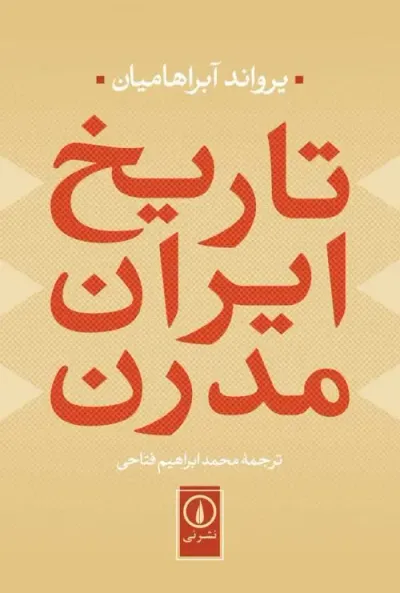
A History of Modern Iran by Ervand Abrahamian is a book for understanding the main trends of Iranian history in the contemporary period. Instead of focusing on a multitude of event details, the author traces the major paths of transformation: state-building, oil, the intervention of foreign powers, the Pahlavis, the 1979 Revolution, the Iran–Iraq War, and the formation of the Islamic Republic.
In this book, Abrahamian also reads Iran's political history from the perspective of society. His attention is not solely on kings, governments, and foreign powers; rather, intellectuals, the working class, the middle class, political elites, and ordinary people are also at the center of the analysis. It is this social perspective that makes his narrative of modern Iranian history not merely a report of events, but an analysis of the hidden and overt forces that shape history.
This work follows in the tradition of Abrahamian's well-known studies, particularly Iran Between Two Revolutions, and is written for the reader who seeks a structured, comprehensible, and analytical picture of contemporary Iran. The book is useful for students, history enthusiasts, social science researchers, and any reader who wants to better understand the roots of today's political and social developments in Iran.